
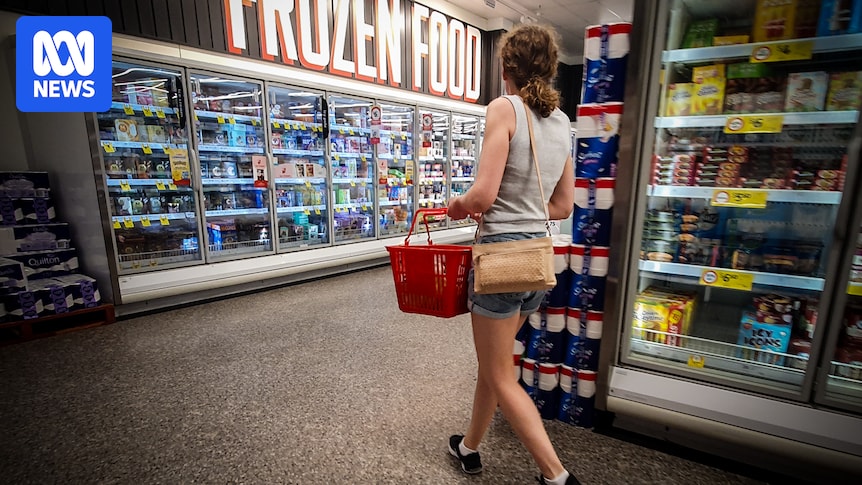
Australian farmers are facing soaring prices and even possible shortages of essential fertiliser due to the Middle East conflict.
However, experts and industry say grocery prices are unlikely to spike for now as a direct result.
Global oil prices have climbed dramatically since the war, prompting warnings that high fuel prices could drive inflation above 5 per cent.
At the same time, the conflict is pushing up prices and disrupting the supply of urea.
Iran war live updates: For the latest news on the Middle East crisis read our blog.
What is urea?
Urea is the world’s most commonly used nitrogen fertiliser, and is essential for getting high yields out of many crops, including cereals like wheat, barley and oats as well as vegetables.
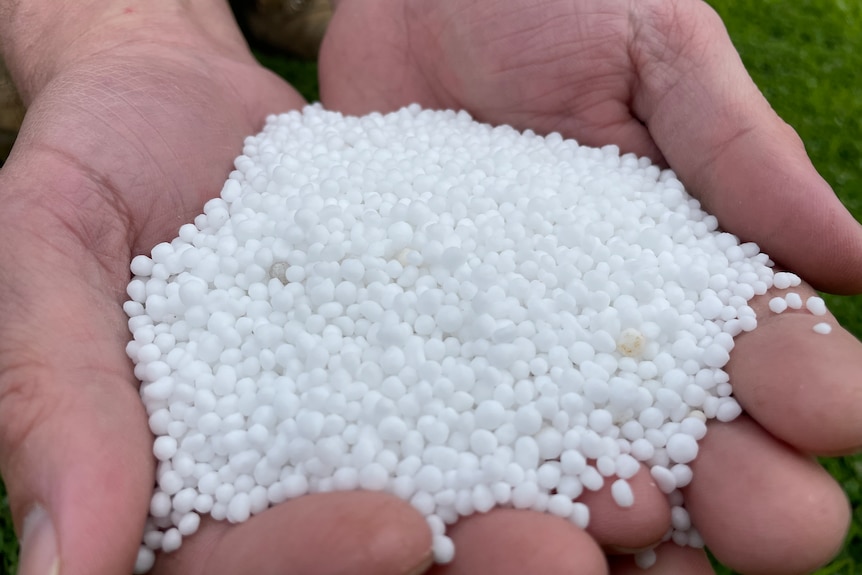
Urea is the world’s most commonly used nitrogen fertiliser. (ABC Wimmera: Andrew Kelso)
Australia relies almost totally on imports as it does not produce volumes of urea domestically, and the Middle East produces about 45 per cent of the world’s urea exports.
It reaches peak use in Australia from April, when winter crops are sown.
Urea prices have jumped since the conflict, but there are warnings that prices may hit record highs and Australia could even run out of urea fertiliser if it continues.
It is a cost farmers say they will have to absorb for now, as they have limited capacity to pass it on.
LoadingFarmers have to pay up
National Farmers’ Federation president Hamish McIntyre says urea shortages will drive up the cost of food production and drive down farmers’ margins.

Hamish McIntyre wants Australia to manufacture its own urea. (Supplied: National Farmers Federation)
“It’s a key ingredient to … producing a viable crop and quality food for Australia and for exports,” Mr McIntyre said.
“Since this war has started, prices have already gone up by 20 per cent.
“It’s really hitting our bottom line, driving up our cost to produce the crops we’re planning to grow in the short term.
“Time will tell for the exact effects, but initially, we can’t pass it on. Farmers will be absorbing it at the moment.”
Other factors at play
Associate professor in economics at the University of Sydney David Ubilava says there are several reasons why he is “optimistic” expensive urea will not be a direct cause of higher grocery prices.
He points to what has happened during urea price spikes in recent years, and that input costs are only a small factor in the end price consumers pay for groceries.

David Ubilava says farm costs are a small percentage of supermarket prices. (Supplied: David Ubilava)
Price surges in 2007 and 2022 coincided with an increase in grain prices, so “farmers didn’t feel the shock so much as their revenues increased”.
This time, it is a different story.
“As of now, wheat prices are not high, so if input costs go up, probably the cause for optimism I have is not as strong,” Professor Ubilava said.
“But looking at it from a consumer perspective, agricultural inputs are a very small share of the prices that we pay for a loaf of bread, for example.
“A bigger proportion of it goes on other things like processing, the label costs, electricity, etc.”
Weather is another major factor that has a greater impact on production and prices.
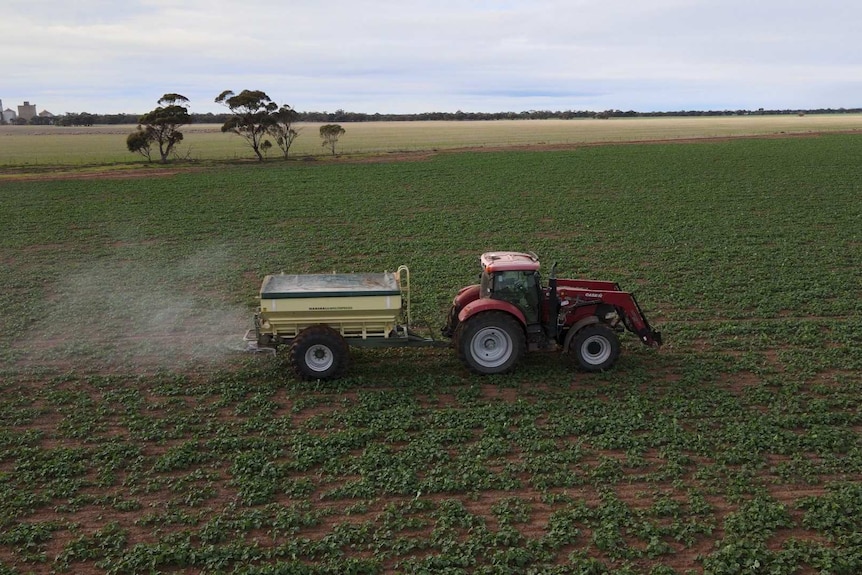
Urea is spread over many crops, including canola. (ABC Rural: Clint Jasper)
Professor Ubilava believes farmers will absorb the shock and continue using fertiliser at similar volumes.
“The question is, will they have fertiliser to apply?” he said.
“That’s a different story. The longer this conflict continues, the less likely [it] is that will be the case.”
Read more about the Iran war:Time will tell
Rabobank senior grains and oilseeds analyst Vitor Pistoia says what happens to grocery prices as a result of high fertiliser costs is down to “timing” and “pressure”.
“Initially farmers, they suffer, but of course they transmit that to the supply chain,” Mr Pistoia said.
“Some parts downstream can absorb a percentage, but not the full extent of the impact and we will see at the other end potentially higher inflation if this conflict lasts a long time.
“It takes a lot of time to see that mass inflation that we see at the shelves.”
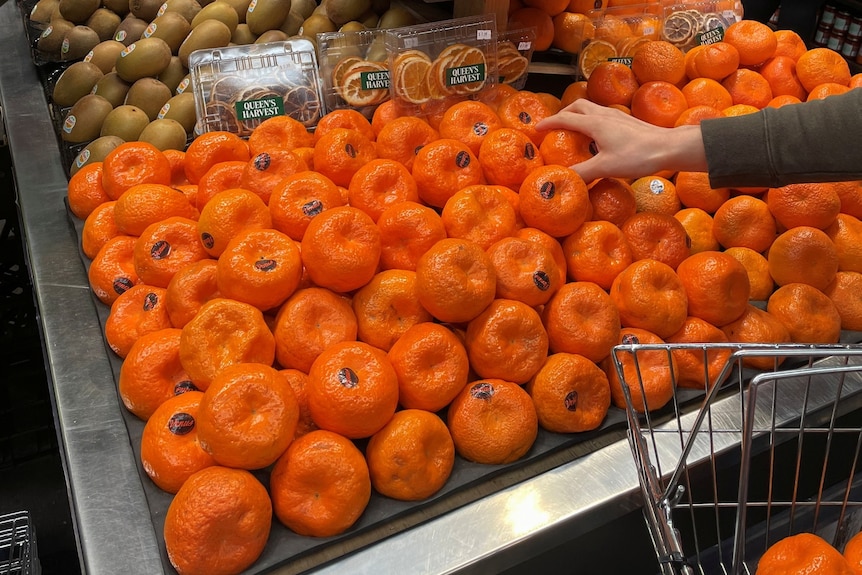
Consumers are concerned about what the Middle East conflict will mean for grocery prices. (ABC Rural: Selina Green)
AusVeg national communications manager Andrew MacDonald says vegetable growers have limited capacity to absorb the price “shock”.
“Margins are already very tight. There’s a lot of downward price pressure generally on what growers are receiving for their produce, given a whole range of challenges and the rising cost of production, so it is a real concern for the industry at the moment,” Mr MacDonald said.
Expert analysis on the Middle East:Farmers ‘price takers’
Murray Mallee broadacre farmer Thomas Fogden is “extremely” concerned about a potential urea shortage.
“That can make or break crops really, especially when it comes down to quality,” Mr Fogden said.
“We can get the rainfall, but if we don’t give it the nutrients it needs, we’ll never make the quality grain that we need to.”
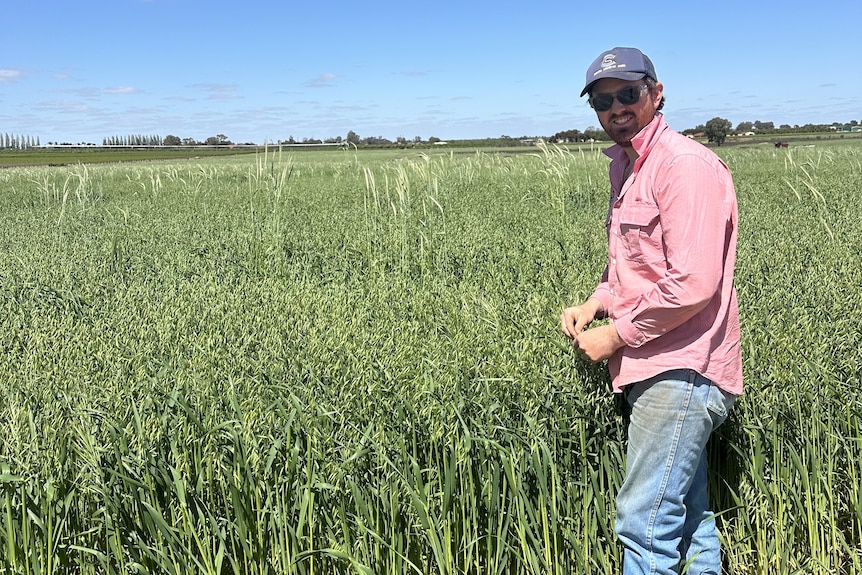
Thomas Fogden says a shortage of urea could ruin entire crops. (Supplied: Thomas Fogden)
Lameroo broadacre farmer Lynton Barrett plans to start sowing winter crops next month after receiving some very welcome rain in a region hit hard by drought in recent years.
“Unfortunately, we’re price takers. We’ll get what we get, and we’ll pay what we have to pay to have it,” Mr Barrett said.
“We’ve just got to pay it.”
Loading…