
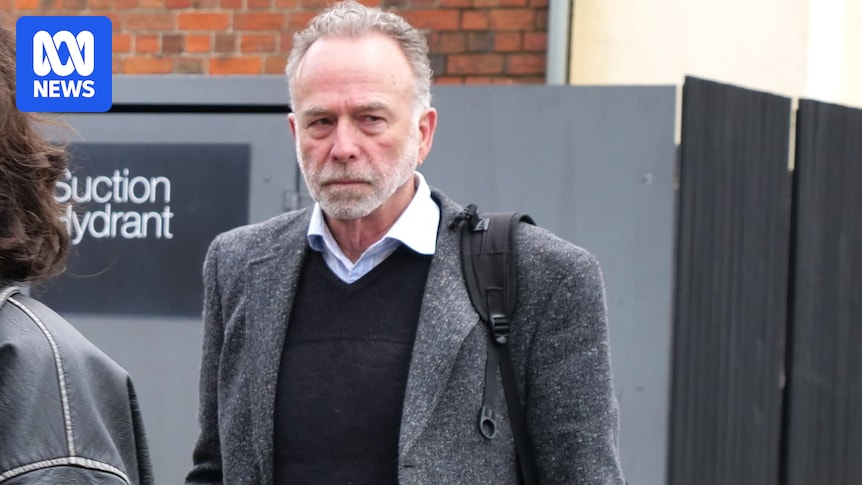
A man who lost control of his vehicle before veering into two families and killing five people has apologised to those impacted by the crash, calling it an “incomprehensible tragedy”.
William Herbert Swale, 69, who lives with type 1 diabetes, had a severe hypoglycaemic episode in November 2023 and crashed into two families while they dined outside The Royal Daylesford Hotel in the central Victorian town of Daylesford.
Pratibha Sharma, 44, her daughter Anvi, nine, partner Jatin Kumar, 30, their friend Vivek Bhatia, 38, and his son Vihaan, 11, were killed while six others were injured.
On Tuesday, 69-year-old William Swale fronted the Coroners Court of Victoria and was questioned over the crash, his medical history, and his history of diabetes education.
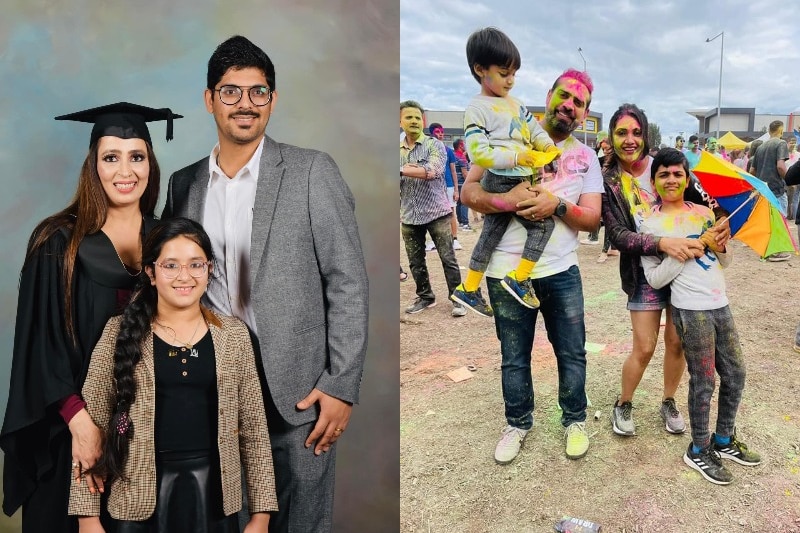
Pratibha Sharma, 44, her daughter Anvi, nine, partner Jatin Kumar, 30, their friend Vivek Bhatia, 38, and his son Vihaan, 11, were all killed and six others were injured. (Supplied)
In January this year, a Victorian court ruled Mr Swale would be compelled to give evidence during this week’s inquiry after he made an application to be excused on the grounds of potentially self-incriminating.
Coroner Dimitria Dubrow issued him a certificate, meaning any evidence he provides at the inquest cannot be used in any future legal proceedings.
Mr Swale was initially charged with multiple driving offences but the charges were dropped after a Ballarat magistrate found insufficient evidence to convict.
The coronial inquiry will examine the circumstances of the five deaths, along with education, guidelines, and public awareness for diabetic drivers, and outdoor dining and road safety.
Mr Swale told the court he undertook a multi-day educational course on type 1 diabetes when he was first diagnosed in 1994.
Under questions from senior lawyer Rishi Nathwani, Mr Swale told the court he had not declared to VicRoads that he was diabetic, as was required.
“So, you no longer drive?” Mr Nathwani asked today.
“Is that a serious question? No, I don’t drive anymore,” responded Mr Swale.
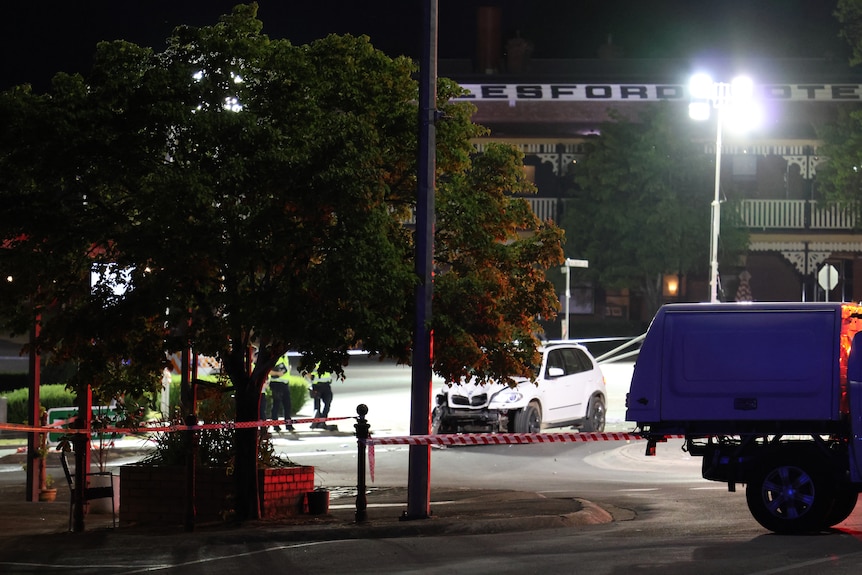
Five people died after a white BMW drove through an outdoor eating area. (ABC News: Kristofor Lawson)
Mr Swale recorded his type 1 diabetes through a continuous blood monitor which reported through an application on his phone called Libre Sensor.
The court heard Mr Swale last had a severe hypoglycaemic event 20 years ago in 2003, which was quickly managed with the help of medical professionals.
The court heard today Mr Swale spent the weekend prior to the crash on November 5, 2023, at a clay shooting event in the central Victorian town of Clunes.
Mr Swale injected himself with a dose of insulin before he was due to eat a meal; however, he could not access food and instead planned to stop for a meal in Daylesford on his way home.
The Mount Macedon man said he would not consider it safe to drive below a reading of 8.0 mmo/L.
On a historical reading of his blood glucose from November 5, the court could see Mr Swale’s reading dipped as low as 2.9 mmo/L prior to the crash.
Mr Swale attempted to buy food from a restaurant in Daylesford when his blood sugar dropped but was turned away as they were fully booked.
Mr Swale said he did not remember anything after leaving the restaurant.
The collision occurred shortly after.
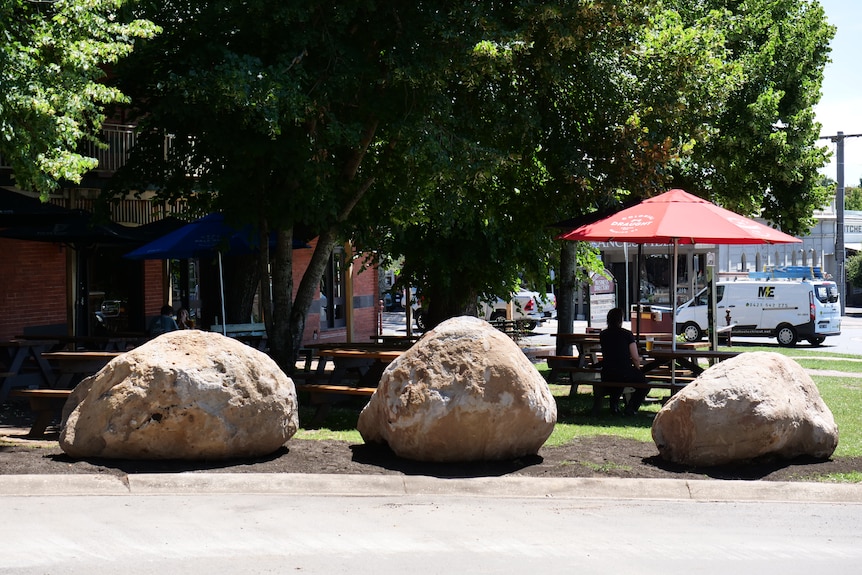
Large rocks were placed outside the Daylesford hotel as bollards. (
ABC News: Rochelle Kirkham
)
Blood monitoring limitations
An analysis of Mr Swale’s phone found that between 5:18pm and 6:07pm, 10 low blood glucose alarms went off from the monitoring application.
The court heard Mr Swale repeatedly denied hearing any alarms while he was driving.
Mr Swale described how Libre Sensor alarms could be “overridden” by car applications, including bluetooth.
He told the court he had not tested the monitoring alarms through the car prior to the incident.
“The glucose alarm won’t work if you don’t have signal,” he said.
“I never detected an alarm … through my car. Unfortunately, I assumed that was because I was very careful [with my blood glucose] when I was driving.”
A bag of fruit and nuts was found in Mr Swale’s car after the crash.
When asked why he had not eaten some of the snack when he experienced hypoglycaemic symptoms, including his vision going “dark”, Mr Swale said, “I guess it was because I was going [to the restaurant].”
“But also I was severely hypoglycaemic and not thinking rationally,” he said.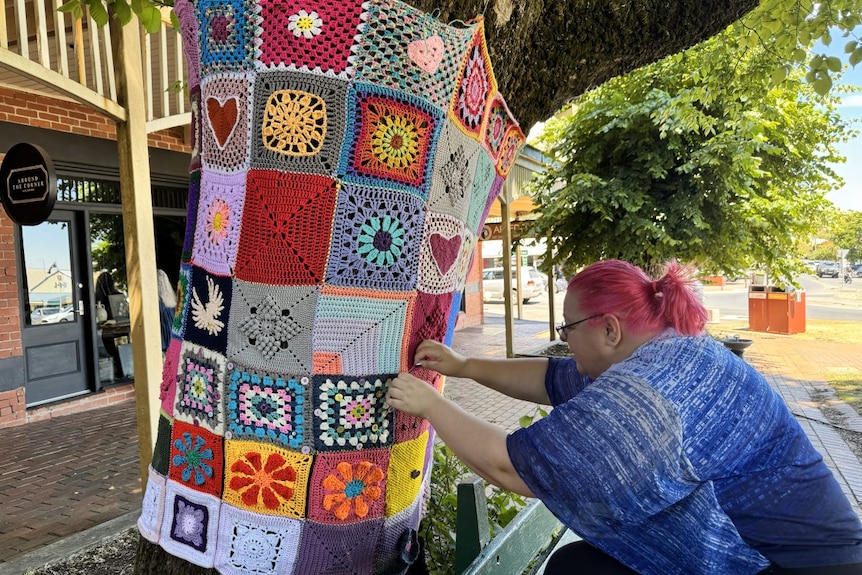
“Tribute trees” were erected after the Daylesford crash in memory of those who died. (ABC Ballarat: Lexie Jeuniewic)
It was today put to Mr Swale that in 2016, his endocrinologist, Matthew Cohen, recommended he undergo a refresher course in relation to diabetes and driving.
Mr Swale told the court he could not recall the conversation.
Dr Cohen will be the next witness to give evidence in the inquiry, which continues tomorrow.
Mr Swale took the opportunity while on the stand to apologise to those impacted by the crash.
“This has been an incomprehensible tragedy, a catastrophe, you could say a series of unfortunate events,” Mr Swale said.
“We can’t turn back time, and sometimes I even think that time won’t heal. But it is gradually.
“It has been rather traumatising to me as well. I think of them from the moment I wake up to the moment I go to sleep. They are always with me.”