
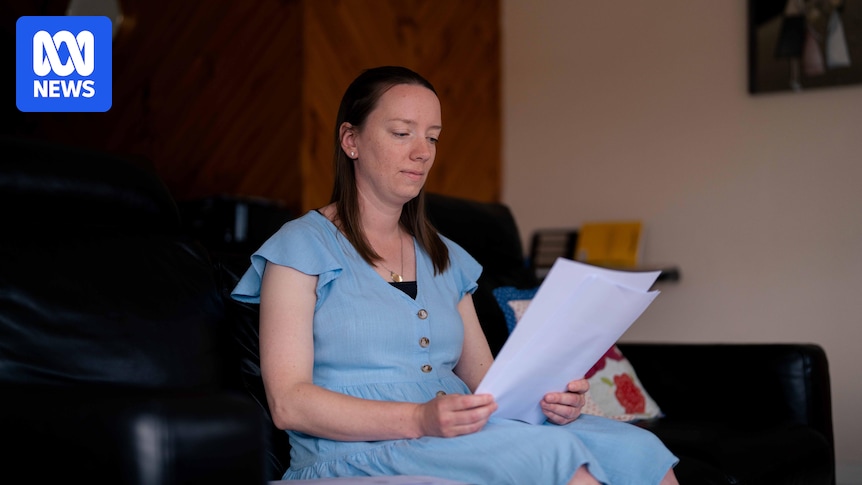
Lily Johnstone and her husband live in a two-bedroom home in Melbourne with a pair of French bulldogs.
They expected to turn their spare bedroom into a baby room.
Now she’s unsure whether her dream of becoming a mother will ever come to pass after a common obstetric procedure resulted in her uterus becoming scarred.
“At the moment it kind of feels like that’s been taken away from me, so it’s very sad,” Ms Johnstone said.
Dilation and curettage (D&C) procedures are routinely carried out to remove pregnancy tissue after a miscarriage, in an abortion or postpartum.
After having a D&C, 1 to 2 per cent of women develop scarring of the uterus that results in a condition known as Asherman’s syndrome.
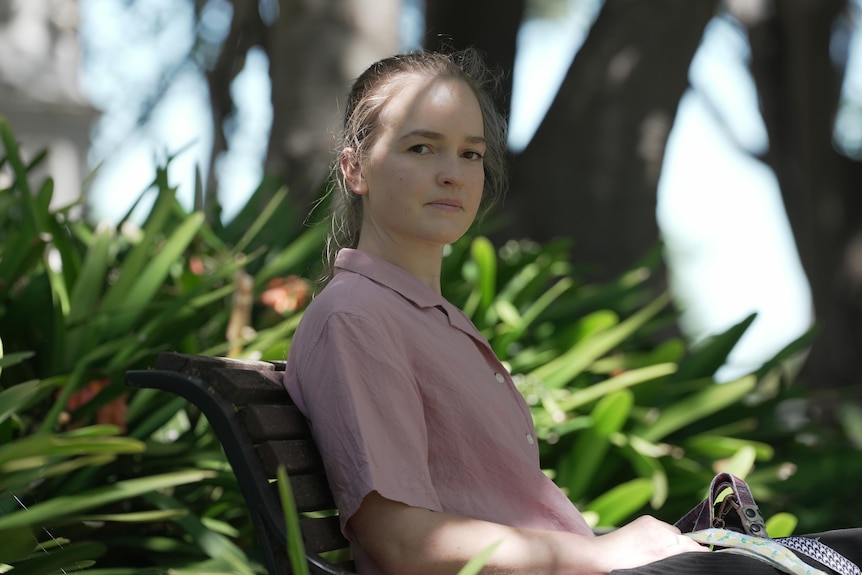
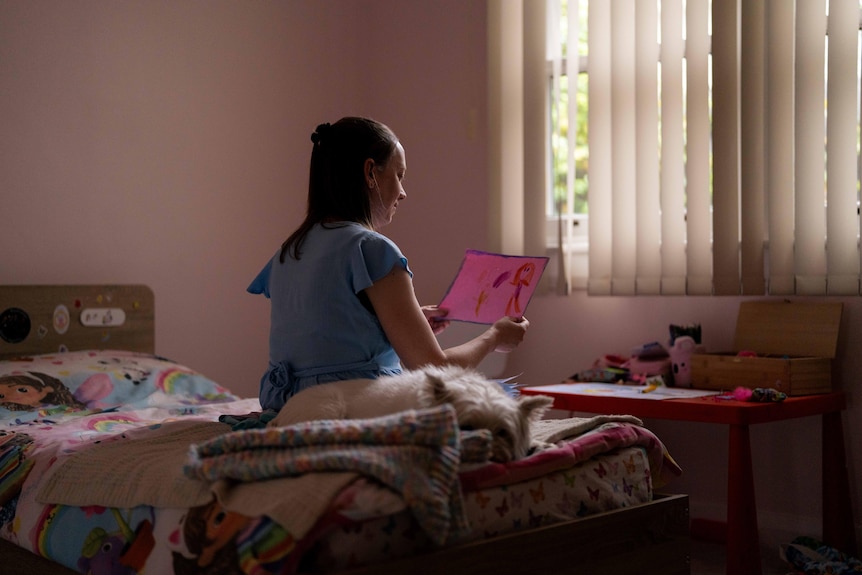
Lily Johnstone is unsure whether her dream of becoming a mother will ever come to pass. (ABC News: Patrick Stone)
The condition most commonly develops after having one or more D&Cs.
Some women with Asherman’s syndrome, and advocates for women’s health, said doctors and health authorities were not doing enough to address the use of outdated clinical practices that could result in women developing the condition.
Those outdated practices included the use of inappropriate surgical tools, lack of proper consent and underuse of assistive technology like ultrasound.
“It feels like there’s no accountability for these surgeries being done and then unfortunately women are left to pick up the pieces,” Ms Johnstone said.
The scar tissue can form after a D&C if the lining of the uterus becomes inflamed.
It can cause changes in menstruation, painful periods and difficulty becoming pregnant. It can also increase the risk of infection, affect fetal development and increase the risk of catastrophic bleeding after delivery.
Laura wasn’t told her operation could cause infertility
While the risk of acquiring the condition is low, the consequences can be severe.
Naomi Cate was diagnosed with the condition after having a postpartum D&C she was later told was not necessary.
When Ms Cate found out a school friend also had the condition, she met another local woman with the syndrome, and they co-founded Asherman’s Australia to advocate for better outcomes for women.
“When [women] agree to that D&C, we want to know that they’re getting the safest possible treatment,” she said.
Five years into their advocacy, Ms Cate is frustrated that regulators have not changed the rules regarding the use of sharp curettes, which are known to increase the risk of scarring.
“That reflects very low respect for women,” she said.
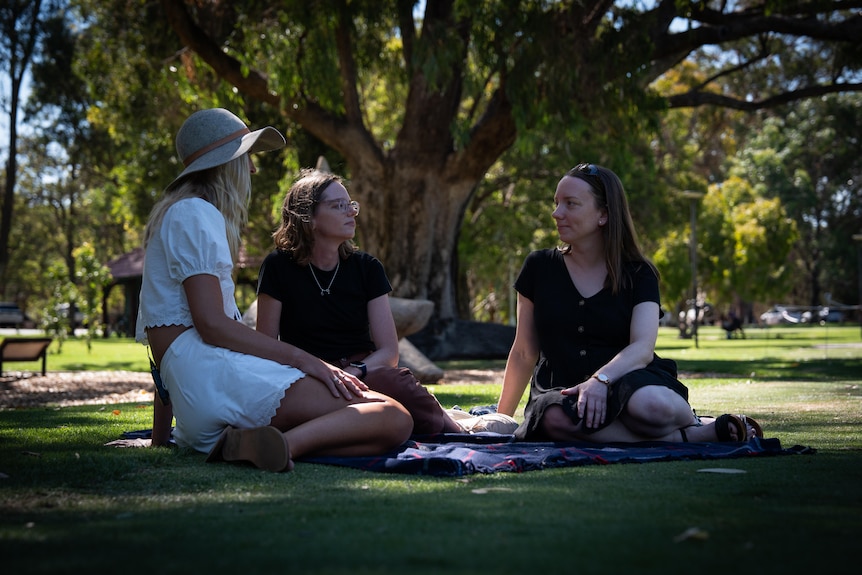
Kim Harvey (left), Rebecca Trainor (centre), and Naomi Cate are pushing for regulators to change the rules regarding the use of sharp curettes. (ABC News: Mitchell Edgar)
19th-century tool
D&Cs are routinely carried out on women across Australia because if pregnancy tissue is not removed, it can lead to infection or severe bleeding.
The World Health Organization strongly recommends the procedure is done using a suction curette — a blunt plastic tool that pulls tissue from the uterine walls and removes it from the cavity.
However, the ABC found examples of women in at least four states, at public and private hospitals, who recently had the procedure done with sharp curettes — a looped metal tool with a cutting edge for removing tissue.
The use of sharp curettes is known to raise the risk of developing Asherman’s syndrome.
Obstetrician Thierry Vancaillie, who specialises in treating Asherman’s syndrome, considers the device, which dates back to at least the 1840s, a museum piece.
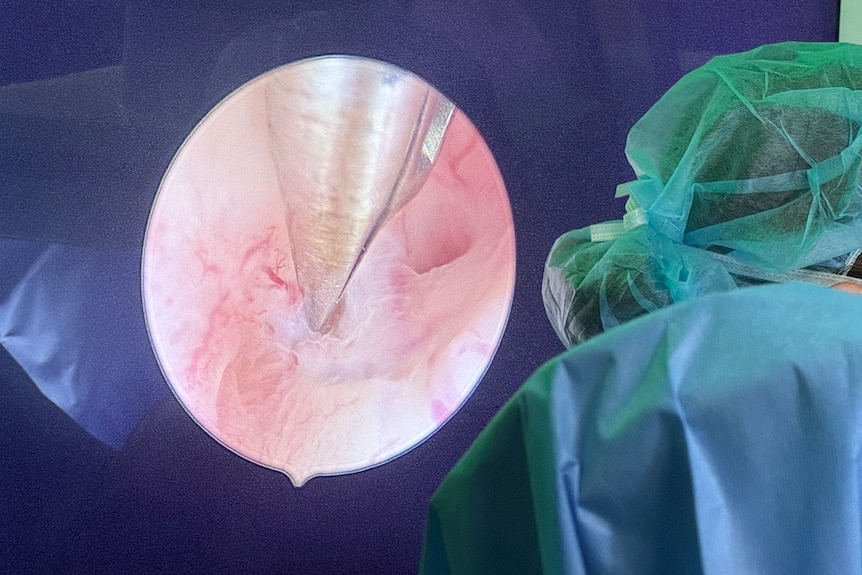
Women with Asherman’s syndrome can have a hysteroscopy to treat the condition. (ABC News: Mary Lloyd)
“The sharp curette is a diagnostic tool. It’s to obtain a uterine cavity sample for histological analysis. It’s not intended to treat miscarriages,” Professor Vancaillie said.
He said sharp curettes could injure the uterus and have been shown to miss large portions of the surface area of the uterus, which risks failing to remove tissue completely.
If tissue remains, it can cause infection or the scarring that Asherman’s syndrome is known for.
Ms Johnston suspects one was used on her during a procedure two years ago.
She distinctly remembered a clinician said they had to do a lot of “scraping” because the tissue had been there a while.
In March last year, the Royal Australian and New Zealand College of Obstetricians and Gynaecologists (RANZCOG) issued clinical guidelines stating that the use of sharp curettes should be avoided in D&Cs after a miscarriage.
The college currently has no guidelines regarding postpartum D&Cs.
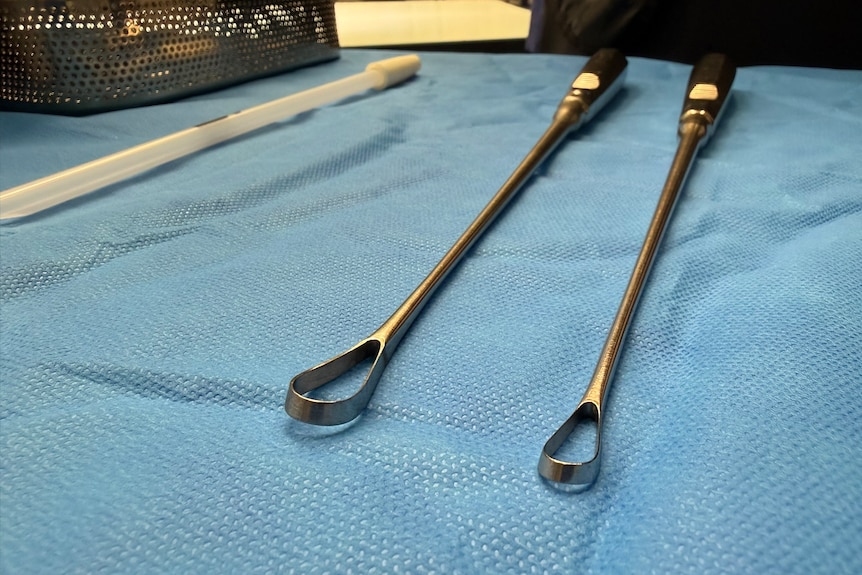
Sharp curettes can injure the uterus and have been shown to miss large portions of the surface area. (ABC News: Mary Lloyd)
RANZCOG president Dr Nisha Khot said she wanted to see all D&Cs performed using suction curettes, not sharp curettes, whenever possible.
“I definitely can’t be confident that it’s not being used,” she said.
Ms Cate said she signed a form consenting to a D&C using a suction curette, only to find out a sharp curette was used.
She had to fly across the country to have surgery to repair the damage to her uterus before she could fall pregnant again.
“Sharp curettes honestly just give me nightmares because that is what caused me so much damage,” she said.
Adverse event data
When he started treating Asherman’s syndrome four decades ago, Professor Vancaillie said, he saw three to four women with the scarring a month. Now he sees three or four a week.
“The incidence has definitely increased. There’s no doubt about that,” he said.
He said the rising average age at which women become pregnant means more complications and more surgical interventions, which is increasing the incidence of problematic scarring.
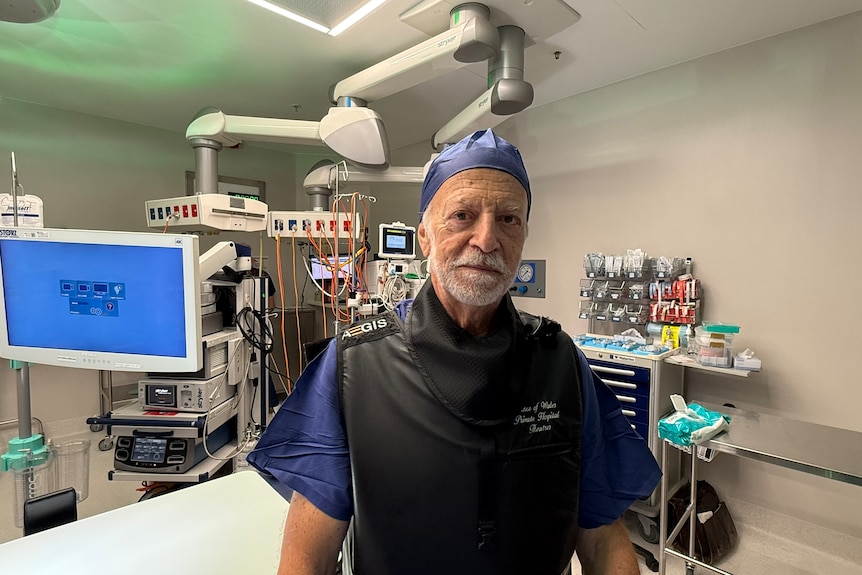
Professor Thierry Vancaillie specialises in treating Asherman’s syndrome. (ABC News: Mary Lloyd)
It is unclear how often sharp curettes are used during D&Cs or how many women develop scarring, because medical services are not required to report this information.
The Therapeutic Goods Administration (TGA) currently classifies most sharp curettes as class 1, which does not mandate adverse incident reports.
Some other class 1 devices include dental floss, latex gloves and tongue depressors.
Officials from the TGA were recently questioned in Senate estimates about whether the classification of sharp curettes was appropriate.
The TGA’s deputy secretary of the Health Products Regulation Group, Professor Anthony Lawler, told the hearing in February that the agency received indications of adverse outcomes from medical colleges and patient groups.
“If we are aware of any concerns that are relevant to a particular device, then we might actually put additional conditions on that,” he said.

Shadow Minister for Health, Anne Ruston said it was “ridiculous” the TGA said they could not change the classification. (ABC News: Nick Haggarty)
Shadow Minister for Health Anne Ruston said it was “ridiculous” that the TGA said it could not change the classification because it was not receiving information about adverse events, when its classification did not require the reporting of adverse events.
“We’re talking about women who suffer lifelong injury, women who live with pain for the rest of their life, women who have had their chances of having a family taken from them by this procedure,” she said.
In a statement, a spokesperson for the TGA said it asked all suppliers of sharp curettes late last year to ensure their instructions for use included a warning about the risk of Asherman’s syndrome.
Clinical standards
The procedure Ms Johnstone said involved “scraping” and was the second one she needed after a miscarriage.
She left the hospital after the initial procedure, believing it was successful.
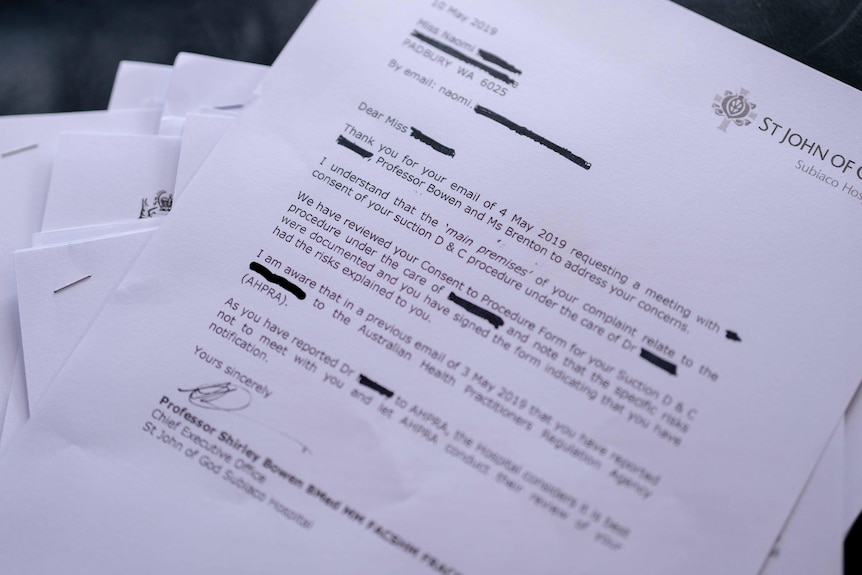
Naomi Cate has been advocating for greater awareness of Asherman’s Syndrome. (ABC News)
After her period did not return for several months, she was told she needed another surgery to remove tissue that had been missed.
“They didn’t complete the procedure,” she said.
“I left that hospital thinking that everything was OK, and then you find out months later that you’re infertile, it’s devastating.”
She remains hopeful that surgery can repair the scarring in her uterus so she can conceive again.
Lily Johnston says she needed a second D&C to remove tissue that had been missed. (ABC News: Patrick Stone)
Until then, the emotional toll has been so hard, she is only working four days a week.
“It’s probably been the hardest two years of our lives,” she said.
Professor Vancaillie said he wanted ultrasound imaging to be used in all D&Cs to ensure the uterus was completely empty.
Ultrasound guidance during D&Cs was beneficial, but not always available, Dr Khot said.
“Increasingly now we want to look inside, identify the cause of whatever the problem might be, and then treat based on what the cause is,” she said.
Naomi Cate had to fly across the country to have surgery to repair the damage to her uterus before she could fall pregnant again. (ABC News)
She also acknowledged that ultrasound machines were not available in all surgical theatres, and not every clinician was trained to use one.
“Those are things that we should address,” she said.
Ms Johnstone said she wasn’t told the extent of what could go wrong before her second procedure.
Dr Khot said clinicians should accurately inform women about the risk of Asherman’s syndrome as part of the process to get informed consent.
She said an Asherman’s syndrome registry was needed, as well as more funding for research, because poor data was part of the problem.
“We have very few registries for anything to do with women’s health,” she said.