
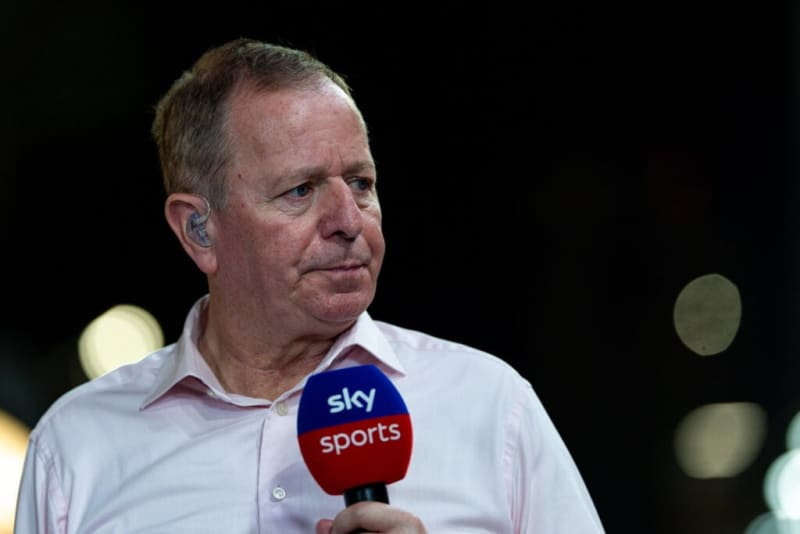
Martin Brundle has voiced concerns about both driver safety and the overall racing spectacle after Formula 1’s first race under its new regulations.
Up to now, Brundle had been one of the more vocal supporters of the changes.
The Australian Grand Prix offered plenty of action, especially early on when Charles Leclerc took the fight to eventual winner George Russell. But some fans were left frustrated by qualifying, where ‘superclipping’ affected what is usually a flat-out session.
There were also several odd incidents over the weekend, including Max Verstappen’s crash in qualifying and Oscar Piastri’s accident before the race even began. At lights out, Franco Colapinto came close to colliding with Liam Lawson as drivers struggled with the new starting procedure.
Martin Brundle labels current 2026 F1 cars as ‘dangerous’
Martin Brundle’s early support of Formula 1’s new regulations shifted noticeably after the Australian Grand Prix.
After practice at Albert Park, Brundle said on X that he was “totally relaxed” about the new rules, despite “all the doubts and high-level criticism.” But his tone changed following an eventful weekend in Melbourne.
Verstappen said he was no longer “enjoying” F1 after qualifying, while reigning champion Lando Norris declared that the sport had swapped its “best” generation of cars for the “worst.”
In a column for Sky Sports, Brundle described how unpredictable these cars have become. He acknowledged that while he knew the regulations were flawed from the start, it was still strange to see drivers slowing down on straights during races.
“I grimace at the thought of controlling these cars on a wet day at – say – Monaco or a Safety Car restart on a damp cold track on slicks,” Brundle wrote. “The power delivery is clearly too unsophisticated and unpredictable right now, but it will improve quickly with some proactive mindsets.”
The biggest issue is with battery management. The kinetic electrical motor (MGU-K) output has been tripled, but removing the MGU-H has made it harder to harvest enough energy over a race distance. As Verstappen put it:
The standing starts have also become less reliable without extra turbocharger power from their hybrid system under certain conditions and some cars are struggling off-the-line during race weekends now:
F1 teams hoping for wind assistance in Shanghai
Looking ahead to the next race in China, teams will be keeping a close eye on the 1.2-kilometre back straight, which will present a new challenge for the 2026 cars.
Managing energy over such a long stretch could be tricky, and Brundle joked that a strong tailwind might be just what teams need to get through it.
“Given all we have learned in Oz I would expect the cars to function a step better in a few days time in China,” Brundle wrote. “But that massively long back straight is going to cause some energy problems and complaints. Let’s hope there’s a stiff tail wind.”
Read more: