
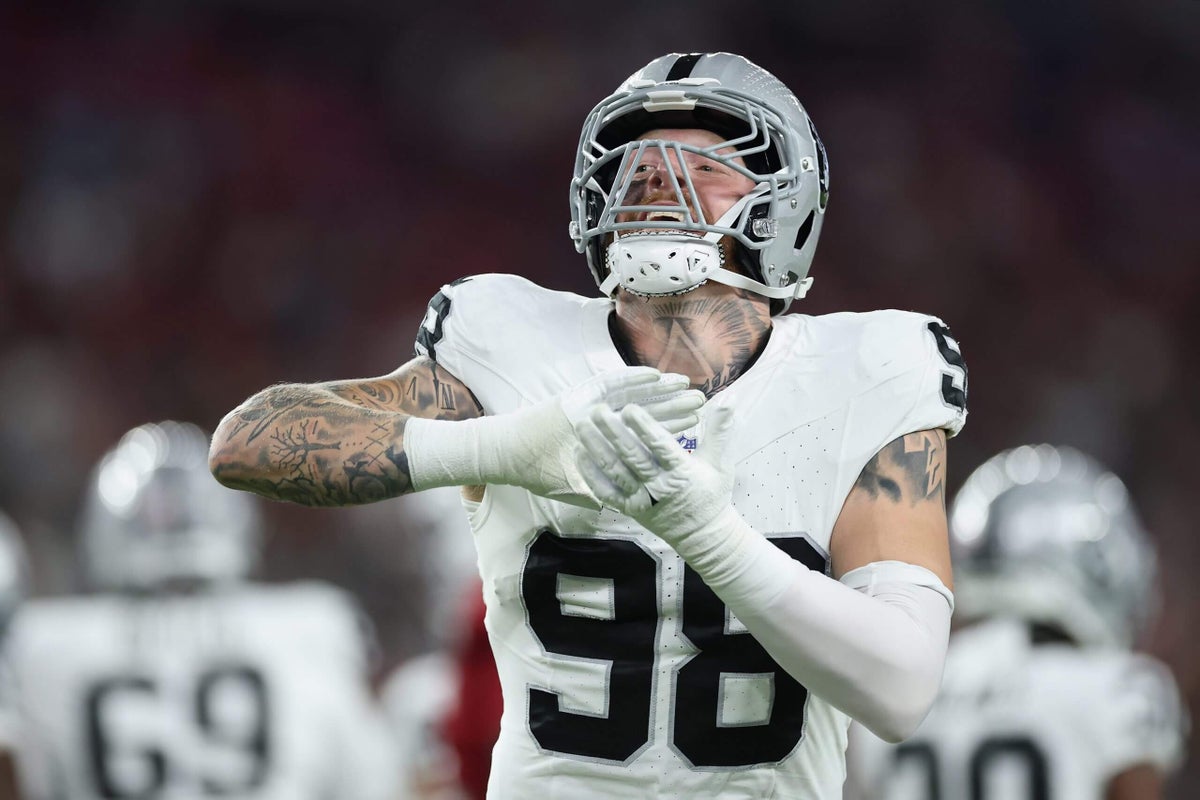
Happy NFL New Year, to all who celebrate. At 4 p.m. ET on Wednesday, the page will finally turn from 2025 to 2026, as the new league year begins.
This week has consisted of a flurry of moves around the NFL. In addition to some trades, 73 of The Athletic’s Top 150 free agents flew off the board on Monday, followed by a handful more trickling off throughout the day on Tuesday and Wednesday.
But it was the reversal of the Maxx Crosby trade on Tuesday evening that served as a stark reminder that regardless of what has been announced thus far, nothing is official until the new league year begins. Let’s explain the dynamics of how free agency week works in the NFL, from the legal tampering period to when deals become official.
What is the legal tampering period?
Beginning in 2012, the NFL implemented a soft launch, of sorts, to free agency by introducing a two-day negotiating window, known familiarly as the “legal tampering” period. This year, that began on Monday at noon ET. From the start of the negotiating window until the start of the new league year on Wednesday, teams are allowed to speak to the agents of unrestricted free agents and work on a new deal.
This year, the NFL added a new element by allowing teams to conduct a one-hour video or phone call with the player directly rather than just communicating through the player’s representatives. Each team is allowed a maximum of five of these direct-contact calls with a player, but there is no limit for how many unrestricted free-agent players they can negotiate with through their agents.
It’s important to note that this negotiating window applies only to unrestricted free agents. That means the three players who received the franchise tag this year and restricted free agents who received tenders cannot negotiate with other teams until Wednesday at 4 p.m. ET. (Indianapolis Colts quarterback Daniel Jones, who had received the transition tag, was allowed to negotiate with other teams, with the Colts holding the right to match. The Colts and Jones agreed to a two-year deal Wednesday.)
While pending unrestricted free agents can negotiate with other teams during this period, signings aren’t official until Wednesday. However, pending UFAs can negotiate with their current teams and sign a new extension at any time. For example, the Buffalo Bills secured center Connor McGovern with a four-year extension on Saturday.
If a team releases a player before the negotiating window, he can start negotiating and sign with a new team right away. That’s how the Los Angeles Chargers were able to sign former Washington Commanders center Tyler Biadasz last week. A player can also negotiate elsewhere if he has received permission from his current team, something that usually happens if the team plans to trade or release him.
When do contracts become official?
Following the 52-hour negotiating window, deals can become official on Wednesday at 4 p.m. ET. Longtime Tampa Bay Buccaneers wide receiver Mike Evans agreed to terms with the San Francisco 49ers this week. The team even put out a statement acknowledging his departure, but Evans won’t officially be able to put ink to paper until Wednesday.
Teams are, however, now allowed to announce they’ve agreed to terms with a player in advance of 4 p.m. Wednesday if the NFL has approved those terms. So, no, the Chargers didn’t accidentally schedule this X post a day early when it went live at 4 p.m. Tuesday.
Can teams back out of agreements that haven’t been signed?
Yes, and so can players. Last year, defensive tackle Milton Williams was reportedly close to finalizing a deal with the Carolina Panthers, so much so that he said he thought he was a Panther and was looking up pictures from when he played on a youth team with the same name. However, the New England Patriots came in and offered him a big deal and he pivoted.
The news of Crosby being traded from the Las Vegas Raiders to the Baltimore Ravens broke on Friday. The next day, Crosby released a video in which he thanked the Raiders and talked about his future with the Ravens. He later hopped on a flight to Baltimore, posting a video of the Ravens’ M&T Bank Stadium as he flew into his presumed new city. However, following a physical with the Ravens, the team nixed the trade and sent Crosby back to the Raiders. Regardless of the optics of it, this was within the Ravens’ legal right because the trade had not been processed. And even if this trade had occurred after the start of the new league year, it still would have been pending a physical and thus could have been voided by Crosby not passing.
Last week, it was also reported that the Raiders would release quarterback Geno Smith and the Bills would release cornerback Taron Johnson. In the end, the teams were able to move both players for Day 3 pick swaps instead of outright releasing them. Because nothing had or could become official, the option to pivot was still on the table. Similarly, Green Bay Packers edge rusher Rashan Gary posted a farewell to the franchise (that he later deleted), only for the Packers to agree to trade him to the Dallas Cowboys three days later for a fourth-round pick. In those cases, the players still ended up departing and the compensation was minimal so it didn’t send shockwaves the way the Crosby situation did.
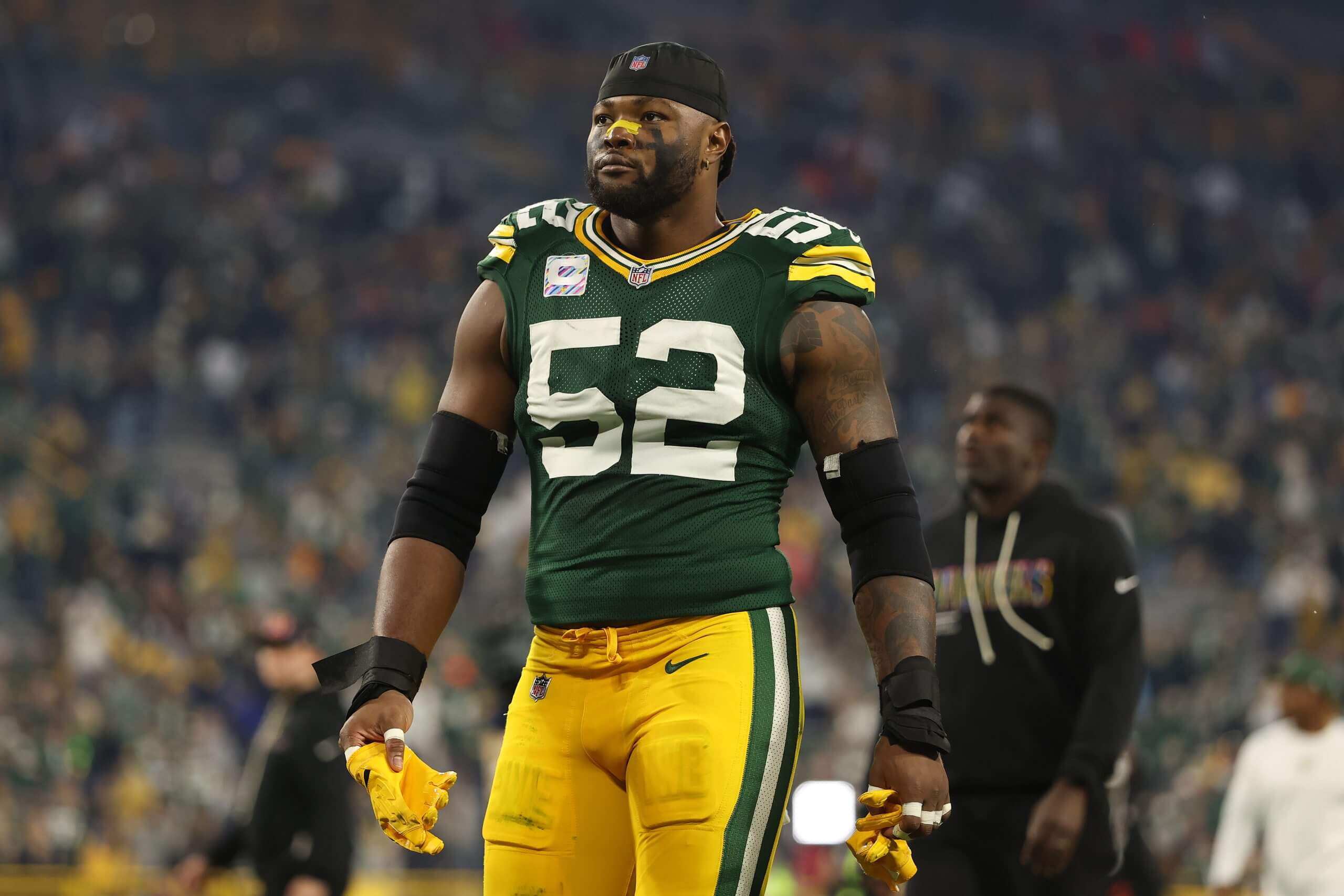
Three days after posting — and deleting — a farewell to the Packers, Rashan Gary was traded to the Cowboys. (Michael Reaves / Getty Images)
Do teams have any recourse against a team that backs out of an unsigned deal?
No, they do not. The Ravens technically did nothing wrong in reversing the Crosby trade. It puts the Raiders in a tough situation, though. They operated in the negotiating window as if Crosby’s contract would be off the books and losing the two first-round picks will be hard to recreate.
Instead, the Ravens took the opportunity to look at the medicals and make their final decision. In the end, they don’t end up with Crosby but they get their first-round picks back and agreed to terms with top free agent Trey Hendrickson to fill their pass-rusher need.
Are new free agents being added to the pool?
The Miami Dolphins announced their intention to release quarterback Tua Tagovailoa, but Tagovailoa won’t officially be released until Wednesday. That means Tagovailoa’s deal to join the Atlanta Falcons can’t be finalized until after he’s released.
The same thing applies to Arizona Cardinals quarterback Kyler Murray. Although the team has made it known it will move on from Murray, a trade remains an option before he’s officially released.
Hendrickson’s deal with the Ravens now means the top 11 free agents on The Athletic’s Top 150 are off the board, with Green Bay Packers offensive tackle Rasheed Walker now the top name available.