
S Rajesh
CloseS Rajesh is ESPNcricinfo’s stats editor in Bangalore. He did an MBA in marketing, and then worked for a year in advertising, before deciding to chuck it in favour of a job which would combine the pleasures of watching cricket and writing about it. The intense office cricket matches were an added bonus.
Multiple Authors
Mar 12, 2026, 05:05 AM
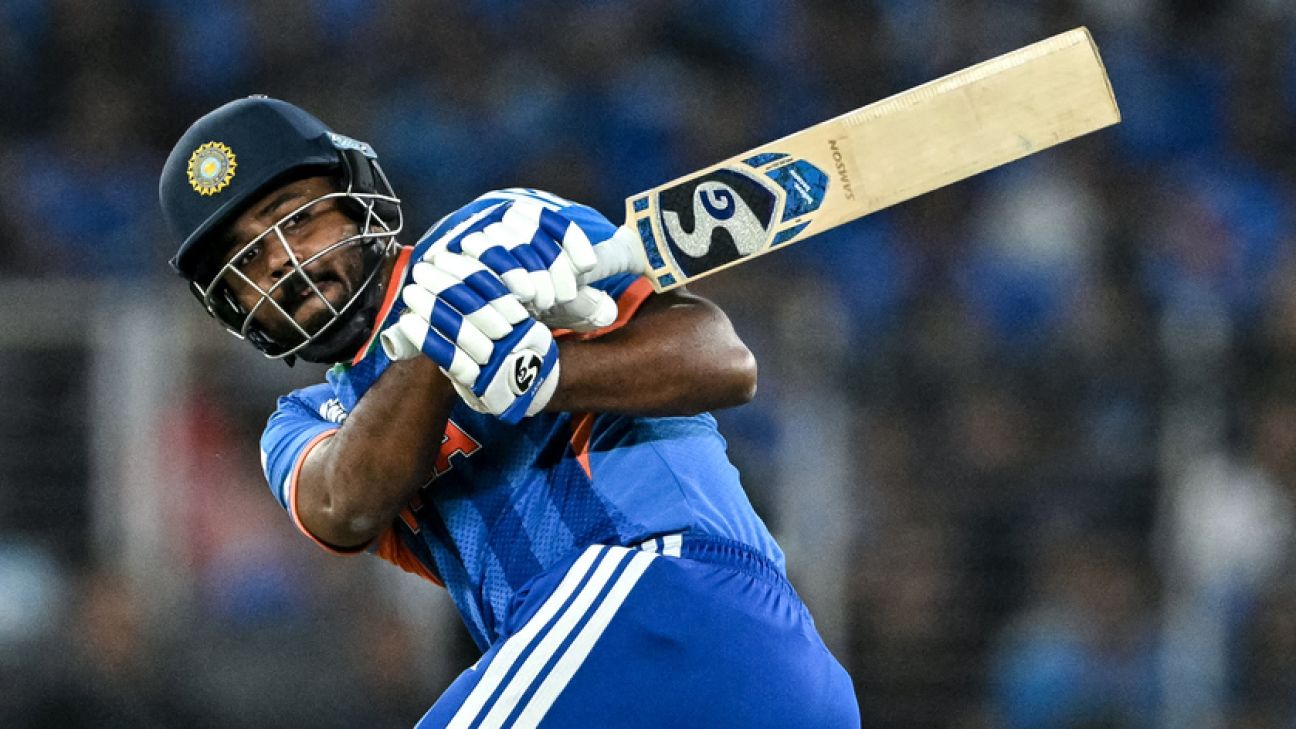
Sanju Samson‘s T20 World Cup was the kind that batters dream about. Out of the team for three of India’s first four games, he returned towards the sharp end of the tournament, and in three high-pressure knockout games delivered three 80-plus scores at 190-plus strike rates. Despite playing only five innings, he was the third-highest run-getter of the World Cup and the unarguable player of the tournament.
Editor’s Picks
2 Related
Back-to-back-to-back matchwinning innings in any format in knockout games is a tall order, but it’s even more so in a format as fickle and unpredictable as T20s, where the call for relentless aggression invariably leads to lack of consistency. Admittedly, Samson had some luck along the way – he could have been dismissed for 15 against England had Harry Brook accepted a straightforward catch – but aside from that chance, Samson’s matchwinning consistency was the result of optimally combining intent with control. Let the numbers speak for themselves.
The intent
T20 batting is all about looking to maximise the output from each delivery, and Samson showed that intent in every innings he played in the tournament, from his 22 off eight balls against Namibia to his 46-ball 89 in the final.
According to ESPNcricinfo’s ball-by-ball logs, Samson looked to score a boundary (a four or a six) from almost 45% of the total deliveries he faced. Among the 25 batters who faced at least 125 deliveries in the tournament, only three batters – Ishan Kishan, Finn Allen and Tim Seifert – had higher boundary-intent percentages.
Not only did Samson attempt plenty of boundary hits, he also pulled them off more often than not: his strike rate when he attempted the big hits was almost 357, as he hit 26 fours and 24 sixes off those 72 deliveries. With the same 125-ball cut-off (of total deliveries faced in the tournament), no batter had a better strike rate off aggressive shots. Kishan had a strike rate of 302 from the boundary-intent deliveries, ninth among those 25 batters.
A high intent percentage, and a high strike rate off those deliveries, indicates that a batter was successful in maximising his output from each ball. That shows in Samson’s tournament strike rate of 199.37. In fact, among all instances of batters facing at least 75 deliveries in any T20 World Cup (this has happened 397 times), there’s only one instance of a batter achieving a higher strike rate: Allen’s strike rate of 200 in the 2026 edition. The scatter graph, plotted along those two parameters for the batters who faced at least 125 balls, illustrates how Samson bossed the tournament.
The control
The intent and strike rate ensured the runs came quickly, but the volume of runs and the consistency came from the shot selection and the control Samson exhibited even when he was on the lookout for boundaries. His control percent when attempting boundary hits was 79.17%, which translates into one false hit every fifth aggressive shot.
Among batters who faced at least 125 balls in the tournament, only Ryan Rickelton, at 80%, had a higher control percent. However, Rickelton’s intent percent of 37.3 was a few rungs below Samson. Kishan’s intent of 52.44% was the highest among all batters, but his control percentage when trying the boundary hits was lower at 67.44%.
The intent and the control
The combination of high boundary intent, high control percent, and a high strike rate when attempting those aggressive hits is a heady cocktail, pointing to a batter at the top of his game. The scatter plot of boundary intent and control percent illustrates how various batters fared on those parameters in the World Cup (among batters who faced at least 125 balls and had an aggressive intent percent of over 30). Seifert and Allen, the most prolific and destructive opening pair of the tournament, attempted boundaries off more than 46% of the deliveries they faced, but their control percent was under 70. In Allen’s case, it dropped to marginally below 60, the lowest among the 24 batters in this list.
That’s usually the tradeoff that coaches and players are comfortable with in this format – they accept that the quest for more boundaries will lead to more false shots. However, Samson’s judgement of line, length and pace was so precise that he was able to maintain a high level of aggression without giving the bowlers too many opportunities, thus increasing his chances of achieving consistency.
The outcome was three dazzling performances in succession, making him the first batter to score over 80 in the semi-finals and final of a T20 World Cup. The Player of the Tournament award was inevitable, as was the MVP award according to ESPNcricinfo’s Smart Stats, which rates each batting and bowling performance in a match based on context and performance under pressure. According to this metric, Samson’s per-match impact number was the highest not only among batters, but also overall among all players who played at least five matches; in fact, his impact per match is well clear of the next best. With stats like these, it’s not hard to see why.