
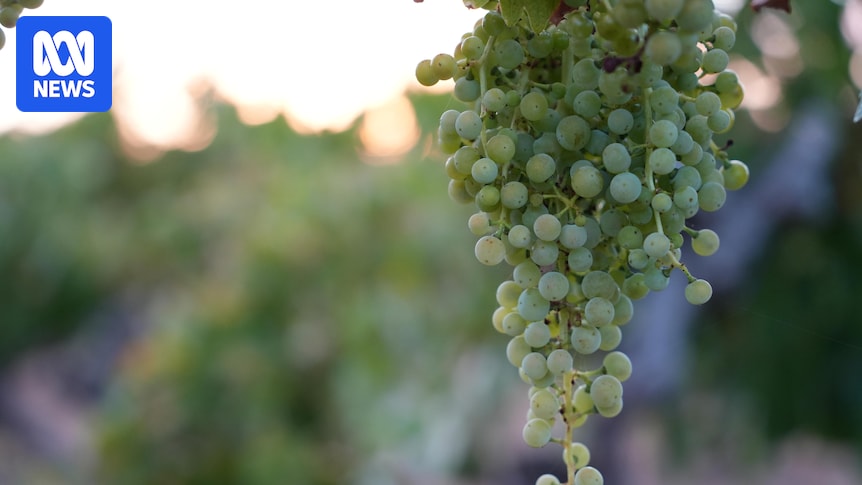
There’s profit to be found in the earth of Victoria’s Great Western region.
For more than a century a small community of vineyards has extracted that value from the shallow soils, drawing up nutrients to grow healthy grapes and produce award-winning wines.
But, there are also those who have dug much deeper, in a bid to strike gold.
It is in town of Great Western — on the edge of the Grampians in Victoria’s central west — that the state’s historic wine and gold industries are now colliding.
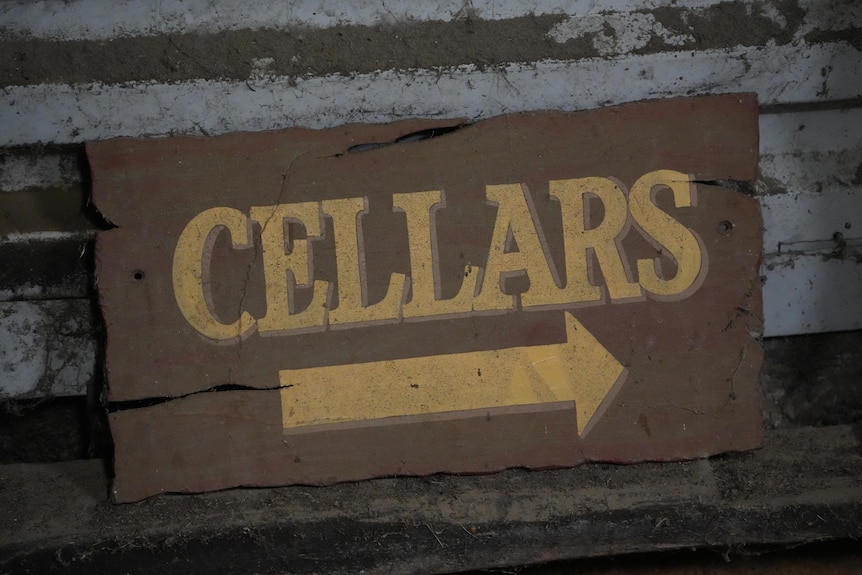
Victoria’s Great Western region is host to more than a dozen wineries and cellar doors. (ABC News: Harrison Tippet)
The ABC can reveal gold exploration company Aureka last year purchased three vineyards in the region, in the hopes of tapping into veins of the highly profitable mineral underneath these properties.
The purchases coincided with an explosion in the price of gold, and followed a major downturn for Victoria’s wine industry that — although it’s now showing signs of recovery — has prompted many growers to reconsider their futures.
A cellars market
Ben Thomson is the fifth-generation winemaker at 160-year-old Best’s Wines, one of Great Western’s two major wineries.
The three vineyards snapped up by Aureka — including Miner’s Ridge, Westgate and a smaller grower — had all sold fruit to Best’s before deciding to sell off their properties.
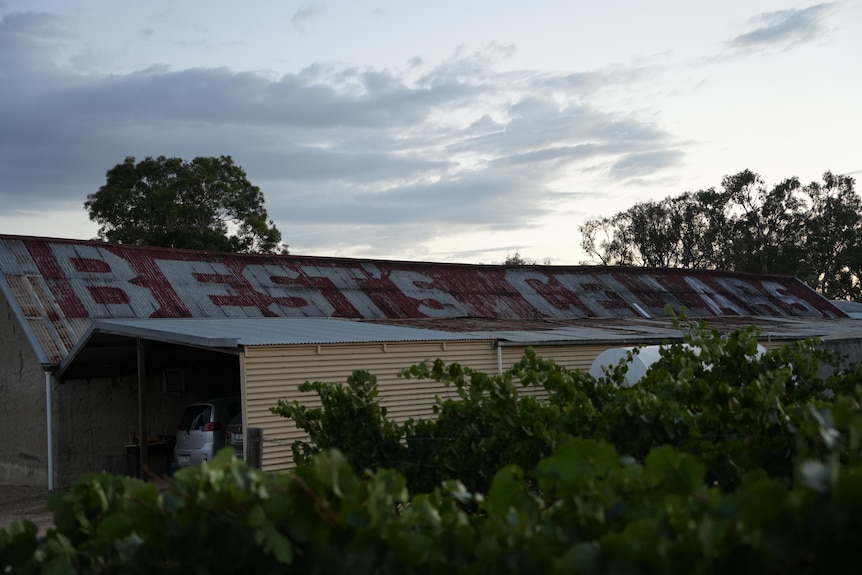
Best’s Wines has operated in the area since 1866. (ABC News: Harrison Tippet)
Mr Thomson is blunt when discussing the struggle faced by Victoria’s wine industry in recent years — prompted by China’s crippling 2020-24 wine tariffs, an oversupply of wine and the changing drinking habits of consumers.
“The wine industry at the moment is in a lot of pain, a lot of hurt,” he said.
“I don’t know anyone in the wine industry that’s driving around in too many Ferraris and sitting back laughing.
“It is tough at the moment. Really tough.”
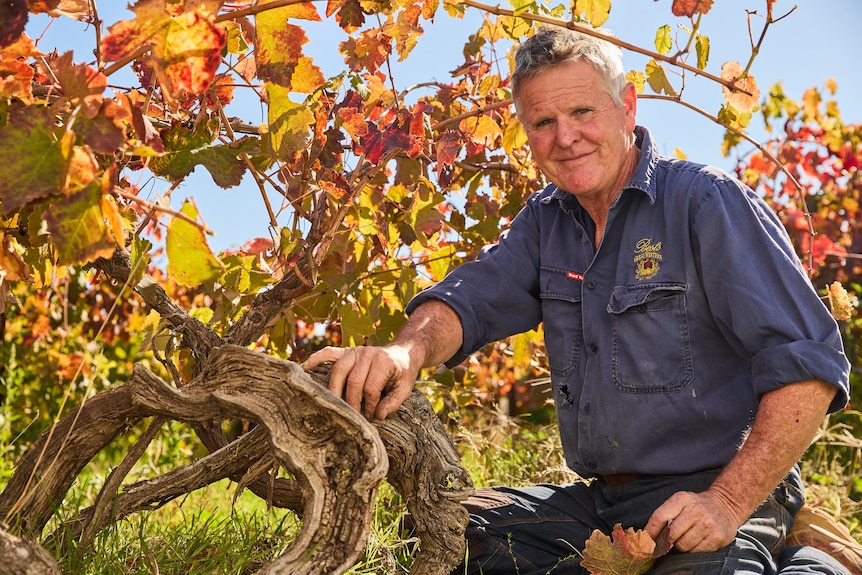
Ben Thomson says the local wine industry has struggling amid challenging conditions. (Supplied)
While Mr Thomson doesn’t blame local growers for selling up, he said it was tough to lose colleagues from the small Great Western wine region, which “punches above its weight”.
“I feel it’s quite sad, because our little wine region’s getting littler,” he said.
“It’s harder for us as a small wine region to take our little region to the world if we’ve only got three or four of us shouting ‘Great Western’.
“In this current climate, I don’t blame people for selling off.”
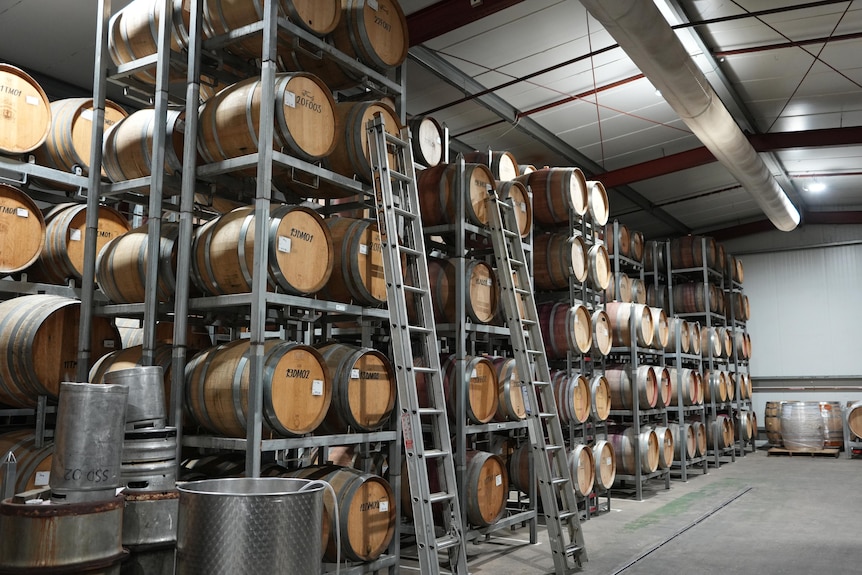
The small wine industry in the Grampians has shrunk even further in recent years due to the economic climate. (ABC News: Harrison Tippet)
Vineyard owners who sold to Aureka declined to comment when approached by the ABC.
Victorian explorer chasing global gold rush
Aureka managing director James Gurry confirmed three of four recent land purchases in the region included vineyards.
“We are continuing to operate the farms as agricultural enterprises,” Mr Gurry said.
“The overall land use is not expected to vary much from current agricultural activities. We may switch land use to pasture depending on the wine market.”
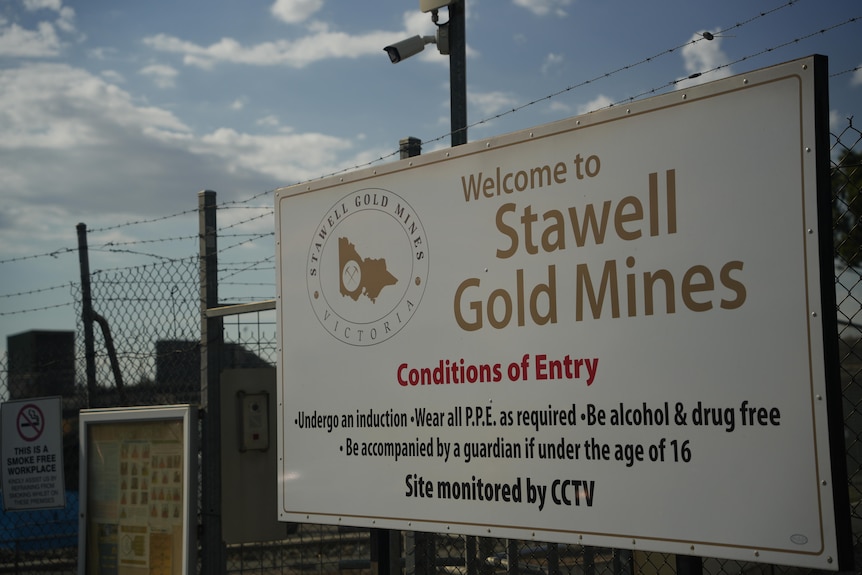
Victoria’s west has been a hub for gold mining and prospecting since the mid-1800s. (ABC News: Harrison Tippet)
Mr Gurry acknowledged both the wine and gold industries had operated in the region since the 1800s.
“The wine industry and exploration are not mutually exclusive,” Mr Gurry said.
“Both industries have times of strength and weakness.
“Currently the gold price is at historical highs and the wine industry is suffering. We would like to see both industries thrive.”
Aureka’s land purchases in Great Western coincide with record-high gold prices, pushing above $5,000 USD per troy ounce this year.
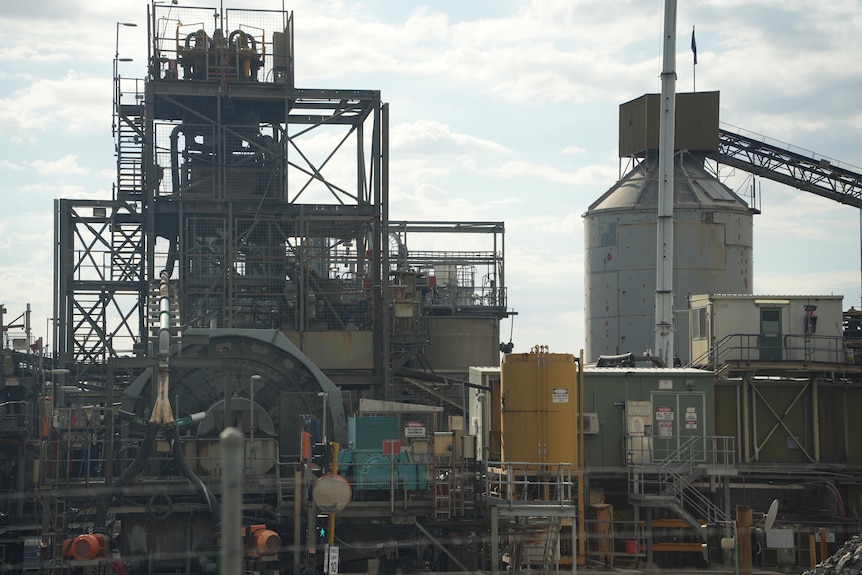
A global boom in gold prices has encouraged investment into gold exploration and mining. (ABC News: Harrison Tippet)
The price of the commodity has tripled over the past five years — including a 75 per cent jump in the past 12 months alone.
While explorers were “hopeful” enough gold would be found to launch a profitable mining operation at the Great Western sites, Mr Gurry said it was not a certainty.
“Only a small fraction of exploration projects result in actual mining — estimates suggest that only one between 300 to 1,000 exploration projects become mines,” Mr Gurry said.
“Further, holding an exploration license doesn’t guarantee a mining licence will be issued.”
Wine industry showing signs of a rebound
Victoria’s wine industry woes are largely a result of Chinese tariffs of up to 220 per cent imposed on Australian exports in 2020 — which were eventually abolished in 2024.
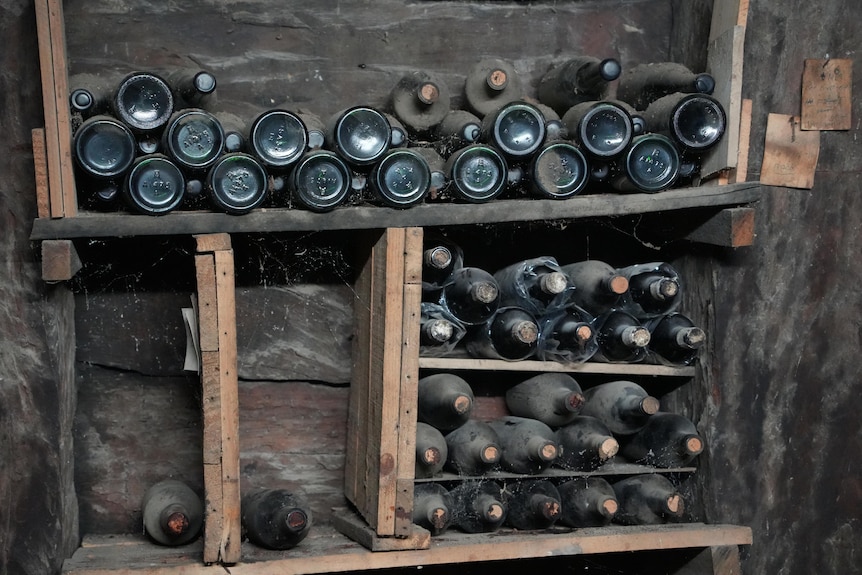
Import taxes enforced by the Chinese government in 2020 affected the demand for Australian wines. (ABC News: Harrison Tippet)
With China having been Victoria’s main wine export destination prior to the tariffs, the downturn saw the state’s total wine exports drop from $379 million in 2019/20 to $140 million in 2022/23.
The 2024 end of the tariffs has coincided with export numbers now rising. Export sales jumped to $465 million in 2025.
Industry peak body Wines Victoria this month released an economic scorecard for the industry, which shows the struggles of recent years may now be turning.
The scorecard shows the state’s wine industry delivered a $10.8 billion economic contribution in 2025, up 14 per cent from 2024.
It also shows the industry now supports 17,178 jobs across the state, an increase of 25 per cent over the past two years.
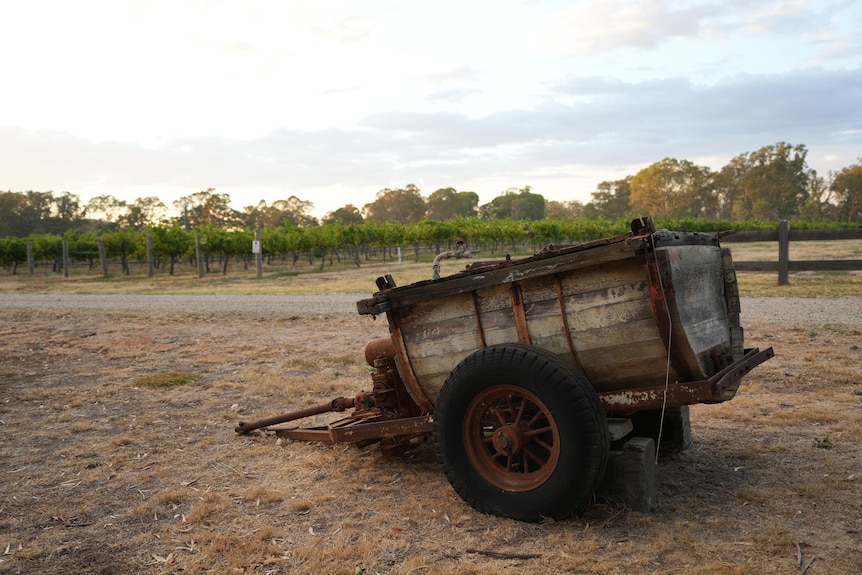
The wine industry has shown signs of resurgence with the cessation of Chinese tariffs. (ABC News: Harrison Tippet)
Wine Victoria chief executive Stephanie Duboudin said the results were welcomed following the “seismic change in the industry” sparked by the Chinese tariffs.
“I think there’s some really positive insights in this report that show a direction forward for the industry,” Ms Duboudin said.
“We’re a huge economic powerhouse for the Victorian economy … and [we employ people] across so many different angles whether it’s hospitality, tourism providers, service providers, viticulturalists, winemakers.
“There’s not many agricultural industries that have that reach. Well, there’s none really except for wine … it’s a resilient industry.”