
“Refined”, “elevated”, “boutique”. Nearly all of the off-the-plan apartments for sale this month in Brisbane are described by developers with a synonym for “luxury.”
Prices range between $700,000 for a 1-bedroom, 1-bathroom apartment on Brisbane’s northside to $11,050,000 for a four-bedroom, four-bathroom riverfront apartment.
Ray White chief economist Nerida Conisbee said while there was still demand for affordable new apartments, high construction costs were leading developers to focus on what are marketed as high-end builds.
“There are a lot of sites available or a lot of sites that are owned by developers where they would prefer to do much more affordable apartments, primarily because the area would suit that market and there’d be high demand for that market,” she said.
“It really just happened through the pandemic that because construction costs went up so quickly, we did start to see the ability to deliver much more affordable apartments become much more difficult.”
Building and labour costs
ABS data shows construction materials have increased in price by 35.5 per cent since the COVID pandemic.
“It is really hard for developers now to build affordable apartments, but it is, and conversely, it’s a lot easier for them to build much more expensive apartments,” Ms Conisbee said.
“So if you consider someone looking to buy an apartment for around $750,000, for example, often they’re very price sensitive.
“Many developers can’t now build those apartments for $750,000. They can only build them for $900,000.
“Flip that to a luxury builder. Now they are selling to people who are far less cost sensitive and are able to charge rates which coincide with what’s happened to construction costs.”
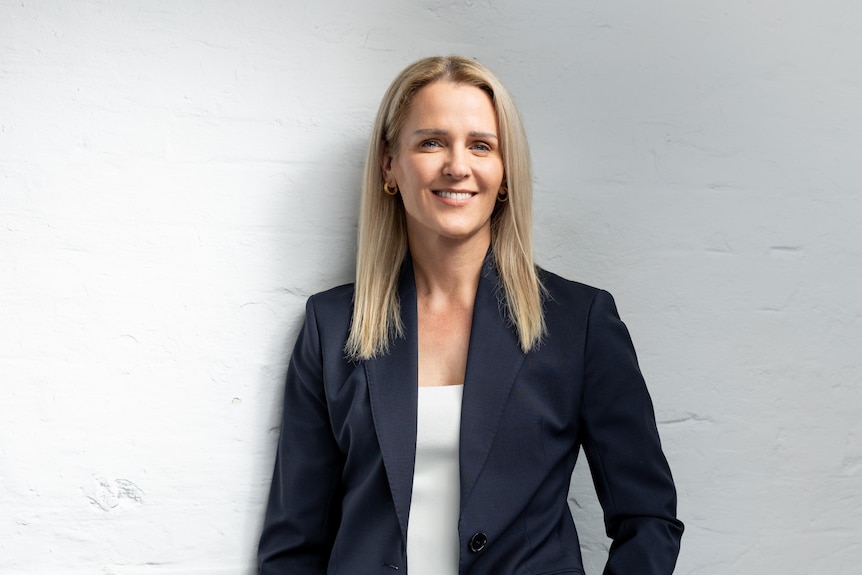
Nerida Conisbee says construction costs are making it harder to build affordable apartments. (Supplied: Ray White)
Ms Conisbee said the availability of construction workers was also affecting prices, and the 2032 Olympics added further challenges.
Analysis by advisory firm WT Partners from February shows that by the 2028/29 financial year, the construction labour force in Queensland will be short 46,000 based on current growth and construction projections.
“If you can’t get that labour to migrate to Queensland, you do have to pull it off other projects, and unfortunately, a lot of those other projects do tend to be housing,” Ms Conisbee said.
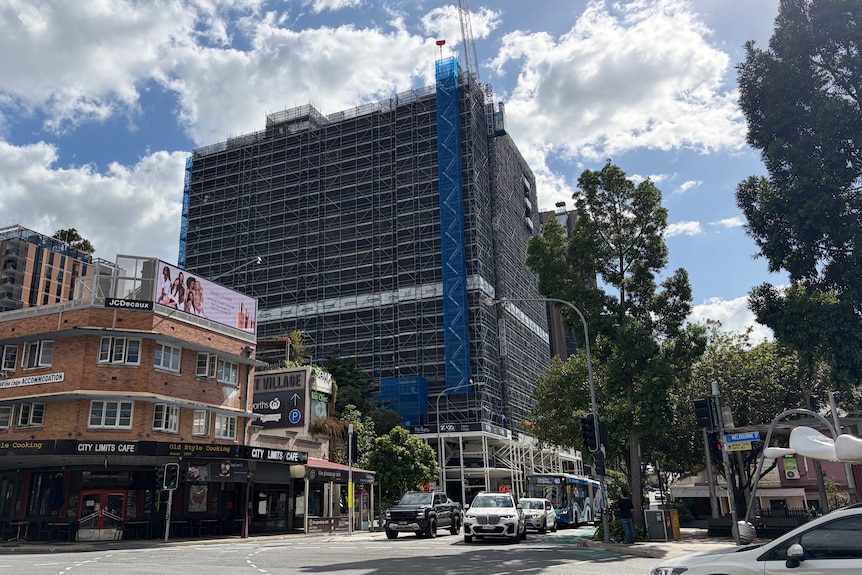
West End is a popular suburb for new apartment development. (ABC News: Liana Walker)
VERSO CEO Steve Laffey, behind the not-yet-on-market 3,000 dwelling Toowong Central project, said government work was often more appealing to labourers.
“If [there are] defects or any issues with the building as a builder, you’ve got to go in and rectify, you’ve got 100 different clients in that building,” he said.
“Some of those people … this is the biggest investment they’ve ever made in their lives; [they] may not be terribly au fait with what constitutes a defect, [they] may be emotively driven.
“It can be very challenging at times to work with so many different people in a particular building … whereas when you’ve got the government as the client, you finish the building, you’ve got one client; it’s very, very easy to work with them.”
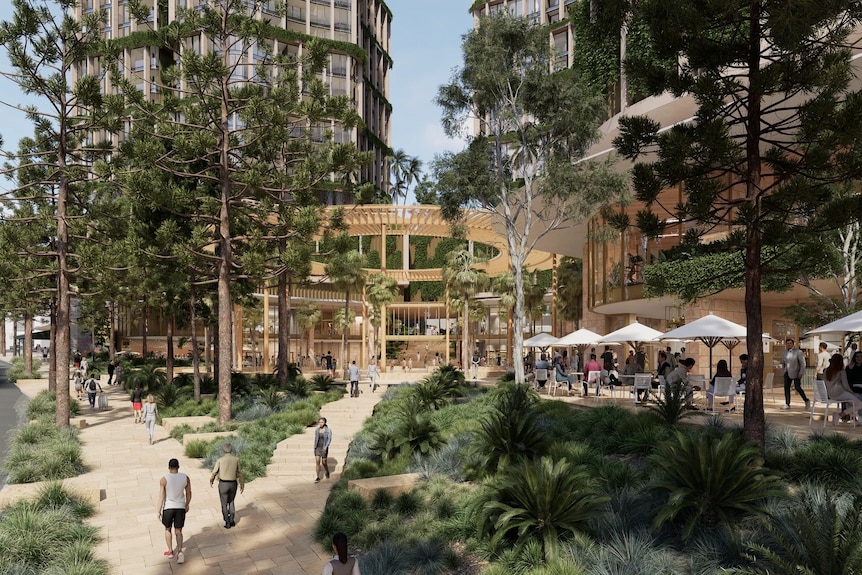
The mixed-use Toowong Central development is marketed as “a trio of architecturally distinctive towers.” (Supplied)
Economist Cameron Murray said construction worker wages largely influenced the price of construction.
“It’s just their skills are in demand relative to others. So their incomes have risen faster than others,” he said.
“But that won’t persist forever and will adjust back as more people train in construction.”
A Department of Housing and Public Works spokesperson said Queensland Productivity Commission had completed a review into productivity of the construction industry which “aimed at improving productivity and workforce outcomes to help deliver housing and infrastructure across the state.”
Downsizers and investors
Despite the often multi-million-dollar price tags, demand for these apartments remains high.
Ms Conisbee said the largest groups of buyers were downsizing older baby boomers and investors.
Jadecorp manager Alexi Dracakis, who is building a 52-unit boutique apartment in Lutwyche, said owner-occupiers were demanding more from new builds.
“Buyers today really want that certainty that the project will actually be built and delivered,” Mr Dracakis said.
“Apartments are becoming increasingly long-term homes rather than short-term investments, so buyers are paying really close attention to design finishes and the reputation of the builder.
“We’re seeing a real shift that apartments are no longer a stepping stone for housing.”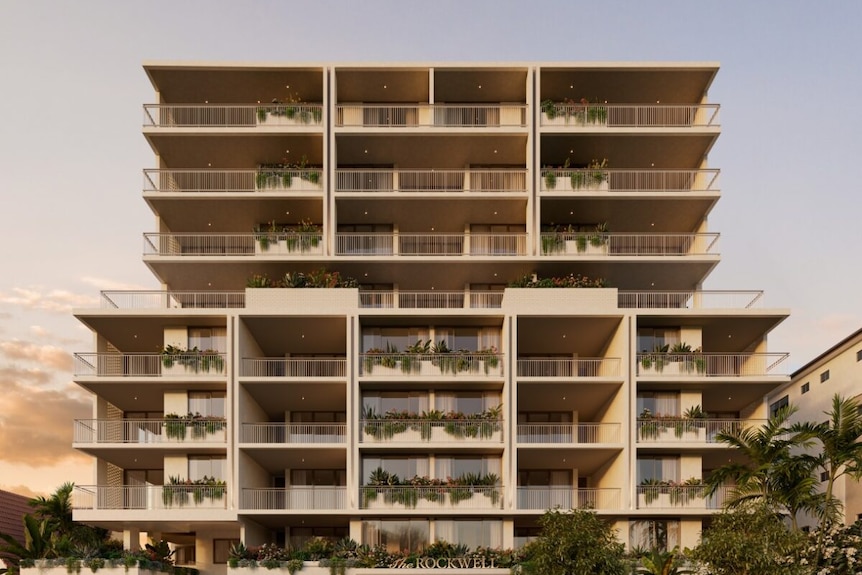
The Rockwell in Lutwyche is advertised as “refined apartment living”.
(Supplied: Jadecorp)
According to the latest Urbis Apartment Essentials National Snapshot report, in Q2 of 2025, 56 per cent of buyers of projects under construction and in pre-sales in inner Brisbane were owner-occupiers.
Many of the new builds boast extravagant facilities: pools, saunas, fully equipped gyms — all of which come with the ongoing cost of body corporate fees.
Ms Conisbee said buyers of these types of apartments, particularly retirees, often have no issue paying those ongoing fees, compared to buyers of more affordable apartments who might find body corporate fees too prohibitive.
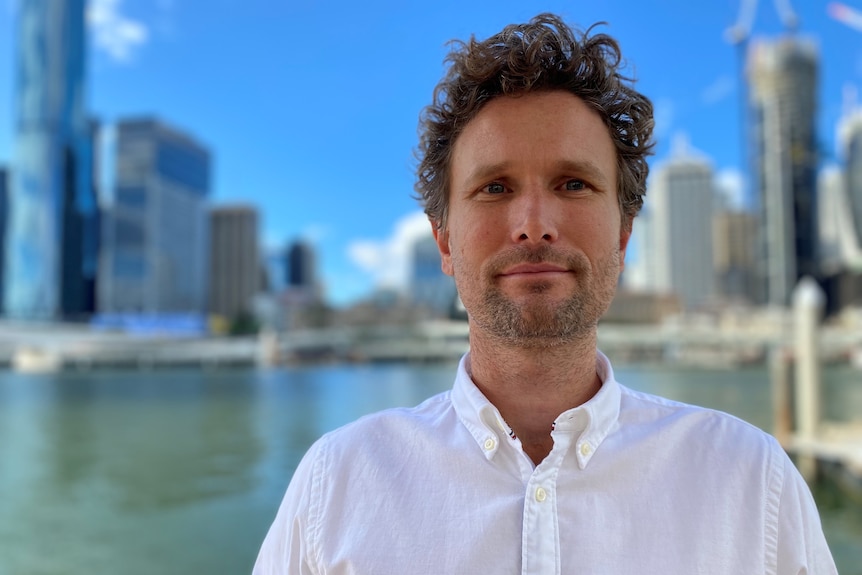
Cameron Murray says developers are responding to market demand. (ABC News: Lucas Hill)
Mr Murray added that Australia had a lot of wealthy residents.
“Rich people sometimes like to buy luxury apartments,” he said.
“[Developers] build in response, not just to prices, but changes in prices and the rate at which buyers show up to pay those prices.
“The idea that the market itself will somehow ignore that feedback and prices will fall … sort of defies economic logic.”
Mr Laffey said most developers were building in locations that had something unique to offer, like “a view that cannot be built out” and in generally affluent areas.
How to make housing affordable
Mr Murray said the government could influence affordability by building housing itself.
The state LNP has pledged to build one million new homes, including 53,000 social and affordable homes, by 2044.
Deputy Premier Jarrod Bleijie said initiatives like the Residential Activation Fund had already unlocked land for 98,000 homes.
“[The] Land Activation Program [is] increasing supply of a range of housing types into the market, which will help put downward pressure on property prices,” he said.
Mr Murray added Australia was at the point in the price cycle where it should start to correct, making housing cheaper.
Mr Dracakis said the government’s ambition to deliver more housing was the right one — but developers needed to be able to do so.
Council proposes high-density apartments near Brisbane shopping centres
“Without expanding the construction workforce, improving productivity, and streamlining planning approvals, it will be difficult for the housing supply to keep up,” he said.
Mr Laffey said while private developers had a role in housing affordability, they needed to remain profitable.
“I think it’s everybody’s responsibility to help generate more supply. I think everybody should have the right to have a roof over their head, absolutely,” he said.
“But at the same time, everything cannot be placed at the feet of the private sector.”