
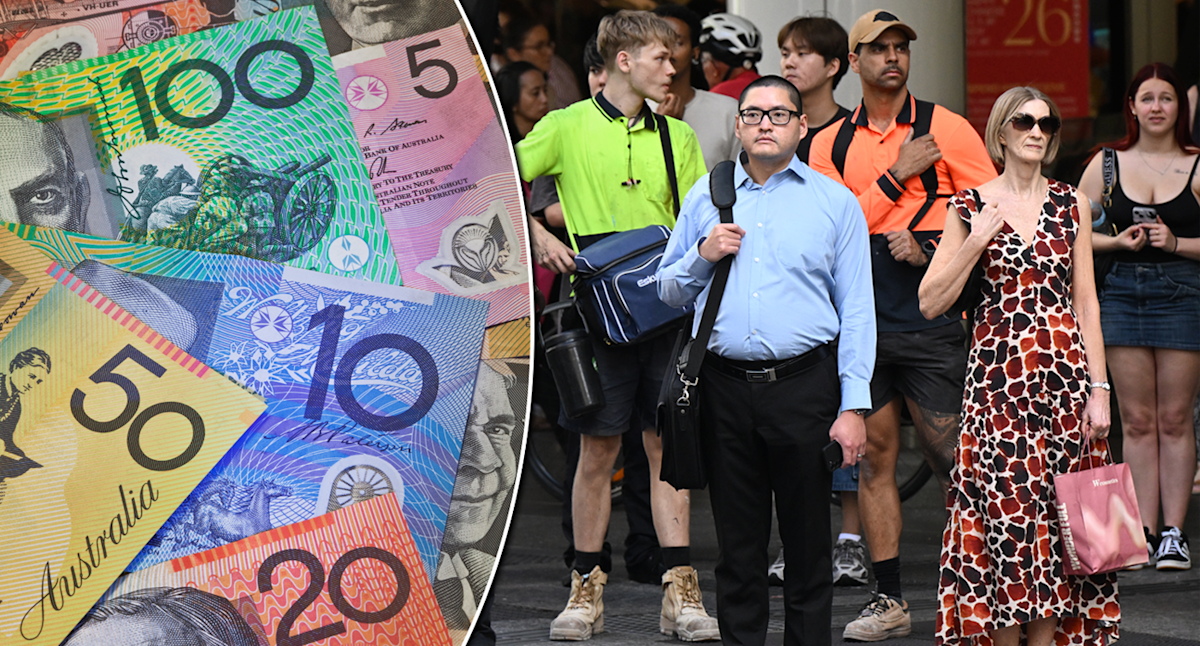
 The CBA’s Australian-focused economist said time will tell if this represents the start of a shift for the Australian consumer. (Source: AAP)
Australian households appear to be tightening their belt as interest rates climb and real wage growth turns negative. With no end in sight for global uncertainty and supply chain disruptions, a “notable” data point from the nation’s largest bank could be the start of a shift for millions of Aussie households.
After many months of robust spending, that growth has stalled. And sooner than Commonwealth Bank expected.
“A decline after 17 months of growth is notable and suggests households may be starting to pull back,” CBA economist Belinda Allen said.
RELATED
With the prevailing economic conditions, the bank was expecting a slowdown, but has been somewhat surprised at how quickly it could be coming.
“We have been expecting consumer spending growth to slow in 2026 with more modest growth in real household disposable income under the weight of higher inflation, higher interest rates and slower labour income growth,” Allen, the bank’s Head of Australian Economics, said in a note to the market on Thursday morning.
“Having said that, the fall in February was an earlier reaction than anticipated.”
The CBA economist said time will tell if this represents the start of a shift for the Australian consumer, noting the monthly falls coincided with the first interest rate increase from the Reserve Bank of Australia.
“We judge it is too early to tell if this was coincidence or the start of a slowing trend in household consumption growth,” she said.
The bank’s long-running Household Spending Insights (HSI) Index declined 0.5 per cent in February as spending fell across half of the 12 categories measured on a month-to-month basis.
The category with the biggest monthly negative change in spending was utilities, followed by education, recreation, transport, insurance and hospitality. However only education and transport were down year-on-year with recreation spend still a whopping 9.2 per cent higher on a year-on-year basis, the biggest annual increase.
“Given the movements in the categories it remains too early to tell if the shift lower is the new normal,” Allen said.
The first sign of a broader pullback comes off the back of “remarkably resilient” spending over the past year or so.
The bank is seeing softer momentum in discretionary categories and “that’s typically where households adjust first when budgets come under pressure,” Allen said.
 Off to a different start in 2026. (Source: CBA)
The good news is that the restrained spending will help rein in inflation but the bank warned it could be the canary in the coal mine for household budgets with most economists tipping two or three more interest rate hikes this year and an ongoing conflict in the Middle East disrupting vital supply chains.
“More modest consumption growth will be needed to help bring the economy back into balance and inflation back to target,” Allen said.
“Rising energy prices will add to inflation and constrain household incomes this year and do add a downside risk to the outlook.”
Reacting to the data from CBA, economist and former advisor to the Gillard Labor government, Stephen Koukoulas, said the spending fall showed “a dreadful start to 2026” for the Australian economy.
“In concert with consumer sentiment being in the toilet, this is not good news.”
The slowdown in spending shouldn’t come as a major surprise with Westpac’s card tracking data recently revealing a slump, while the national accounts data released last week showed the household savings rate increasing to highest level since the September quarter of 2022.
The savings ratio rose to 6.9 per cent, up from 6.1 per cent in the September quarter.
CBA on Wednesday joined NAB and Westpac in changing its mind and predicting another rise in the offical cash rate when the reserve bank meets early next week.
Get the latest Yahoo Finance news – follow us on Facebook, LinkedIn and Instagram.