
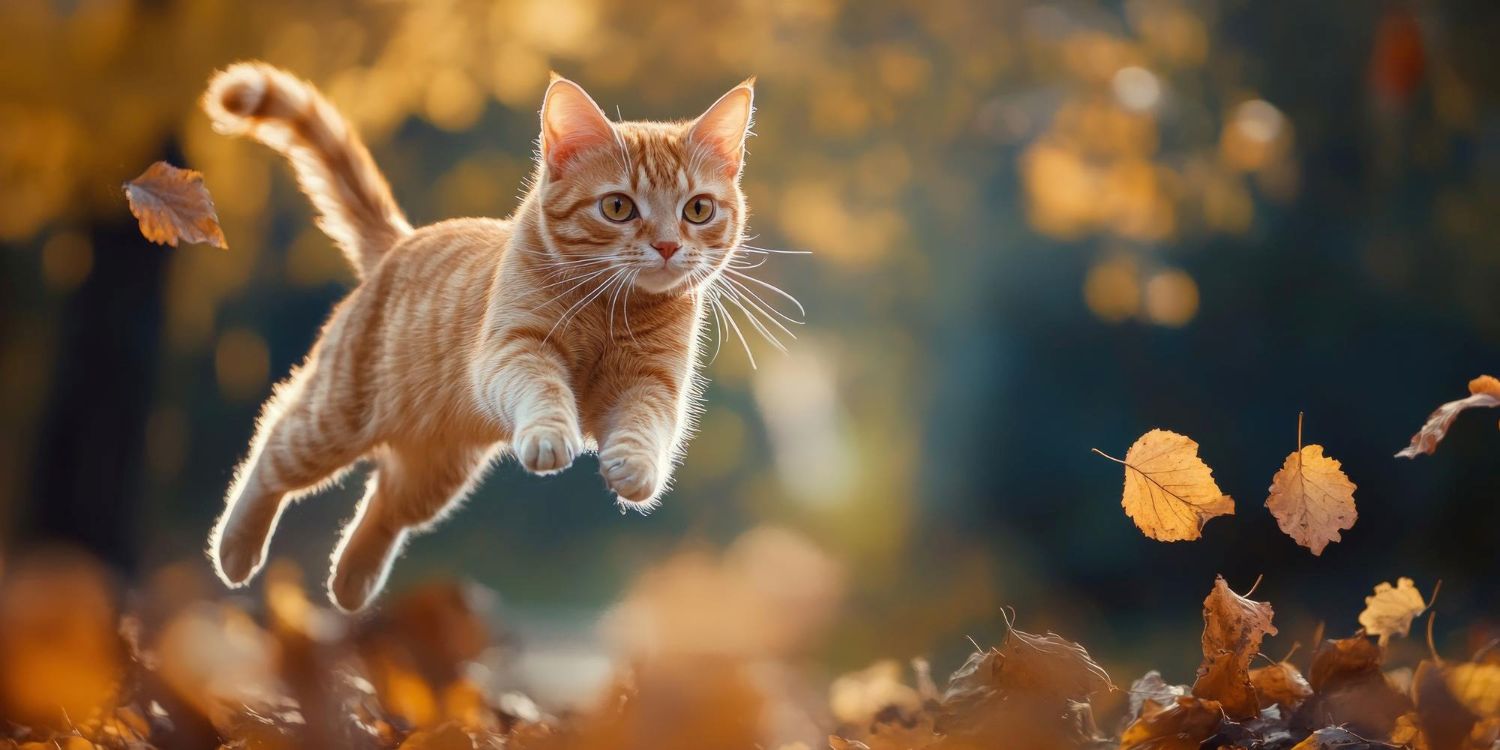
If you’ve ever seen a cat fall off the side of a sofa or jump off a shelf, then you may have marveled at its remarkable ability to land on all fours. This well-known ‘air-righting reflex’ has fascinated both pet owners and scientists for centuries. But how can cats twist their bodies in midair and not violate the laws of physics?
A recent study by researchers at Yamaguchi University in Japan sheds some light on the mechanics of the feline spine.
This study examined how flexible the feline spine is during twisting and whether this flexibility influences how cats land on their feet. They examined five cat spines in the laboratory to measure ‘strength, range of motion, and stiffness’ in the thoracic (chest) and lumbar (lower back) regions. They also filmed two live cats performing their famous air‑righting maneuver.
The results showed clear differences between the two spine regions. The thoracic spine was more flexible, while the lumbar spine was more rigid.
Scientists crack the mystery of the “orange fur” in cats
The thoracic spine, the section running through the chest, proved remarkably flexible. It could twist through a wide range of motion, bend easily, and even had a “neutral zone” of about 47° where it could rotate freely without resistance. By contrast, the lumbar spine, the lower back, was much stiffer and stronger, showing ‘no neutral zone’ at all.
While filming the cats performing the air-righting maneuver, researchers observed a clear sequence of body rotations. First, the front half of the body rotates, followed by the rear half. This movement is logical given the spine’s characteristics. These observations show that when cats tumble through the air, their bodies do not rotate all at once.
This coordination goes hand in hand with their anatomy, too: The flexible thoracic spine drives the twist, while the more rigid lumbar spine provides control and stability, so they land safely.
This study shows that the air-righting reflex is not just a fun party trick: it’s a finely tuned cooperation between two different parts of the spine. Beneath their graceful leaps and tumbles, cats possess an impressive piece of biomechanical engineering.
Journal Reference:
Yasuo Higurashi, Yasufumi Kaino, Makoto Habara, Shiki Okamoto, Kyoko Yoshizaki, Masashi Sakurai, Masahiro Morimoto. Torsional flexibility of the thoracic spine is superior to that of the lumbar spine in cats: Implications for the falling cat problem. The Anatomical Record (2026). DOI: 10.1002/ar.70165