
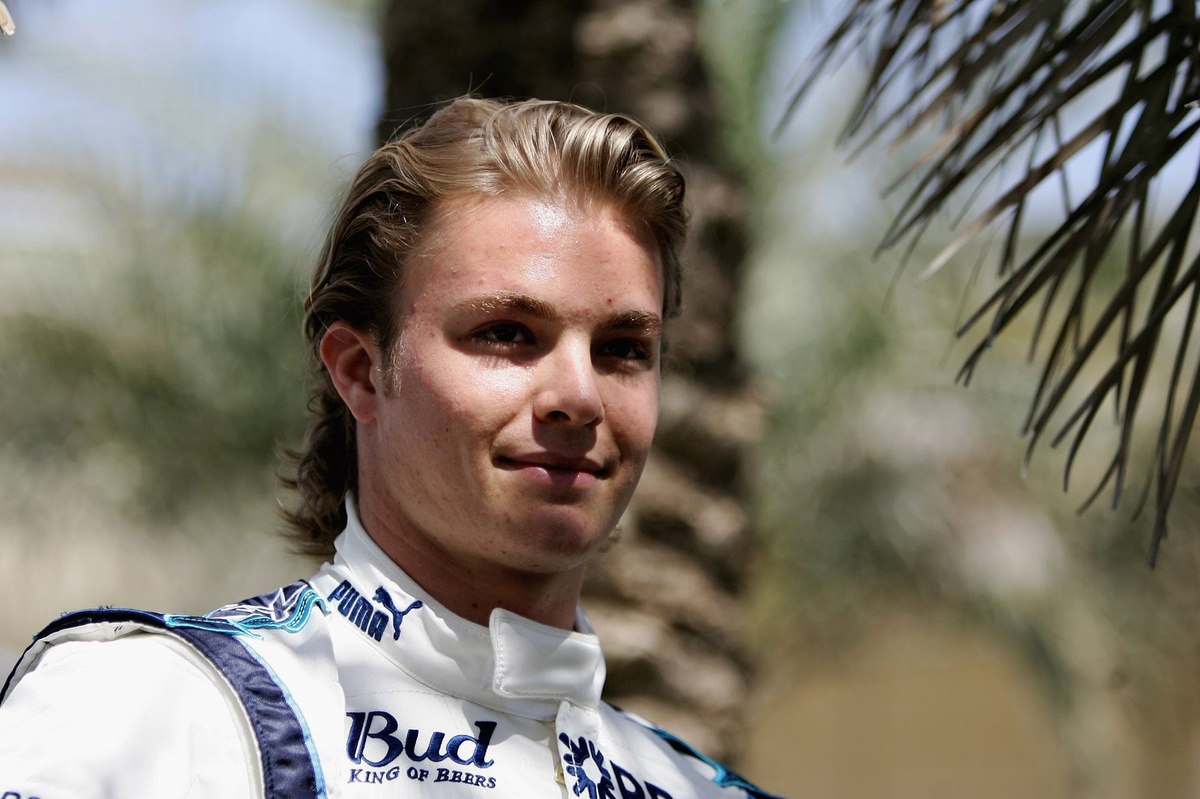
On 12 March 2006, Nico Rosberg made his Formula 1 debut, taking seventh place in the Bahrain Grand Prix with Williams.
The son of 1982 Formula 1 champion Keke Rosberg was among the hottest prospects in junior formulae; he was signed by Williams as a test driver after taking fourth place in the 2004 F3 Euro Series as a sophomore, two points ahead of rookie Lewis Hamilton.
Read Also:
Rosberg went on to join the newly formed GP2 Series (now Formula 2) for 2005 and beat Heikki Kovalainen to the title in a two-horse race, earning graduation to the world championship at Williams alongside Mark Webber. The move was facilitated by BMW making Sauber its works team and taking Nick Heidfeld with it; Williams settled for a Cosworth supply.
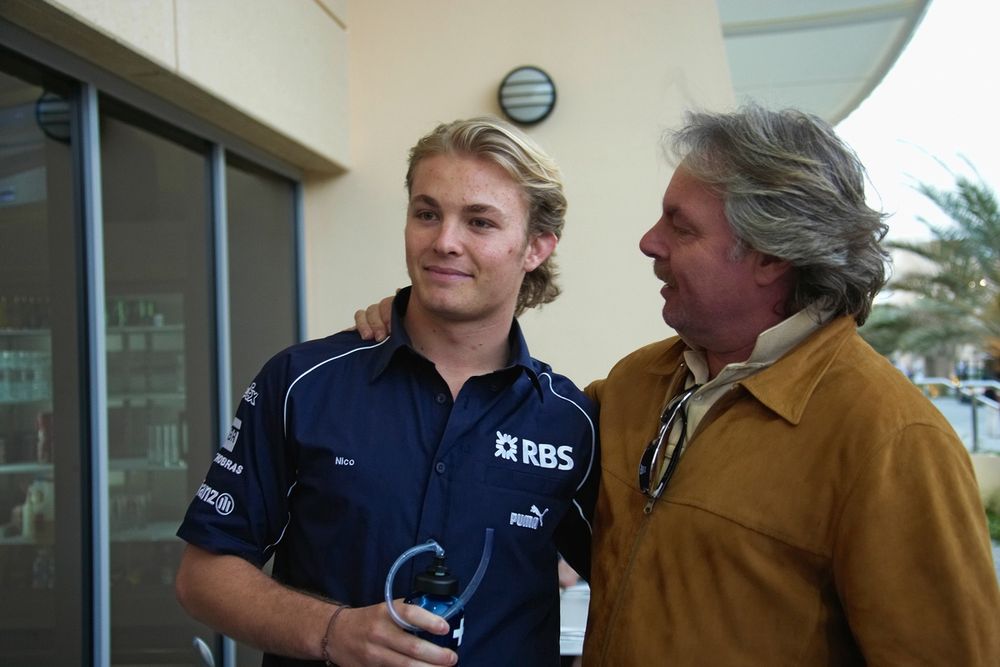
Nico Rosberg, Williams
Photo by: Rainer Schlegelmilch / Getty Images
Rosberg therefore made his F1 debut at the 2006 Bahrain Grand Prix, at the same circuit where he earned GP2 glory in emphatic fashion, winning the two races of the weekend, under six months earlier.
The German – having switched from a Finnish racing licence in 2004 – was just 20 years old at the time of his first grand prix, but was highly rated by Williams.
“His natural talent in the cockpit is equally matched by his intelligence out of it, demonstrated by his depth of technical understanding and communication of data over the months spent as a test driver this season,” the team wrote in a statement when confirming Rosberg as its new race driver.
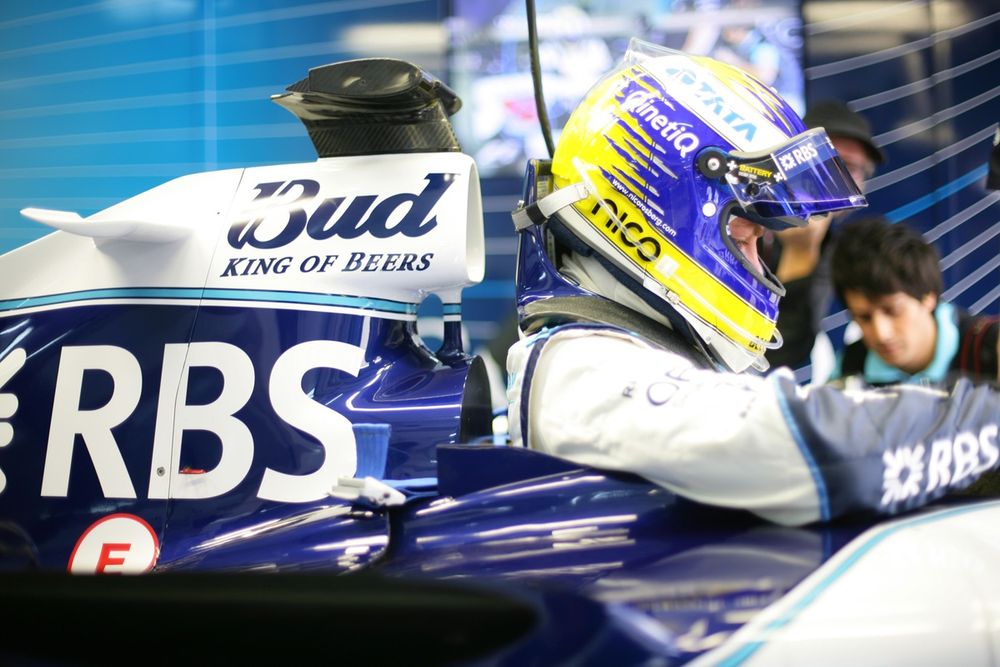
Nico Rosberg, Williams
Photo by: Glenn Dunbar / LAT Images via Getty Images
“Despite his youth, his wealth of experience reflects the early start made by contemporary drivers and it is significant to note that Nico has recorded more race starts by the age of 20 than his father… recorded in an entire career.”
The 2006 Bahrain GP also marked the implementation of the current Q1/Q2/Q3 qualifying system. Rosberg made it to the second segment of the session at Sakhir, three tenths slower than Webber; he took 12th place on the grid, with the Australian up to seventh.
But Rosberg’s start was haphazard as he poked his nose down the inside of Heidfeld, in a gap that was always going to close. The FW28’s front wing was broken; the rookie found himself at the back of the field, 57 seconds away from the lead and 47 seconds down on the last points-paying position.
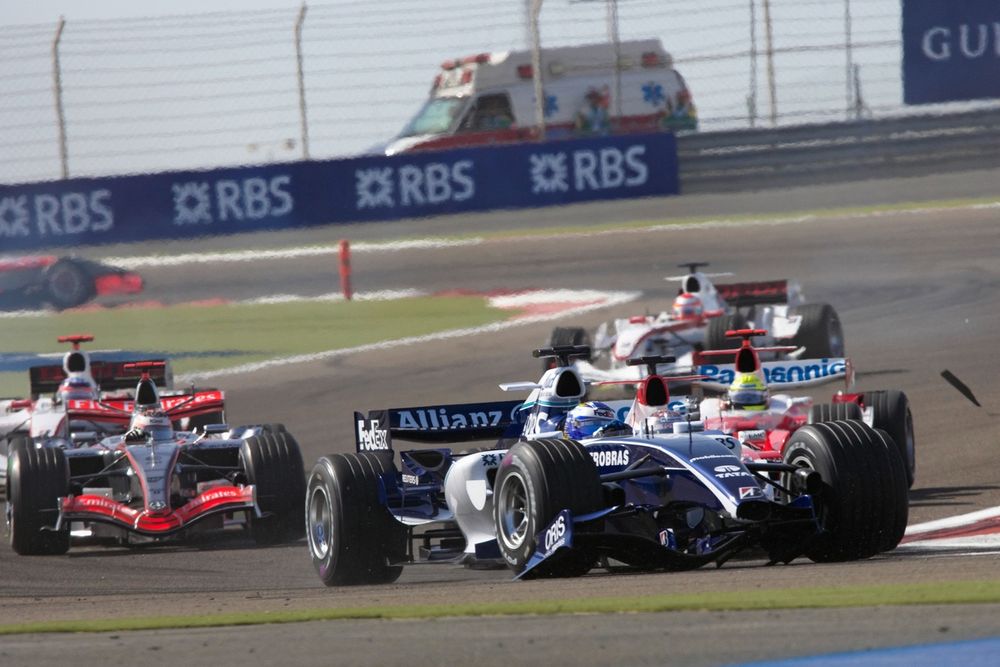
Nico Rosberg, Williams
Photo by: Rainer Schlegelmilch / Getty Images
Yet, Rosberg’s pace was remarkable. By lap 18, he had lost just 12 more seconds to eventual race winner Fernando Alonso; over the remainder of the race, he actually gained time on the Renault driver and his Ferrari rival Michael Schumacher.
So Rosberg caught up; he successively overtook Takuma Sato, Scott Speed, Heidfeld, David Coulthard and Christian Klien to finish seventh, 21 seconds behind sixth-placed team-mate Webber – down from 46 seconds on lap two – and score two points on debut.
“I looked at the pitboard the first time around and I was dead last and 60 seconds behind everyone, so I thought that was it and I didn’t expect anything from the race,” the Williams driver commented after the race.
“Then all of a sudden I started moving up and then on the radio they were saying: ‘Nico you’re doing great, you’re the fastest man on the circuit’. And I was like, ‘no way’.
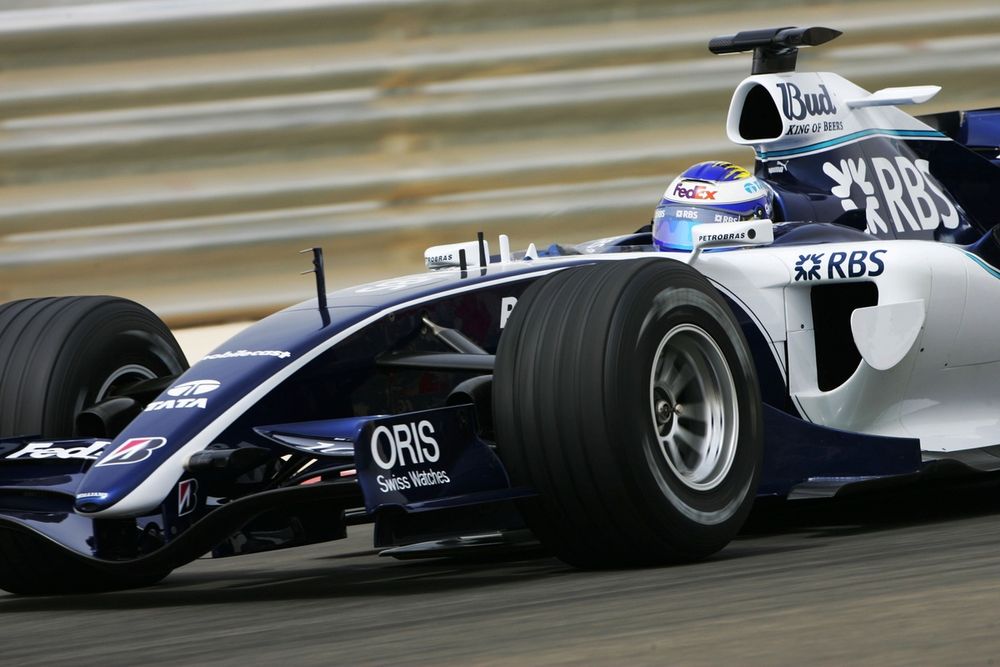
Nico Rosberg, Williams
Photo by: Mark Capilitan / Sutton Images via Getty Images
“It felt really good out there and I was just pushing like hell. I got closer and closer and then had some great overtaking manoeuvres… which was a lot of fun.
“I could feel that I was bloody quick, but it was a bit of a surprise. I mean you have [Michael] Schumacher and [Fernando] Alonso driving flat out at the front and I was racing quicker than them, so it was a bit surprising to me, but it was really great.”
At 20 years, 8 months and 13 days old, Rosberg was the third-youngest points scorer in history behind Jenson Button and Ricardo Rodriguez – 20 years later, he’s the 17th-youngest.
Rosberg actually didn’t score just points; he also set the fastest lap by a tenth over Schumacher and Alonso. This made him the youngest driver ever to do so, beating the Spaniard’s record by more than a year.
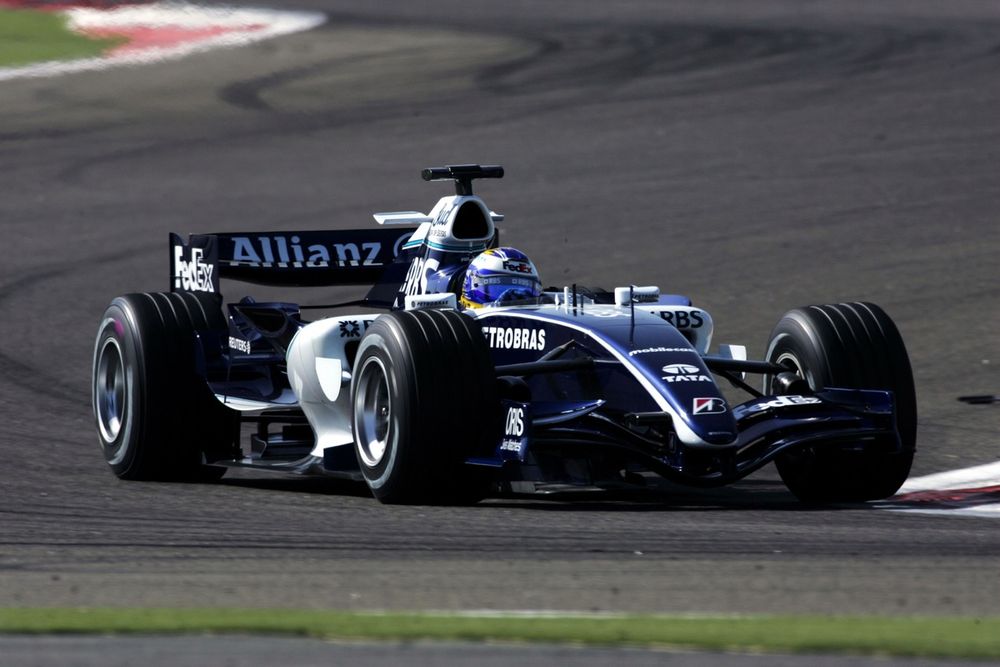
Nico Rosberg, Williams
Photo by: Sutton Images via Getty Images
It took 10 years for anyone to surpass Rosberg’s record; Max Verstappen set the fastest lap at 19 years, 1 month and 14 days old in the 2016 Brazilian Grand Prix, in a masterful wet-weather display, before Kimi Antonelli took the same honour in Japan last year at 18 years, 7 months and 12 days old.
“I think it’s the best performance of any young driver that I’ve seen for a very long time,” three-time world champion Jackie Stewart commented.
“I can’t remember a performance in a first grand prix that was so impressive. I had a sixth place in my first grand prix but he came from the back and I certainly didn’t get fastest lap. His judgement, the manner in which he went about it… it’s a rare commodity today but as a racing driver he knows how to pass and carries it out.”
Read Also:
The remainder of the 2006 season was tricky for Rosberg amid reliability gremlins and driver errors, and he scored just two more points. But his performance ramped up over his first four seasons in F1, leading to a breakthrough move to Mercedes which would culminate in his hard-earned 2016 title success – and his racing retirement five days later.
“Nico can even win the world title. It’ll take time, but he can do it,” two-time world champion Mika Hakkinen said back in March 2006. The Finn could hardly have phrased it better.
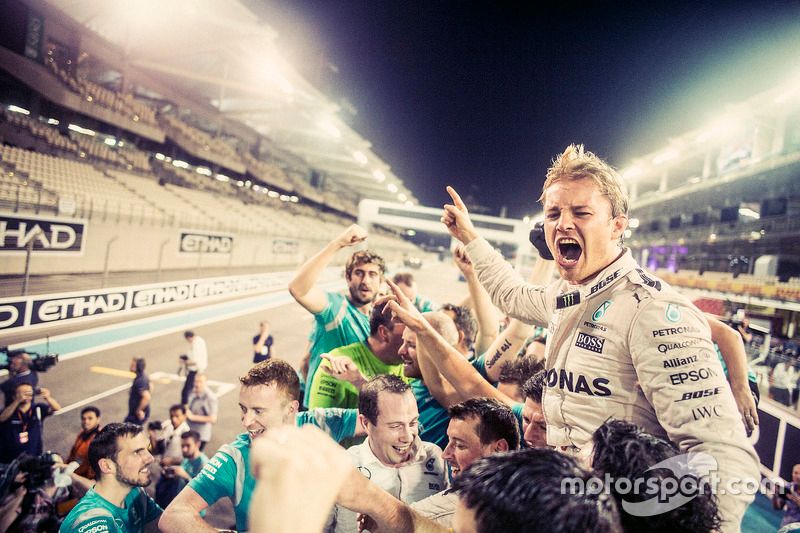
Nico Rosberg, Mercedes AMG F1, 2016 World Championship victory behind the scenes
Photo by: Paul Ripke
We want your opinion!
What would you like to see on Motorsport.com?
– The Motorsport.com Team