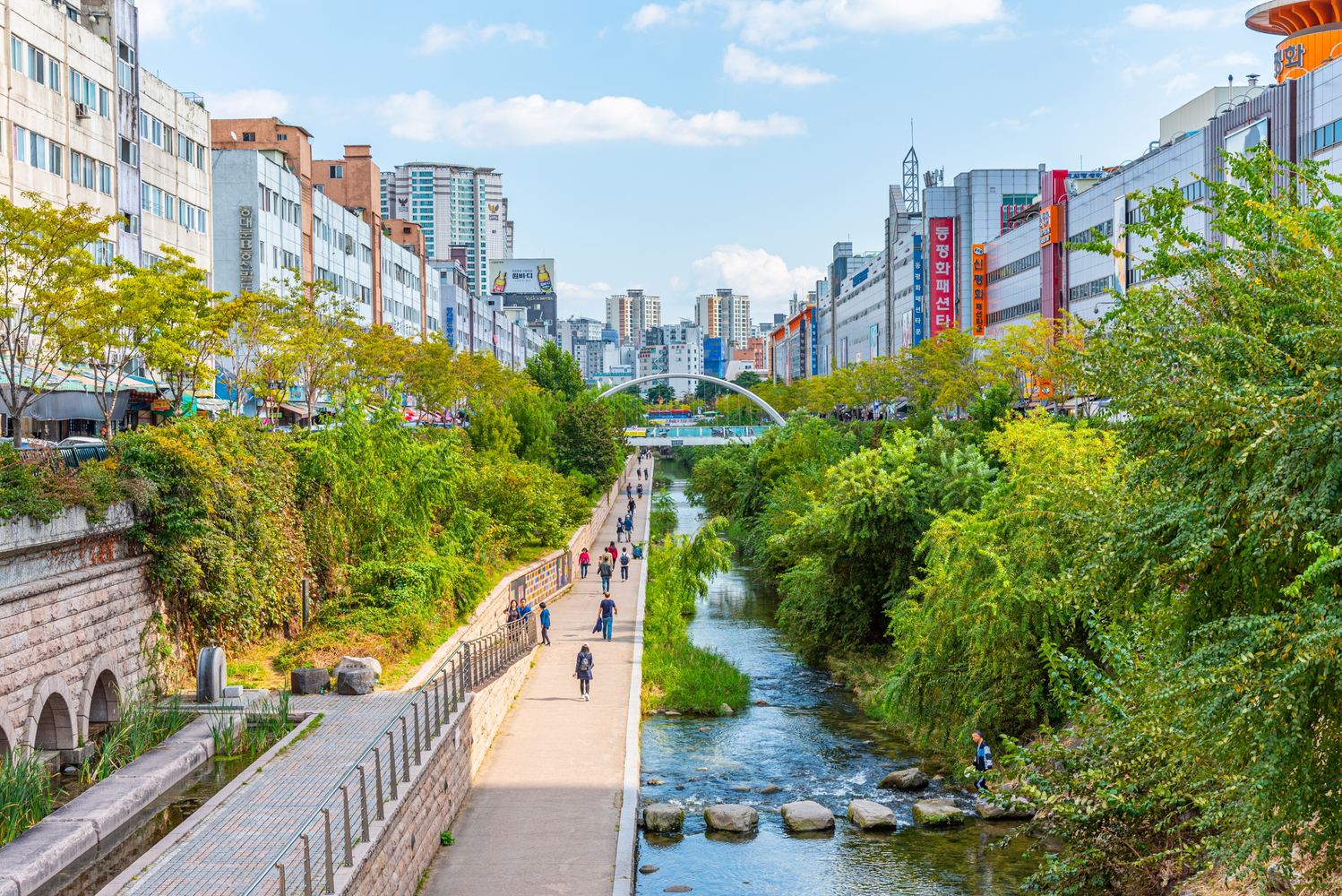
 Cheonggyecheon stream in Seoul, Korea. Image © trabantos via Shutterstock
Share
Or
https://www.archdaily.com/1039450/mobility-justice-urban-equity-in-an-era-of-innovation
Every city contains two transportation systems. One is the visible network of roads, rail lines, sidewalks, and bus routes mapped in planning documents. The other is the invisible geography of privilege and exclusion embedded within it: the neighborhoods that received highways instead of parks, the communities whose bus routes were cut, the sidewalks that abruptly end at the edge of a district. For many years, built-environment professionals have treated infrastructure as a technical challenge. Mobility justice insists it is, fundamentally, a political one.


Although the term mobility justice may be relatively recent, the conditions it describes are not. Transportation decisions have concentrated accessibility for those who already have it while systematically restricting movement for those who do not. The result is a landscape shaped by decades of policy decisions, design standards, and investment priorities that have quietly hardwired inequality into the physical fabric of cities.