
The last time England played in Paris, in 2023, they almost pulled off one of the greatest shocks in the history of the Rugby World Cup. In the quarter-finals, South Africa had stunned the home nation, beating France in a game that was epic in every way.
England produced an inspired performance and came within one point and two minutes of shocking the Springboks to reach the final. In the process the team became lost to “the process” of kick-and-chase rugby — the theory being that a limited team can upset the odds if they boot the ball often enough into enemy territory with sufficient accuracy. It got a team that made rugby into a soulless and ugly sport to third in the world. You still hear that defence all the time.
It’s a theory that isn’t without truth. England’s management have frequently explained to us exactly how number of kicks multiplied by “metres made” can upset the longest odds, as was so nearly the case in the 2023 World Cup semi-final. As with conspiracy theories, the kernel of truth is often wrapped up in unmentioned complexities.
The weather is the great unmentionable of that day. The heavens opened and the rugby gods did everything within their powers to usurp the rightful order. The Springboks had a game of growing variety. That variety continues to this day. Yes, they kicked the leather off the ball in their magnificent record-breaking 43-10 demolition of New Zealand in Wellington in September. But they also played some of the most pyrotechnic rugby ever seen as they turned the broken-field ball into dazzling rugby.
England, in their 12-match winning run, never aspired to this quality — and fair enough, they are not double world champions. Yet they dipped their toes into the Springboks’ world of kick-and-run rugby, but all too briefly. When the pressure came on, Steve Borthwick’s men were all too ready to revert to kick and chase at the cost of the creative.
Maybe the teams that kick most have the most “winning” statistics — as we are often told by people who confuse statistics with strategy — but England’s theory doesn’t take them all the way. Under pressure, the handbrakes have inevitably come on and England have skidded to a stop. But to point the finger at the obsession with kicking is to risk being reminded that this was the game plan that almost beat the Springboks.
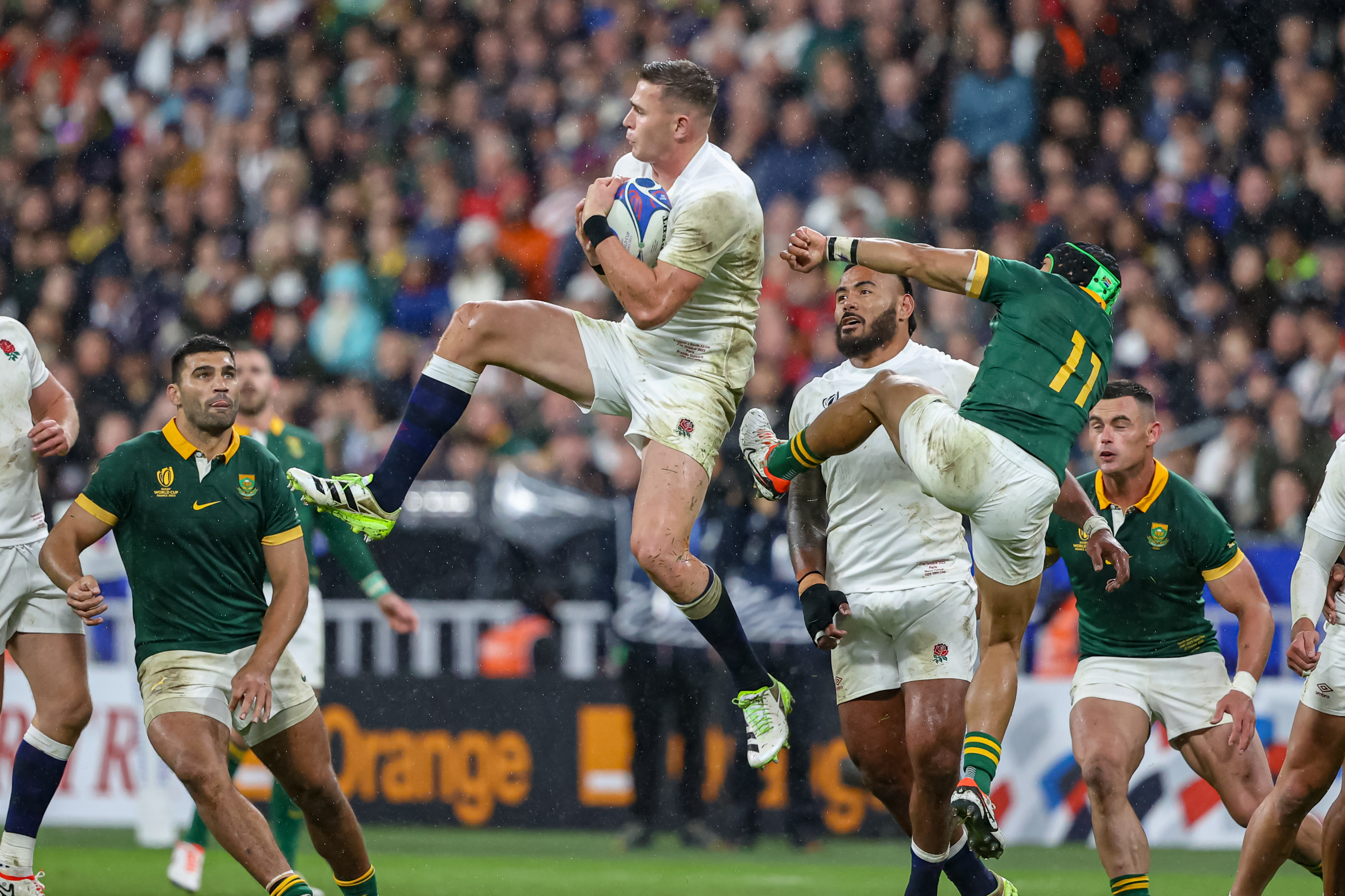 England have embraced the kick-and-chase strategy that almost beat South Africa, but they have not played it to the same standard they achieved in that gameRvS.Media/Sylvie Failletaz/Getty Images
And you know what? If that plan is executed at the Stade de France on Saturday night as precisely as it was during the 2023 semi-final, England may deprive France of the Six Nations title. But it will need to be of a standard England have not reached since that game against the Springboks. Oh yes, and there’s the rain. Watching the 2023 game on a television screen in England was to be unaware of quite how biblical the conditions were, how impossible it was to attempt anything but kick and chase.
Again, credit to England. They played the elements superbly while the team with the all-round game were dragged to the brink of elimination. On a dry day, South Africa would have waltzed it, no matter how good England’s kicking.
But England, with a rookie head coach (at Test level), finished third in the tournament. What a great effort. It was the dullest World Cup campaign in every way bar George Ford’s three drop-kicks against Argentina (down a red-carded Tom Curry, that was brilliant decision-making) and the precision with which they utilised the conditions to counter the Springboks’ superiority.
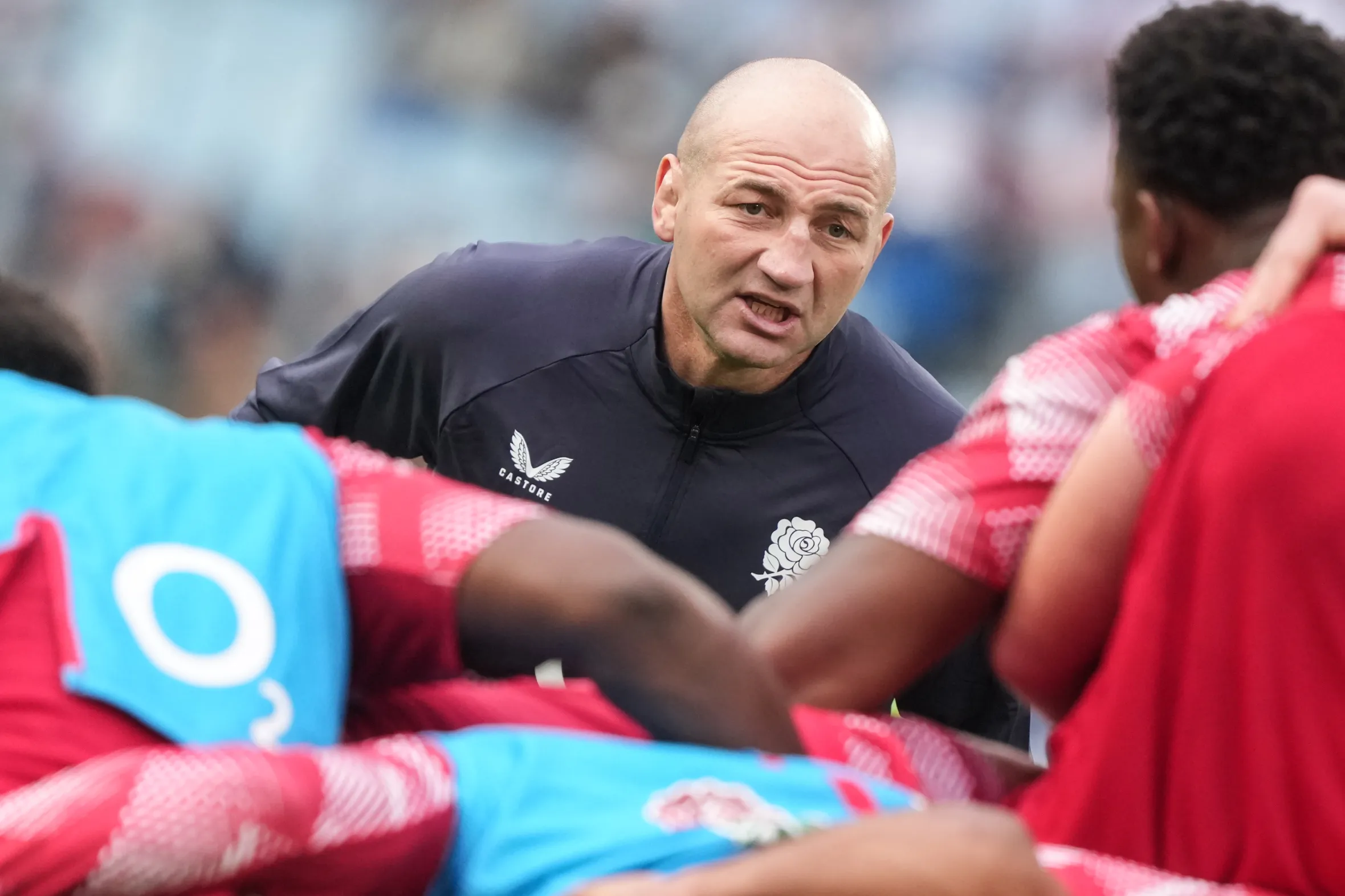 Borthwick’s dull-eyed rugby by the numbers was supposed to be lead England to a title showdown in Paris Antonietta Baldassarre/Insidefoto/LightRocket via Getty Images
So here’s the “expert” theory reiterated. On Saturday night, England should kick every ball either deep into the French 22 or box-kick the beauty out of the game in pursuit of a win. They should certainly do so if there’s a monsoon hitting Paris. Otherwise they should release those handbrakes that have the England fans squealing at the paucity of anything but percentage rugby.
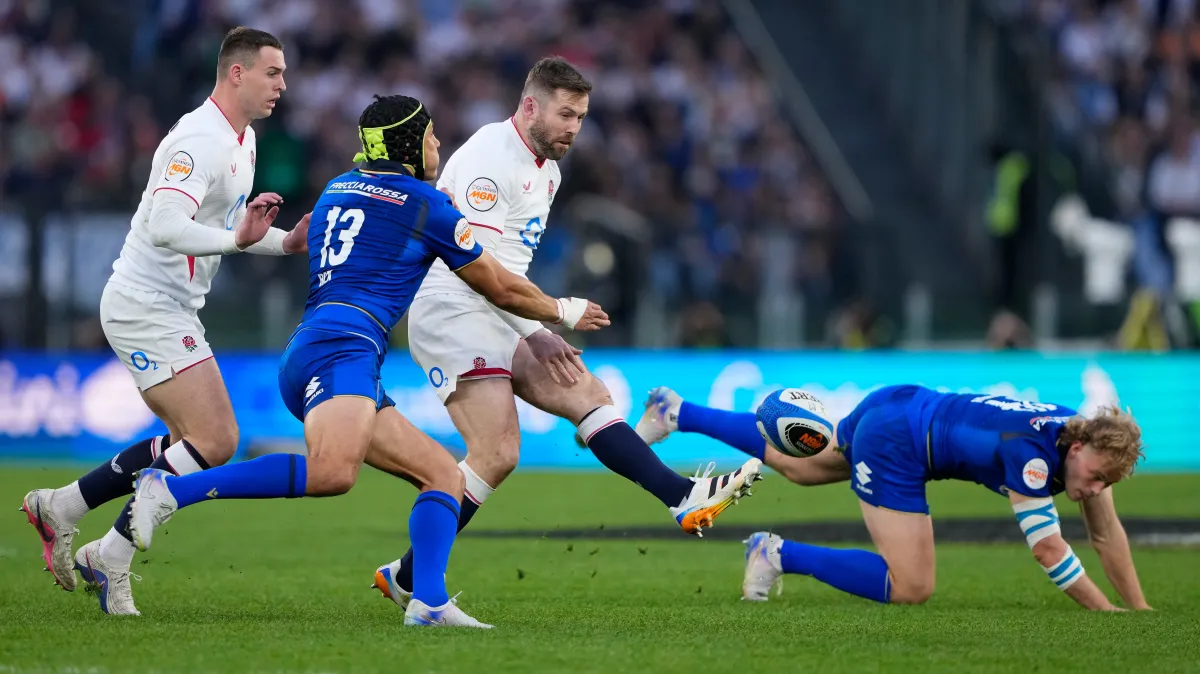
Elliot Daly — in theory — was the right choice to replace Freddie Steward for the Italy match because he fitted the bill as a full back who can exploit the space created by teams that clear their lines loosely due to kicking and territorial pressure. Instead of offering England that lovely Saracens arcing running line of his, his first instinct was to dab the ball back into the opposing 22.
This week two former internationals have told me how the main problem is a failure to turn this clichéd “red zone” pressure into points. Dropped balls, bad decisions, blah, blah… the inability to turn broken-field ball into tries isn’t mentioned, yet the counterattack from the kicking game is part of the grand Borthwick strategy.
Strategy is a fancy word for rugby by numbers. Players reading their playbooks should take a few hours off and stimulate their imaginations with any sort of book. Daly has to step and swerve his way out of the stony rubbish that England have played throughout this Six Nations.
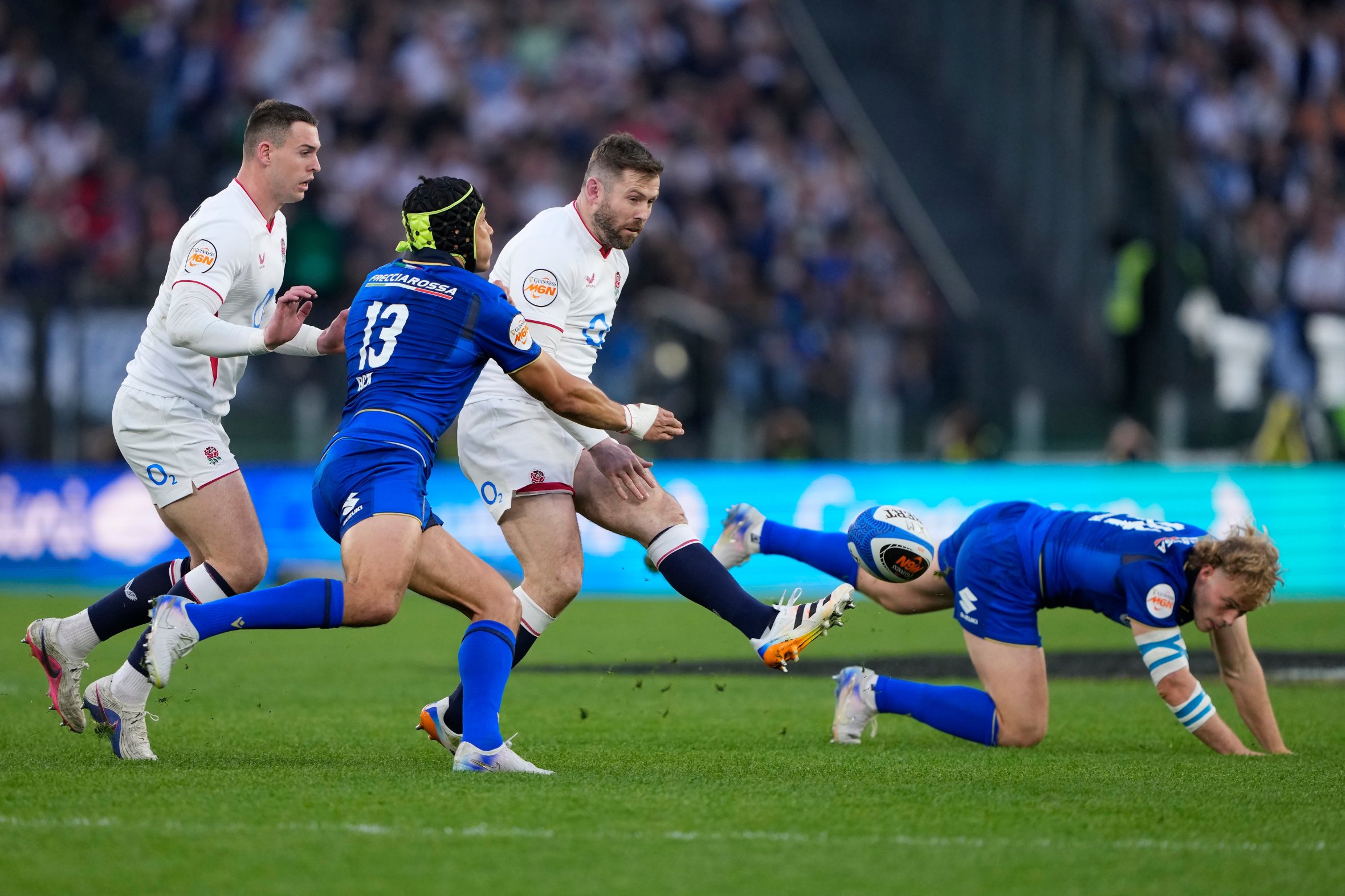 Daly started against Italy but the kick-heavy strategy stopped him showing the qualities that make him such a dangerous player for Saracens Danilo Di Giovanni/NurPhoto/Shutterstock
The head coach has intimated that it’s the burden of playing for England that is holding them back. Nonsense. It is the dull-eyed rugby by numbers that has forced them off the road that was supposed to be taking them to Paris for a tilt at the title. Borthwick said as much before the Six Nations started; he challenged them and his men duly dropped the gauntlet.
Win or lose, England have to do more than negate France. Maybe Seb Atkinson isn’t a top-quality Test No12, but give him a chance. Take the game to France and attack the gainline. Give the forwards a chance to play going forwards, and not the sideways shuffle without anyone to blast away at the opposing defence.
Having conceded 50 points against Scotland last weekend , Shaun Edwards will be livid, his French defence hungry for hits. What seems like a million years ago, when Edwards was at Wasps, he talked to me about his famed defence. He said something along these lines: “If the attack is precise, can pass under pressure, a rush defence risks being torn to pieces.” Enter Scotland, stage left.
If England are to finish their 2026 Six Nations campaign with a bang rather than a whimper, let’s see England fighting the French on the gainline. Let’s see Fin Smith trying to thread his Northampton Saints team-mate Tommy Freeman into those briefest of opportunities the rush defence offers. Let’s see if England can play rugby union, not the Borthwick version of chess, which is a theory riddled with untruths.