

Melbourne was the first real test for Formula 1’s new cars and rules and, as was inevitable, it was also a source of debate. One of the topics to receive the most attention was related to starts, which already emerged during pre-season testing, but what happened in Australia, with several slow starts and near misses, has reignited the focus on the issue.
Several teams, including Mercedes, are pushing for further changes to the starting procedure, but they are opposed by those who do not want any further changes beyond those already granted. The result, at the moment, is a divide.
It is no secret that teams with larger turbos need more time to prepare their cars for the start. With the removal of the MGU-H, the engine has to work harder and longer to bring the turbocharger unit up to the correct speed, so it was decided to allow a five-second pre-race preparation period on the grid for safety reasons.
However, this is not the only issue on the table. In Australia, many teams found themselves at the start with their batteries flat, regardless of their position on the grid. This situation amplified the differences: not only because the combustion engine becomes even more decisive, but also because above 50kph some drivers were unable to rely on electrical boost.
Added to this was the fact that some drivers remained stationary on the grid, such as Liam Lawson, who was narrowly avoided by Franco Colapinto thanks to a lightning-fast reaction, so it is understandable there are concerns in reviewing the starting procedure. On one hand, there is a group calling for changes, and on the other, those who do not want to introduce further changes at this time.
After the controversy emerged in the pre-season, fuelled in part by some of the teams in greater difficulty, the FIA had already granted greater flexibility by introducing a five-second warning before the starting procedure, so as to allow drivers to prepare their turbo correctly. This change was also accepted by Ferrari, despite the fact that the Maranello-bases team had reported the problem a year ago, but their concerns had gone unheeded.
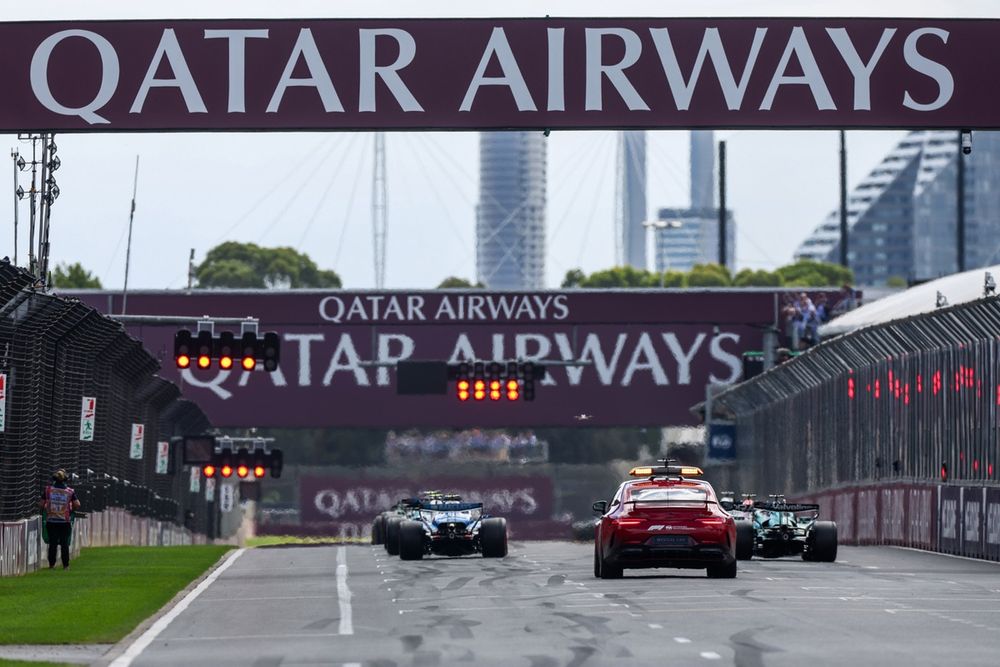
The FIA Medical Car lines up on the grid
Photo by: Peter Fox / Getty Images
It is therefore clear that, having already accepted the concession of five extra seconds before the start, there are teams that oppose further changes to the regulations, not least because this would mean giving up a competitive advantage. According to this camp, the focus should not shift once again to the rules, but to the internal procedures of each manufacturer, where there is room for improvement.
One of the issues that emerged in Melbourne was that several drivers arrived at the start with their batteries almost flat, partly as a result of the recovery limits imposed by the FIA for each lap. Add to this the fact that, during the formation lap, drivers have to drive more aggressively with heavy acceleration and braking, to warm up their tyres and brakes, and the result is that many teams found themselves unprepared with their batteries already depleted.
As Max Verstappen explained, there are several proposals on the table to simplify the starting procedure and reduce the risk of slow starts or accidents. However, the FIA cannot intervene at the moment: changing the regulations would require a supermajority of the teams, a consensus that does not exist today. The only alternative would be to pass the amendment as a safety measure.
“[The FIA] could do it, I think they want to do it, but they need a supermajority of the teams and they don’t have that at the moment. So you can probably guess which team is against it,” said George Russell on the eve of the Chinese Grand Prix, making it quite clear that Ferrari is the team opposed to the change for now.
The issue of how much energy can be recovered before the start is one of the points that has already been discussed, but on which the FIA has not yet taken action. Even those starting from the back of the grid encountered difficulties in managing their batteries, including Verstappen: “There are simple solutions, but they have to be approved by the FIA for everything related to the battery because, yes, starting with 0% battery is not much fun and also quite dangerous.
“So we are discussing with them to see what can be done, because we saw in Melbourne we almost had a huge accident at the start. Part of this is related to the batteries. Part of it, of course, can happen because of anti-stall. But there were big differences in speed, because I wasn’t the only car with zero energy. It’s something that can be easily solved.”
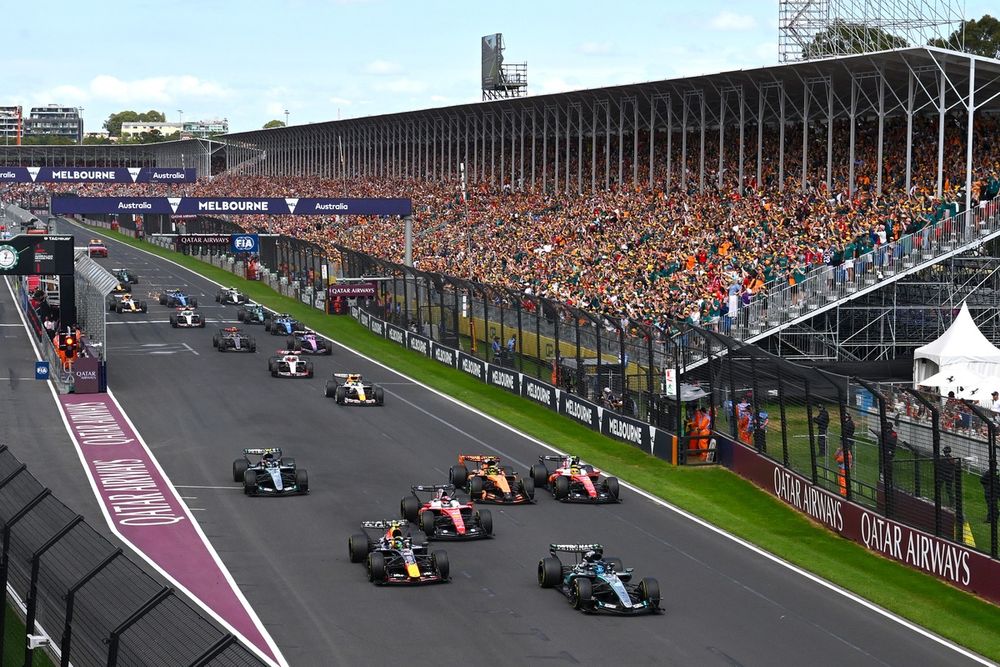
George Russell, Mercedes
Photo by: Mark Sutton / Formula 1 via Getty Images
Clearly, Ferrari’s advantage does not lie in the use of the battery itself, but it is evident that those who have greater difficulties with the internal combustion engine need the support of the electric motor above 50kph to compensate for the race start. This is something that Russell is also well aware of, describing those who oppose the regulatory changes requested from the FIA as “selfish”.
“Half the grid got it wrong in Melbourne; we will adapt and now we know what we need to watch out for,” he said. “The FIA wanted to make life easier for us and remove this recharging limit, but as is often the case, some people have selfish views and want to do what is best for them. It’s part of F1. We’ll deal with it and I think the starts will be much better here.”
Read Also:
We want your opinion!
What would you like to see on Motorsport.com?
– The Motorsport.com Team