
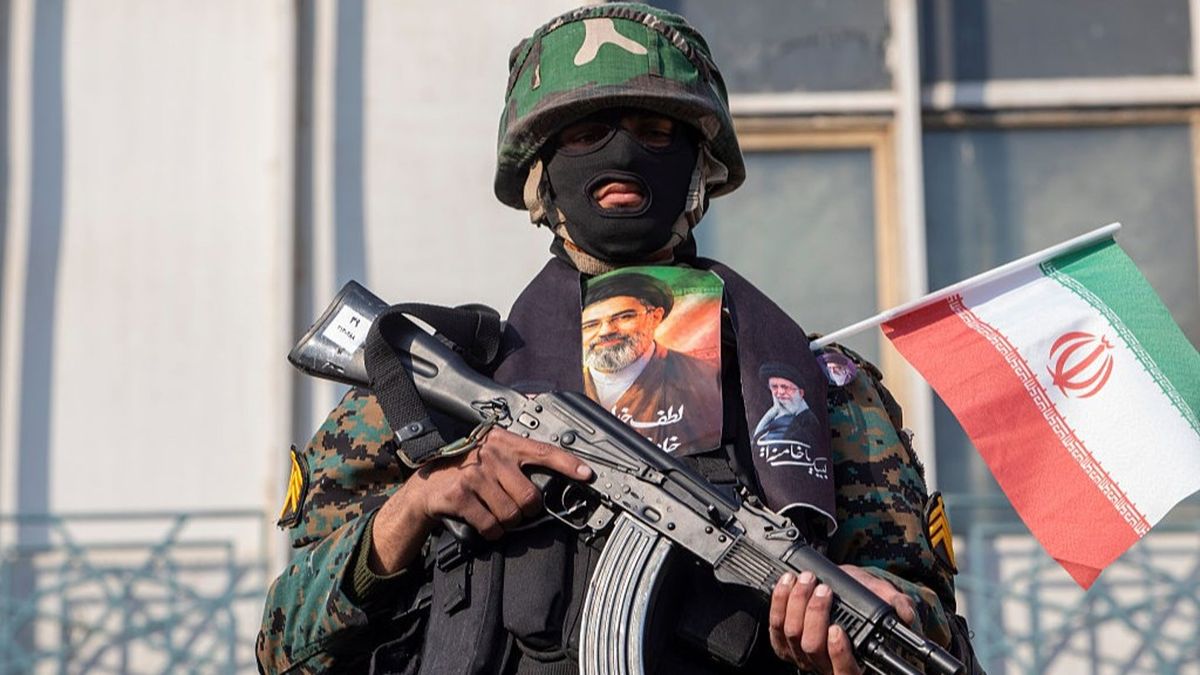
There are fears that the world economy could be at risk following claims from intelligence sources about a new tactic being employed by Iran.
In the wake of Donald Trump’s action against Iran on February 28, which killed the Supreme Leader Ayatollah Ali Khamenei, there have been numerous back-and-forth strikes.
Airports, US embassies and landmark hotels across the Middle East were hit with retaliatory drone strikes, grounding flights and stranding thousands of holiday-makers and expats abroad.
Despite Trump’s new claim that the Iran war is ‘very complete’ following a call with Russia’s Vladimir Putin, new intelligence from sources claims Iran is using a terrifying new tactic involving landmines.
The news is at odds with Trump’s claim to CBS News that Iran has ‘nothing left’ following the attacks from the US, insisting: “I think the war is very complete, pretty much.
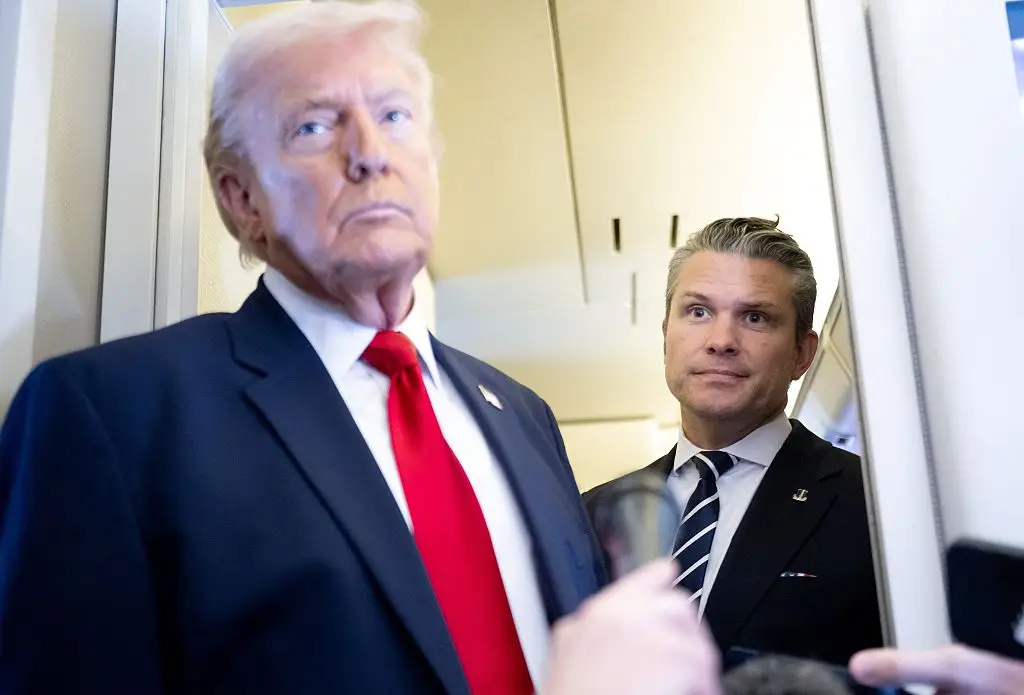 Donald Trump and Pete Hegseth have revealed the US attacked ‘mine laying’ vessels in the crucial waterway (Photo by SAUL LOEB / AFP via Getty Images)
“They have no navy, no communications, they’ve got no air force. There’s nothing left in a military sense.”
According to CNN and the Guardian, on Tuesday, the US military said it attacked and destroyed 16 Iranian mine-laying vessels near the vital Strait of Hormuz.
The waterway is a narrow passage between Iran and Oman. It followed claims that Iran was laying landmines and other explosive devices in the waterway, which is vital for the world’s oil supply.
CNN quoted intelligence sources as saying Iran has placed ‘a few dozen mines’ in the region and ‘has the capability to sow hundreds more’.
Merchant ships are now terrified of passing through the vital shipping lane, with the BBC reporting two foreign tankers were hit with explosions on Thursday (12 March).
The Strait of Hormuz is hugely important for the economy and for the oil supply, as around one-fifth of the world’s oil passes through there.
Oil prices skyrocketed to $120 a barrel on Monday, according to Neil Quilliam of the Chatham House thinktank (via The Guardian). He feared it could rise to $150 if there were further attacks on Iran’s oil supply.
And oil prices are far from the only thing to be affected, with potential ripple effects that could engulf the world economy.
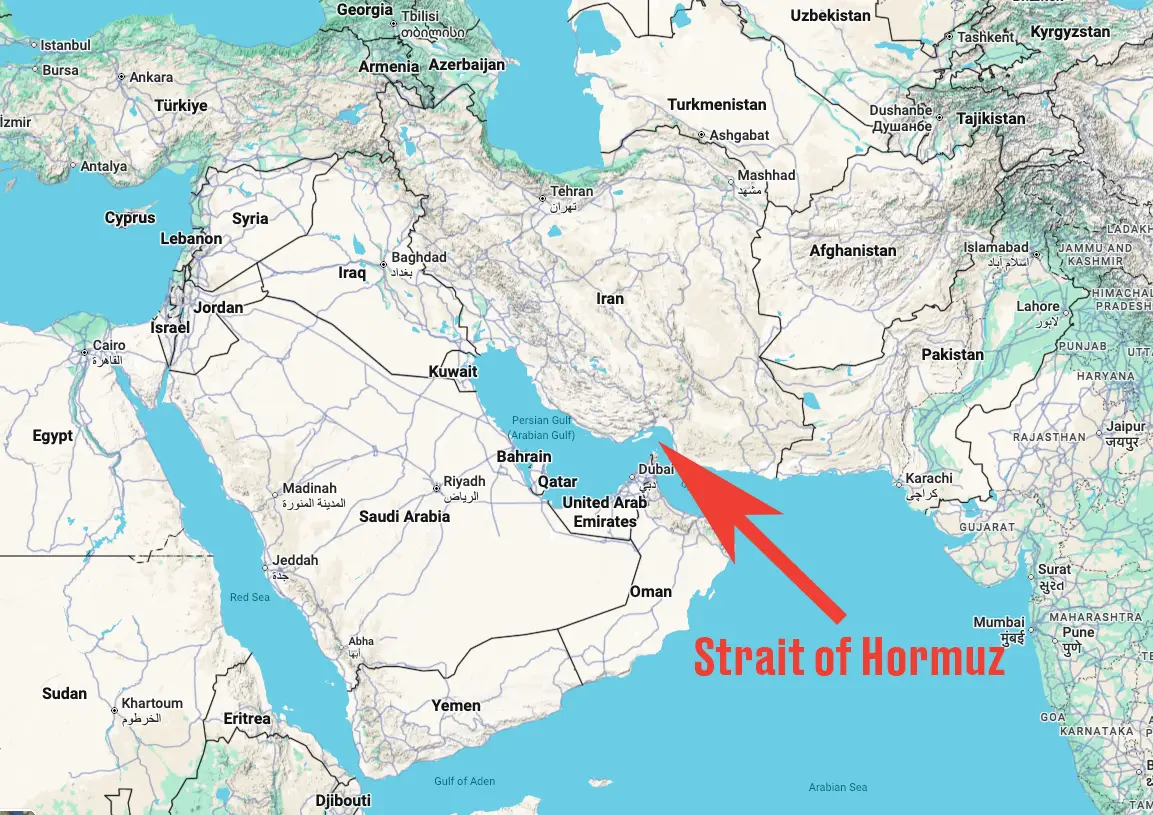 The Strait of Hormuz (LADbible)Food
CNBC reports that around one-third of the global fertiliser trade passes through the Strait of Hormuz
Euronews adds that for consumers, this could increase the price of wheat, corn, bread, pasta and potatoes.
Animal feed prices could also rise, which will be another blow to the agriculture industry.
Pharmaceuticals
Menelaos Ydreos, secretary general of the International Gas Union, warned CNBC: “I think we have to look at the disruption in [its] totality rather than simply as a question of gas and oil. It is actually much more severe.”
That’s partly because the petrochemicals that transit through the Strait of Hormuz are essential for pharmaceuticals and plastics, he says.
Craig Geskey, vice president of strategic solutions at transportation management firm Traffix, added that rubber, electronics, batteries and sugar will also be affected.
Clothes and plastics
Your fashion choices are likely to be impacted too.
Andrei Quinn-Barabanov, supply chain industry practice Lead at Moody’s, told CNBC: “Risks are particularly acute for the Asian garment industry, which relies on petrochemicals shipped through the Strait to produce synthetic fabrics.”
When will the impact start to be felt?
Gerskey said major disruption to all of these industries will be felt very soon unless the Strait of Hormuz is reopened.
He said: “The initial ocean impact may take 10–14 days to appear, but the real pressure typically hits within 2–5 weeks.”
What is Donald Trump doing about it?
Trump took to Truth Social and wrote: “If Iran has put out any mines in the Hormuz Strait, and we have no reports of them doing so, we want them removed, IMMEDIATELY!”
Hours after his comments, the US military shared video footage of them taking out the mine-laying vessels.
Kharg Island, situated northwest of the Strait, accounts for 94 percent of Iran’s crude oil exports, mainly to China.
According to The Independent, talks by US administration officials regarding a potential seizure of Kharg Island have taken place, which, if it were to happen, it would ‘cut off Iran’s oil lifeline, which is crucial for the regime’, according to Petras Katinas, a research fellow in climate, energy and defence in the Europe office of the Royal United Services Institute (via The Telegraph).
Though Quilliam says this would be in vain, as Iran would have oil production while unable to export, while the US wouldn’t be able to produce, it would ‘set markets in a tailspin’.
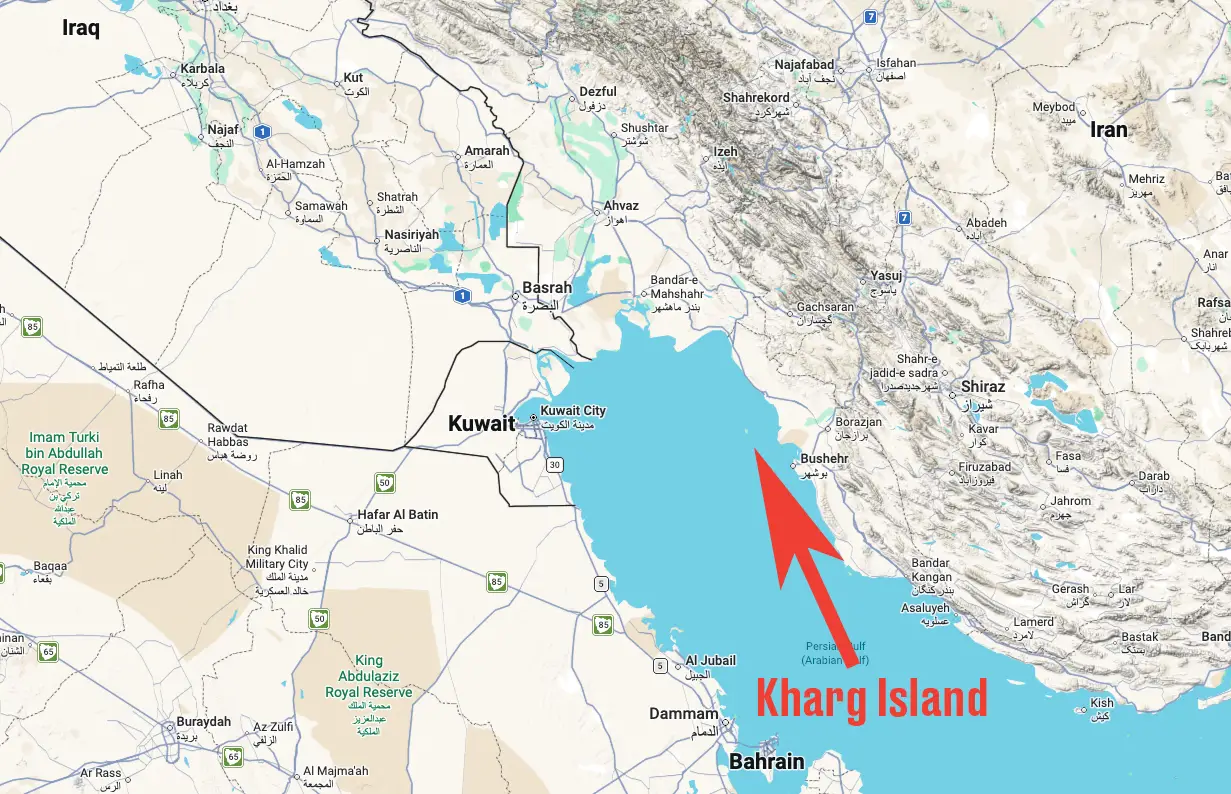 The US reportedly has plans to seize Kharg Island and block Iran’s oil exports (Google Maps)
The US military has responded to the claims from the Islamic Revolutionary Guard Corps, insisting it would retaliate with force.
The top US general, Dan Caine, said at a press conference that the US Navy may be brought in to escort ships through the Strait: “We’re looking at a range of options there, and we’ll figure out how to solve problems as they come to us.”
Echoing his sentiments, the US Secretary of War, Pete Hegseth, said if “Iran does anything to stop the flow of oil within the Strait of Hormuz, they will be hit by the United States of America 20 times harder than they have been hit thus far”.
Following Trump’s Truth Social post, Hegseth also shared on X that the US ‘has been eliminating inactive mine-laying vessels in the Strait of Hormuz—wiping them out with ruthless precision.
“We will not allow terrorists to hold the Strait of Hormuz hostage.”