
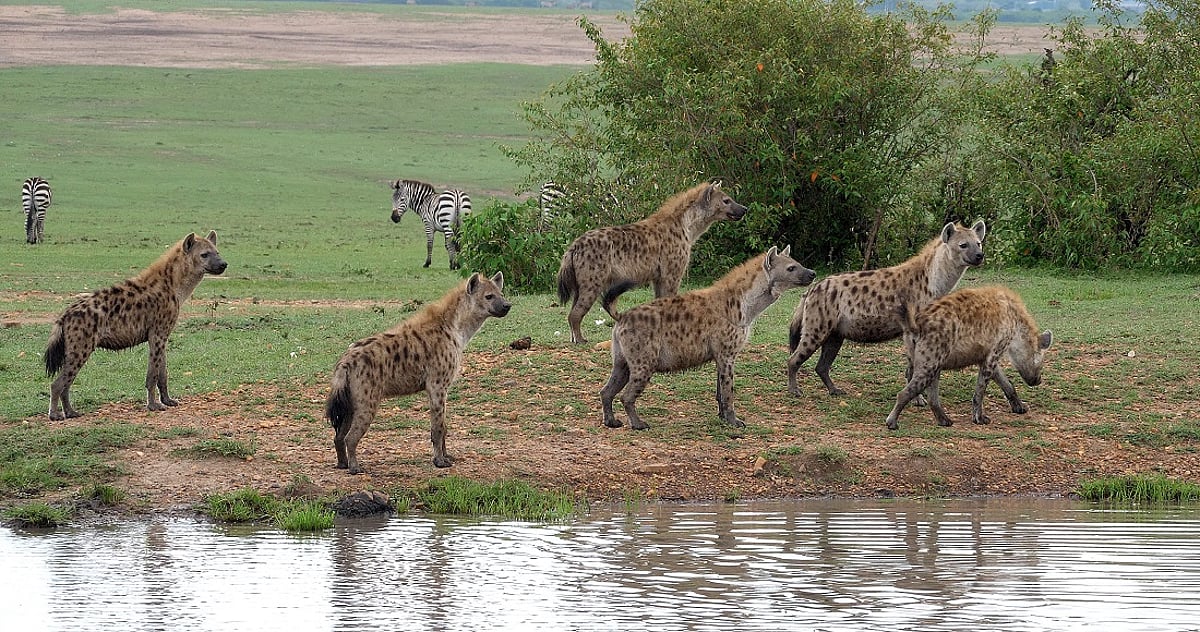
The enigmatic spotted hyena (Crocuta crocuta), the second-largest land carnivore in Africa after the African lion, has emerged as an unlikely ‘eco-warrior’ in Ethiopia’s second-largest city, according to a new study the University of Sheffield, United Kingdom.
The predators, who also scavenge, are preventing over a thousand tonnes of carbon emissions annually in the rapidly urbanising the city of Mekelle, a statement by the university noted.
The hyenas consume organic waste that would otherwise rot. This saves the city over $100,000 in waste management costs while reducing the significant sanitation risk associated with routine roadside dumping.
Over one million chickens, goats and sheep are slaughtered in people’s homes for food each year in Mekelle, home to over 660,000 people. The leftover parts of the animals not consumed by people are then discarded, with two thirds of the organic waste being dumped at roadsides or other open sites.
According to the study led by Gidey Yirga from the university’s School of Biosciences, this carrion or offal releases greenhouse gases and spreads disease. But scavengers like hyenas, African wolves and vultures provide a vital ecosystem service by consuming it.
“At a time when cities across the world are struggling with waste and climate goals, we’ve found that scavengers are providing essential ecosystem services while significantly reducing potentially catastrophic sanitation risks,” the statement quoted Yirga.
“Animals like spotted hyenas have adapted to a high-density, urban environment and have become an essential part of the city’s ecosystem.
“This demonstrates a mutually beneficial coexistence between people and large carnivores that, in most circumstances, require vast natural environments free of human intervention.”