
Summary
Technology and digital platforms are expanding access to wealth management beyond traditional high-net-worth clients.
Globally mobile investors are driving demand for cross-border advice and alternative investments.
Leadership in modern wealth businesses requires agility, empathy and technological fluency, says HSBC’s Lavanya Chari.
For much of her career, Lavanya Chari saw wealth management through a familiar lens: investment performance, product distribution and clients defined largely by high net worth. Today, that model is significantly changing.
Technology is widening access to investment advice, younger investors are entering markets earlier and affluent families are increasingly managing assets across borders.
Global wealth itself continues to expand as high-net-worth wealth and population grew by 4.2% and 2.6% respectively in 2024, according to the World Wealth Report by Capgemini. Asia-Pacific is expected to remain a major driver of that growth, with the region projected to account for nearly 30% of global high-net-worth individuals by 2028, according to research from McKinsey & Company.
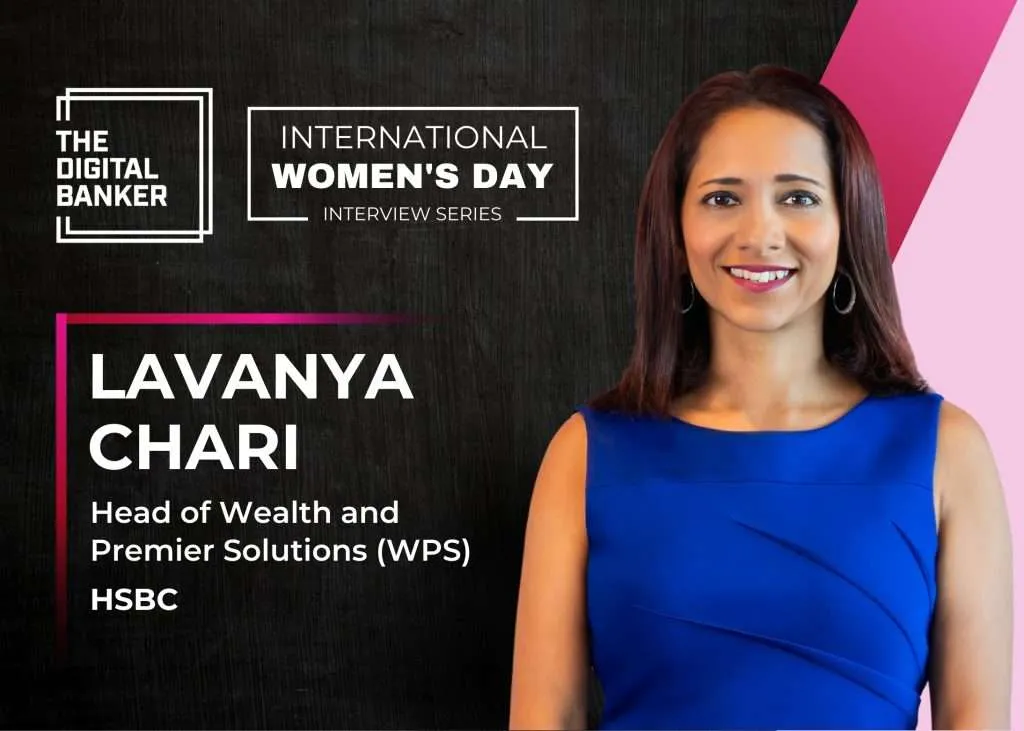
“Wealth management used to be much more product-centric,” Chari, head of wealth and premier solutions at HSBC, tells The Digital Banker. “But today it’s about understanding the full context of a client’s life — their goals, family dynamics and global ambitions.”
Technology has widened access to wealth management in ways that would have been difficult a decade ago. Digital platforms now allow clients earlier in their financial journeys to track portfolios, run investment scenarios and engage advisers more easily. The result, Chari says, is a more inclusive model of wealth management.
The rise of the global client
One of the most significant developments in recent years has been the increasing internationalisation of client needs. Affluent families today often hold assets, businesses and residences across multiple jurisdictions, increasing demand for cross-border advice and integrated financial planning. “Our clients are increasingly global,” Chari notes. “They may live in one country, run businesses in another and invest across several markets.”
For global banks, this creates an opportunity to link wealth management more closely with broader commercial and institutional capabilities. Investors are also becoming more sophisticated in how they construct portfolios. Younger affluent clients in particular are diversifying into a wider range of asset classes, including private markets and alternative investments. Private markets are expected to generate more than USD432 billion in revenue by 2030, according to projections from PwC’s Global Asset and Wealth Management report.
HSBC’s Affluent Investor Snapshot 2025 report found that five out of ten affluent investors plan to add alternative investments to their portfolios within the next 12 months — double the current ownership level. “These investors are looking beyond traditional assets,” Chari says. “They are building more diversified portfolios.”
Digital advice — but still human
Technology is also reshaping how clients interact with wealth advisers. Digital tools now allow investors to run portfolio simulations, plan financial goals and access advice remotely. HSBC’s platforms such as Future Planner, WorldTrader and Prism Advisory aim to support this shift.
Yet Chari emphasises that technology is not replacing the adviser relationship. “In wealth management, trust is built over time,” she says. “Technology provides flexibility and efficiency, but relationships remain central.”
Artificial intelligence is also beginning to play a larger role in supporting advisers. HSBC has introduced a Wealth Intelligence platform that uses generative AI to provide client-facing teams with market insights and personalised investment ideas.
The intention, Chari says, is to free advisers from routine tasks so they can focus on more complex client needs such as cross-border planning and multi-generational wealth structures. “Technology allows us to streamline routine work so our colleagues can spend more time with clients,” she highlights.
Sustainable investing moves into the mainstream
Environmental, social and governance (ESG) considerations are also becoming embedded in wealth management.Rather than treating ESG strategies as a niche product category, many banks are incorporating sustainability directly into their investment processes.
“We see ESG as part of our core investment philosophy,” Chari says. “Our aim is to ensure clients can align their investments with both their financial goals and their values.”
Younger investors are playing a key role in driving this change. HSBC research shows that eight in ten Gen Z and millennial investors say sustainability plays an important role in how they manage wealth. At the same time, transparency remains critical.
“Clients want clarity,” Chari says. “They want to understand not only potential returns but also how their investments contribute to broader environmental and social goals.”
A changing client base
Another structural shift shaping wealth management is the transfer of wealth to younger generations and women.
As the financial industry reflects on International Women’s Day, Chari says the growing share of wealth held by women is one of the most significant developments influencing the future of wealth management.
A large wealth transition is already underway. Around USD83 trillion in assets is expected to be transferred across generations over the next two decades, according to the Global Wealth Report by UBS. Women are expected to benefit significantly from this shift. Studies estimate women could control as much as USD34 trillion in financial assets by 2030, according to research from Citizens Bank.
“Younger clients value transparency, authenticity and personalised advice,” Chari says. Advisory models will need to evolve accordingly, combining digital engagement with financial education and holistic planning that extends beyond traditional investment portfolios.
Investing in future leaders
Delivering increasingly complex wealth solutions also requires new capabilities within financial institutions. Chari points to three skills she believes will define future leadership in wealth management: agility, empathy and technological fluency.
Financial markets are shifting rapidly, making adaptability essential. At the same time, advisers must develop stronger emotional intelligence as they guide clients through complex financial decisions. “Empathy and active listening are becoming critical skills,” Chari says.
Technology literacy is also growing in importance as banks integrate artificial intelligence and digital platforms into their operations. “The leaders who succeed will be those who combine these capabilities,” she says.
Chari’s own leadership philosophy has been shaped by efforts to create opportunities for colleagues across the organisation. During the pandemic, she was tasked with bringing together a team drawn from different business lines and working styles. She soon recognised that some employees lacked visibility and opportunities to contribute.
In response, the team introduced an extended leadership structure and a “shadow executive committee” programme that allowed emerging leaders to participate in senior-level discussions. “It created opportunities for people to contribute and grow,” she says.
For Chari, leadership ultimately comes down to investing in others.
“When you invest in others — through mentorship, sponsorship or simply by listening — you strengthen teams and create better outcomes for clients,” she says.
“Great leaders build better leaders.”