
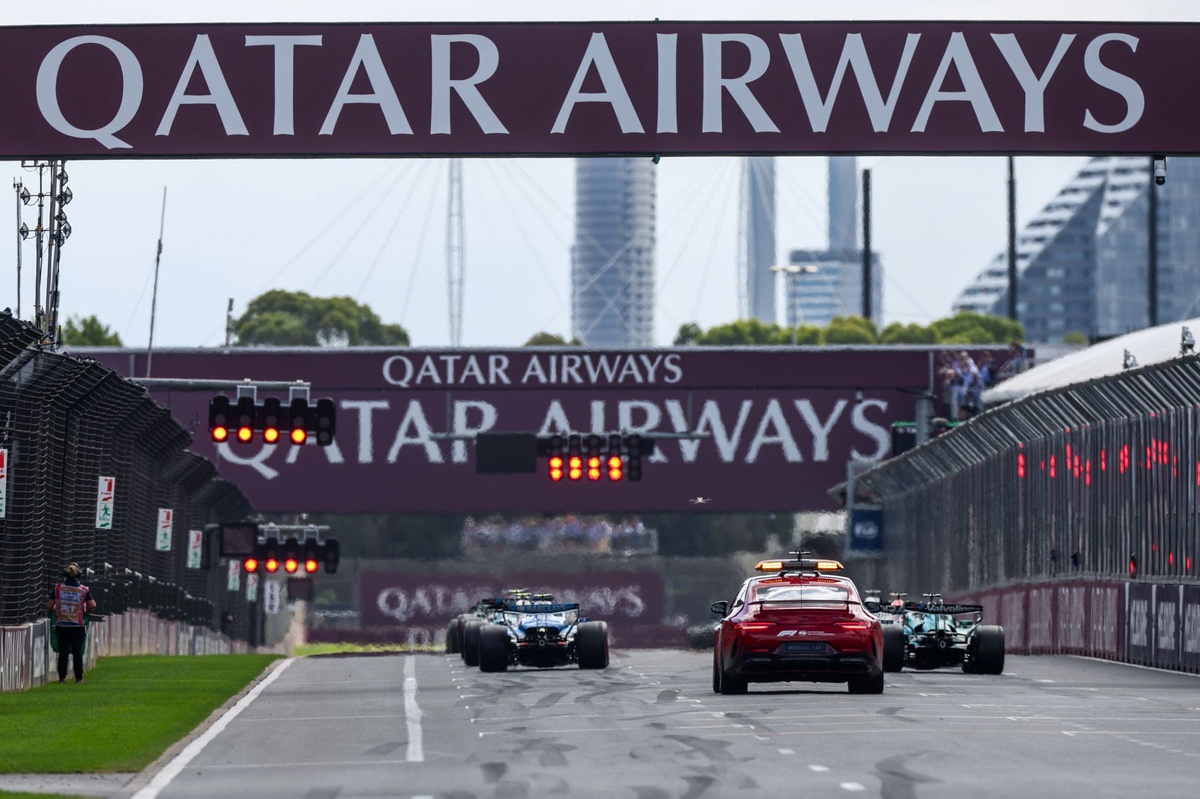
It’s probably fair to say that, on occasion, there’s a tendency among Formula 1 teams to self-sabotage – even in the moments during which they act in an apparent attempt to serve their own interests. The good of F1 as a whole should be prioritised but, if a team has a competitive advantage, they reserve their right to exercise it – sporting competition be damned.
Let’s take the current startline fears as an example: now that the MGU-H has been deleted from the regulations, it was known that turbo lag was going to be a much greater presence in the 2026 formula, and that it requires a lot more engine duty to spool the turbo up.
According to the rumble of the paddock, Ferrari flagged this and was told it wouldn’t be an issue, so went off to develop a turbocharger with a little less inertia to induce a quicker spool-up. It’s not surprising, therefore, that the Italian manufacturer is apparently peeved that the other four power unit builders have now flagged their concern.
Although much maligned for its expense and relative lack of relevance to the road car industry, the MGU-H did at least allow the turbine to rotate at full pelt pretty much on the application of throttle.
Without that, the revs need to be higher and applied for longer to get the turbo up to speed, otherwise the cars risk hitting anti-stall and bogging down – particularly those at the back of the field, which don’t sit on the grid for long.
It’s all very well saying this with hindsight, but this is a situation that has happened before – not in F1, mind you, but in F2. When turbocharged engines were implemented for the 2018 season, essentially the 3.4-litre V6 Mecachrome used in the GP3 Series (as was, now F3) retrofitted with a turbo, it changed the start processes immeasurably.
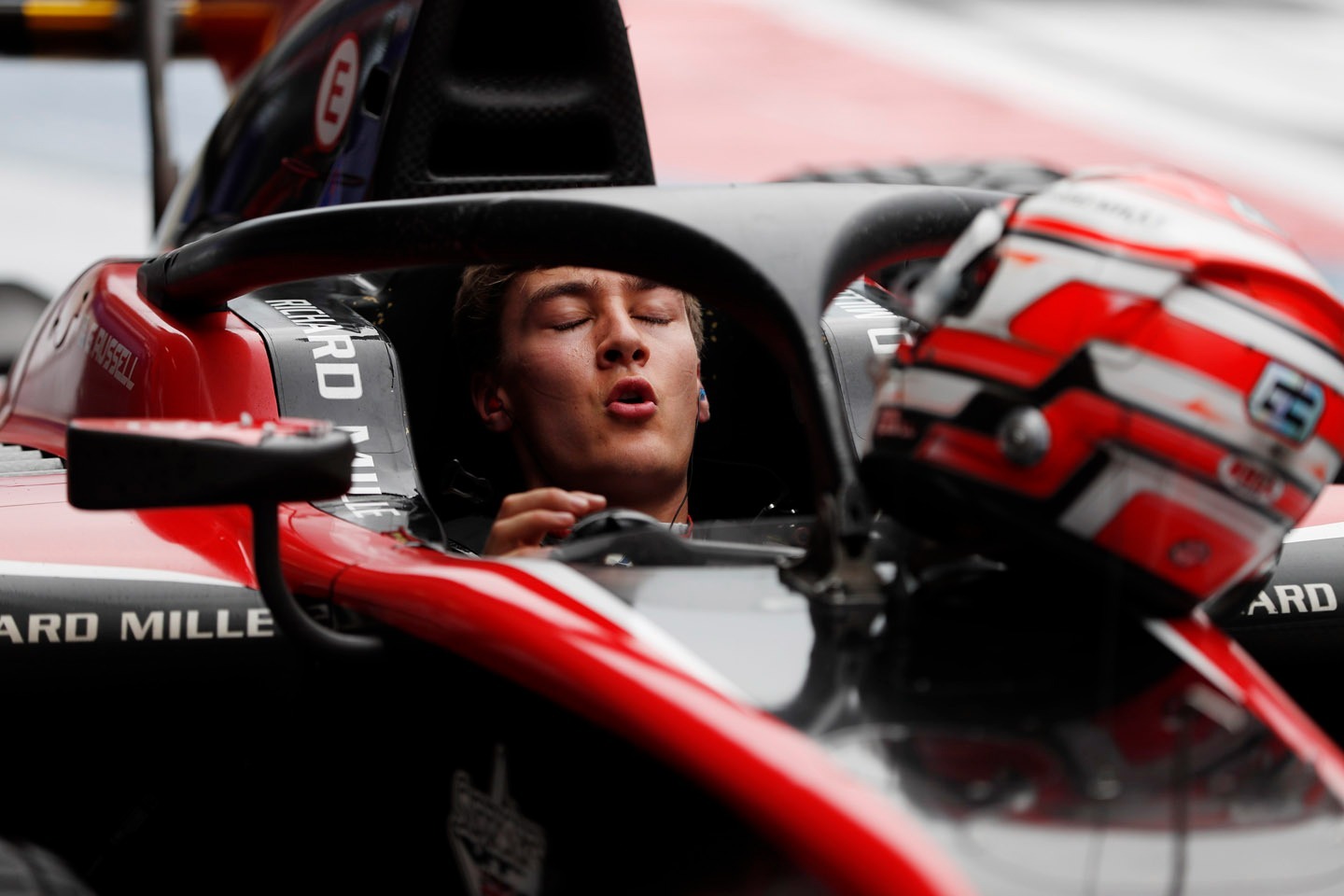
Russell was unimpressed at how the start procedure had become a “gamble”
Photo by: FIA Formula 2
Versus the old four-litre V8 used in the previous F2/GP2 car, the car had a narrow rev band to get off the line, and the standard clutches were not equipped to contend with the greater torque from the new powerplants. This produced a lot of stalls.
As the press officer for the series back then, Muggins here was tasked with trying to play down the situation. A fix, in the shape of a new clutch basket, was in the works, but it was hoped that some clutch map changes disseminated into the cars’ ECUs would reduce the issue.
Indeed, there were races where the stalling issue wasn’t that bad, but it continued to be a persistent problem through the early rounds. Drivers were fed up with the start procedures being a “gamble” (in the words of George Russell), and F2’s management team was fed up of drivers talking about it to nosey journalists.
A “why do I have to do this?” expression briefly factored into his countenance, as he reeled off a highly workshopped response
With the clutch basket still a way off, and in the wake of a startline Euro F3 shunt where Ameya Vaidyanathan ploughed into the back of Dan Ticktum at the Norisring, the FIA wanted greater intervention.
It was therefore decided that all races at the Red Bull Ring and Silverstone rounds would be taken as rolling starts, giving F2 the summer to get a fix in place for the Hungaroring event.
This writer was tasked with doing the unilateral interview with F2 CEO Bruno Michel to explain the temporary changes to the starts. A “why do I have to do this?” expression briefly factored into his countenance, as he reeled off a highly workshopped response.
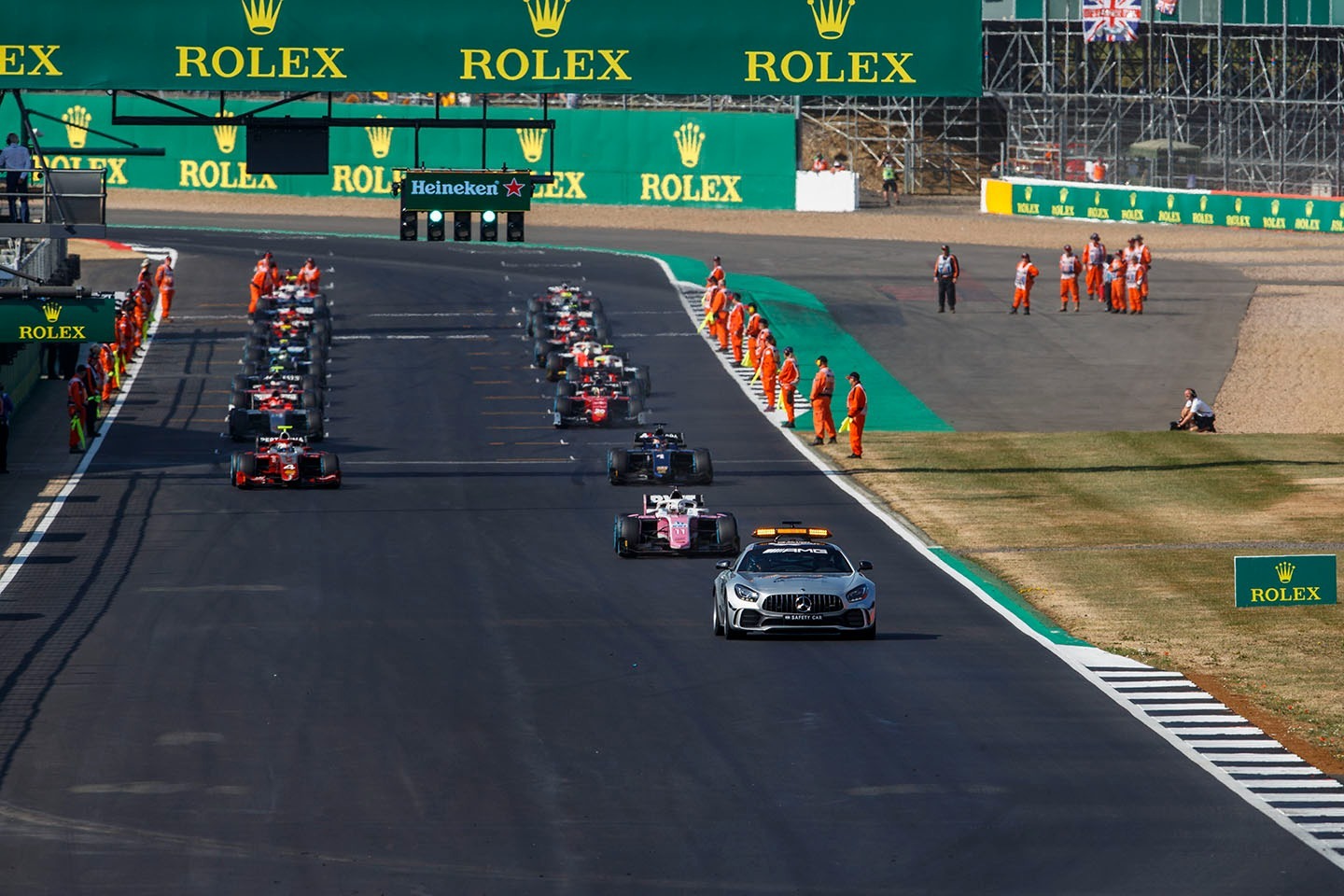
Rolling starts were held at the Red Bull Ring and Silverstone as a temporary measure
Photo by: FIA Formula 2
Indeed, the rolling starts weren’t needed after Hungary, although that wasn’t entirely the end of the problem; notably, Arjun Maini careened into the back of a stalled Nicholas Latifi in the Abu Dhabi feature race, while Alex Albon and Sergio Sette Camara also stalled in that race.
While that year’s F2 car eventually got easier to work with, it became necessary to get the engines to hit the top of the limiter at the start; the roaring thumps as the drivers revved up at the starts were symbolic of this.
The clues had been there from testing, in 2018; drivers were stalling in the pitlane frequently but, because nobody gave two hoots about the F2 tests, this could be smoothed over in press releases through complete omission.
Of course, the difference here is that F2 does not have anti-stall; F1 can fall back on this, should the cars struggle to maintain the right engine speeds off the startline. As a temporary measure at the very least, however, F1 needs to whip the teams into line and get them to think of the greater good.
These engine regulations are ridiculously convoluted anyway, so it surely makes no odds if the drivers have to wait an extra few seconds on the grid to get the cars revving.
In theory, this shouldn’t be a problem next year. But, when all your initial testing is effectively done in public, hysteria begins to reign…
This article is one of many in the monthly Autosport magazine. For more premium content, take a look at the April 2026 issue and subscribe today.
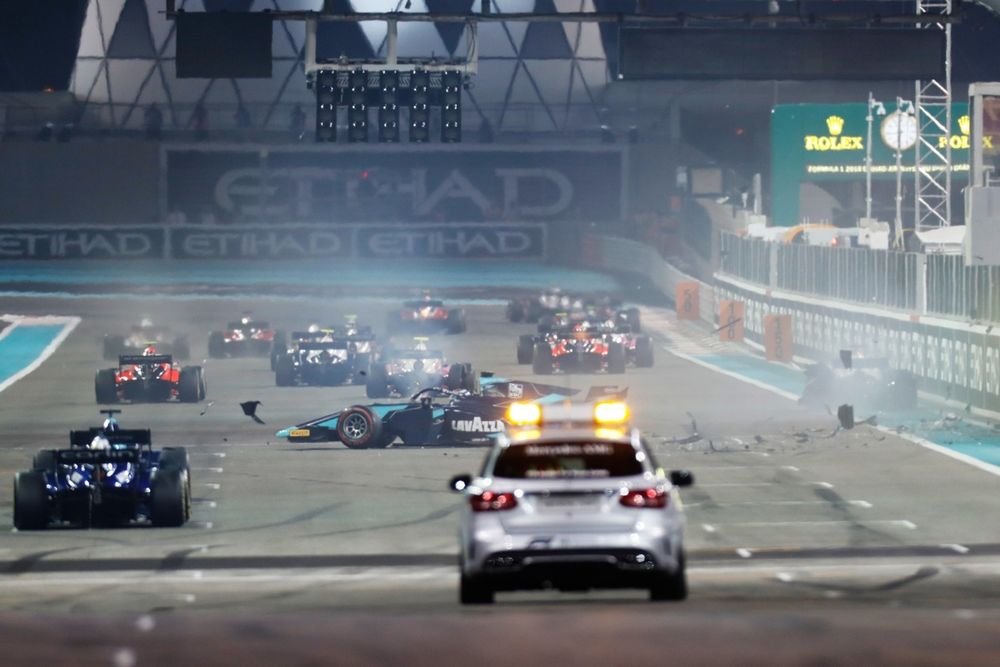
Latifi’s stalled car was clouted from behind by Maini in the Abu Dhabi F2 feature race
Photo by: Getty Images
We want to hear from you!
Let us know what you would like to see from us in the future.
– The Autosport.com Team