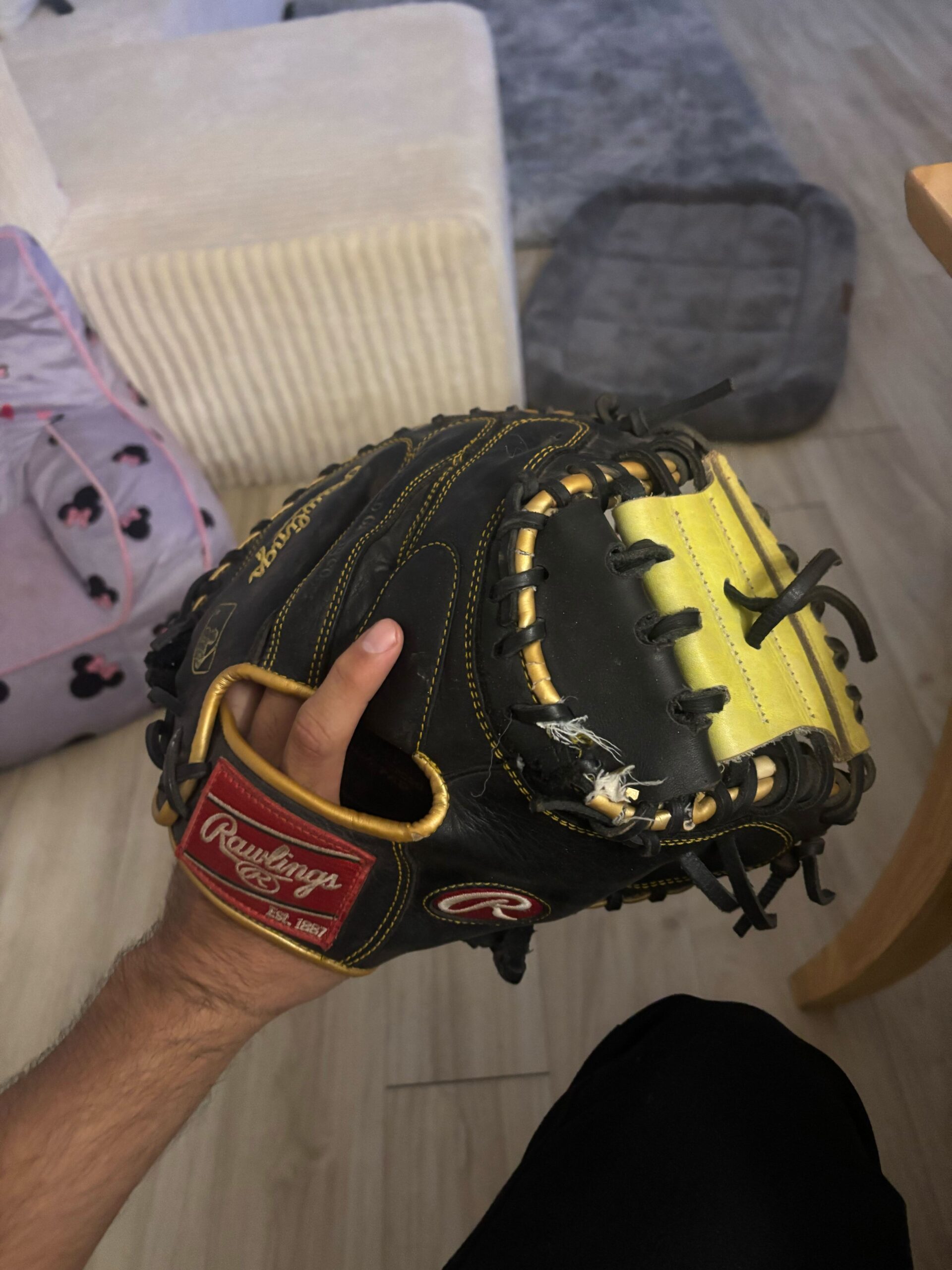
Tucked into the corner of Alain Gómez-Gudiño’s apartment sits a Rawlings catcher’s mitt with black leather and gold welting and binding. It carries the story of hundreds of pitches he’s received over the years. Now, the glove rests on display as a reminder of the sacrifice he and his family have made in pursuit of the American Dream.
“It means everything to me,” Gómez-Gudiño told Baseball America in Spanish. “That glove represents what my family and I have been through.”
Inside the glove, the leather carries stains. Stains from river water as Gómez-Gudiño crossed through nine countries, beginning in Venezuela and ending in the United States. Moisture from the thick, dangerous jungles of Central America. Tears from the silent nights when doubt crept in about the sacrifice.
The well-traveled glove remained sturdy by the time Gómez-Gudiño and his family—his mother Lislen Gudiño, stepfather Joel Rodrigues and sister Victoria—arrived in the U.S. after a four-month journey.
He used it to help Saguaro High School win its first state championship. They even had to replace the webbing after Cam Caminiti, drafted by the Braves in the first round in 2024, ripped a hole through it with one of his upper-90s fastballs during Gómez-Gudiño’s sophomore year.
Once an immigrant simply searching for an opportunity for a better life—one that didn’t even include baseball in the original vision—Gómez-Gudiño now enters the final stretch of his senior season at Saguaro High School with a range of options ahead. He has earned multiple SEC offers to play baseball but is committed firmly to South Carolina. He has also emerged as a well-regarded prep catching prospect and could be drafted this summer.
Getting to that point, however, has required a long journey.
Leaving Home
The voyage was long, but the decision to begin it came within days. For years, Lislen Gudiño and Joel Rodrigues had been at odds with the regime in Venezuela, witnessing firsthand how the government treated ordinary civilians like themselves. Gudiño had worked for the government before eventually leaving her job to care for her children full-time while Rodrigues worked.
Like many families across Venezuela, they watched their country change around them, opportunities shrinking and everyday life growing more uncertain. Millions of Venezuelans have fled the country amid political instability, economic collapse and deteriorating living conditions in search of safety and opportunity elsewhere.
What began as a far-fetched conversation between a mother and father quickly turned into a plan. Within two months, they had sold nearly all of their belongings. With the help of family members—including Gómez-Gudiño’s biological father—they raised enough money to make the journey together.
Only a handful of people knew. The family kept their plans secret within their innermost circle, careful not to draw attention or invite anyone who might try to stand in the way of their path. Some say that goodbyes are tough, but perhaps the hardest are the ones that instead require silence.
“We were really scared,” Lislen said in Spanish. “We had heard so many horror stories from others who had attempted to make this journey. But at that point, we had to take the risk so our kids could have a better life.”
On Aug. 10, 2023, the family fled Venezuela’s capital city, Caracas, beginning a journey that first took them into the neighboring country of Colombia. They traveled with one bag of limited clothing, nonperishable foods and whatever else they felt was crucial to survive the journey. It set the tone for everything that followed. The family stayed for a few days with a distant relative, gathering themselves before the real trek was to begin.
From there, travel became a grueling routine—long rides on crowded buses, miles of walking along treacherous trails and, at times, crossing open water on small speedboats. Each leg of the trip brought new uncertainty, but the family kept moving forward, one step closer to the life they hoped to build.
It took Gómez-Gudiño and his family several days to make their way across Colombia before preparing for the next leg of the journey—Panama, which would prove to be one of the most difficult stretches of the entire trail.
As they traveled northward, Gómez-Gudiño often found himself at the front of the line. Just 15 years old, he had stepped into a role far beyond his age, leading the way through dense mountains and across rushing rivers, taking the first steps along a path none of them had ever walked before.
“I always tried to remain positive throughout the trip,” Gómez-Gudiño said. “Because if one of us was sad, the feeling would hit all of us, and it wasn’t favorable. I wanted to make sure everyone had a smile, whether it was my mom or sister.
“As important as it was for me to take whatever first step was necessary for them to have a safe path ahead, I wanted to make sure we all remained positive and happy.”
There was never a worry that Gómez-Gudiño could handle the daunting task.
“He is much more mature beyond his years,” Rodrigues said. “Not too many people of any age could handle what he did, but he didn’t hesitate to step up.”
That maturing became illustrated in a moment that reflected wisdom well beyond Gómez-Gudiño’s youth—and one that may have saved a life.
One rough morning, the family was crossing a river when Gómez-Gudiño’s mother lost her footing. The current pulled her under, and for a terrifying moment, she didn’t resurface. Gómez-Gudiño plunged his arm beneath the water, searching until he felt her arm. With all the strength he had, he pulled her back above the surface. Shaken but determined, he helped steady his mother and carried her across the remaining river, refusing to let the current take her again.
“To this day, I’m still shocked that I was able to pull her out,” Gómez-Gudiño said. “I don’t know where I got the strength from, but I knew one thing for certain—I wasn’t going to lose my mom.”
It was those kinds of moments that would force the family to ask themselves if it was all worth it. They had heard the stories of people who never made it out, of lives lost to the unforgiving terrain or to the cartels that terrorized the routes north.
But even with several countries still ahead of them, the red, white and blue promise waiting in the distance was enough to carry on. The hope of reaching the United States remained the light at the end of the tunnel, the reason they kept moving forward.
 (Photo by Bill Mitchell)
Arriving In Mexico
Gómez-Gudiño and his family pressed on, making their way through Costa Rica, Nicaragua, Honduras and Guatemala in a matter of weeks. But as they finally reached Mexico—the final stop before the United States—they were about to encounter the most life-changing moment of the entire journey.
At long last, they arrived in southern Mexico. But the danger was far from over. Just days after crossing another river into the country, they were moving under the cover of darkness, quietly making their way along the path.
Then they were stopped.
Out of the night emerged a group of men dressed in military-style uniforms. The family didn’t know who these men were—officers, cartel members or something else entirely. All they knew was that their journey had suddenly taken another terrifying turn.
Gómez-Gudiño and his family were rounded up. One by one, their belongings were taken, including their phones, which had been their lifeline to the outside world and served as irreplaceable flashlights to guide them through the nighttime darkness.
Fear swept through the family, but no one felt it more intensely than Gómez-Gudiño’s mother, who soon began to suffer a severe panic attack.
“I thought this was where they were going to kill us,” she said.
In a desperate attempt to defuse the situation, the family pleaded with the men, asking if they could keep at least one phone. The men eventually relented, allowing them to hold onto a single device.
No physical harm was done to the family, but the encounter left a lasting imprint, especially on Gómez-Gudiño.
“It’s an experience nobody in this world should have to live through,” he said. “Every time I face adversity, I look back at this moment and think about how we fought back from that moment to get where we are.”
In late August 2023, the family continued their journey north through Mexico before eventually stopping in Mexico City. For the first time in weeks, they had something close to stability, a consistent place to sleep and a bed to rest in.
But even then, life in the shelters came with its own challenges. Families there were separated by gender, forcing Gómez-Gudiño and his stepfather to sleep away from his mother and sister in different sections of the facility.
For three months, the family found ways to make money for more supplies and food. And that’s when Gómez-Gudiño’s catcher’s mitt came back into play.
Gómez-Gudiño was recruited to play for a local Mexican team filled with many local players in their mid 20s playing for the pride of their region. After hearing about Gómez-Gudiño and his family’s journey, the team offered to take them in as one of their own and made sure they had support.
“All I’ve ever wanted was for my family to be taken care of,” Gómez-Gudiño said. “So, whenever I played, it wasn’t just to get better. It was to make sure my family had everything possible for us to live a better life in the future.”
In the end, baseball became the escape the family needed.
It was there that Gómez-Gudiño celebrated his 16th birthday. The family scrounged up to purchase a small pastry and place a single candle on top. In a short video of the moment, Gómez-Gudiño smiles as his family gathers around him, their voices filled with laughter and encouragement. The video was recorded on the same phone they had managed to keep during the frightening standoff weeks earlier.
That same phone became their window to the outside world. Huddled around its small screen, the family watched as the Rangers recorded the final out of the World Series against the Diamondbacks in Phoenix, Arizona—a city that would soon become part of their everyday life.
Land Of The Free
Gómez-Gudiño and his family soon received approval to enter the United States seeking asylum. They crossed the southern California border and headed for San Diego. For the first time in months, the sacrifices they had endured began to feel worthwhile.
They marveled at the American city’s towering skyscrapers, the familiar fast-food restaurants and, in the distance, the silhouette of a cathedral-like structure that would later reveal itself to be the Padres’ home of Petco Park. The sight of the stadium was a reminder to Gómez-Gudiño that the same catcher’s mitt he used to help feed his family in Mexico also symbolized the possibilities that existed in the United States.
The family’s time in San Diego was short-lived, and they ultimately relocated in late November 2023 to be closer to relatives in Arizona—a state that, unbeknownst to them at the time, is a hotbed for baseball talent and opportunity. From the 15 minor league teams that call the Cactus League home to a wide array of prep programs with established baseball traditions and three in-state universities with Division I programs, Arizona offered a clear path for a young player like Gómez-Gudiño to develop and get noticed.
Brian Bratspis, the parent of one of Gómez-Gudiño’s eventual teammates at Saguaro HS, stepped in to help the family, providing Gómez-Gudiño with equipment and rallying the rest of the team to provide support for their new neighbors.
Players and families from the program pitched in, helping the family move into their new apartment. Some hauled heavy furniture up the stairs, while others made sure their refrigerator and pantry were stocked with food.
Though they had only been in the country for a few weeks, the outpouring of support made Gómez-Gudiño and his family feel right at home—and this was before many of them knew about the journey the family had endured.
“We never expected to be treated with so much respect and love from strangers,” Gómez-Gudiño said. “I see many of them as extended family. Gestures like that are something I will never forget.”
Getting Noticed
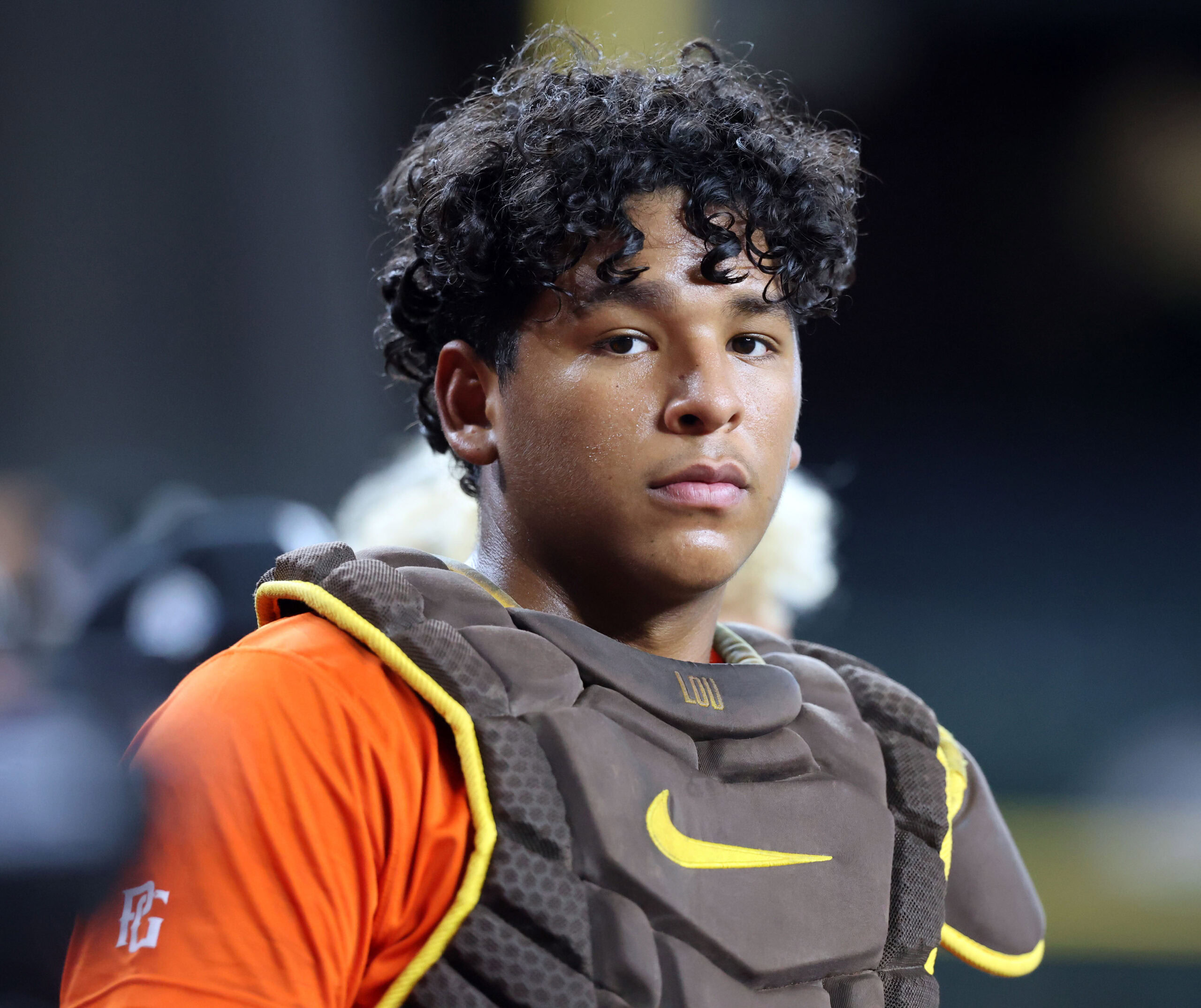
Gómez-Gudiño’s baseball talent didn’t go unnoticed in Arizona. That was especially as the batterymate of Cam Caminiti, whose presence regularly drew scouts from across the country eager to see the future MLB first-rounder.
With that kind of attention surrounding the program, coaches suggested placing Gómez-Gudiño on the showcase circuit. That path eventually led him to Elvin Soto of Ballengee Group, who would become his agent. Soto, a Spanish speaker who also played college baseball, immediately connected with the family. More importantly, he understood the challenges they had faced along the way, which helped build trust and made it easier for them to navigate the next steps of Gómez-Gudiño’s journey together.
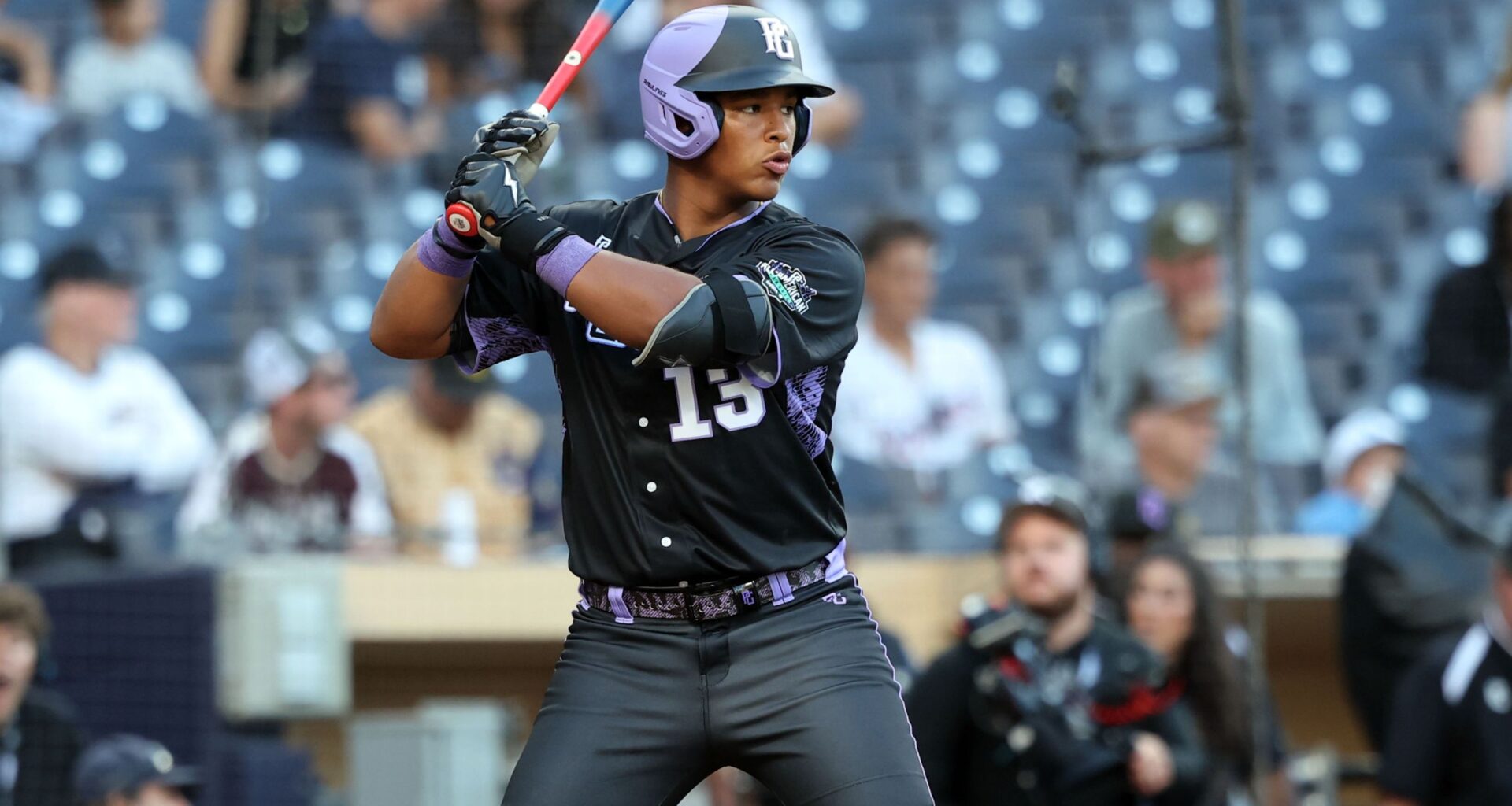
With proper guidance, all that was left for Gómez-Gudiño to do was to prove his talent on the field—and that he did. From the Area Code Games in Long Beach to the Under Armour All-America Game in Baltimore. But perhaps no showcase has been more special than the Perfect Game event at Petco Park, where Gómez-Gudiño revisited the site of his first introduction to America.
“Every time I step on the field, I always tell myself, ‘How did I end up getting here?’” Gómez-Gudiño said. “In reality, it was everyone around me who pushed me, from back home in Venezuela to everyone here in the United States. I’m just so lucky to have good people in my life.”
Gómez-Gudiño received college offers from programs around the country. He committed to South Carolina after his first visit, saying it immediately felt like home. He plans to study physical therapy, hoping one day to help others recover from injuries while using his native language to make Spanish-speaking patients feel more comfortable in moments of uncertainty.
For now, however, Gómez-Gudiño’s focus remains on finishing his senior season at Saguaro and growing his game. He understands his potential value as a draft prospect and that professional baseball could soon become another chapter in his story.
“Most importantly, I just want to make my family proud,” Gómez-Gudiño said. “They would support me no matter what I do in life, whether it’s baseball, school or work. They just mean so much to me.”
Back in his apartment, Gómez-Gudiño’s Rawlings mitt now sits quietly on display.
It won’t be used to catch another pitch. It doesn’t need to.
The glove’s job now is simply to remind Gómez-Gudiño how far he and his family traveled and why every opportunity ahead of him matters.