
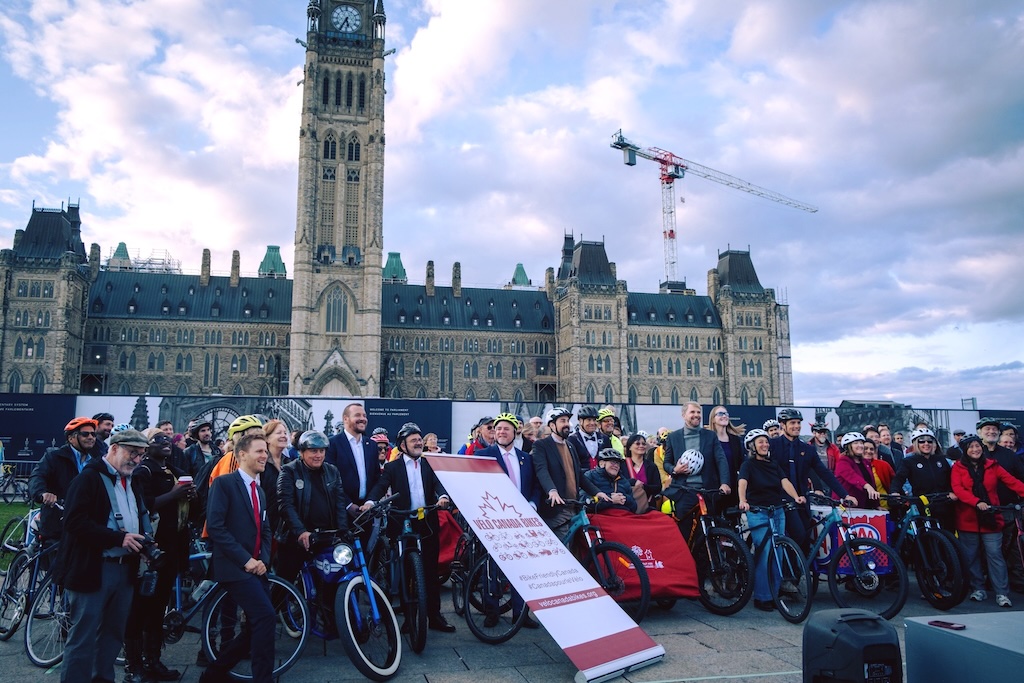
Canada’s cycling community is facing a critical moment. $500 million in active transportation funding—meant for everything from protected bike lanes to multi-use trails—is still awaiting approval, and the 2026 construction season is rapidly approaching. Samuel Benoit of Velo Canada Bikes warns that delays could cost Canadians more than just infrastructure: they could mean lost opportunities for safety, climate action, and healthier communities.
“In Canada, the construction window is narrow,” Benoit explained, during an interview with Momentum. “Municipalities plan their infrastructure seasons years in advance. If Minister Robertson’s office doesn’t approve these applications immediately, cities can’t put these projects out to tender. By the time the paperwork is finished, the 2026 season will already be booked. This isn’t just a delay—it’s a lost year for road safety and climate action.”
The backlog is significant, maybe Canadian Prime Minister Mark Carney is too busy setting the groundwork for more fossil fuel projects instead of worrying about the future.
The most recent intake for the Active Transportation Fund (ATF) received 758 applications from communities nationwide, covering a diverse range of projects: protected bike lane networks, pedestrian bridges, multi-use trails, and safe sidewalks in both urban and rural areas, including Indigenous communities. These projects are already “shovel-ready,” meaning technical reviews are complete and all that’s needed is a ministerial signature to begin construction.
Without federal approval, Benoit warns, municipalities are forced into difficult choices.
“Projects die on the vine,” he said. “Many rely on federal cost-sharing. If the funding is delayed, cities must either cancel projects entirely or strip away key safety features. That means infrastructure that’s less usable for children and seniors.”
The ATF is part of the broader Canada Public Transit Fund (CPTF), a roughly $3-billion-per-year federal program. As a “targeted stream” within the CPTF, active transportation funding is not guaranteed, which is why sustained advocacy is crucial. “Most cities face tight local budgets and can’t fund complete networks alone. Federal support allows them to move from patchwork lanes to connected systems,” Benoit explained.
He cites examples of projects ready to move forward: the West Central Multi-Use Corridor in Saskatoon, designed to close a critical gap between Avenue Q and Avenue W, has been stalled in the federal review process since early 2025. “This is just one of hundreds of projects waiting for a green light,” Benoit said.
The benefits go beyond cyclists. Safe active transportation infrastructure can reduce car traffic, improve transit efficiency, and bolster public health. Physical inactivity costs Canada’s healthcare system $3.9 billion annually, yet even modest increases in activity could save nearly $1 billion per year in healthcare and productivity costs, according to the 2025 ParticipACTION Report Card.
Benoit also emphasized that federal involvement isn’t just about funding; it’s about long-term planning.
“We need predictability,” he said. “A mayor planning for 2026 should know exactly how much support they have for 2030. Reliable, annual transfers allow communities to build complete networks that make Canada truly livable.”
For cyclists and advocates, the message is clear: contacting your MP isn’t just politics—it’s about keeping Canadian streets safe, connected, and accessible. Benoit concluded, “The Active Transportation Fund was won through grassroots advocacy before, and we’re building on that effort now to protect these victories. It’s time to ensure Canadian communities don’t lose another year for active transportation.”