

Sydney designer Katie Taylor, the woman behind the Katie Perry label, was on a high.
Surrounded by empty champagne glasses in her newly launched Mossman showroom, she opened a letter with devastating news.
“It said, these words jumped out at me, ‘Cease and desist, stop sale of your clothes, stop any advertising material, stop your website, otherwise this is going to go to the Supreme Court,'” Ms Taylor said this week.
“I just burst into tears. I thought, ‘I’m going to lose everything, and this has been my dream since I was 11 years old.'”
The letter was from international superstar Katy Perry, whose bid to lodge a trademark to sell clothing in Australia had been blocked because Ms Taylor had just secured that trademark herself.
Ms Taylor was born with the name Katie Perry, and when she began her small business, she applied for a trademark under that name.
This week, the High Court ended the superstar’s bid to force a cancellation of the designer’s trademark, but the battle, it seems, is far from over.
Questions remain around Katy Perry tour merchandise
It is still unclear whether Katy Perry will be able to sell her clothing merchandise as part of any future tours. (Getty Images: Amy Sussman)
To start with, the High Court has sent the case back to the federal court to determine the not insignificant costs.
But questions about whether the singer will be able to sell her “Katy Perry” clothing merchandise as part of any future tours are not resolved.
Sarah Hook from the University of Technology Sydney said it was an ongoing issue.
“Now it goes back to trial and they’re going to talk about what that means in terms of liability,” Dr Hook said.
“So Katy Perry, the singer, might have some kind of defence, such as honest concurrent use, prior use … good faith of using her name.
“All of that has to be sorted out again.”
If the singer was found to have done the wrong thing, Dr Hook said determining what happened next could be difficult.
“There’s a number of penalties that they could give. One of them is … perhaps compensation,” Dr Hook said.
She said sometimes an injunction was imposed or additional damages were awarded if there was a flagrant infringement.
But Dr Hook said generally there would be an election for damages or an account of profit.

Sarah Hook says determining what happens next may be very difficult if Katy Perry is found to have done the wrong thing. (ABC News: John Gunn)
A 16-year legal battle
The potted story of the legal struggle between the pair is that it began in 2009, although the initial threat of court action went nowhere.
But over the next few years, Katie Taylor had customers remarking on the “Katy Perry” clothing they had seen.
That prompted a Federal Court challenge in 2019, in which Ms Taylor alleged the singer had breached her trademark.
But in an appeal, the full bench found Ms Taylor was the one who had breached the trademark rules and that the singer already had a reputation associated with the brand name, ordering the “Katie Perry” trademark be cancelled.
It is that ruling that was reversed by the High Court this week.
Dr Hook said while the High Court had left many issues still to be resolved, it did make other things clear.
“They were sort of concerned about the way that the full Federal Court was looking at … if a celebrity owns or a singer owns a trademark, which she does, in entertainment and music, does that necessarily mean that consumers would think that they have a monopoly on all these other products that celebrities are known to go out and do?” Dr Hook said.
“So things like perfumes and clothing and things like that.
“They said … that’s not the case, [and] that especially when the Australian designer put in the trademark application, Katy Perry was a singer, she [Katie Taylor] knew she was a singer, but that doesn’t mean that she therefore has this monopoly over everything.”
Case about ‘protecting and supporting’ small businesses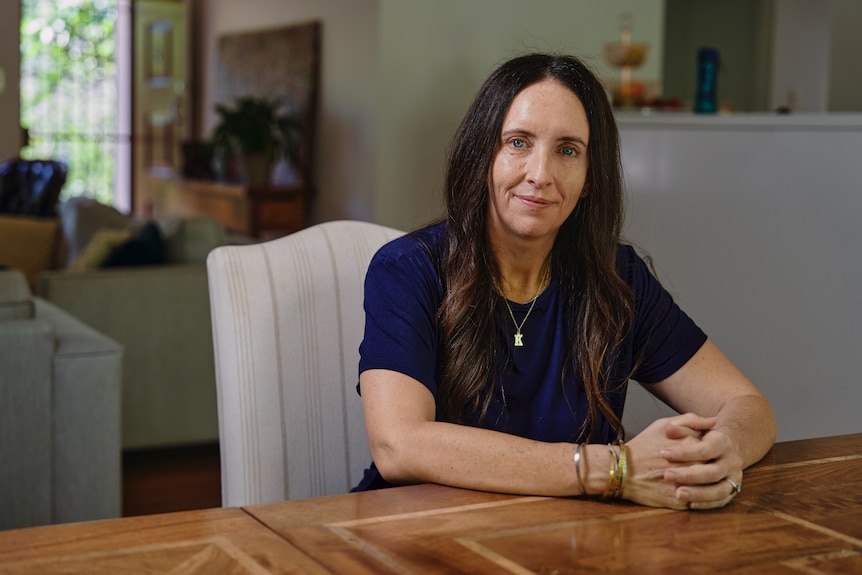
Katie Taylor says the case is important in terms of standing up for the rights of small businesses. (ABC News: Timothy Ailwood)
Katie Taylor was born Katie Perry, and says when she heard the song I Kissed a Girl, she loved knowing there was a singer of the same name.
But that soon turned sour, with a legal battle that has raged for 16 years so far.
“I think the damage that it’s done is more … it’s kept me away from my business — and anybody with a small business knows the amount of hours and times and commitment that it takes,” Ms Taylor said.
“This whole legal case has taken up so much of my time, my emotional bandwidth. It’s even really impacted my time with my family and my kids.
“It has been part of my life for such a long period.”
But Ms Taylor said she felt the case was important not just for her own situation.
“This case has always been about more than just my trademark … it’s actually been about protecting and supporting all of small businesses,” Ms Taylor said.
“Because we all matter, whether or not you’re a small business with two young kids, you’re a mum, or you’re a big global pop star.”