
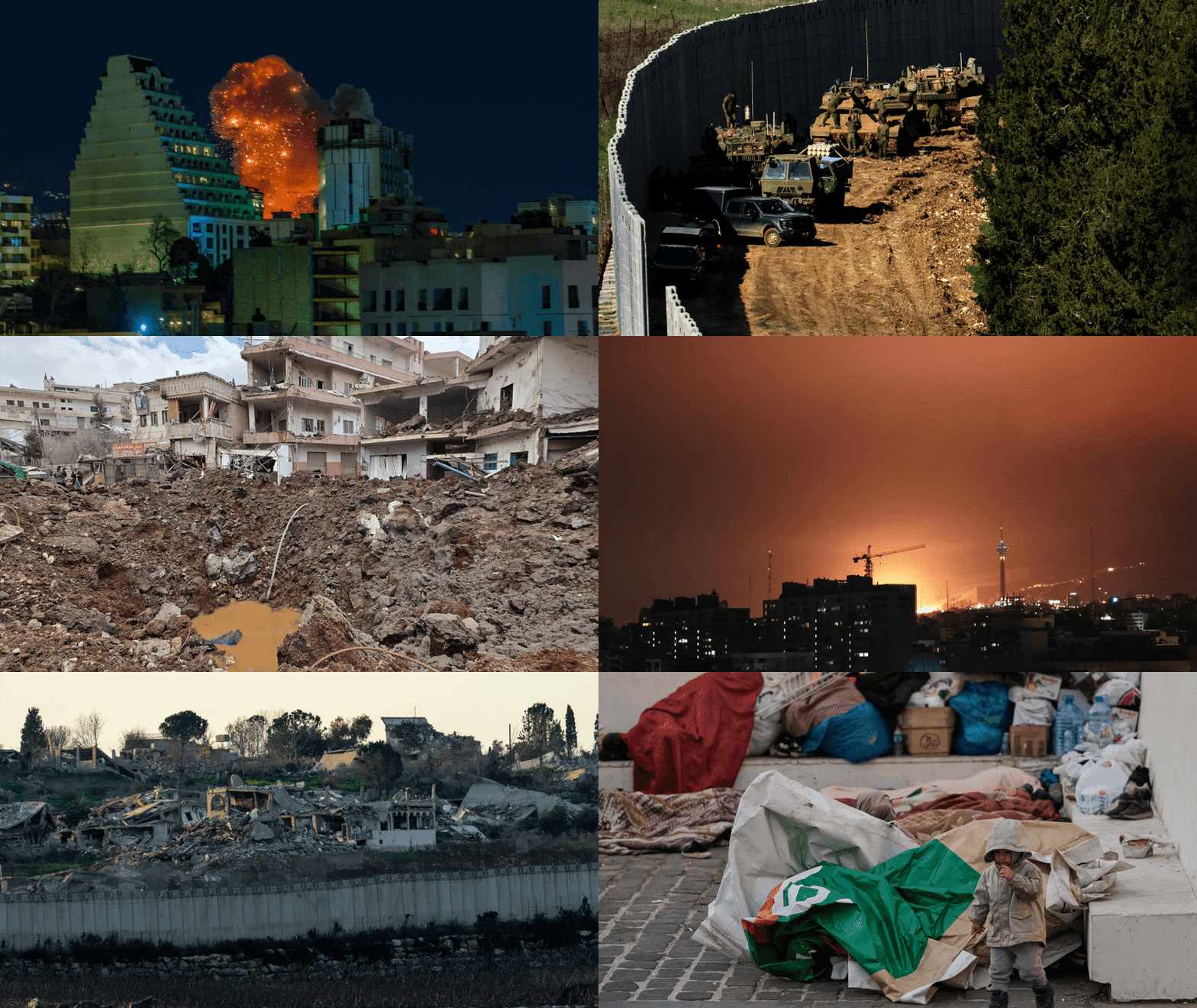
Israeli aircraft have dropped leaflets onto the streets of Beirut in an attempt to shift public opinion against Hezbollah fighters who are firing rockets into Israel, but there is no sign of a peace deal that could halt the airstrikes that have forced more than 800,000 people out of their homes across Lebanon.
Israeli Prime Minister Benjamin Netanyahu is urging the government of Lebanon to disarm Hezbollah, and the leaflets spread this message to Lebanese citizens. “Lebanon is your decision, not someone else’s,” the leaflets said. “Stability is not just a word – it is a right for every Lebanese.” The leaflets called Hezbollah “Iran’s shield” and said it should be disarmed.
The message may find a receptive audience in parts of the community that oppose Hezbollah – such as Maronites and other Christians, or Sunni Muslims, and some members of the Shia Muslim community. At the same time, the Israeli airstrikes generate fierce opposition from people who see them as attacks on Lebanon, not just on Hezbollah.
This was apparent in Douris, a district near Baalbek, east of Beirut, one day after a missile strike turned a large family home into a concrete crater.
Photographer Kate Geraghty captured the scale of the destruction when we visited on Friday. Nothing remains of the home where the missile hit: it is all rubble. The neighbouring house is partially destroyed: it has walls missing, smashed concrete and glass all over the floor.
The owner of the house next door to the crater, Ali Shreif, was one of several people wounded in the strike. He stood in the kitchen of his home with debris all over the floor. His friends and neighbours visited to help remove his destroyed car from the driveway.
United Nations Secretary-General António Guterres was in Beirut on Friday to discuss a peace deal, although there was no sign of progress. Guterres said 816,000 people were now displaced from their homes in Lebanon. As well, 90,000 Syrians who lived in Lebanon have crossed into Syria. Guterres announced a “flash humanitarian appeal” of $US308.3 million (about $440 million) to help the Lebanese people.