
The Australian Energy Regulator has released more details about the Government’s plan to offer free power in the middle of the day for some Australians.
The Solar Sharer Offer will be available from July first for Australians in Queensland, New South Wales, and South Australia, with other states to follow.
The program will be part of the Default Market Offer, which is a price set by the regulator that retailers need to offer customers, acting as a benchmark for electricity prices for the next financial year.
So how will it work?
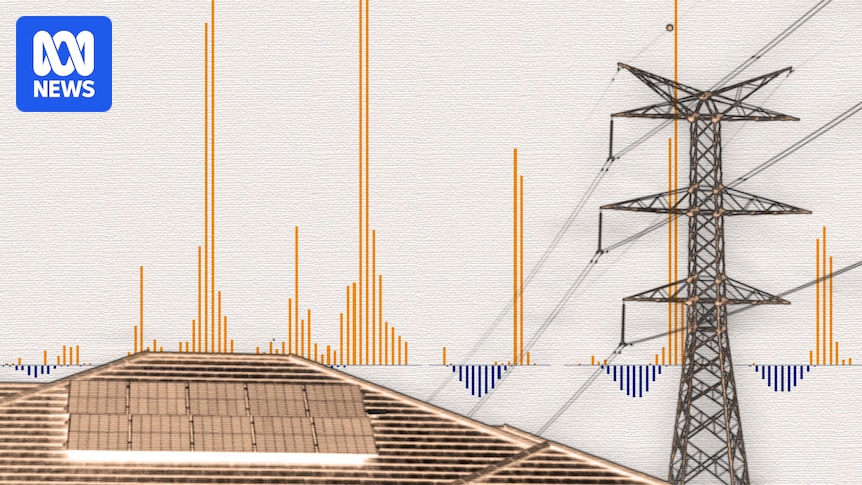
Australia’s rooftop solar story is staggering; panels on about 4 million households and businesses across Australia are regularly the biggest source of power in the grid.
That wave of solar energy floods the electricity grid during the day when the sun is shining, at times so much that the grid can not handle it all, and some of it goes to waste.
To help Australians cut their power bills and ease the pressures on the grid, the country’s energy regulator announced the Solar Sharer Offer (SSO) in January.
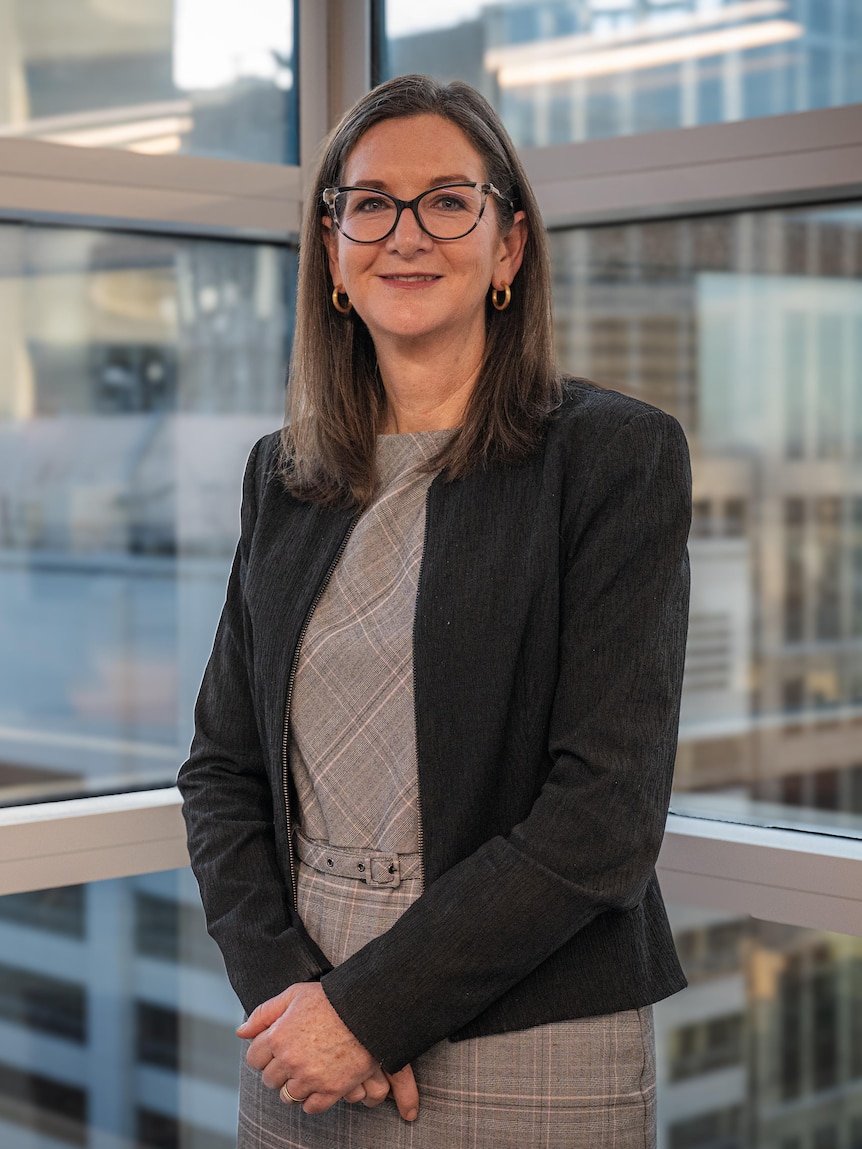
Clare Savage says the free power offer aims to make better use of the electricity system. (ABC News: Daniel Irvine)
From July, eligible consumers in Queensland and NSW will get three hours of free electricity between 11am and 2pm and in SA between midday and 3pm when solar power generation is at its peak.
Australian Energy Regulator (AER) chair Clare Savage said the focus had been to pick the hours when demand on the grid was at its lowest.
“We’ve picked those hours after we did some quite extensive modelling, you can imagine … when is the minimum demand in the grid? When do we have the most sunshine? When do we have the lowest prices? When do we have the lowest wholesale prices? When do we have the lowest network prices?” she said.
Am I able to get free power?
Currently, only customers in Queensland, New South Wales, and South Australia who have smart meters can benefit, but the federal government is consulting with the other states to bring it in by July 2027.
Ms Savage said while there is solar in the name, it doesn’t have anything to do with owning rooftop solar, or even being a homeowner.
“Some people want to make out that Solar Sharer is only going to be beneficial to high-wealth individuals who have EVs and batteries. There’s no doubt that they’ll have more load they can shift, but it’s also beneficial to everyone that those people are not charging their cars [during peak demand],” she said.
Will I pay more if I don’t sign up?
The SSO is generally structured like a time-of-use tariff.
While the three-hour block is free, prices at other times are adjusted so the typical annual bill stays about the same. Households that run appliances during those free hours, however, could save money.
There were concerns when the policy was first announced that retailers would raise prices outside the free hours, but Ms Savage said the program had been set up to avoid this situation.
But Ms Savage said the cost was calculated into the default market offer, which was the price cap rate that retailers had to offer to customers.
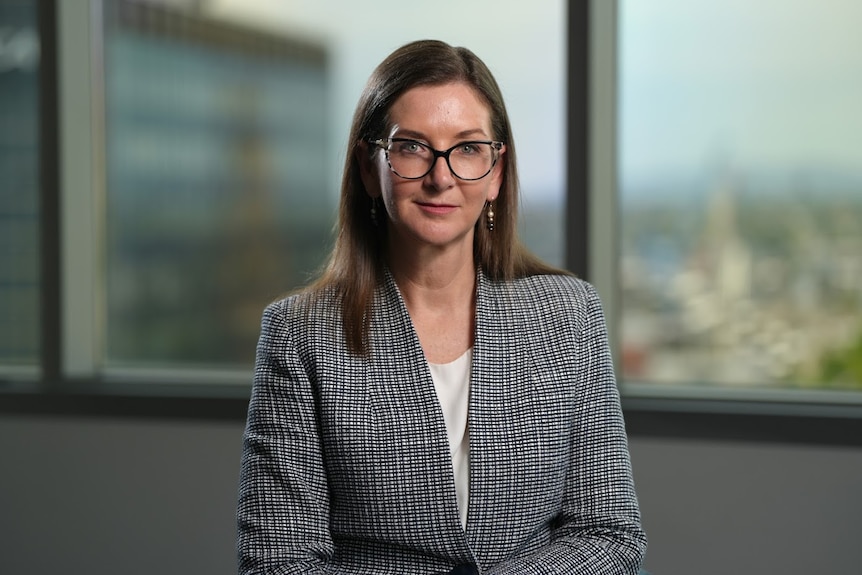
Ms Savage says nobody will be worse off by adding the free power tariff. (
ABC News: Matthew Holmes
)
To ensure this, the regulator calculates the average cost of power across the day, but instead of it being divided across the full day, it will be across the period outside free electricity.
Ms Savage said it meant if people did not shift much of their power to the middle of the day, they would be charged about the same amount as everyone, but if they were able to shift more to the free period, they should be able to save money.
“That actually helps give that regulated protection to customers that they know that they’re not going to get ripped off in the morning or the afternoon if they decide to go on to a solar sharer tariff, and they can move some of their load. So I think that’s an important principle,” she said.
She said the program should result in cost savings for all power customers, regardless of whether they signed up to the offer or not. Less demand on the evening peak meant less expensive gas, which would lower power prices across the board.
“For everybody that does shift load, it gives bill savings for all of us, right? Because we flatten the load profile,” she said.
Why is the government giving away free electricity?
Of course, the government is interested in relieving cost-of-living pressures by lowering power bills, but the SSO is designed to do another important job: smoothing demand on the grid.
During the day, demand plunges thanks to the huge amounts of solar energy generated on rooftops across the country.
But in the early evening, when the sun goes down and there is no more solar power, that demand shoots up.
It is creating what in energy circles is called the “duck curve”, and despite the cute name, it is bad news for our bills.
“The cost of having a system that looks like that is very expensive,” Ms Savage said.
“Imagine we had to build the Sydney Harbour Bridge big enough that you never had any congestion on it? So a car never paused as it went across the Sydney Harbour Bridge. You would have to build an absolutely enormous bridge, right?” Ms Savage said.
“But if you could smooth out when the cars go across the bridge throughout the day, you can build a much smaller bridge, and it’s much less expensive.”
The energy source that is available to jump in at short notice and meet that peak demand in the evening is often gas, and gas is expensive. We’re using less gas due to the growing supply of renewable energy, but it is often so expensive that it has an outsized effect on bills.
The Solar Sharer Offer was created to tackle that demand feast or famine by encouraging consumers to shift some of the demand from the evening peaks into the daytime.
We use very little gas, but it has an outsized effect on our bills
“So we really do need to see all customers … where they can, taking some of that demand from the early evenings and moving it into the middle of the day if we want to avoid a higher cost system in the future,” Ms Savage said.
And the way to get consumers to change their behaviours, according to Ms Savage, is through their hip pocket.
“So by encouraging people to actually shift some of their load into the middle of that day, we get to use that solar energy that would be otherwise wasted, and we get to avoid building more infrastructure to meet those demands in the evening.”
How can I make the most of the free power?
Basically, it is as simple as shifting any electricity-intensive activity into the cost-free period. For those at home during the day, it could mean turning on the dishwasher, washing machine, and air-conditioning during those times.
New appliances have increasingly become “smart”, meaning they can be programmed to turn on when power is free or turned on remotely.
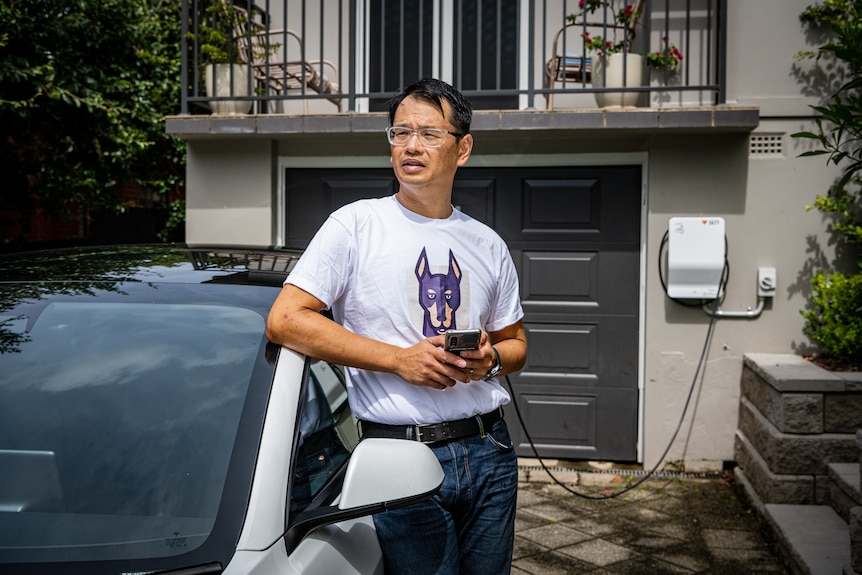
The energy regulator would like to see EVs being charged in the middle of the day. (ABC News: Brendan Esposito)
Of course, what will really move the needle will be if the majority of EVs and batteries are charged during those hours.
How much power can I consume for free?
Customers will be able to access up to 24 kWh of free electricity during the daily window, which is about what a five-person household would consume in a day, according to Ms Savage.
“[There] won’t be like a penalty price above that. It’ll just revert to a marginal price at that time. It’s not like if you exceed that cap, you’re going to be punished,” she said.
How can I sign up for free power?
The SSO will be introduced with the regulator’s release of the power price cap, the DMO, in July.
Eligible consumers can sign up through their electricity retailer.
The SSO will have to be part of the big energy retailers’ offering. (ABC News: Natasha Johnson)
Ms Savage said consumers would have to opt into the program — they could not be forced onto it.
While it is due to officially start in July, there are several retailers who already offer “free power” plans.
Ms Savage said consumers needed to check the fine print on any of the offers and advised using the regulator’s free comparison tool, Energy Made Easy.
“It can’t tell you whether you’ll be better off in the future, but it can tell you up to this point, is it a bad plan for you?” she said.
Will the free power even matter if the war in Iran pushes up prices?
In 2022, the Ukraine war sent fossil fuel prices skyrocketing and drove up electricity prices. The question is whether the same will happen again.
Ms Savage said while she was concerned about the situation in Iran, at this stage, it was not having a significant impact on prices.
“We’re watching, we’re concerned, but at this stage it’s not having a significant impact,” she said.
“At this point, on the situation in Iran, we’re alert, not alarmed.”
“We have seen over this last year wholesale prices come down so much that even though they’ve gone up a little bit in the light of the situation in the Gulf, they’re still not above where they were, say, a year ago. And we’ve got a lot more renewables in the system than we had in 2022.”
She said while Australian power prices remained exposed to international fossil fuel prices, the situation was different to 2022.
“One of the things that was really challenging in 2022 was that we’d had really bad flooding over the summer,” she said.
“And we had a lot of coal mines that were flooded or wet, our own domestic production had been interrupted for coal. The hydro [power plants] couldn’t generate as they might have wanted to, because of the risk of flooding. We were very energy-constrained; at the same time, we also had a crisis with Ukraine.
“So it’s a different situation now to that, but we are still very exposed to fossil fuel prices.”
Low volatility and more renewable energy in the grid have been driving down wholesale power prices that could be flowing through to consumer bills.
The Australian Energy Regulator will release a draft of its Default Market Offer (DMO) for 2026-27, which covers most of Australia’s east coast on Thursday.
Victoria released its draft last Thursday, which proposed that prices for domestic customers will decrease by roughly 3 per cent compared to the previous year.