
The Athletic has live coverage of Italy vs. Puerto Rico in the World Baseball Classic 2026.
The dust has settled, and two teams that were on a collision course for a matchup at some point in the World Baseball Classic will meet in the semifinals. Team USA and Team Dominican Republic, federations heavy on All-Stars, MVPs, Silver Sluggers, Gold Glovers and Cy Young Award winners, will meet Sunday at loanDepot park for a spot in the WBC championship.
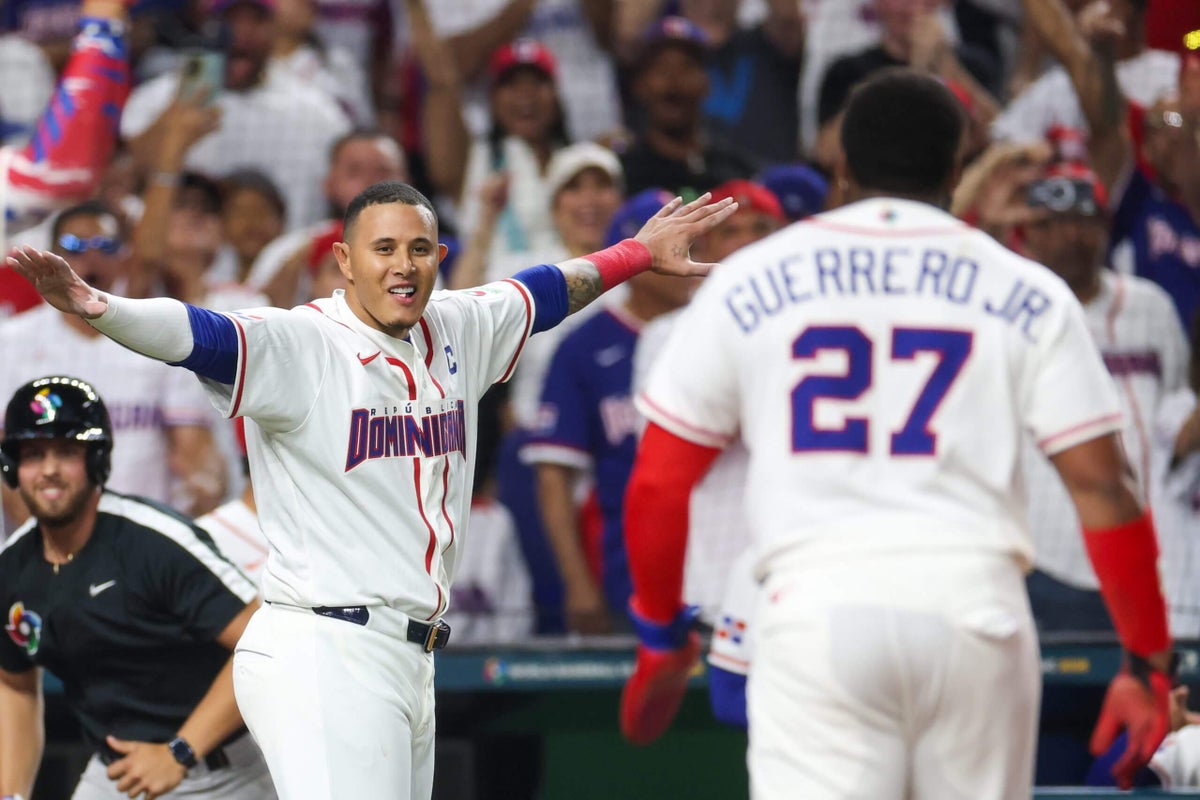
To get there, the D.R. has done nothing but crush the opposition, tying the record for the most home runs in a tournament (14) on a walk-off that mercy-ruled Korea out of the quarterfinals, 10-0. The U.S. needed help from Italy, then a strong performance from Logan Webb against Canada.
This will be the first U.S.-vs.-Dominican Republic matchup since the 2017 WBC. There, the sides split the series 1-1, though Team USA ultimately got the last laugh, besting the Dominicans in the quarterfinals en route to winning its first WBC championship.
It’s a coin flip between who will win, but these three things will ultimately define the matchup.
Starting pitching will have fewer restrictions
That 65-pitch limit in pool play, and the 80-pitch limit that safeguarded arms in the quarters, is off the table. Pitchers can reach 95 pitches in their starts in the semifinals and championship. It’ll be Paul Skenes vs. Luis Severino come Sunday, and both starters will have the freedom to attack hitters as they see fit without needing to weigh pitch selection against the need to cover innings.
On paper, Skenes, the reigning NL Cy Young Award winner, stands out as an immediate favorite. But consider this: Severino pitched to a 3.02 ERA away from Sutter Health Park, the Athletics’ temporary home in Sacramento, Calif. The matchup is a lot closer than it’s being given credit for.
Lineup construction will define the game
To get past Team Canada, U.S. manager Mark DeRosa made one major change to his “A” lineup. He replaced center fielder Byron Buxton with Pete Crow-Armstrong, who slugged two home runs in the loss against Italy. Crow-Armstrong rewarded that faith by tallying two hits, including an RBI single.
What DeRosa didn’t do was move Bryce Harper down the lineup, and potentially out of it altogether. Harper has spent much of the WBC looking lost at the plate, often against lesser competition. On Friday, he remained in the two-hole, going 0-for-5 with a loud fly out and one run scored. DeRosa similarly kept Alex Bregman at third, if only for defensive purposes behind Webb.
If the U.S. wants to beat the D.R., then some tough conversations need to be had. The best players need to get the most at-bats. Frankly, neither Harper nor Bregman has been playing their best. By comparison, Brice Turang and Crow-Armstrong have.
During a Fox TV interview with The Athletic’s Ken Rosenthal, DeRosa defended himself against some of the criticism he’s received, saying, “I have an undying passion for (this job), and an undying belief in the guys on this roster. I don’t think there’s an A and a B. I think they’re all A’s.”
It’s time to treat the “A’s” as such.
Managerial inexperience could doom either side
Neither DeRosa nor Albert Pujols, the Dominican Republic’s manager, could be called experienced. Pujols does have more experience than DeRosa, having managed in the winter leagues, but he, too, has yet to step into a big-league dugout as a skipper.
So far, that inexperience has shown up in spurts. DeRosa went to Brad Keller followed by Gabe Speier against Canada. Both allowed runs. Keller had already permitted two runs against Italy. He allowed another two against Canada. Part of the calculus of reconfiguring Team USA’s roster was to get fresh relievers in. DeRosa stuck with the known, and it bit him.
Similarly, Pujols replaced Abner Uribe with Elvis Alvarado in the ninth inning against Venezuela. A 7-3 score suddenly became 7-5, and had Venezuela manager Omar López subbed Eugenio Suárez for Salvador Perez, there’s a good chance the D.R. is up against Japan in the quarterfinals instead of mercy-ruling Korea.
Knowing which button to press when is a fine art that managers learn over time. That inexperience could spell doom either way when it comes to picking the right relievers and substitutions.