
46
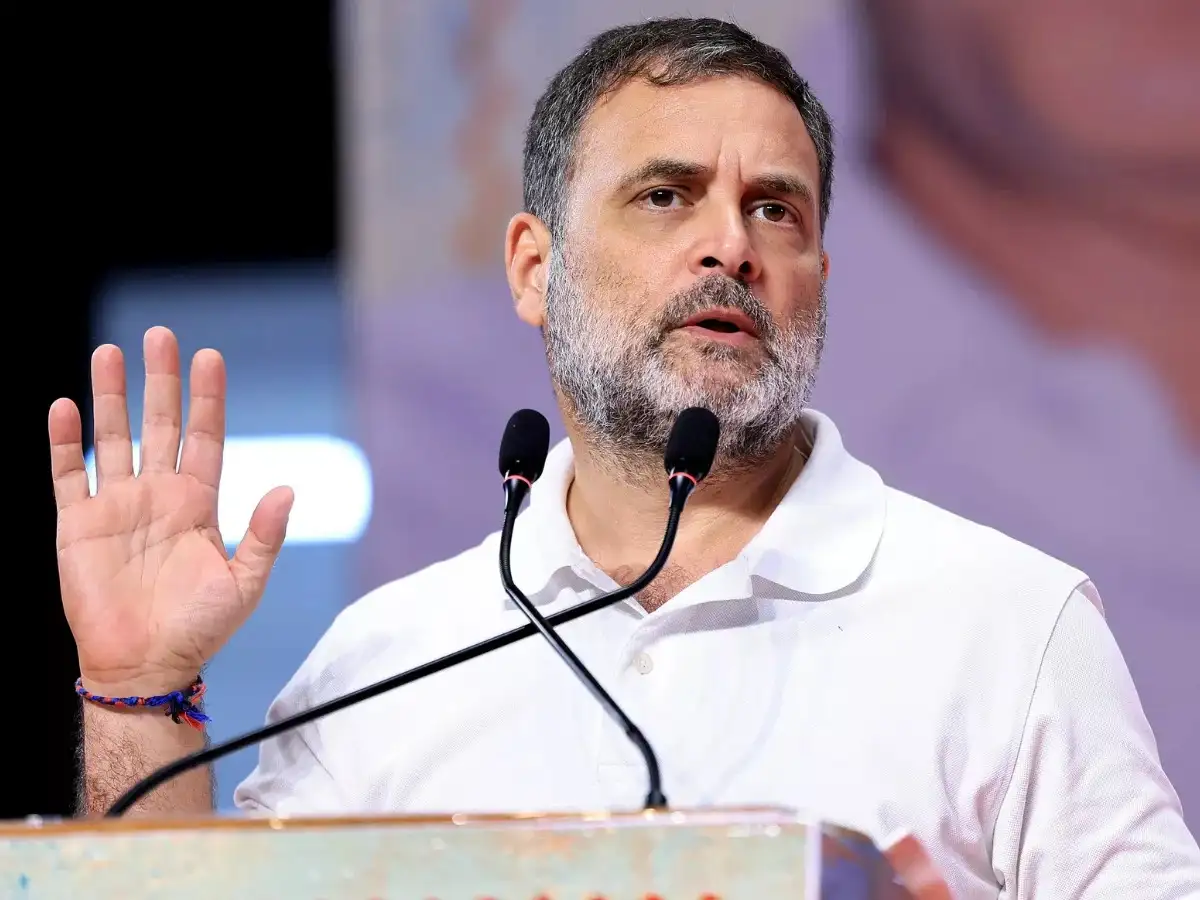
NEW DELHI: Rahul Gandhi has been fond of boxing since childhood, and his political style often reflects that approach. In a boxing match, victory or defeat is decided quickly. Prime Minister Narendra Modi, on the other hand, from his early years has practised Surya Namaskar, drawing strength calmly over time and focusing on long-term benefits.
Today, as the war in West Asia triggers a global energy crisis—particularly affecting petroleum and gas supplies—Rahul Gandhi and the Congress party have been creating considerable uproar both inside and outside Parliament. In the Lok Sabha, Rahul Gandhi spoke briefly about petrol and gas prices but then began raising unrelated issues involving the United States, ministerial families and alleged pressure on India. When the Speaker did not permit him to continue along those lines, he joined the protests. Outside Parliament, Congress leaders staged a sit-in and symbolically sipped tea at the gates.
Rahul Gandhi also alleged in television sound bites that the Modi government had failed to prepare any policy or arrangements in advance to deal with an energy crisis. However, Petroleum Minister Hardeep Singh Puri presented a detailed statement assuring that there is no shortage of petrol or gas and that the government has arrangements in place to tackle the crisis, including crude oil import agreements with around 40 countries.
You Might Be Interested In
Rahul Gandhi has been a Member of Parliament for nearly 22 years, including 10 years during which his own party led the government. During that period, how often did he raise energy policy issues inside or outside Parliament? Did he ever prioritise solar energy—the cheapest and potentially free source of power—and urge governments to adopt it on a large scale?
Many journalists recall being told by officials and diplomats during the Congress years that proposals to acquire oil fields in African countries were often delayed. Senior leaders were reportedly more interested in commissions from oil imports. The coal allocation scandal also took place during that era. To be fair, during Prime Minister Manmohan Singh’s tenure, some approvals for solar energy projects did come through due to the efforts of certain advisers, collaborators and state governments.
After Narendra Modi came to power in 2014, however, solar energy programmes expanded rapidly. From 2014 to 2025, solar capacity multiplied several times.
Large solar parks were built, domestic manufacturing began to develop and India steadily moved toward a leadership position in global solar energy.
Today, solar power has become a central pillar of India’s energy policy. If the present pace continues, India could emerge as one of the world’s largest solar energy economies in the coming decade.
The expansion of solar and other energy sources has also helped reduce dependence on crude oil imports. This has provided India greater resilience at a time when global petroleum and gas markets are facing disruption.
Another fact that Rahul Gandhi and his colleagues often overlook is that the industrial groups they criticise—such as the Adani and Ambani conglomerates—have invested massive sums in the energy sector in recent years, particularly in solar energy projects.
There is no doubt that China still leads the world in solar energy, with the United States in second place. India has now moved into the third position. China’s lead stems from several advantages, including a vast domestic solar manufacturing industry, global leadership in solar panel production, heavy government investment and extensive desert regions suitable for solar parks. Today, most of the world’s solar panels are manufactured in China.
This issue had surfaced even during the Congress years. A senior central government official once informally told me of his frustration that the government appeared to push for the purchase of solar panels from Chinese companies, even though panels produced at Bharat Heavy Electricals Limited were considered superior. One could only speculate whether commissions were involved in such decisions.
Regardless, the combination of government policy and private investment under the Modi administration has made India one of the world’s largest solar energy markets. If the present trajectory continues, India could soon become one of the biggest solar power producers globally. The government has developed around 45 large-scale “solar park models” for solar power generation. Under this framework, the government provides land, transmission networks and infrastructure, while private companies generate electricity. Rajasthan and Gujarat are expected to remain the main centres of solar power generation, with massive solar parks coming up in the Kutch and Thar desert regions.
Major corporate groups are investing heavily in renewable energy. The Adani and Ambani groups have launched large green energy projects, while the Tata and Birla groups are playing important roles in solar production and related technologies. The Adani Group has emerged as India’s largest private investor in renewable energy and has announced plans to invest about Rs 2.3 lakh crore in the sector, much of it in solar projects.
Mukesh Ambani’s Reliance Industries has announced an investment of about $75 billion (nearly Rs 6 lakh crore) in green energy, including solar panel manufacturing, battery production and green hydrogen.
The company is developing the Dhirubhai Ambani Green Energy Giga Complex in Jamnagar, which is expected to become one of the world’s largest green energy hubs. The Tata Group’s Tata Power has announced an investment plan of about Rs 1.25 lakh crore to be completed by 2030 and has already emerged as one of India’s largest rooftop solar companies. The Aditya Birla Group is investing heavily in wind energy. With cooperation between the central and state governments in providing land and infrastructure, India can continue expanding its electricity generation capacity. Rajasthan, Gujarat, Madhya Pradesh and several southern states have achieved notable success in renewable energy development.
It is surprising that despite immense potential, states such as Bihar and Uttar Pradesh continue to lag far behind in harnessing solar energy.