
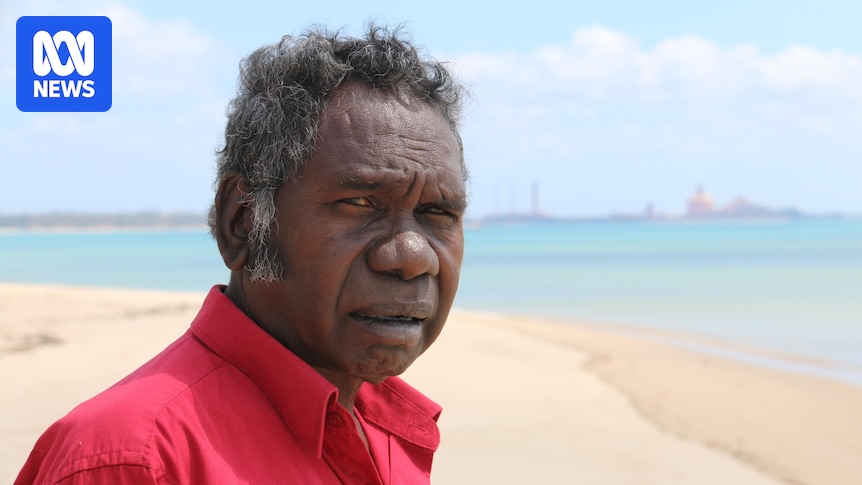
Aboriginal and Torres Strait Islander readers are advised this article contains names and images of people who have died.
Before Yothu Yindi, before Witiyana Marika’s onstage swagger and electric smile had him dubbed “the black Elvis”, the man from Arnhem Land was steeped in the songs and ceremonies of his people.
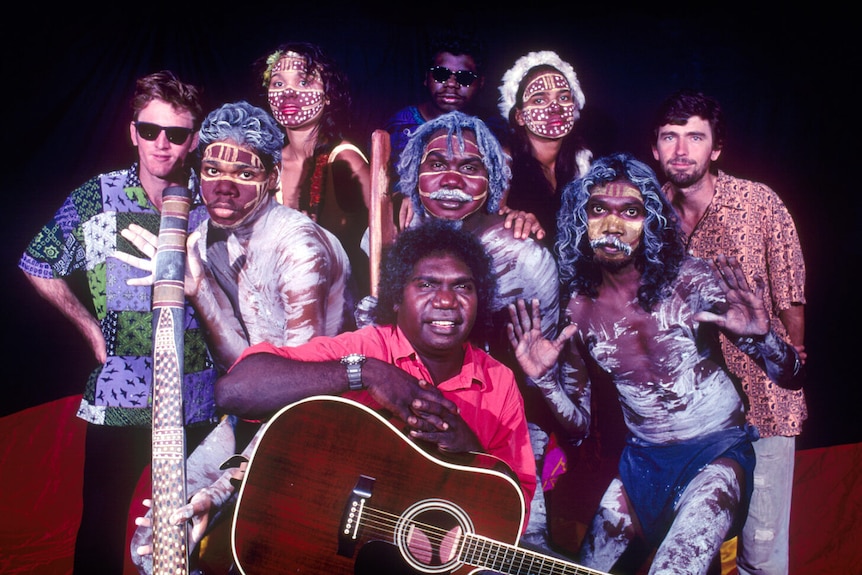
From remote Arnhem Land to the world stage: Yothu Yindi pictured in its heyday. (Photo by David Hancock)
Even as Witiyana was forming in his mother’s womb, his father and land rights activist Roy Dadaynga Marika would sing to him, believing that when his son arrived into the world, he’d be cloaked in his culture.
As a boy, he’d sit with Roy and other elders and learn the songs, the clapsticks, the age-old stories of the Rirratjingu, one of the clans of the Yolngu people of the Gove Peninsula in the Northern Territory.
Then, in his 20s, Witiyana was whisked to international stardom, a dreadlocked dancer and songman who formed part of Yothu Yindi, arguably Australia’s most influential, Indigenous-led band.
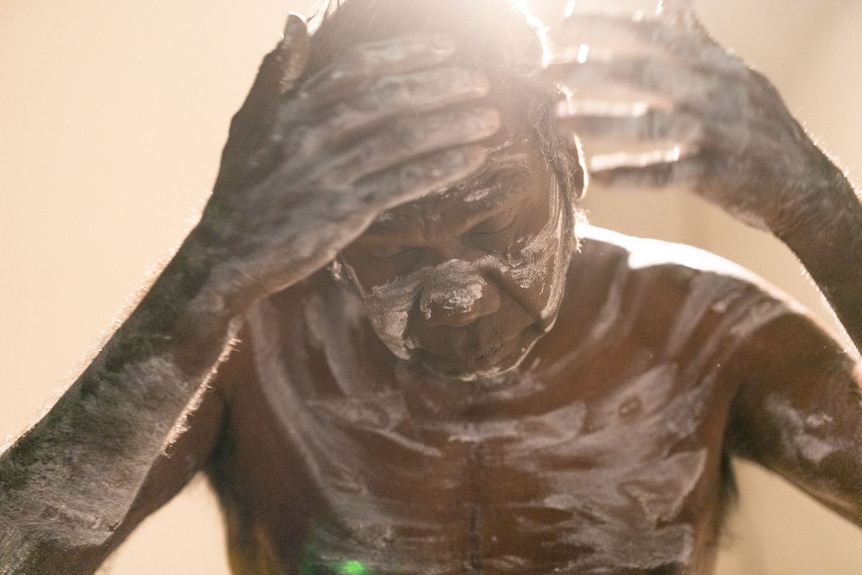
Witiyana Marika prepares to perform at the 2025 Garma Festival in remote Arnhem Land. (Australian Story: Che Chorley)
Now 64, Witiyana is happy living back on country, curbing his exposure to the rock-and-roll lifestyle to become a leader in his community, just like his late father.
“He was a role model for me,” Witiyana tells Australian Story. “He expected that I would one day be a leader. Watching Dad, I’d think to myself, ‘I’m going to be like him’. Just stand strong and fight for my people’.”
The people of Arnhem Land have long fought on the national stage for Aboriginal land rights and the Marika family has been at the forefront.
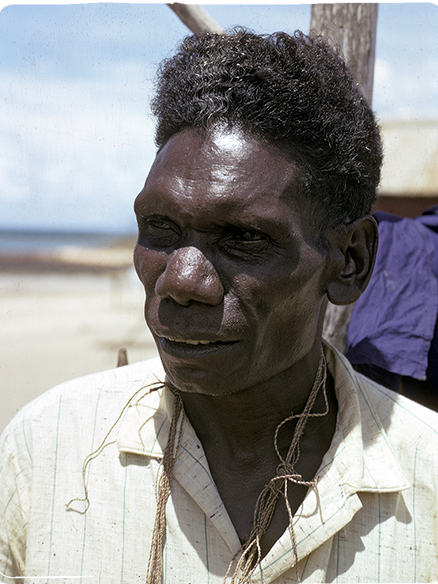
Roy Marika is remembered as the “father of the Aboriginal land rights movement”. (Supplied: National Museum of Australia)
Before Witiyana was born, the discovery of vast deposits of bauxite on the Gove Peninsula led to the Liberal Menzies government allowing prospecting on a large chunk of Aboriginal reserve, without consulting the Indigenous people.
What followed was one of the most significant battles over Indigenous land rights, one in which the Yolngu people were often defeated but never bowed.
Now, with mining set to cease by 2030 and a massive compensation win awaiting finalisation by the Federal Court, the future of the region and its people is at a crossroads.
And Witiyana Marika, whose name means “morning star”, is stepping up to the challenge of guiding them on.
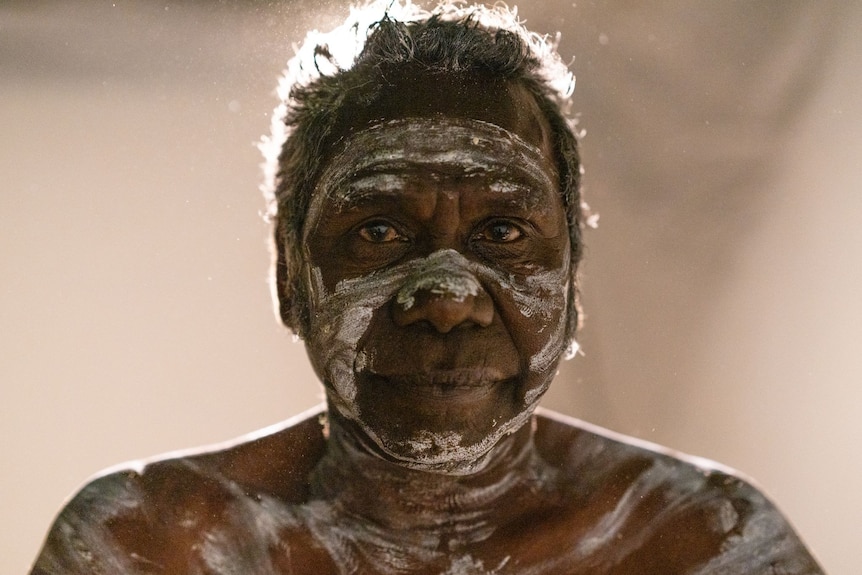
Yothu Yindi songman Witiyana Marika walks in two worlds. (Australian Story: Che Chorley)
A ‘crazy idea’ catapulted Yothu Yindi’s success
In the video clip, Witiyana is dancing on the beach on the Gove Peninsula with his clapsticks, his painted body moving in undulating rhythm to the words “Treaty yeah, Treaty now”.
The remix version of Treaty released in mid-1991 became the first song by an Indigenous-led band to chart in Australia, reaching number 11 before climbing to number 6 on the US’s Billboard Hot Dance Club chart.
“My life just changed,” Witiyana says. “I was becoming a famous Yolngu rock star … and that puts us up there, the top of the world.”
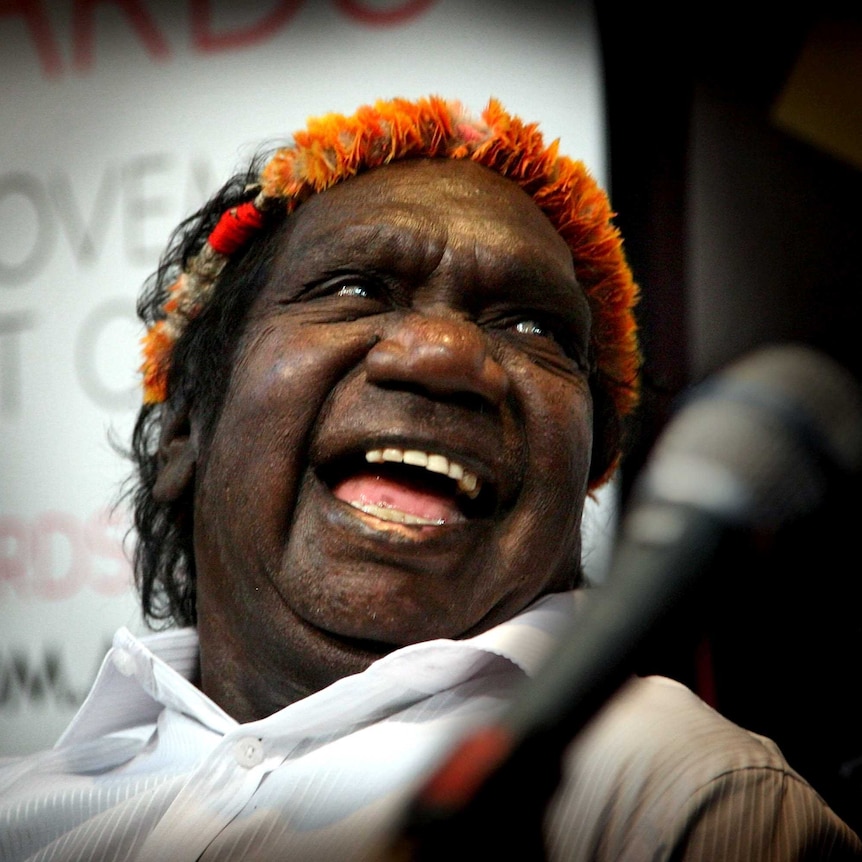
Yothu Yindi founder and Witiyana Marika’s uncle Mandawuy Yunupingu died in 2013. (AAP: John Donegan, file photo)
It all began about six years earlier after Witiyana’s uncle, the late Mandawuy Yunupingu of the Yolngu people’s Gumatj clan, saw Witiyana dancing in their community of Yirrkala. Mandawuy had returned to his hometown as school principal and was keen to start a band.
“He chose me because I had the talent and I could sing as well,” Witiyana says of his mentor who would become Yothu Yindi’s frontman. “[He said], ‘We can change this world. Instead of singing in English, we can blend English and Yolngu’.”
Witiyana laughs. “What a crazy idea.”
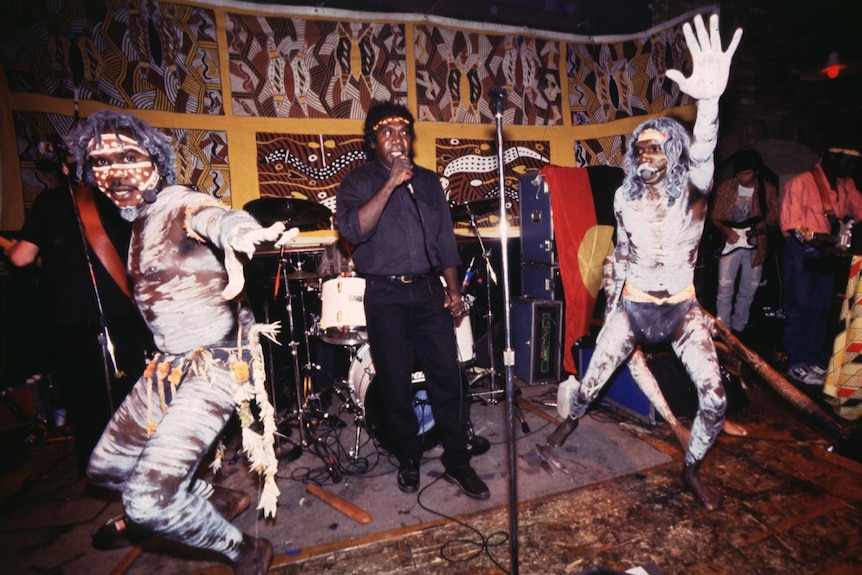
Yothu Yindi, including lead singer Mandawuy Yunupingu and Witiyana Marika (left), perform on stage in 1991. (Getty Images)
In 1986, the band merged with the white rock group, Swamp Jockeys, and played big shows with bands such as Crowded House and Midnight Oil, even touring the US and Canada with the Oils in 1988.
Then, the band collaborated with musicians Paul Kelly and Peter Garrett to write Treaty, a protest song at the lack of action on a promised treaty between Aboriginal people and the federal government.
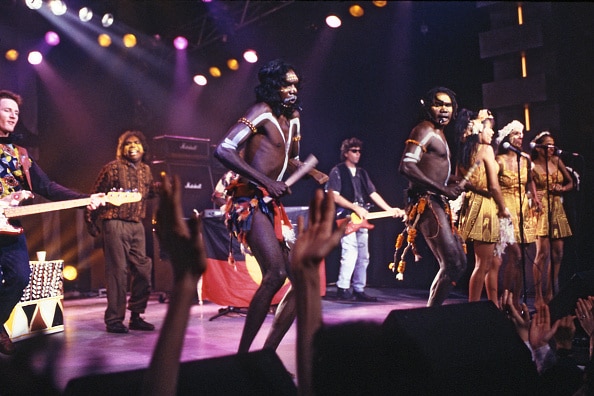
Yothu Yindi’s success as a band that sings in a blend of both English and traditional language was unprecedented. (Getty Images)
The rhythm, the message and the otherworldly sound of the Aboriginal language captivated audiences, as did Witiyana, “the black Elvis”.
“He’s got all of the tribal moves, but he’s got swagger,” says Stephen Johnson, a film director who made Yothu Yindi’s early video clips. “He’s got this Elvis thing going on that he just mixes in at the right time and brings it right up front, and the audience just love it.”
Yothu Yindi was off again touring the world, including performing in New York at the United Nations for the launch of International Year for the World’s Indigenous People, and hanging out with famous stars.
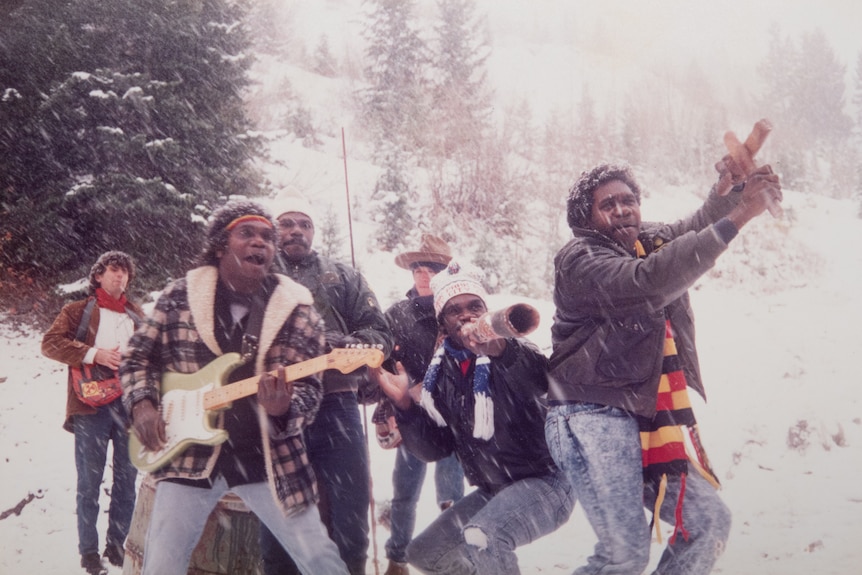
Yothu Yindi members had a chance to travel the world and see new places, and climates, along the way. (Supplied: Yothu Yindi/Alan James)
It was a massive cultural change for a man who spoke 13 Indigenous dialects before he learnt English and, as the tours rolled on, the trappings of the rock-and-roll lifestyle took its toll.
“I was drinking too much sometimes,” Witiyana says. “It was bad to my body … It was just killing, like killing or ruining my talent.”
He decided to go home. His father was very ill and Witiyana says, he could “feel his energy … that he was calling me home”.
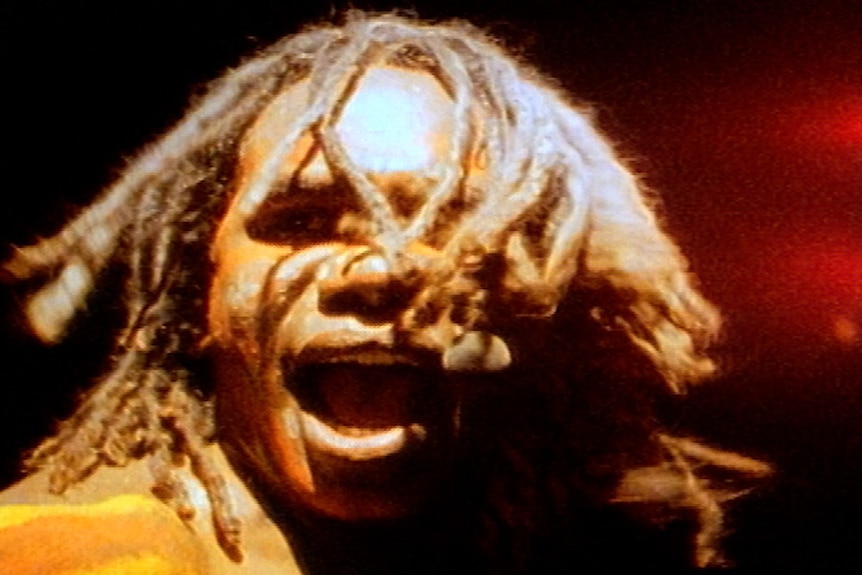
A young Witiyana Marika in his element performing. (Supplied)
But Witiyana was still drinking. A drunken car crash on country with his son and others on board would change that.
The car veered around a sharp corner at full speed and flipped five times. Witiyana and his son were badly injured but pulled through.
Witiyana’s cousin Merrkiyawuy Ganambarr-Stubbs says the family feared they’d both die.
“That’s when he said, ‘No more drinking, I’m going to be an elder’,” she says.
“Come back to the land. Come back to the songs. Come back to the culture. And that’s what he did.”
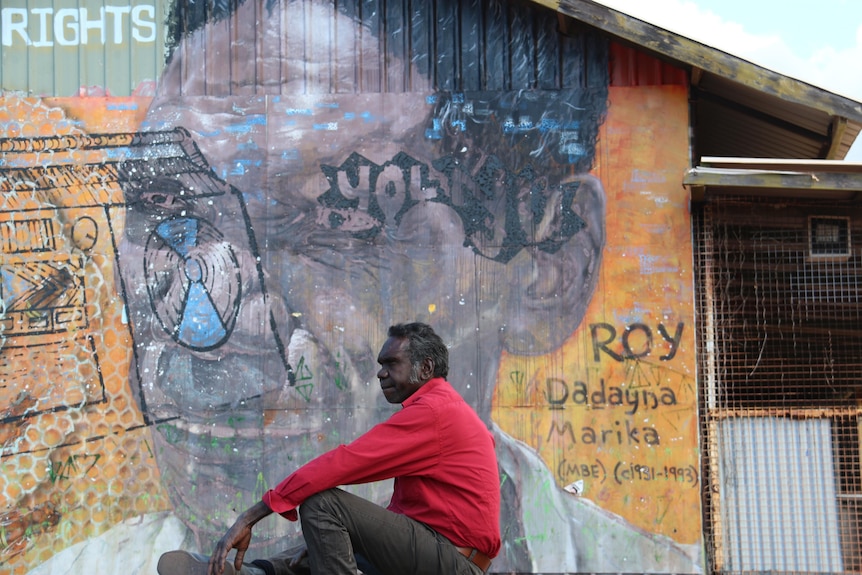
Witiyana Marika sits in front of a mural dedicated to his father, Roy Marika, a Yolngu man known as the “father of land rights”. (Australian Story: Ben Cheshire)
Witiyana is a ‘spiritual ambulance’
On the occasions when tensions erupt between clans in Yirrkala, Witiyana heads towards the fracas with his clapsticks.
He begins with just a single clap, says Will Stubbs, coordinator of Yirrkala’s arts centre. Then another. Then the rhythm quickens to a heart beat and the warring families start to register his presence.
Loading…
“He walks straight through the middle of these scenes as if he’s got a force field around him,” Will says. “And slowly things subdue, and people remember who they are, and that we are all part of the same family. It’s as if he is in another dimension.”
Mandawuy Yunupingu’s widow, Yalmay Yunupingu, says Witiyana is a peacemaker who has the respect of all the Yolngu clans.
“He brings people together, brings reconciliation, brings harmony,” she says.
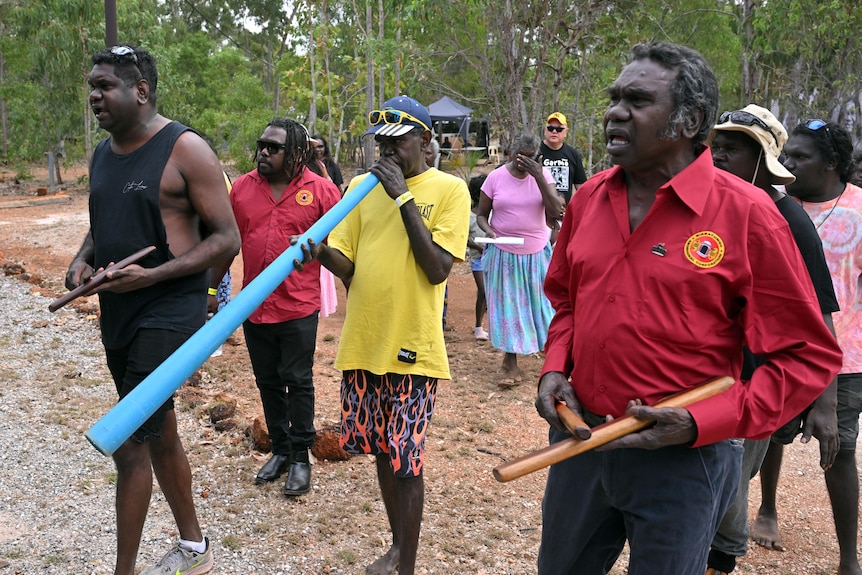
The 2024 NT Australian of the Year Local Hero Witiyana Marika leads the opening of the Garma Festival. (AAP: Mick Tsikas)
Witiyana has risen to be the leader his late father always wanted him to be, a songman who holds in his memory the lore and songs of his people. He conducts the important ceremonies of his mob, such as funerals and initiations and much more.
“He wears quite a few different hats under the one role as ceremonial leader,” Will says. “He’s an archbishop. He’s a High Court judge. He’s a professor. He’s a counsellor. He’s like a lord mayor. And he also happens to be a rockstar.
“He’s the person who’s comforting the woman who’s lost her child … He’s like a spiritual ambulance, if you like.”
 Witiyana still ‘flying across the stage’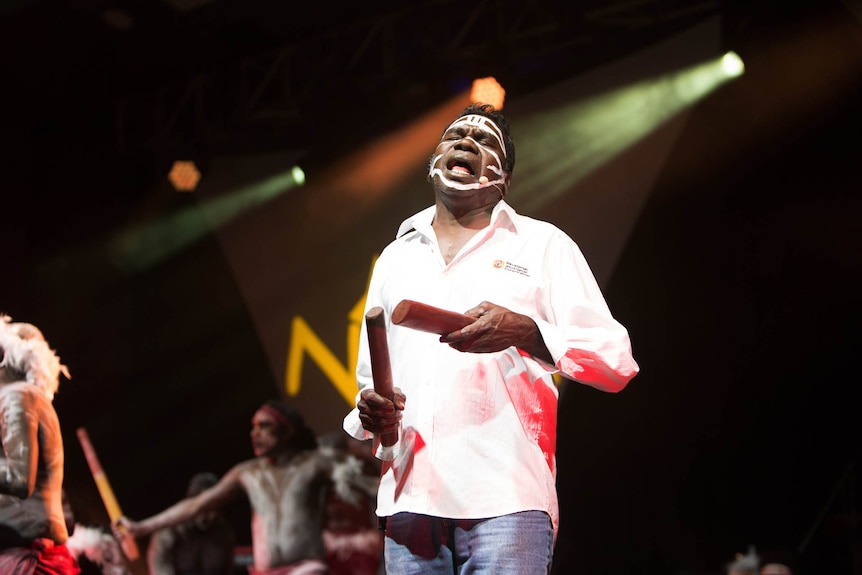
Yothu Yindi co-founder Witiyana Marika performs on stage. (Photo by David Hancock)
Witiyana still straddles both worlds, returning to the stage in recent years after helping to reform Yothu Yindi with a new generation of musicians and dancers.
“I’m enjoying it and I’m singing again,” says Witiyana, a rheumatic heart disease sufferer who has renewed energy after undergoing open heart surgery. “Even though I’m 64 years old, I’m still flying across the stage.”
He also turned his hand to acting, featuring in Stephen Johnson’s 2020 film High Ground, which tells the story of an early 1900s massacre of the Yolngu people and how they fought back.
But it’s his role as ceremonial leader and the cultural advisor to the Rirratjingu Aboriginal Corporation that is likely to take up more of his time as the Yolngu enter a new phase.
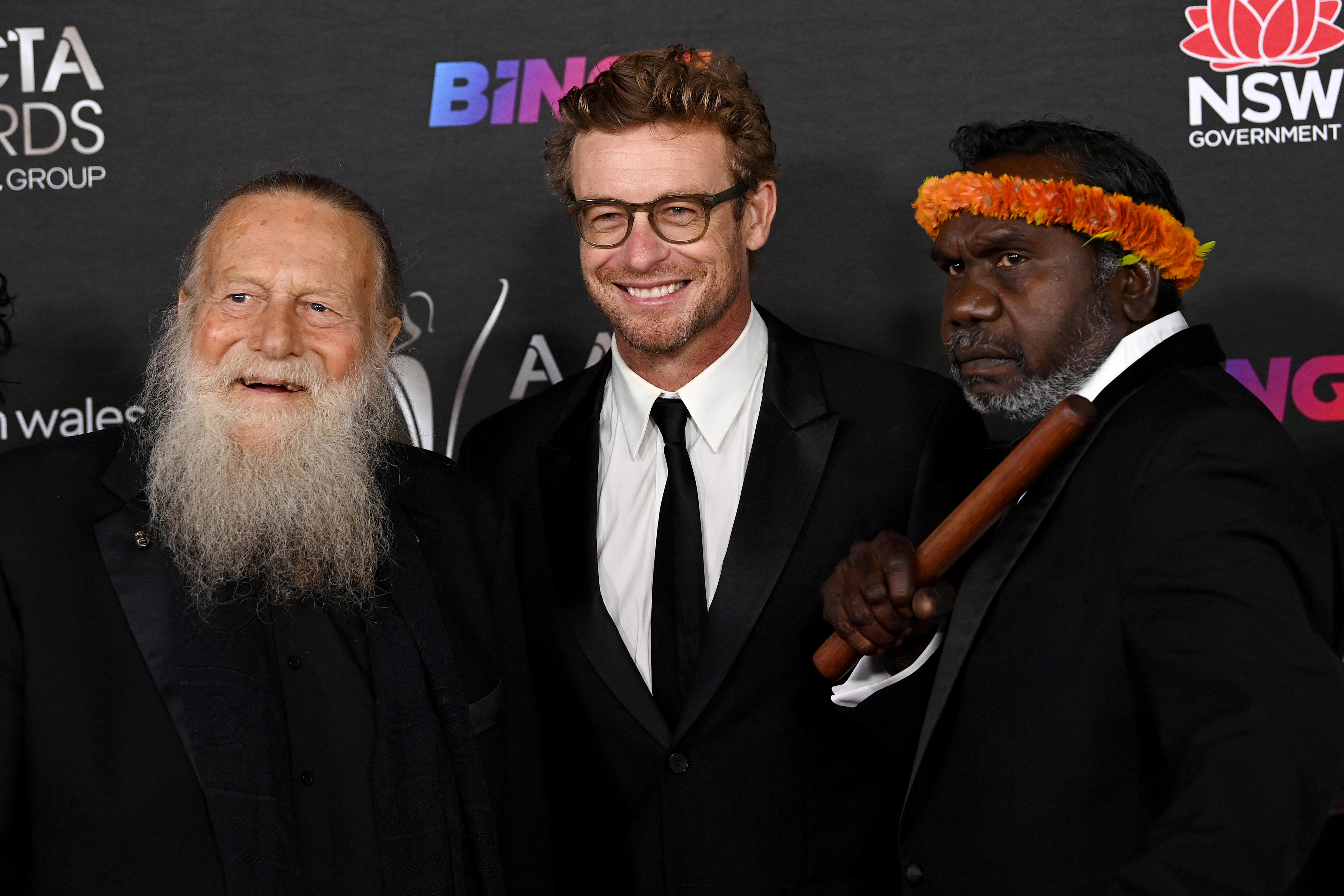
Witiyana Marika (right) on the 2021 AACTAs red carpet alongside fellow High Ground actors Jack Thompson and Simon Baker. (AAP: Bianca De Marchi)
Roy Marika leads long fight for land rights
Witiyana’s father Roy drove the establishment of the Rirratjingu Aboriginal Corporation in 1984 as a vehicle to manage the royalties the community was to receive from the bauxite mine, setting up businesses and services.
Getting to that point had been a long, hard fight.
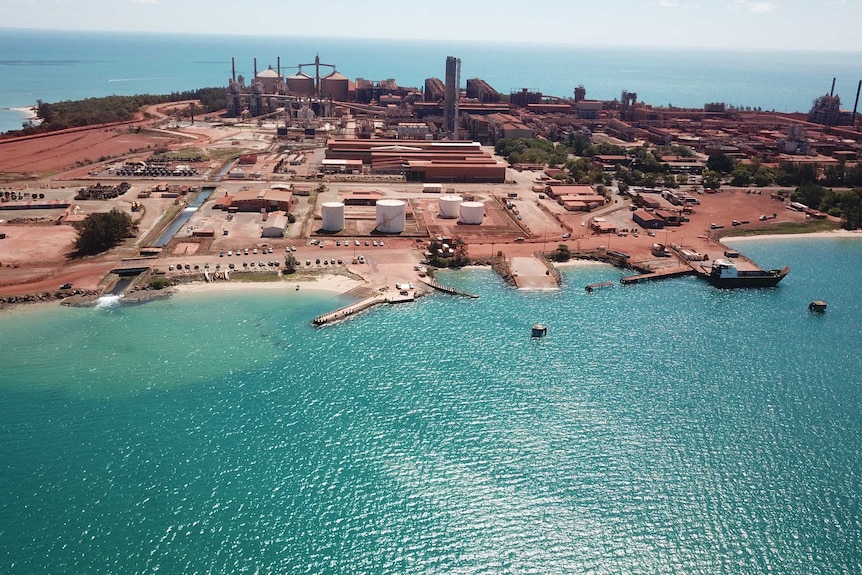
The bauxite mine on the Gove Peninsula at the centre of the claim. (Supplied: Blue Douglas)
La Trobe University historian Professor Clare Wright says that after the Yolngu learnt in 1963 of the move to mine on the Gove Peninsula, they petitioned the federal government.
They chose bark as the petition’s medium. On the bark, the Yolngu people explained their ongoing ownership and connection to the land and asked to have a voice in determining what happened on their land.
“But,” Professor Wright says, “the Yolngu people’s views were ignored.”
The Yirrakala bark petitions explained
So, they went to court in 1971 in what became known as the Gove land rights case, the first significant legal case for Aboriginal land rights in Australia.
Again, they were thwarted. “Justice Blackburn found that the Yolngu people had no native title claim over their land in British law … and the mine went ahead,” Professor Wright says. Sacred sites were destroyed.
Witiyana says it was a “terrible moment”. “Broke my father’s heart, my grandfather’s and all the clan. That was devastating.”
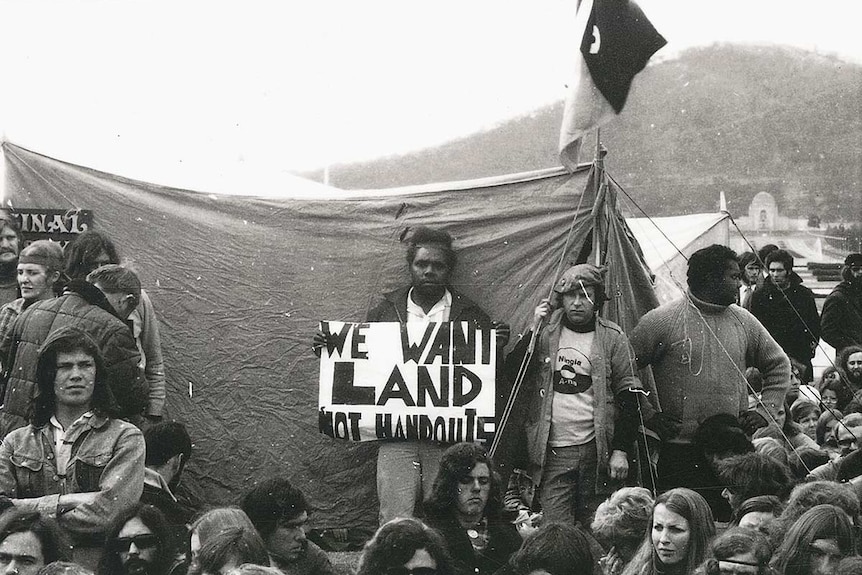
A group of protesters at an Aboriginal land rights demonstration at Parliament House, July 30, 1972. (Supplied: National Museum of Australia)
But a royal commission into land rights followed and, in 1976, the first land rights legislation in Australia came into effect in the Northern Territory, with mining royalties going to the Yolngu.
Then, in the landmark Mabo judgement of 1992, the High Court rejected the 200-year legal notion that Australia was an empty land, or terra nullius, before Europeans arrived, overturning Blackburn’s decision.
Fast forward to 2019, and prominent Gumatj leader, the late Dr Galarrwuy Yunupingu, lodged a compensation claim over the impact of mining on native title rights, seeking $700 million.
It went all the way to the High Court, with the opening session marked by a traditional ceremony performed by the men and women of different Yolngu clans.
There, leading the group into the Darwin courtroom with his clapsticks, was Witiyana.
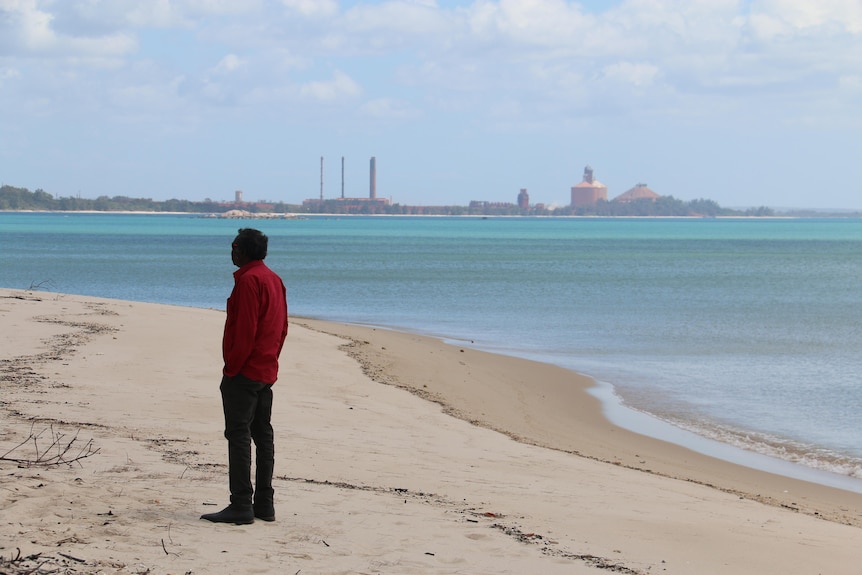
Witiyana Marika looks out across Crocodile Creek (Lombuy). (Australian Story: Ben Cheshire)
Last year, the High Court found in favour of the Yolngu, with the matter now before the Federal Court to decide the compensation amount.
“My father would have been the happiest man alive, [if] he would have been here today, for winning the case,” Witiyana says.
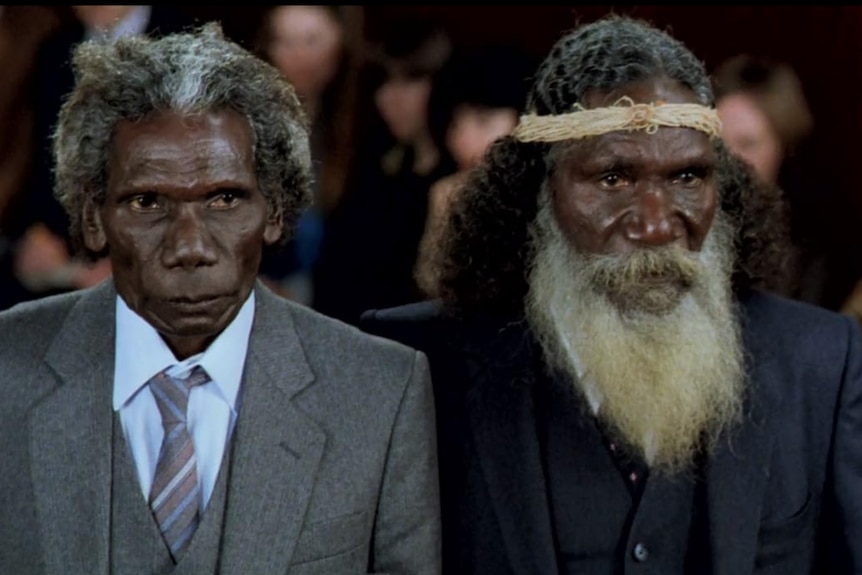
Roy Marika (left) portrayed the Aboriginal land rights battle in the 1984 movie Where the Green Ants Dream. He is pictured here alongside Wandjuk Marika. (Supplied: IMDB)
Much is influx on the Gove Peninsula, with the mine closing down in a few years, royalties drying up and decisions to be made about how the compensation is divided between clans.
Rirritjingu Aboriginal Corporation CEO Rhian Oliver says a number of complex issues will need to be tackled in the next few years and Witiyana will have “a massive, important role to play”.
“Because of Witiyana’s ability to walk in two worlds, he’s actually going to be a major part of how we do move forward,” Oliver says.
As his director friend Stephen Johnson says, it’s been a crazy ride “from this incredible dreadlocked rockstar into incredibly important cultural leader” but Witiyana is keen to bring the clans together and see his people prosper.
“I want to bring them back as being one people. Unity is the better way to live in harmony,” Witiyana says.
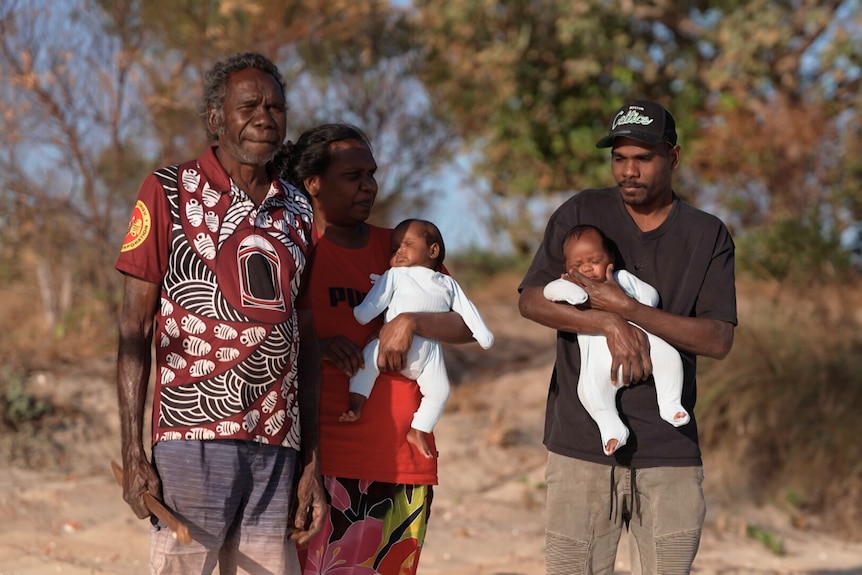
Witiyana Marika with his family near Yirrkala, Arnhem Land. (Australian Story)
With him on his quest will be the spirit of his late father Roy, the man who taught him the songs and ceremonies that have made Witiyana Marika a songman, a keeper of his ancient culture, a leader.
“My father always wanted me to stand in his footsteps,” Witiyana says proudly. “And show love.”
Watch the Australian Story ”Morning Star” Monday at 8:00pm (AEDT) on ABCTV and ABC iview.
Enjoyed this story? Check out these Australian Story reads:Loading…