
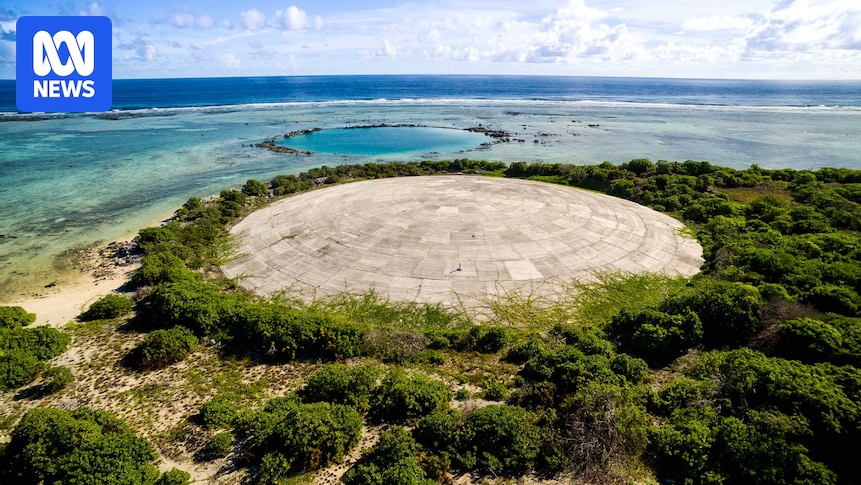
Robert Celestial stood in radioactive water wearing nothing but shorts and rubber boots.
The former United States Army truck driver was trying to drain water from a crater that would become a dump site for what he thought was debris left over from World War II.
He did not know the crater he was standing in was created by a nuclear blast.
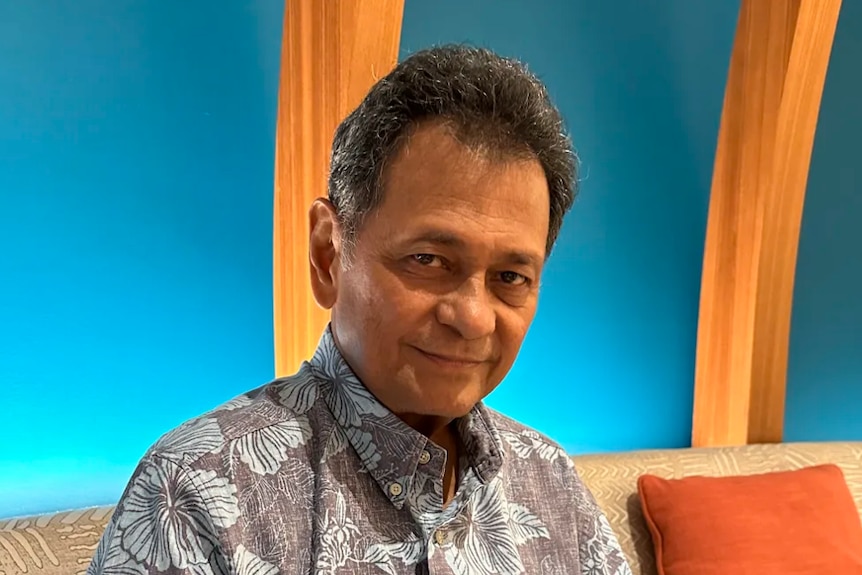
Robert Celestial was posted to the Marshall Islands in 1978. (RNZ Pacific: Eleisha Foon)
“We were on a small island in the Pacific with 500 guys on it, and it was like Alcatraz. You couldn’t escape,” he said.
Mr Celestial had been posted to Enewetak Atoll near the northern edge of the Marshall Islands during the late 1970s nuclear clean-up.
Mission details were vague, but his orders were simple — transport “contaminated” soil to a small island and dump it into a crater.
The island was called Runit.
“We were told it was post-war debris,” he recalls.
“Years later, we found out there were 43 nuclear detonations there.”
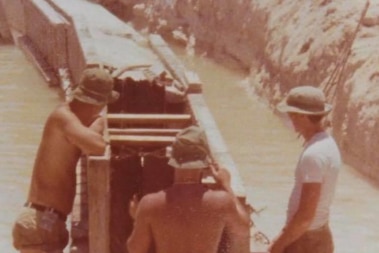
Soldiers huddle inside the crater, which would later become the Runit Dome. (Supplied)
Sixty-seven nuclear tests were carried out across Enewetak and Bikini atolls between 1946 and 1958.
More than 300 Marshallese were removed from their homeland to make way for the US nuclear program, which commenced 80 years ago this year.
Among the detonations was an 18-kiloton bomb known as Cactus.
The blast vaporised part of Runit Island and sent a mushroom cloud 6 kilometres into the sky.
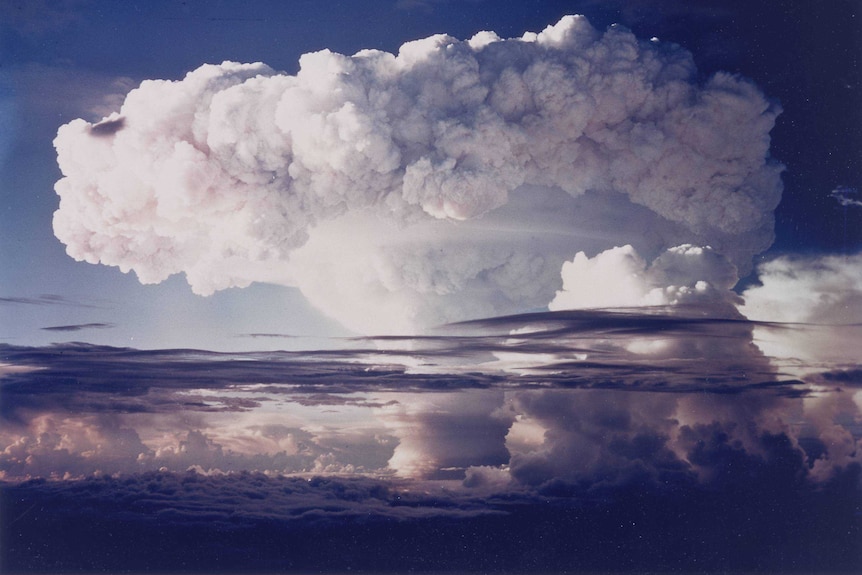
A nuclear explosion on Runit Island, Marshall Islands. (Supplied)
Two decades later, the 10-metre-deep crater it left behind would become a dumping ground for more than 120,000 tonnes of contaminated soil and debris scraped from across the atoll.
Mr Celestial made countless trips to the crater carrying nuclear debris in the back of his dump truck.
When the work was done, the crater was sealed with an 18-inch concrete cap, forming what is now called the Runit Dome or — “The Tomb”.
But 50 years on, the dome is showing signs of deterioration.
Cracks line its outer shell, while groundwater flows beneath the structure, allowing contaminated waste to wash into the surrounding lagoon.
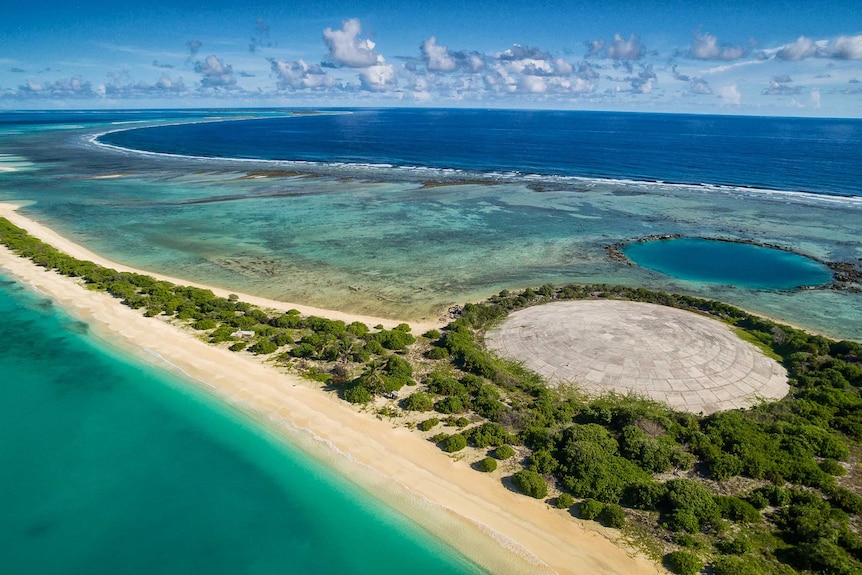
The Runit Dome is a dumping ground for more than 120,000 tonnes of contaminated soil and debris from nuclear testing. (Foreign Correspondent: Greg Nelson)
Scientists fear rising seas or intensifying storms will eventually degrade the structure and place nearby communities at risk.
Yet the Marshallese government has little power to address the problem.
Radiation exposure
The six months Mr Celestial spent dumping debris into the Runit crater were among the worst of his life.
But he encountered something worse after he arrived home when boils began appearing all over his body.
“It was all over my front, my arms, my back and they would bleed,” he said.
“My uniform was full of blood.”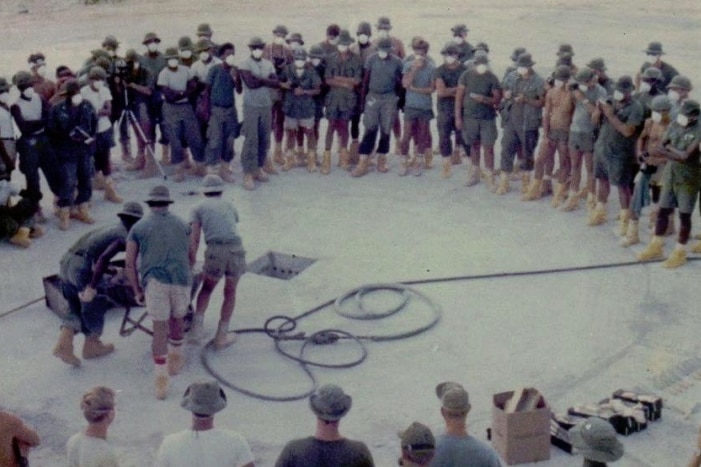
US soldiers gather for the capping of the dome in 1980. (Supplied)
He managed only seven years in the armed service before being medically retired.
In the years since, he said he had suffered a host of health problems, including brittle bone, osteoporosis, arthritis as well as kidney and liver issues.
He still has boils on his legs and back and receives regular injections.
It is unclear if all of the conditions are related to the nuclear clean-up.
According to the Atomic Heritage Foundation, many veterans suffered from cancer and brittle bones after their six-month tours on Enewetak Atoll.
But it was not until 2023 that the government officially recognised them as “atomic veterans” who could access disability claims.
“We couldn’t go to the VA [Veterans Affairs] before that so a lot of guys couldn’t get treatment,” Mr Celestial said.
Despite everything, Mr Celestial considers himself lucky.
Of the roughly 4,000 troops posted to Enewetak during the 1970s and 80s clean-up, he said only a few hundred were alive today, according to records from the National Association of Atomic Veterans.
“Many of them died of cancer but I’m the lucky one because I don’t have cancer yet,” he said.
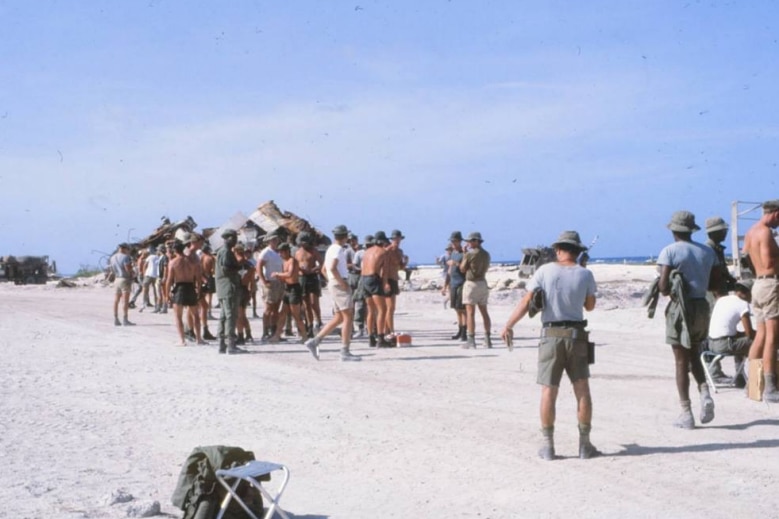
Only a few hundred of the troops posted to Enewetak during the 1970s and 80s nuclear clean-up are alive today, according to records from the National Association of Atomic Veterans. (Supplied)
What still troubles him is how careless the clean-up effort was.
“We didn’t do a good job,” he said.
“We didn’t know what the plan was so a lot of the equipment and hot stuff we just dumped into the lagoon.”
Cracks showing
Experts worry the dome will not stand the test of time.
Multiple recent studies have cited cracks present in its concrete cap.
Another said the structure was never designed to withstand the impacts of climate change, while a United Nations report pointed out it was not watertight.
Groundwater seeps in and out of the dome’s base with the tides, potentially carrying contaminated material back into the lagoon.
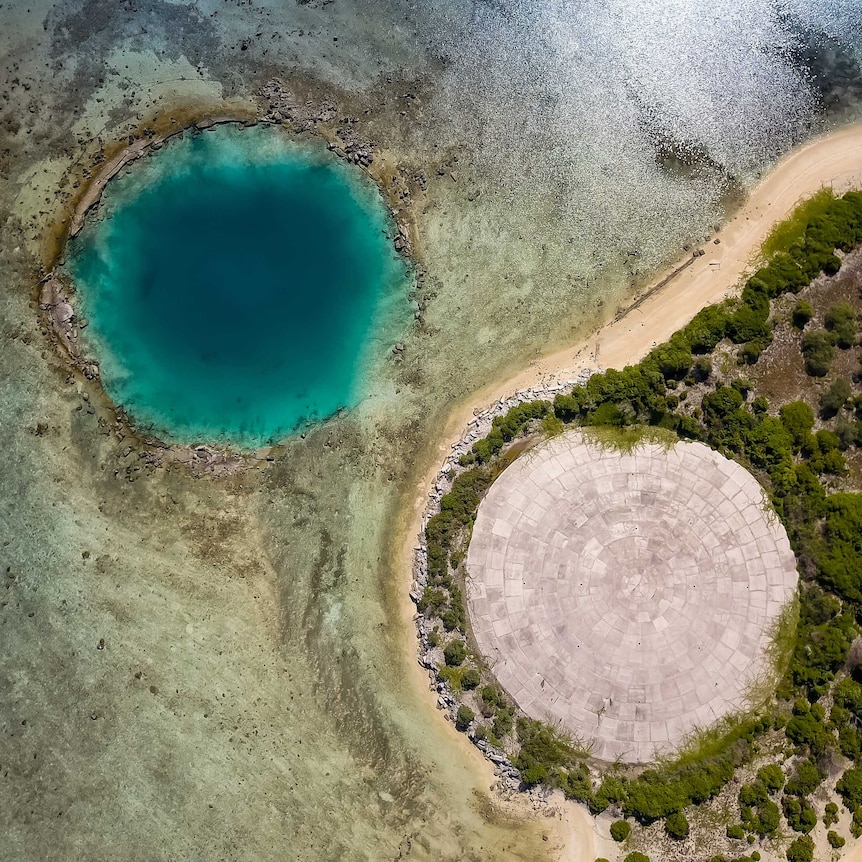
The Runit Dome was built in the late 1970s. (Foreign Correspondent: Greg Nelson)
Ivana Nikolic-Hughes, a senior lecturer in chemistry at Columbia University and president of the Nuclear Age Peace Foundation, saw the cracks firsthand while measuring radiation levels back in 2018.
Professor Nikolic-Hughes said elevated radiation levels were found in soil samples outside of the dome.
“Given that sea levels are rising and there’s indications storms are intensifying, we worry the integrity of the dome could be in jeopardy,” she said.
“Runit is about 20 miles from where people live and they use the lagoon, so the implications are potentially devastating.”
About 300 people live in Enewetak today, according to the 2021 census.
Bikini Atoll, meanwhile, remains too contaminated to inhabit, including Bikini Island — the Marshall Islands’ highest lying atoll.
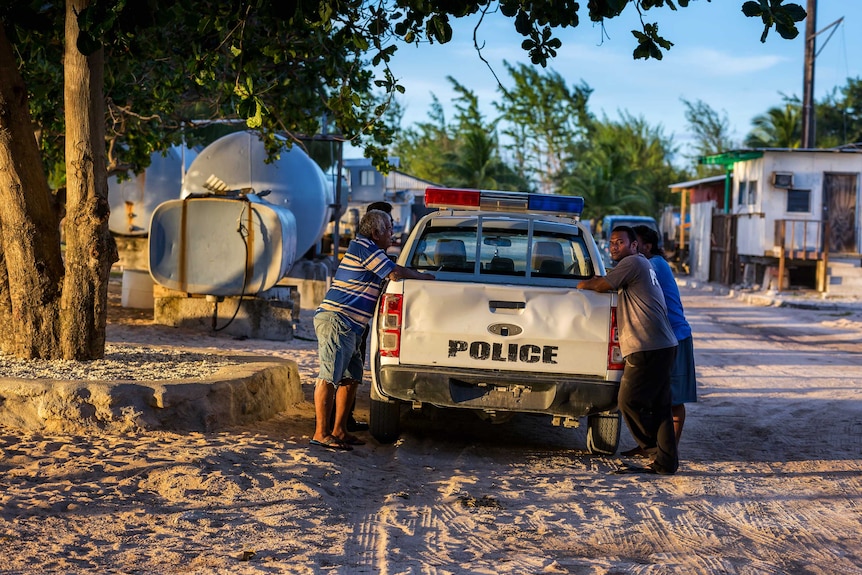
About 600 people live on Enetewak Atoll today. (Foreign Correspondent: Greg Nelson)
But US authorities said the dome was not in imminent danger of collapse.
The United States Department of Energy said the cracks were consistent with aging concrete and that the lagoon already contained large amounts of radioactive material from past tests.
It argued any contamination from the dome was small compared with what was already present in the environment.
However, Professor Nikolic-Hughes was skeptical of that theory.
“If there’s so much more waste in the lagoon, why build a dome at all?” she said.
She suspected debris and unexploded bomb material from failed nuclear tests might also be buried inside the structure, although it has never been confirmed.

Professor Ivana Nikolic-Hughes is a senior lecturer in chemistry at Columbia University and president of the Nuclear Age Peace Foundation. (Supplied)
“If you have things like chunks of plutonium, that can be extremely dangerous, it could kill you if you come into contact with it,” she said.
“So there probably was a good reason why they built the dome, but they are certainly not being open about it.”
Plutonium-239 is a radioactive element used in nuclear weapons that remains dangerous for more than 24,000 years.
Arjun Makhijani, a nuclear engineer and president of the Institute for Energy and Environmental Research, said no concrete structure could endure even for a tiny fraction of that life span.
“There are already cracks in it in less than 50 years,” he said.
The ABC has contacted the US Department of Energy for comment.
Nuclear legacy and climate change collide
Regardless of what lies inside the dome, the Marshallese government says it lacks the technical and financial capacity to deal with it.
The Compact of Free Association granted the country independence in 1986 while providing substantial US funding in exchange for military access.
The agreement also settled “all claims, past, present and future” related to the US nuclear testing program, leaving responsibility for the dome largely with the Marshallese government.
However, Marshallese officials said they did not have the full picture when the agreement was signed.
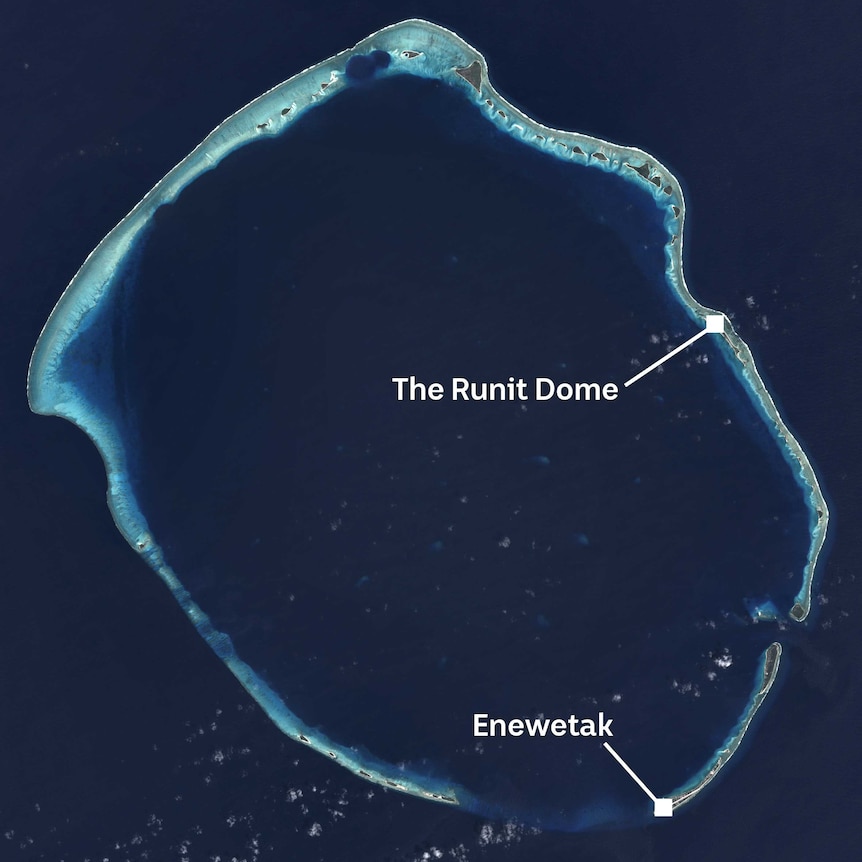
The Runit Dome sits at the north-east end of Enewetak Ayoll — about 30 kilometres from communities that use the lagoon as a food source. (NASA/USGS)
Former Marshallese health secretary Jack Niedenthal said the dome stood as a monument for America’s mistake.
“Outside of covering it with cement and doing studies, they really haven’t done a lot to shore it up or fix it,” he said.
“So as we get these rising sea levels where everything is only a few feet above the water at high tide, it’s pretty concerning.”