
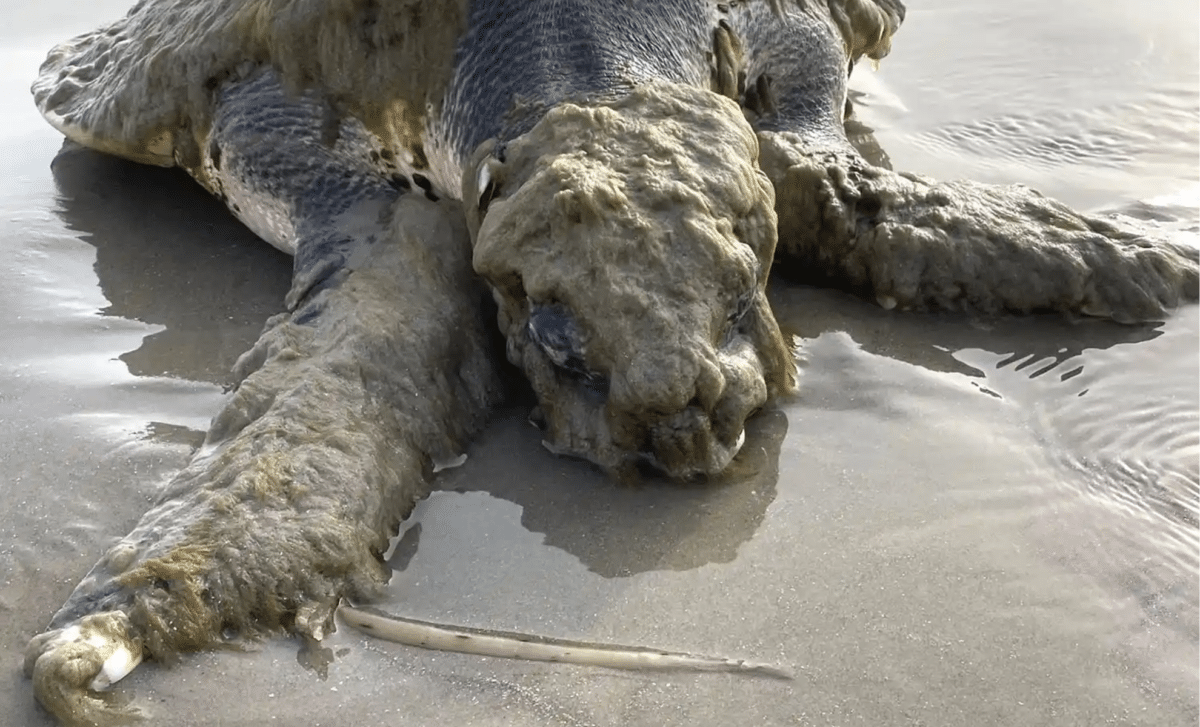
A rare Kemp’s ridley sea turtle, one of the most critically endangered species in the world, was rescued from a Texas beach this March, covered in an alarming growth of organisms. The Gulf Center for Sea Turtle Research (GCSTR) reported the turtle’s distress, shedding light on a complex interaction between the turtle’s declining health and the organisms that cling to its body. Rescuers are now working tirelessly to nurse the turtle back to health, hoping for a future release back into the Gulf.
The Discovery: A Turtle in Crisis
On March 7, 2026, a concerned beachgoer near Galveston, Texas, called for help after spotting a lethargic, seemingly struggling turtle washed ashore. Upon closer inspection, rescuers were shocked to find that the turtle was covered in an array of organisms. As reported by People, the Kemp’s ridley sea turtle, already struggling with its health, was weighed down by barnacles, algae, and other epibionts, organisms that attach themselves to larger creatures. This discovery marked the first step in what would become a critical rescue operation.
The turtle’s condition suggested that it had been battling its deteriorating health for some time. The organisms that had attached to the turtle’s shell were not only contributing to its exhaustion but also preventing it from swimming freely, a critical behavior for the species’ survival. As the Gulf Center for Sea Turtle Research explained in a statement, “Healthy sea turtles are swimming sea turtles.” When turtles slow their swimming due to health problems, the result is often a rapid colonization of epibionts, which exacerbate the turtle’s condition in a dangerous cycle.
The Role of Epibionts: A Vicious Cycle
When rescuers arrived on the scene, the turtle was found struggling under the weight of the organisms that had attached themselves to her body. Epibionts, which include barnacles, algae, and other sea creatures, thrive on sea turtles when the turtles’ health declines.
“Sea turtles that slow down their swimming due to health issues are quickly colonized by organisms in the water. This can turn into a positive feedback loop in that the extra weight causes the turtle to slow down further and expend further energy, which allows more epibionts to grow,” said Christopher Marshall, Director of the Gulf Center for Sea Turtle Research.
This feedback loop can have devastating effects on sea turtles. The weight of the epibionts makes it even harder for the turtle to swim or dive, limiting its ability to hunt and ultimately affecting its health. Over time, this leads to malnutrition and exhaustion, which makes the turtle more vulnerable to the environment. This particular turtle’s slow movement and weakened state were clear indicators that it had been struggling for an extended period, leaving rescuers with no time to waste.
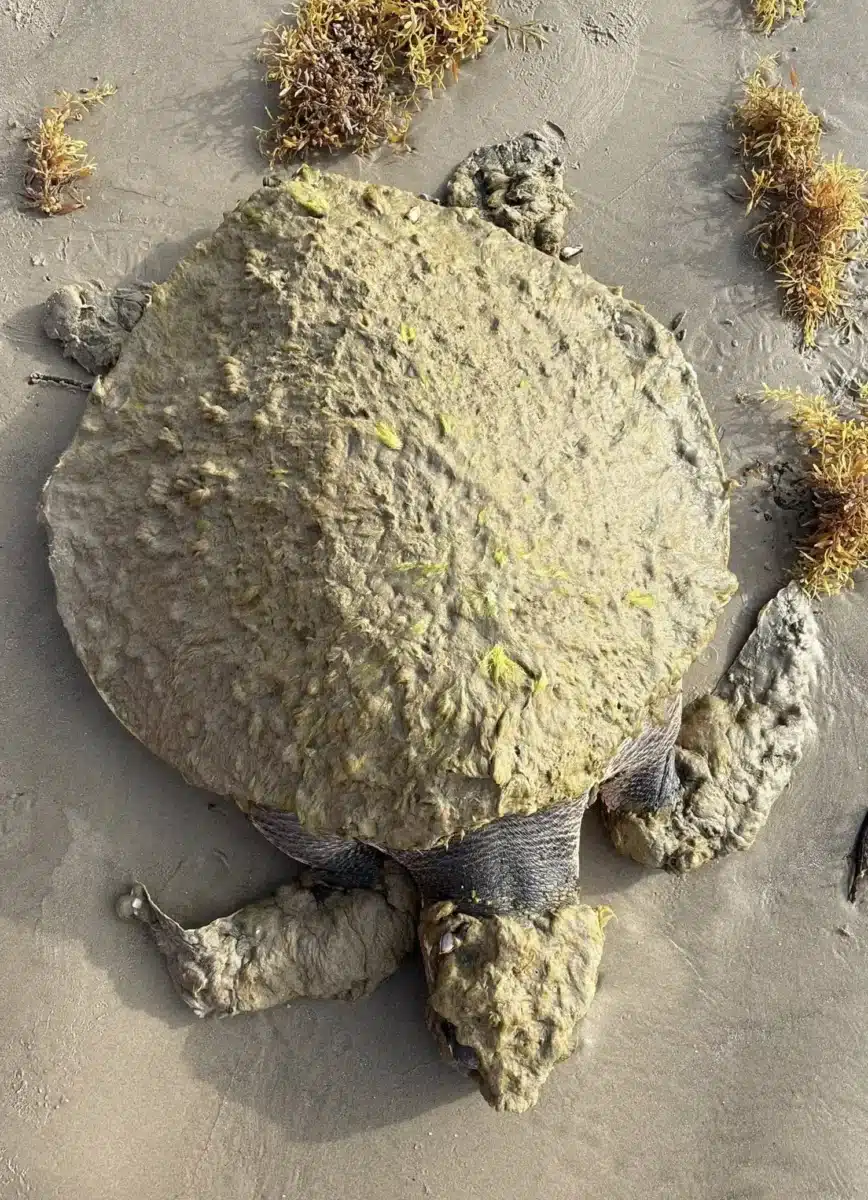 The rescue turtle covered in epibionts on Texas beach.
Credit: Gulf Center for Sea Turtle Research Facebook
The Rescue and Recovery Efforts
Once rescued, the Kemp’s ridley sea turtle was rushed to the Houston Zoo, where veterinarians conducted an emergency examination. Her condition was dire, but the team at the Gulf Center for Sea Turtle Research, in partnership with the zoo, was determined to give her the best chance at survival. As Marshall explained,
“This turtle is in critical condition but is getting the best care thanks to our veterinarian partners at the Houston Zoo and a dedicated team of staff, volunteers and students at our hospital.”
The immediate goal for the care team was to remove the heavy growth of epibionts and assess any internal damage caused by her prolonged struggle. Specialists from the Gulf Center and Houston Zoo worked around the clock to stabilize her condition. The team also provided the turtle with the necessary medical care, which includes both physical treatment and nutritional support to help her regain strength.
With her health still fragile, the turtle remains under close observation as she receives round-the-clock care. However, the dedicated team at the Gulf Center for Sea Turtle Research is hopeful for her recovery. As they put it, “We are hopeful for her recuperation and eventual release back into the Gulf.” If all goes according to plan, the turtle will eventually be reintroduced to her natural habitat, where she can once again swim freely and live the life she was meant to lead.
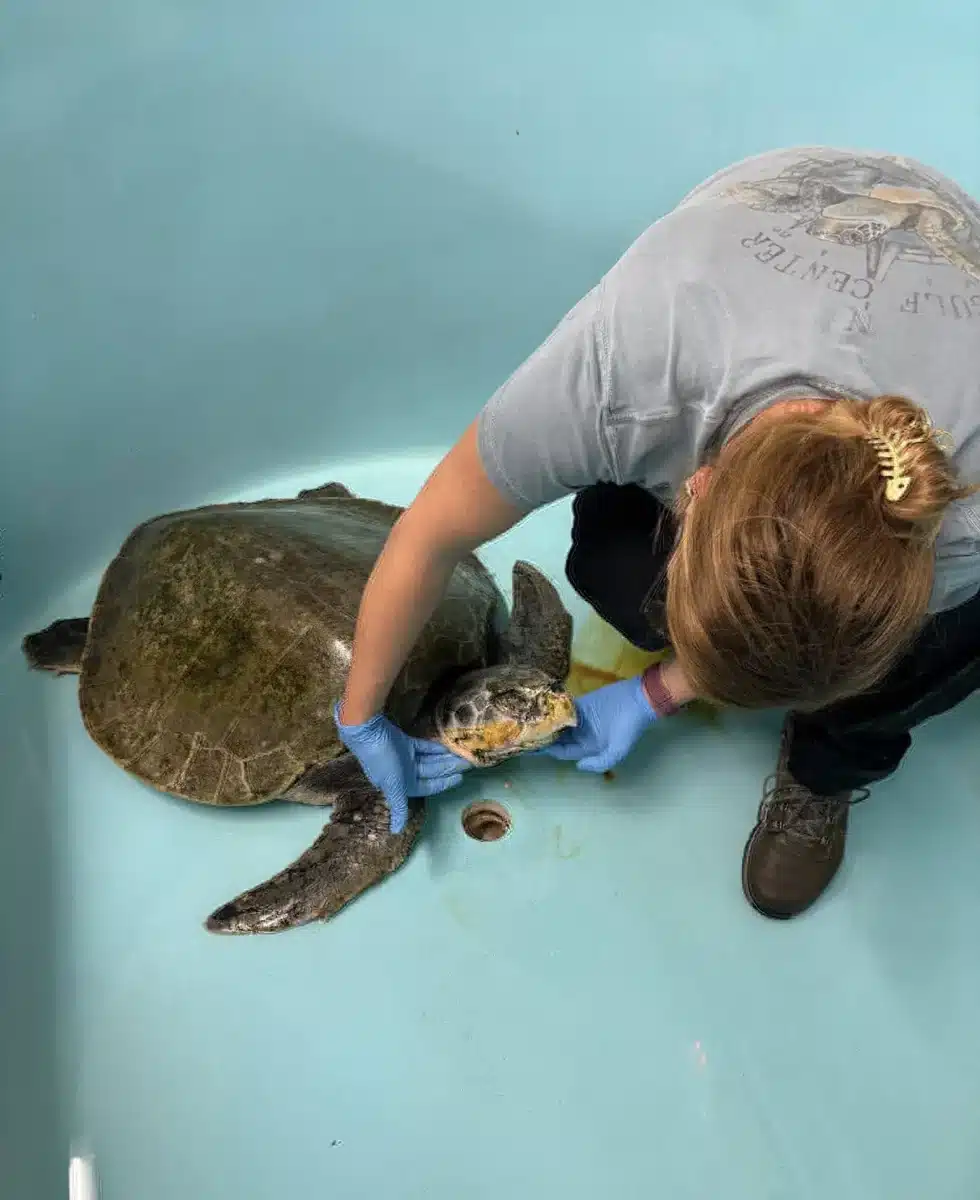 A Gulf Center for Sea Turtle Research assisting the sea turtle.
Credit: Gulf Center for Sea Turtle Research Facebook
Why This Rescue Matters
The Kemp’s ridley sea turtle is one of the rarest and most endangered marine species in the world. Native to the Gulf of Mexico, this species faces numerous threats, including habitat destruction, entanglement in fishing gear, and the impact of pollution on their marine environment. The population of mature adults is estimated to be just over 22,000, and despite conservation efforts, the Kemp’s ridley remains critically endangered.
This rescue highlights the ongoing struggles that sea turtles face in today’s polluted oceans, as well as the importance of conservation efforts and public awareness. Organizations like the Gulf Center for Sea Turtle Research play a pivotal role in rescuing and rehabilitating these creatures, and they rely on donations and public support to continue their work. If you encounter a stranded sea turtle, you are encouraged to contact professionals immediately, including the Texas statewide hotline at 1-866-TURTLE-5, to ensure that the animal receives the appropriate care it needs.