
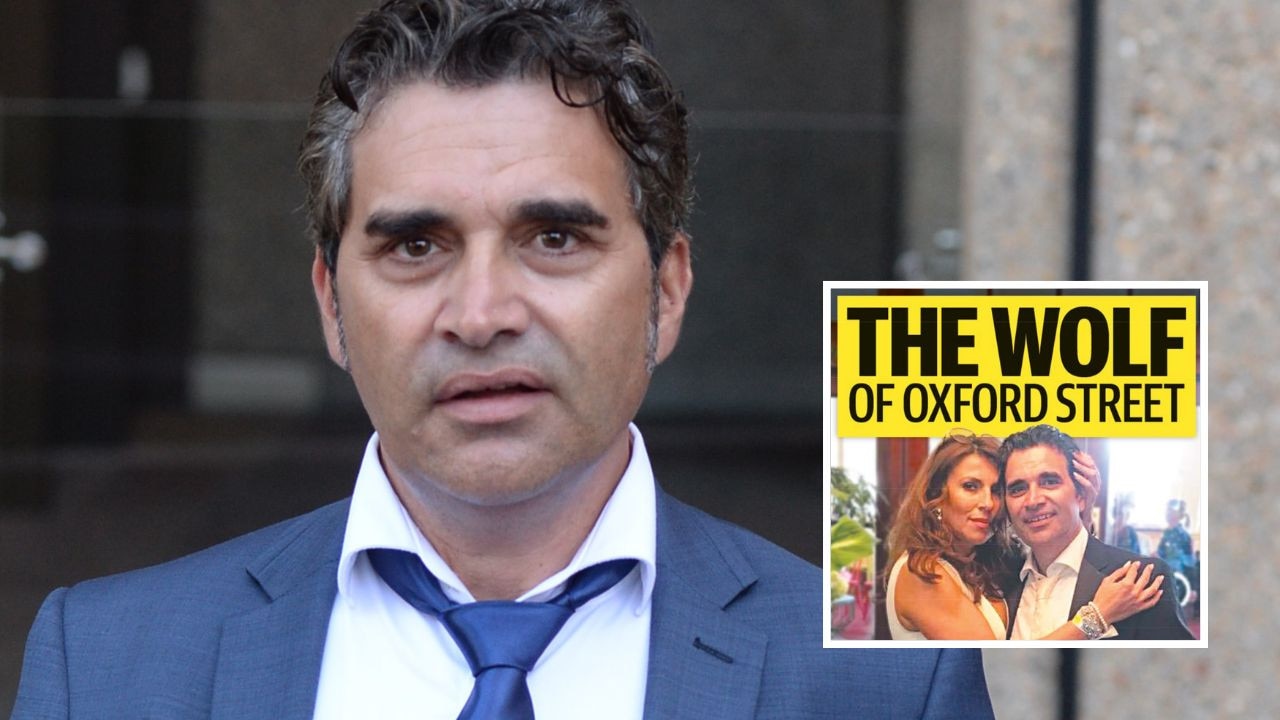
Victims of a $180 million Wolf of Wall Street-style Ponzi scheme want their money back via an extraordinary bid for compensation because they say the nation’s corporate regulator failed to stop the rip-off.
Those burnt by the notorious Courtenay House scam say the Australian Securities and Investment Commission failed for up to five years to close down financial scammer Tony Iervasi who was operating without a financial licence.
This masthead has seen letters ASIC sent to Courtenay House mastermind Iervasi, who was jailed in 2024 for more than a decade after being described by Justice Deborah Sweeney as “dishonest on an egregious scale.”
In December, 2014, ASIC wrote to Iervasi saying it was concerned Courtenay House may be operating a financial services business without holding an Australian Financial Services (AFS) licence.
Then, four months later, the regulator said in a letter to Iervasi that it was still in business without an AFS licence and warned him of further action.
“If we do not receive a response from you by this date (April 7) we reserve all our rights, including commencing proceedings, seeking injunctions, declarations and other orders without further notice,” ASIC wrote.
The applicants for what is known as an “Act of Grace” payment are alleging that ASIC had received complaints about Courtenay House as far back as 2012.
Court judgments show how the scam swelled in the years after ASIC contacted its operators – growing to $43 million in the 2015-16 financial year and $65 million in 2016-2017.
There is no hope of recovering the money from Iervasi.
It has led to 280 scammed investors – from every state in Australia – combining to submit an Act of Grace application to the Department of Finance.
They say they satisfy special circumstances provisions, alleging ASIC failed to act against Courtenay House when it had the chance and that it did not alert the public.
Some of those who tipped in money lost millions on Courtenay House but most of those who suffered were mum and dad investors who lost their nest eggs.
One victim said the scam cost her home, wrecked her marriage and left her close to broke.
The single mother, in her mid-30s, said she lost a house in suburban Sydney she had bought as a 21-year-old thanks to Courtenay House.
“I’ve got $75 in my bank account now. It’s life-changing,” the investor said.
The investory, who did not want to be named, said Iervani was a “selfish” conman who reminded her of the “Wolf of Wall Street” character played by Leonardo DiCaprio, a movie based on the life of rogue trader Jordan Belfort.
“Big time,” she said.
As investors were being duped, Iervasi was funding holidays, flying business class and leasing waterfront properties and luxury cars.
In the years after his Ponzi scheme collapsed, Iervasi was kidnapped in Sydney’s Centennial park and bundled into the back of a van by assailants who demanded sums between $50,000 and $100,000 while assaulting him.
Iervasi, who is serving an 11-years jail for dishonesty offences defrauded about 585 investors.
It was estimated they lost $54 million.
David Sipina, who promoted the investment scam, escaped being locked up after being ordered to do three years’ jail in the form of an intensive corrections order.
Sipina’s flashy promotional material promised returns of 36 per cent per annum and falsely claimed client funds were fully insured by Lloyd’s of London.
He also falsely claimed former Prime Minister Malcolm Turnbull was an investor.
ASIC, in response to questions, said it had not received any reports of misconduct from any investor until after it commenced a formal investigation in March, 2017.
The watchdog a month later took Courtenay House to court.
“Once this occurred, information about ASIC’s court action was promptly shared with the public,” an ASIC statement said.
“ASIC does not consider that there was any regulatory deficiency in the fact it did not provide information to the public about the status of its surveillance of Courtenay House at an earlier time.”
ASIC said it was its policy not comment on Act of Grace applications due to privacy concerns.