
Some of the nation’s largest manufacturers have told their customers of significant cost hikes and rationing of industrial goods due to the escalating Iran war, with producers warning of a “Covid 2.0” hit to Australia’s economy amid worsening supply chain delays and stock shortages.
As struggling households prepare for the Reserve Bank to unleash the first in a set of rapid-fire interest rate hikes this week, a string of major plastics suppliers have written crisis letters to long-standing customers saying they will be forced to pass on the cost crunch.
Several flagged they may be forced to trigger emergency force majeure clauses, meaning they are unable to fulfil contracts.
The supply shock revelation has landed at a time of acute stress for Anthony Albanese.
The Iran war is increasingly threatening the nation’s economy as Donald Trump urges China to send warships to the Middle East over fears the prolonged closure of the Strait of Hormuz will debilitate global trade.
Jim Chalmers conceded on Sunday that household costs would spike in the three months to June due to high oil prices and the deteriorating Iran war.
“We know already that it’s a very substantial shock, whether it’s a substantial and enduring shock remains to be seen,” the federal Treasurer said.
Five letters sent by manufacturers have blamed the Middle East war and transport bottlenecks through the Strait of Hormuz for their decision to hike prices for plastic supplies used in construction and hospitals.
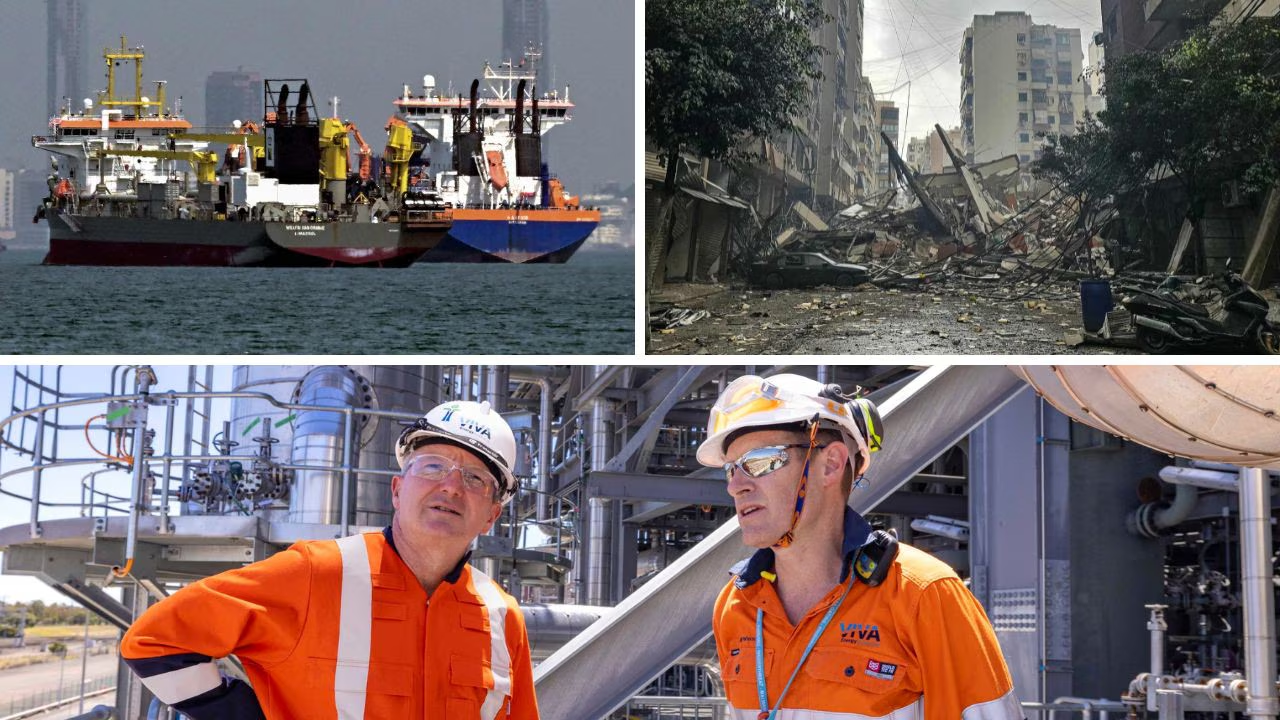
The sole manufacturer of polypropylene in Australia, Viva Energy, told customers it was hiking plastics costs and rationing products from its Geelong refinery as the industry scrambles to keep supplies flowing to a range of critical industries.
“Due to the ongoing situation in the Middle East and the significant impacts on regional and local polypropylene supply chains, Viva Energy will implement a number of measures to help maximise supply continuity during this unprecedented supply issue,” Viva said in a letter seen by The Australian.
Price hikes, security surcharges, sea freight and supply chain costs would be applied to all customers effective April 1. Structural price increases would be permanently to support continued local manufacturing of polypropylene at the Geelong refinery. On Friday, Energy Minister Chris Bowen was forced to break open the nation’s emergency stockpile to prop up diesel supplies as shortages reached the major cities.
Experts said Australia was particularly vulnerable due to its “unusually low fuel stockpile” and its failure to produce much oil itself, and said there could be an “immediate hike” in domestic airline prices and construction costs.
Polypropylene produced by Viva is used in everything from houseware and consumer products to industrial sheeting and piping. Viva has also introduced a process to ration supplies to customers as the company grapples with the “critical situation” to meet orders from industry.
Impact International, which makes food, cosmetic and pharmaceutical tubes, said Australia faced a “Covid 2.0” hit, with the economy far too reliant on imported materials despite post-pandemic undertakings by the federal government to boost sovereign manufacturing capacity.
“I’m calling it personally Covid 2.0,” said Impact International managing director Aleks Lajovic. “When the pandemic started to reveal itself, the circumstances were almost the same. People were scared. People couldn’t get information, people couldn’t get pricing, people couldn’t get delivery confirmation. And people also couldn’t get an accurate shipping date,” he told The Australian. “And this is exactly what we’re seeing play out in supply chains. Again, it’s really like the start of a pandemic.”
Letters by companies including Vinidex, Polypipe and Pipemakers Australia sent to customers last week said prices for plastic materials had jumped by up to 50 per cent for April delivery compared to March. Existing quotes will be cancelled effective March 31, with new rates to start from April 13.
Impact International delivered a 15 per cent price hike to customers, noting sea freight charges had increased by as much as 250 per cent.
Polypipe said a 24 per cent diesel levy was set to apply to all deliveries from March 23.
Resources Minister Madeleine King said on Sunday the “vulnerabilities of global energy supply chains” had been exposed by the current conflict in the Middle East. Several manufacturers questioned the decision to allow plastics maker Qenos to collapse into administration in 2024, given Labor’s promise to revitalise manufacturing and lessen the nation’s dependence on importing critical goods from overseas. “Qenos were a very, very big player in the Australian market. And when it shut down, a lot of companies, ourselves included, had to look for overseas supply,” said Mr Lajovic.
Impact International purchases resin from the Middle East, Thailand and Japan.
“The plastic plants need to import feedstock to make the plastic, and a lot of that feedstock comes from the Middle East, which at the moment is almost completely closed,” he said. “We just don’t know how to price your product, our product, because our import costs are changing dramatically.”
Oil prices last week topped $US100 a barrel due to Iranian attacks on energy facilities in the Middle East, despite plans for a record 400-million-barrel reserve release.
The Albanese government has been accused of “serious negligence” and “putting the community at risk” by ignoring warnings on fuel and fertiliser vulnerabilities for years, as industry demanded an expedited food security plan.
Food industry groups and experts told The Australian the current fuel and fertiliser crisis, triggered by the Iran war, exposed government failure to heed repeated warnings on the need for a food and fuel security plan since 2022.
Read related topics:Coronavirus Perry WilliamsChief Business Correspondent