

Three generations of one Australian family have helped scientists identify a new gene linked to a debilitating inflammatory bowel condition, offering hope of new treatments for the disease.
Five members of the Brisbane family — a grandmother, two of her children and two grandchildren — have all been diagnosed with ulcerative colitis, a chronic disorder causing inflammation and ulcers in the lining of the large intestine and rectum.
The condition has been so severe and aggressive, four members of the family, who wish to remain anonymous, have had surgery at young ages to remove all or part of their bowels, including one who was only 14.
All have been patients of the Mater Hospital in South Brisbane.
Symptoms often include diarrhoea, abdominal pain, weight loss, and bleeding.

More than 200 genes have been associated with inflammatory bowel disease, which includes ulcerative colitis and Crohn’s disease. (ABC News: Peter Mullins)
Using advanced genomic sequencing, researchers compared the DNA of family members with ulcerative colitis, and those without, to identify a mutation in the OTUD3 gene that causes the condition.
Lead researcher Rabina Giri, of Mater Research’s Inflammatory Bowel Disease Group, said the study was the first to link the OTUD3 gene to intestinal health.
“We’ve known this gene plays a role in cancer biology, but now we’ve shown it’s essential for maintaining the integrity of the gut lining,” Dr Giri said.
“When it’s disrupted, inflammation follows.”Gene mutation present in ‘significant’ number of cases
Dr Giri worked with researchers from the University of Queensland, Melbourne’s Monash University and US experts at the Harvard Medical School and Mass General Brigham in Boston to study the gene over seven years.
Using data from UK and Finnish biobanks of patient DNA, they found the OTUD3 mutation is not only present in the Brisbane family, but in “significant” numbers of other people with ulcerative colitis.
By studying tissue samples, they also discovered OTUD3 dysfunction in other ulcerative colitis patients without the mutation.
The reason is unclear, but Dr Giri speculated other genes or proteins may indirectly affect its function, or inflammation in the gut may alter the OTUD3 gene’s activity.
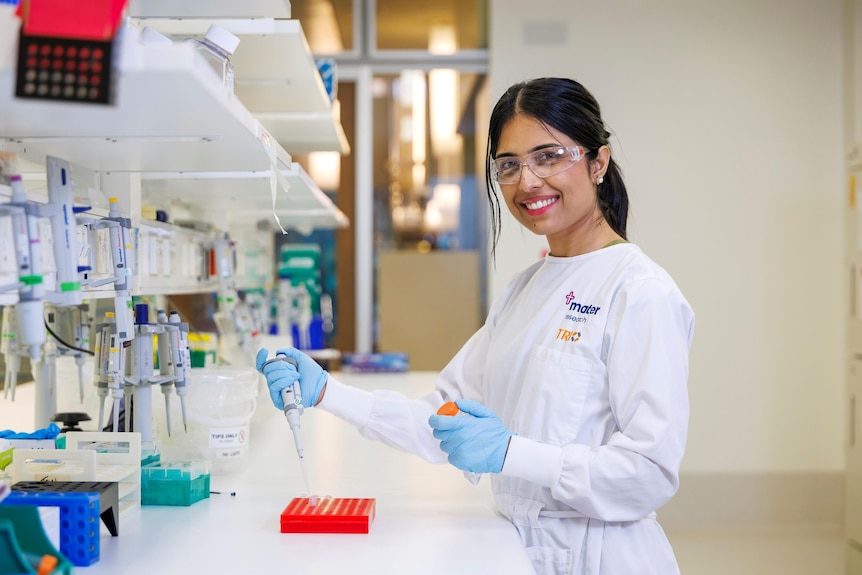
Dr Rabina Giri, of Mater Research’s Inflammatory Bowel Disease Group, has helped discover a new gene involved in ulcerative colitis. (Supplied)
She said the findings raised hopes for the development of a new class of drugs to treat the disorder.
OTUD3 provides the instructions for the body to produce a protein that plays an important role in maintaining the gut’s protective barrier.
When the barrier fails, bacteria can invade the gut lining and trigger chronic inflammation.
“If we can find a drug that can upregulate the protein expression, that might be a good treatment strategy,” Dr Giri said.
“We have some preliminary data to suggest, perhaps, some drugs do increase the expression.”
Hopes for further research
The scientists are hoping to secure more funding to probe the potential of drugs used for other conditions as treatments for ulcerative colitis.
Dr Giri said the research team was also investigating environmental factors linked to the inflammatory bowel condition.
She said about 0.1 per cent of people of South Asian descent, such as the Brisbane family, carried the OTUD3 mutation, but not all developed ulcerative colitis.
The researchers are studying whether a high-sugar western diet could trigger the disease earlier in people with a genetic susceptibility to the condition. More than 200 genes have been associated with inflammatory bowel disease, which includes ulcerative colitis and Crohn’s disease.
Their research enabled the early diagnosis of ulcerative colitis in a young member of the Brisbane family at the centre of the study, allowing medical specialists to treat him successfully without the removal of his bowel.
He was treated with anti-tumour necrosis factor (TNF) drugs — medications that block the action of TNF, a protein involved in inflammation — used to treat various autoimmune and inflammatory conditions.
Dr Giri said his disease had been stable since 2021.
Study findings ‘significant’
Gastroenterologist Jake Begun, who leads Mater Research’s Inflammatory Bowel Disease Research Group, said the study highlighted the importance of genetic research in uncovering hidden causes of chronic diseases.
Associate Professor Begun said the discovery opened the door to new diagnostic tools and therapies to target the gut linings of ulcerative colitis patients, rather than just their immune systems.

Jake Begun says genetic studies are important for uncovering hidden causes of chronic diseases. (Supplied)
Griffith University professor of pathology Albert Lam, who was not part of the research, described the study findings as “significant”, given that it highlighted the importance of the bowel barrier in ulcerative colitis.
“This is a very important discovery,” Professor Lam said.
“It can be a channel for us to drive into a more useful therapy for this kind of patient.”
Professor Lam, who also works as a visiting senior pathologist at the Gold Coast University Hospital and specialises in gastrointestinal and endocrine pathology, said the study paved the way for more extensive research into how to protect the gut barrier in inflammatory bowel disease.

Griffith University’s Alfred Lam also works as a visiting senior pathologist at the Gold Coast University Hospital and specialises in gastrointestinal and endocrine pathology. (Supplied)
He said any potential new diagnostic tools and treatment options would need to be tested in “big samples of patients” to evaluate their effectiveness.
More than 100,000 Australians are estimated to be living with inflammatory bowel disease.
The study is published in the respected scientific journal Cellular and Molecular Gastroenterology and Hepatology.