
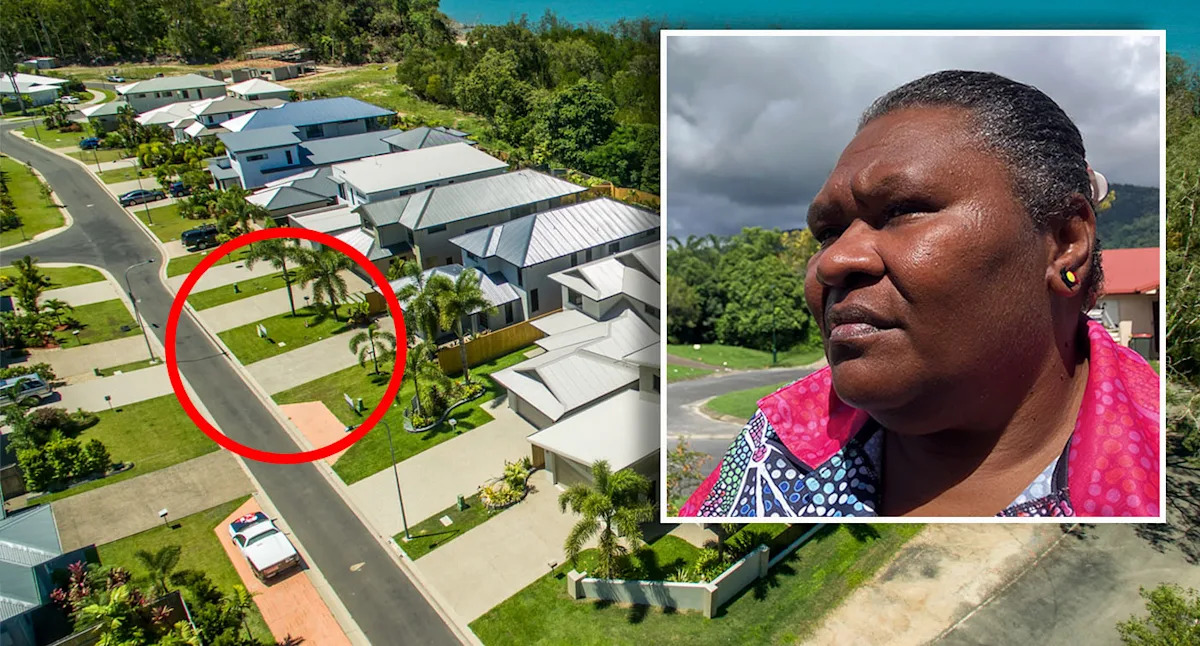
A woman has issued a stark warning about a silent killer lurking in Aussie gardens.
Leichan Williams, 50, had no idea that an innocent session of tidying up her driveway would lead to her fighting for her life.
The Cairns woman has opened up after becoming one of more than 130 people who were infected with deadly soil-borne bacteria meliodosis during the region’s worst-ever outbreak last year.
Melioidosis is an infectious disease caused by bacteria found in soil and water.
Cases have spiked significantly in the past 12 months after wetter-than-average conditions hit tropical regions.
Have you been impacted by melioidosis? Contact newsroomau@yahoonews.com
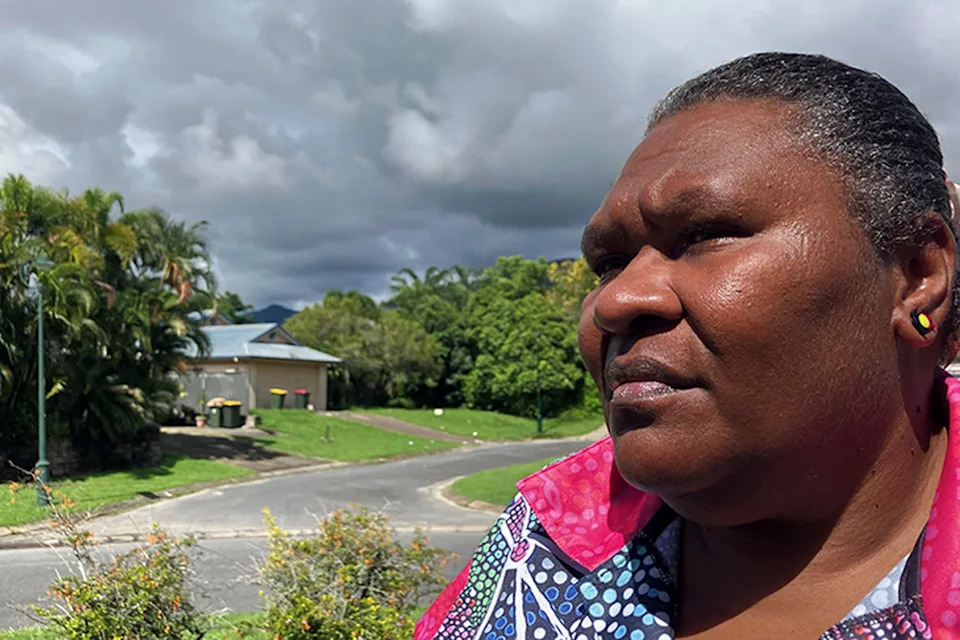
Leichan Williams was struck down with meliodosis after tidying up her garden. Source: Queensland Government.
This year, in Queensland alone, 47 people have already been diagnosed with the condition.
Williams spent weeks suffering debilitating symptoms after a quick session tidying up her front garden in White Rock, a suburb of Cairns in Far North Queensland.
The simple act of pulling weeds from her driveway may have left her struck down by the dangerous tropical illness.
Remarkably, she survived the ordeal and is now warning others.
“Melioidosis isn’t going anywhere. It’s always in the soil,” Williams recently shared with Queensland Health of the condition that nearly cost her her life.
“Don’t garden after heavy rain,” she warned.
“Wear personal protective equipment: gloves, boots, even masks if needed. You wouldn’t ride a motorbike in thongs — this is the same thing.
“Melio is not something to play with. It’s worse than your worst enemy,” she warned.
Gardening session ends in woman fighting for life
Williams suspects she was infected while she was carrying out some impromptu gardening.
“I came home from work, jumped out of the car and went to clean the grass and debris out of the drain near our driveway,“ she said.
“We’ve got four cars, so I didn’t want the drain to block because it was really heavy rain. I wasn’t wearing much protection, just quickly doing it. I reckon that’s how it started.”
Williams believes she must have had a cut somewhere that became infected with the bacteria.
Soon, she started to experience extreme fatigue.
“I was getting tiredness, but not normal tiredness from work,” she said.
“This was tiredness for no reason. But I’ve come home after only five hours of work and be absolutely exhausted.’
Soon after, she lost her appetite and struggled to keep food down.
In three weeks, she lost 11kg.
“My workmates were telling me I looked different, my clothes were loose, and something wasn’t right,” she said.
She eventually visited Cairns Hospital’s Emergency Department, where she was diagnosed with sepsis, an extreme reaction to meliodosis bacteria.
“My knee was huge — it looked like a polished coconut. I couldn’t put any weight on it,” Leichan said.
Doctors performed surgery on Leichan’s knee twice – each time flushing out approximately 8L of fluid.
They also needed to scrape away about 20cm of her femur bone to remove the bacterial infection.
“The infection was in patches — my leg, my back, and later my heart. I also developed a blood clot. My blood pressure kept dropping under 100. I was very unwell,” Leichan said.
Doctors went as far as considering amputating her leg to save her.
Luckily, a strong dose of antibiotics got her infection and fever under control.
A year later, she has been able to return to work but is still feeling the lasting impacts of the infection.
She will be monitored for three years as she is at high risk for reinfection.
Meliodosis targets those over 50, particularly those with chronic health conditions.
“Being 50, diabetic and with high blood pressure, I fit all the risk categories,” said Williams.
Rainfall and housing developments bring bacteria to the surface
Microbiologist Jeffrey Warner previously told Yahoo News that harmful bacteria “happily live” just below the surface of the soil, and rainfall brings them to the surface.
There is “strong evidence” that indicates rainfall of 30 millimetres or above invigorates the bacteria, and it’s “almost certainly when people get exposed”.
However, there is is “strong anecdotal evidence” to suggest the construction of new housing developments where the bacteria is present could be driving an increase in melioidosis cases too.
There are early signs that this is the case in Darwin and in the northern parts of Townsville, where urban sprawl has increased.
How can Australians protect themselves?
When it comes to Australians protecting themselves against melioidosis, “common sense” reigns supreme, Warner said.
While it’s important to still get outside and enjoy fresh air, being mindful of when you do this in relation to recent downpours is crucial.
“It’s just not wise to do the gardening then,” he said, urging residents to treat groundwater similarly to sewage.
“It’s not sewage because it’s not contaminated with human waste, but it is contaminated with a bacteria we need to be careful of,” he said.
“You could argue that you just need to treat water here the same way [as sewage]. It’s not necessarily something you should go out and engage with.”
Do you have a story tip? Email: newsroomau@yahoonews.com.
You can also follow us on Facebook, Instagram, TikTok, Twitter and YouTube.