
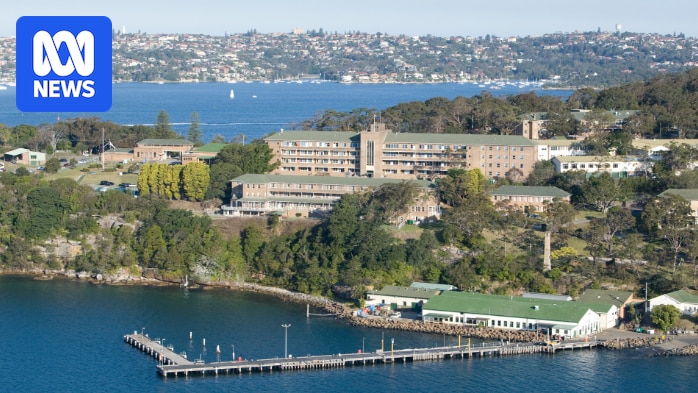
There is strident opposition to Commonwealth plans to sell some of the nation’s most valuable military land.
At HMAS Penguin, on Sydney’s Middle Head, community groups say the harbourside site must be protected from developers, before it is reshaped as yet another ‘Millionaire’s row’.
The site contains pristine and ancient Angophora or Sydney Red Gum forest, and advocates like local campaigner Jill L’estrange say it must be protected.
“It will be luxury housing,” Ms L’estrange told 7.30.
“They will reap enormous amounts of money — this won’t be affordable housing.”
It is not the first time this site has faced a development battle.

Jill L’estrange fears the HMAS Penguin site will be sold to developers who will convert the land into luxury housing. (ABC News: Craig Hansen)
Ms L’estrange says that nearly 40 years ago there was a proposal for 30 luxury homes to be built at Middle Head but it was stopped with the help of trade unionist Jack Mundey and future NSW premier Bob Carr.
She believes it is ironic a Labor government wants to sell it off.
“Labor saved these lands on two occasions and here we are in 2026 and the Albanese Government wants to sell it off and develop it,” she said.
Former Labor prime minister Paul Keating says Defence is trying to “vandalise the national estate.”

Former prime minister Paul Keating opposes the Labor government’s plan to sell off defence assets. (AAP: Sitthixay Ditthavong)
He has joined the chorus of voices opposed to the sale of HMAS Penguin, the 176-year-old Victoria Barracks site in Sydney’s Paddington, and Spectacle Island, off Balmain.
“Some of these properties are gems belonging to the national estate,” Mr Keating said.
“Defence holds them, not as operating assets — they have long fallen out of military use — but holds them in virtual trust on behalf of the nation.
“In an operating sense they don’t belong to Defence to do anything with, including their sale.”
Marles defends proposal
Defence Minister Richard Marles said one benefit of any sale will be greater public access to the space.
“It’s hard to see how it could be less accessible to the people of Sydney,” Mr Marles said.

Richard Marles says greater public access to the sites would benefit the people of Sydney. (ABC News: Ian Cutmore)
“I don’t think many Sydneysiders know it exists.”
But the former senior officer at Victoria Barracks, retired Major General Fergus McLachlan, wonders how “public” that access will be.
Maj Gen McLachlan says the immense cost of maintaining the heritage site means it will likely be sold to a hotel or casino operator.
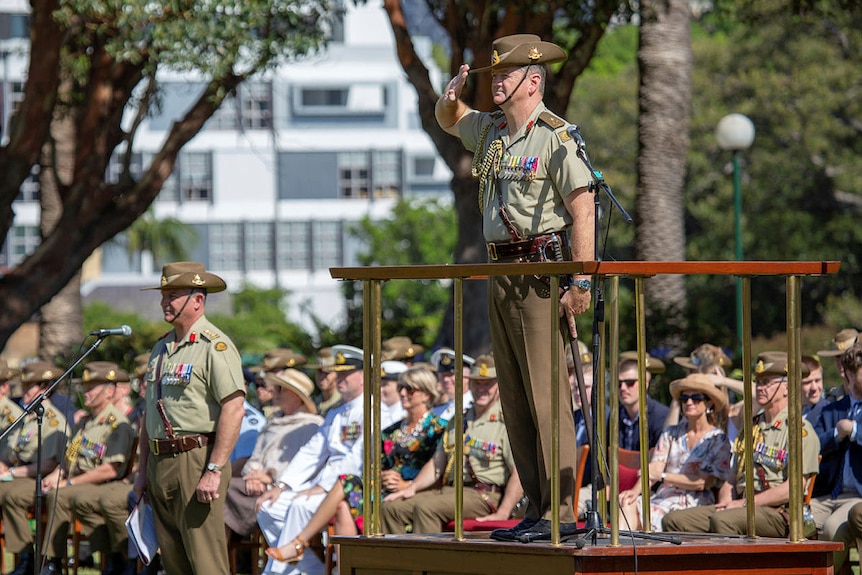
Retired Major General Gus McLachlan ran the military’s Land Forces Command from Victoria Barracks. (Supplied)
“It’s unlikely that there will be a big public organisation who can take on that cost,” he told 7.30.
“The Army is a big machine and has been able to absorb that … can a hotel, or big casino, or something like that? Possibly.”
The two sites are at the heart of a plan to sell poorly-used, derelict or unnecessary military sites around the country.
A 2023 report identified 86 sites that were no longer needed by the military, including four golf courses, numerous rifle ranges and even an island in Sydney Harbour.
Parts of some locations, like WW2-era hangars at the RAAF’s Point Cook airfield in Victoria, were derelict.
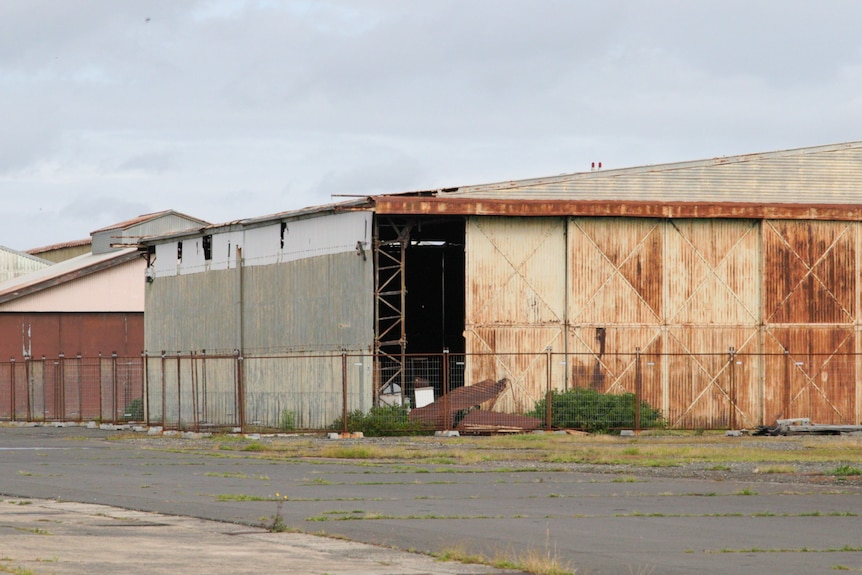
The RAAF hangers at Victoria’s Point Cook air base are beyond repair. (Supplied: Department of Defence)
“There were quite a few that shocked us,” the report’s co-author, Jan Mason, told 7.30.
“Many of the sites just haven’t been properly maintained … because defence has scarce resources, so understandably, their resources are directed towards the current requirements.”
The report’s authors estimated the properties could generate a $3 billion sale price, mostly coming from large metropolitan sites, including Victoria Barracks and HMAS Penguin.
But that will depend on the opportunity for redevelopment.
One property developer had reportedly already offered $5 billion for the entire portfolio.
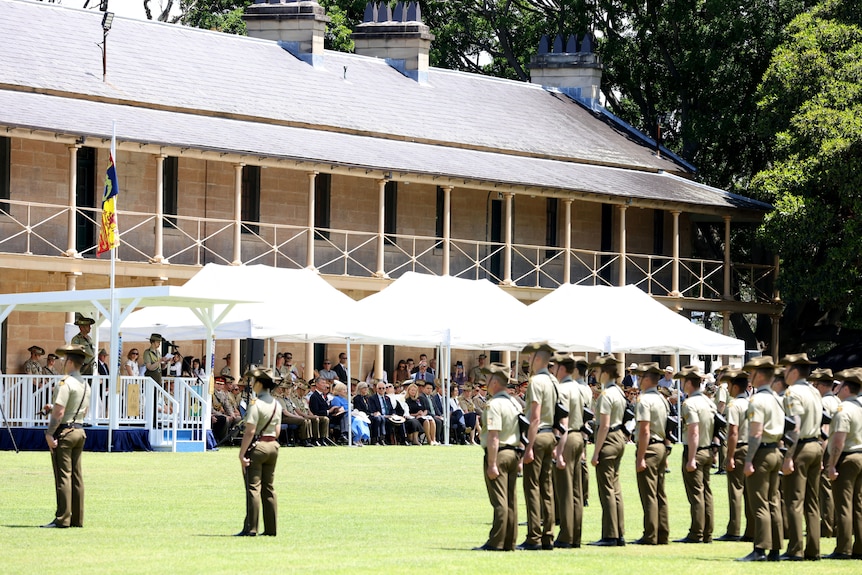
Sydney’s Victoria Barracks is still used as an Army headquarters. (AAP: Damian Shaw)
Maj Gen McLachlan, led the military’s Land Forces Command, headquartered at Victoria Barracks. His concerns about the site go much deeper than mere sentimentality.
“That implies that this is just a desire to do things the same way they’ve always been done but military tradition is something deeper than that,” he said.
“Soldiers fight for something that is bigger than themselves. They want to be connected to a tradition and a history.
“My simple analogy is when a soldier walks out to the middle of a parade ground on a military base, there’s a whole range of traditions around that. But what that soldier understands in that moment is that they’re not alone. They’re connected to, in our case, 100 years of tradition of fighting to a professional level of representing your country and the Anzac spirit.”
History etched in stone
The site has been so carefully maintained that the front wall of the barracks still shows hundreds of thin black marks on the sandstone walls — strike marks a century or more ago made by soldiers igniting flints to light their pipes.
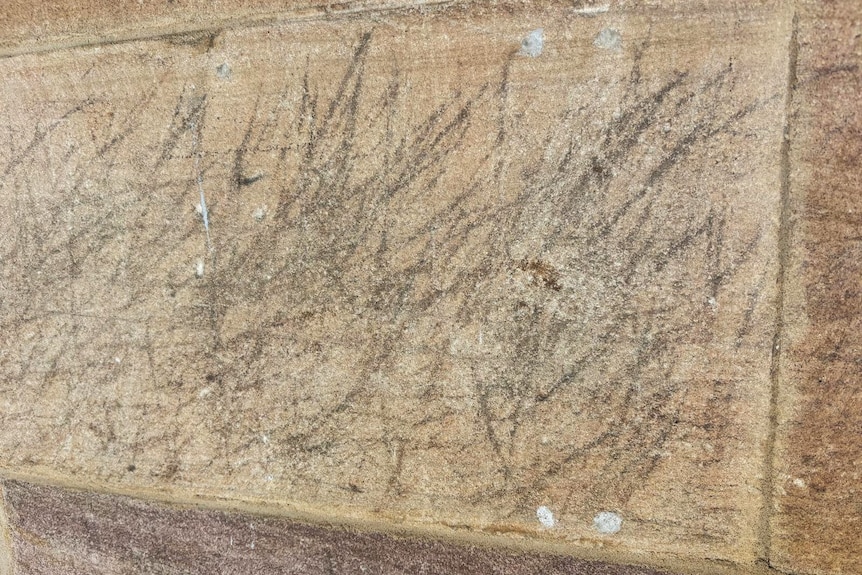
These black marks are the strikes made by flints from soldiers lighting their pipes. (ABC News: Adam Harvey)
Historic graffiti is etched into the building’s soft stone, including a carving purportedly from a young William Holmes, who went on to command troops at Gallipoli and was killed on the Western Front in 1917.
“That was part of the DNA of that barracks,” Maj Gen McLachlan said.
“That was the part of the DNA I absorbed as I went up to my office where I commanded 36,000 soldiers around Australia.
“It is one thing to have access to that. It is another thing to be attached to that DNA. In my opinion, there is a merit to that connection that goes beyond dollars and cents.”
The Commonwealth has been trying to offload redundant properties for decades, in part because of the cost of ongoing maintenance, estimated at around $100 million each year.
The battle to preserve HMAS Penguin and Victoria Barracks is an echo of a previous fight to protect Defence sites, which resulted in the creation of the Harbour Trust in 2001 and the preservation of former military sites on Middle Head, Woolwich, Cockatoo Island and North Head.
‘Trapeze levels of incompetence’
Mr Keating said he saw off “another attack upon the national estate by Defence” in the 1990s, when the Department of Defence wanted to sell off parts of the Garden Island naval base.
“Defence is an organisation characterised by trapeze-levels of incompetence, including its long specialisation in procurement overruns,” Mr Keating said.
“If the government wants to underwrite its commitment to AUKUS and the submarines, the government should provide the budgetary space to accommodate it and not leave it to Defence to vandalise the national estate on the way through.”
Jennifer Parker, a defence analyst and former navy officer, said she supported the sale of poorly used defence assets.

Jennifer Parker is a defence analyst and former navy officer. (ABC News: Callum Flinn)
“I don’t think this is about the budget. It’s actually about rationalising the defence estate. And when you have wide and unwieldily estate that you have to maintain, it also eats up capacity. You have people focused on the wrong things,” Ms Parker told 7.30.
“Our history shouldn’t dictate our capability structure.”
Ms Parker said that she had reservations about the sale of just two sites on the list: Victoria Barracks and HMAS Penguin.
“There’s a lot of hard decisions that we need to make right now on defence spending, on capability, that I wish we were progressing at a faster rate, but it was important for the government to make a hard decision,” she said.
“I think Victoria Barracks in Sydney could have been easy just to keep it, to be honest, but we do need to have a government that’s going to make hard decisions that may well be unpopular.”
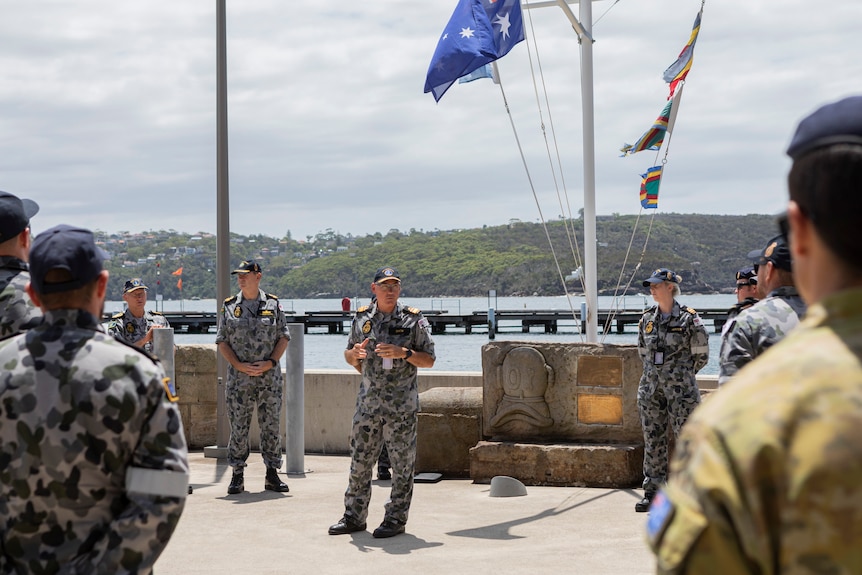
Jennifer Parker says selling off the waterfront access from HMAS Penguin would be a mistake. (Supplied)
She said she would oppose the partial sale of Penguin if it meant losing access to the water.
“We have a lot of Navy capability coming online, from large ships and submarines to small uncrewed underwater vehicles and surface vessels,” she said.
“If we don’t know the infrastructure footprint demands for that, I think selling off any waterfront access is a mistake.”
Watch 7.30, Mondays to Thursdays 7:30pm on ABC iview and ABC TV
Contact 7.30
Do you know more about this story? Get in touch with 7.30 here.