
Mar 16, 2026, 04:00 AM ET
Once again, March Madness is set to feature a strong Australian imprint.
The bracket for the 2026 NCAA Tournament was set in stone on Monday, and multiple Australians are in position to play meaningful roles for teams that are primed to make some noise over the month.
Editor’s Picks
2 Related
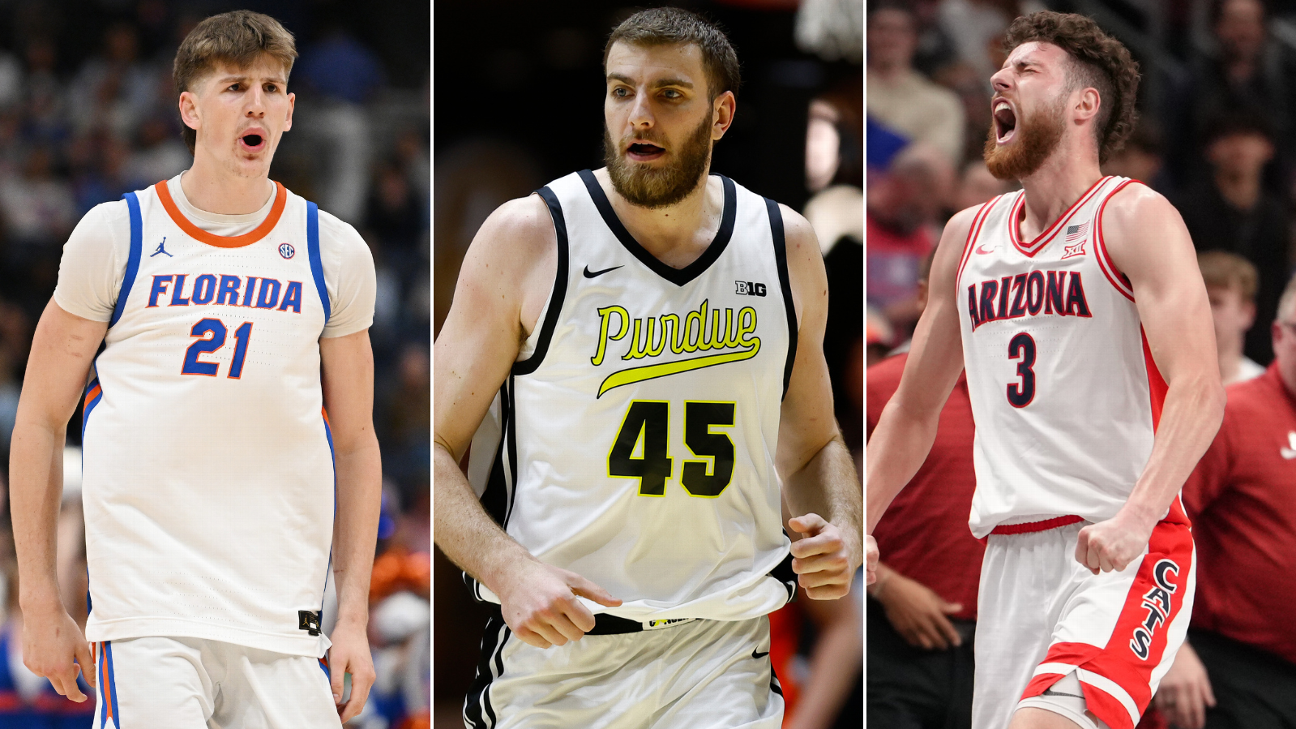
From national title contenders to dangerous teams capable of making deep runs, Australians are scattered throughout the field. Leading the group is Florida’s Alex Condon, whose profile has only grown since helping the Gators capture the 2025 national championship. Purdue centre Oscar Cluff has also emerged as a critical, bruising piece for one of the tournament’s top seeds, while Arizona wing Anthony Dell’Orso provides a different kind of weapon, giving the Wildcats a floor-spacing shooter who can catch fire and swing the momentum in tournament games.
Then, there’s Austin Rapp, who’s already shown a propensity to show up in big games for a Wisconsin team that may be a dark horse in the tournament.
Here’s a look at the Australians set to take the floor in the 2026 NCAA Tournament, and what we could expect from each of them as March Madness tips off.
Alex Condon — Florida (#1, South)
Few international players enter the NCAA Tournament with a bigger profile than Alex Condon, and the Perth-born junior is looking to win back-to-back national titles as a pillar of Florida’s frontcourt. You’ll remember Condon was key for Florida’s 2025 national championship campaign, famously diving on the loose ball in the dying seconds to seal his team’s win over Houston.
It’s unsurprisingly been a career year for Condon, with the big-man averaging 15.0 points, 7.7 rebounds, and 3.5 assists per game, shooting just under 55% from the field, providing an important two-way presence for the Gators, where he acts as a hub for the team’s offence.
Condon played a big role in Florida’s SEC Tournament campaign, posting 22 points and 10 rebounds in the quarterfinals, and there’s an expectation he’ll continue to play a big role for Todd Golden’s team, which is primed for a deep run.
Florida’s Alex Condon. Photo by Carly Mackler/Getty ImagesOscar Cluff — Purdue (#2, West)
Oscar Cluff is a highly-efficient, physical centre whose numbers perhaps don’t illustrate the substantial impact he has for the #2-seed Purdue.
The big-man enters the tournament averaging 10.3 points and 7.4 rebounds per game — shooting 70.1% from the field — and those numbers only grew when playing in games of significance. Cluff was extremely valuable over the Boilermakers’ Big Ten Tournament campaign, dropping 21 points and five rebounds in the final to help his team clinch the conference championship. That came after a 17-point, 14-rebound performance from the Queenslander in the conference semifinals.
Cluff excels as a screen-setter, rebounder, and is an efficient finisher in and around the paint, while providing a reliable interior presence on the defensive end for Purdue. Look for him to play an important role for a Purdue team that has legitimate aspirations of progressing deep into the bracket.
Purdue’s first game is against a #15 seed in Queens.
Full men’s NCAA tournament bracketAnthony Dell’Orso — Arizona (#1, West)
Australian wing Anthony Dell’Orso has emerged as a valuable rotation piece on one of the country’s most dangerous teams, and it feels like the NCAA Tournament is built for players like him. Arizona has a high-powered offence, and Dell’Orso is one of those players who can get hot in a hurry and put away games with his streaky three-point shooting.
Dell’Orso averaged 9.0 points, 2.1 rebounds, and 2.0 assists per game for the Wildcats, and his elite skill comes in the form of his ability to space the floor. The Victorian was a 32.8% three-point shooter over the season — on 4.0 attempts a game — but he’s still regarded as a no-leave marksman, and we’ve seen enough examples of him stringing together multiple threes to stretch out leads.
We saw that firsthand in Arizona’s Big 12 Tournament semifinal against Iowa State, where Dell’Orso put up 26 points, and shot 6-of-9 from downtown — both season-highs — to help guide an important win. The Wildcats would go on to win the conference championship.
In do-or-die games in March, Dell’Orso’s ability to get hot from the perimeter in a key matchup could be a difference-maker for Arizona, and the 22-year-old may end up as one of those classic tournament role players who swings a game, or even a region.
Arizona opens their tournament campaign with a matchup with #16 seed Long Island.
Arizona’s Anthony Dell’orso. Photo by Ed Zurga/Getty ImagesAustin Rapp — Wisconsin (#5, West)
Speaking of Australians who have the potential to become cult heroes over the course of March, may we present to you Austin Rapp, who’s a vital cog for a fun Wisconsin team.
Rapp’s elite ability to space the floor has been on show all season long for the Badgers, and particularly so in their Big Ten Tournament semifinals loss against Michigan, where he had 18 points, including six three-pointers, all of which came in the second half.
The 6’10 forward averaged 9.6 points and 4.0 rebounds per game this season, shooting 36.4% from beyond the three-point line, proving to be a high-level pick-and-pop option — he’s made at least one three-pointer in 11 straight games — for the Badgers.
Rapp is joined on Wisconsin by New Zealand’s Hayden Jones, a versatile guard who adds depth to Wisconsin’s backcourt. He’s less of a focal point for Greg Gard’s team, but brings a defensive versatility, and may continue to see more opportunity while guard Jack Janicki remains sidelined.
Wisconsin’s first game is against #12 High Point.
2026 printable March Madness men’s bracketJosh Dent, Harry Wessells, and Rory Hawke — Saint Mary’s (#7, South)
It remains that no program in college basketball has embraced Australian talent quite like Saint Mary’s, and the Gaels once again enter the NCAA Tournament with multiple players from Down Under.
There are three Australians on the Saint Mary’s roster going into March Madness, with Josh Dent, Harry Wessells, and Rory Hawke flying the flag.
The trio is led by Dent — younger brother of Lachlan Dent — who’s a lead guard for the Gaels, averaging 13.0 points and 5.7 assists per game, playing a key playmaking and shooting role as a sophomore. Dent can do it all on the offensive end: there was a 26-point explosion vs. Washington State earlier in the season — he hit six three-pointers in that contest — and he’s had multiple games with double-digit assists.
Dent bookends this Gaels roster with Wessells, the big-man out of Perth who’s averaged 4.9 points and 5.2 rebounds over his senior year. Wessells’ numbers will likely never jump off the page, but he’s a legitimate 7’1, so he has the ability to anchor the Gaels on both ends.
Hawke rounds out the Australians on this roster, with the guard providing backcourt depth off the bench for Randy Bennett’s team. Hawke averaged 2.5 points and 1.2 rebounds per game over the season.
Saint Mary’s enters March at the #7 seed — they face #10 Texas A&M off the bat — but always have the feel of one of those teams that could easily become one of the tournament’s classic upset threats.
play
1:45
Why Jay Bilas believes Miami (OH) should’ve avoided the First Four
Jay Bilas doesn’t agree with Miami (OH) needing to play in the First Four in the Midwest region.
Jayden Stone — Missouri (#10, West)
Jayden Stone is a fifth-year senior, and has provided Missouri with an admirable scoring punch throughout the season.
The combo guard’s role centres around his offensive production, where he’s consistently been a double-digit point scorer for the Tigers. That output has dipped recently, but it’s been an impressive season for Stone, from an efficiency standpoint, where he’s averaged 13.2 points and 5.0 rebounds per game, shooting 48.2% from the field and 38.2% from downtown.
Stone, who’s originally from Perth, has helped swing several games during the regular season with his scoring bursts, and his confidence as a three-point shooter makes him a potential momentum changer in tournament play.
Missouri enters the tournament as a #10 seed, where they first match up with #7 Miami.
Harry Rouhliadeff — Hawai’i (#13, West)
It’s been a career season for Australian forward Harry Rouhliadeff, who emerged as an important scoring and rebounding option for the Rainbow Warriors over his senior year.
Rouhliadeff averaged 10.8 points and 5.0 rebounds per game for Hawai’i, which was on show during his team’s Big West Championship campaign. The Queenslander had 16 points and 10 rebounds in his team’s conference semifinals game vs CSUF, and followed it up with another double-double: 15 points and 12 rebounds in a win over UCI to win the conference title.
He’s been a consistent starter for this Hawai’i team that enters the tournament as a #13 seed, and has demonstrated that he can be an impactful two-way presence in meaningful games. Hawai’i’s first game is against the #4 seed Arkansas.
STAY IN THE KNOW WITH ESPN
Stay across all the big sports news — sign up to our weekly newsletters here!
SUBSCRIBE
Charles Johnston — Furman (#15, East)
We’ve seen Charles Johnston step into an increased role for Furman this season, and the big-man has taken that opportunity with both hands.
Johnston has started at the four-spot for the Paladins all season long, and rewarded that trust with production, averaging 9.8 points and 9.1 rebounds per game. The Sydneysider played a key role in Furman taking out the Southern Conference Championship, and they’ll enter the NCAA Tournament with a tough task right out the gates, against the #2 seed UConn.
Peitock Machar — McNeese (#12, South)
McNeese qualified for the NCAA Tournament on the back of winning the Southland conference championship, which means Sydney’s Peitok Machar will be involved in March Madness action.
The forward averaged 3.6 points and 3.2 rebounds over the season — shooting 70.3% from the field – and has shown flashes as a quality offensive rebounder and paint finisher for the Cowboys.
McNeese enters the tournament as a #12 seed and, while Machar’s minutes can often be sporadic, the solid screen-setting and offensive-rebound-crashing make him that energy guy that could swing do-or-die games in his team’s favour. The Cowboys’ first game is against #5 Vanderbilt.
Josh Ibukunoluwa — High Point (#12, West)
Minutes have dipped this season for Josh Ibukunoluwa, with the forward playing spot minutes for High Point as they enter the tournament as a #12 seed. Over the season, Ibukunoluwa has averaged 2.8 points and 2.0 rebounds, in just 6.4 minutes per game.
High Point’s first game of the tournament is against Rapp and the #5 Wisconsin.
Jacob Furphy — Connecticut (#2, East)
Opportunities have been tough to come by for Jacob Furphy during his freshman season at UConn, with the wing averaging just 2.5 minutes per game. It’s easy to bet on Furphy eventually putting together a fruitful collegiate career, but he’s unlikely to be used in a significant way by Dan Hurley during the Huskies’ NCAA Tournament campaign.
Oscar Goodman — Michigan (#1, Midwest)
Kiwi wing Oscar Goodman has averaged 1.4 points and 1.5 rebounds per game for Michigan, who enter the tournament as a #1 seed.
Tasman Goodrick — Siena (#16, East)
Tasman Goodrick won’t feature in the NCAA Tournament due to a knee procedure in February that ruled him out for the remainder of the season, but it’s worth acknowledging how impressive he had been, with the big-man averaging 9.7 points and 7.3 rebounds a game as the starting centre for Siena.