
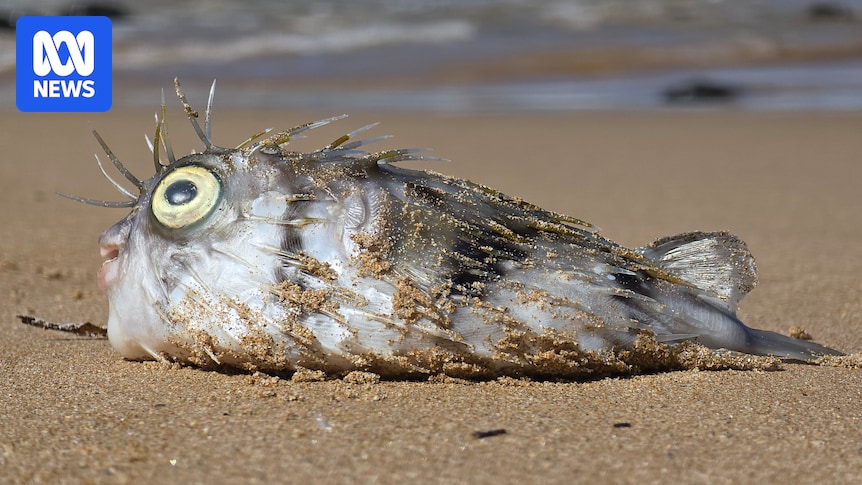
The South Australian premier has doubled down on public health advice given during the state’s algal bloom crisis, saying the word “toxic” was “broad” and could also be used to describe beer.
Responding to a Four Corners investigation into the state government’s handling of the toxic algal bloom, Premier Peter Malinauskas defended advice given by public health officials and why he had said the bloom was “not toxic” during an interview on radio last year.
“Toxic’s a pretty broad set of language,” Mr Malinauskas told ABC Radio Adelaide on Monday morning, saying no-one had presented to public hospitals with significant illnesses related to the algal bloom.
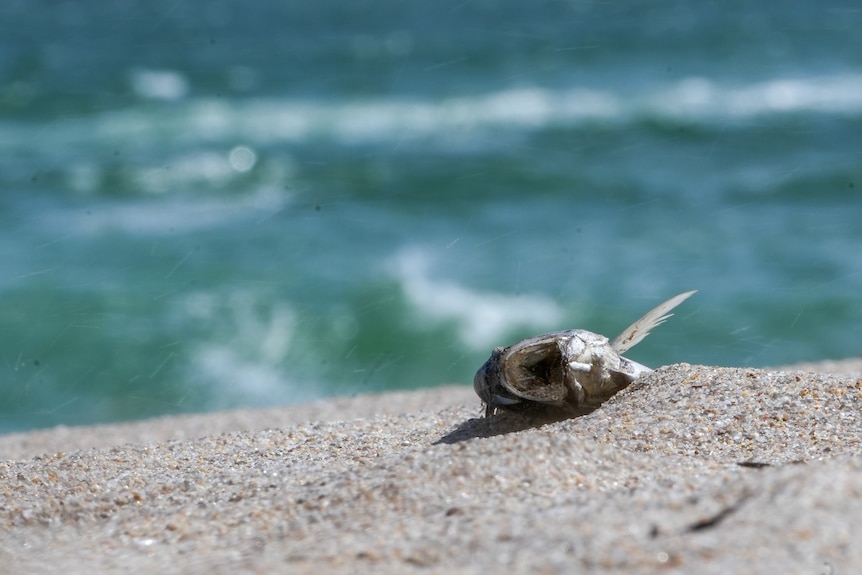
Dead fish at Corny Point on the south-west Yorke Peninsula in January this year. (ABC News: Daniel Taylor)
“So, do you know what else is toxic under the definition of the strictest possible terms? Beer.
“Alcohol is strictly, under the same way as brevetoxin is a toxin, alcohol is a toxin, and we don’t run around the country saying we’ve got a toxic beer crisis.”
Tuesday will mark one year since ABC News first reported the emergence of a mystery foam at a beach south of Adelaide which made surfers unwell and caused dead fish to wash ashore.
In the weeks and months that followed, the bloom spread along the South Australian coastline including to metropolitan Adelaide, where countless dead sea creatures — including a great white shark — washed ashore.
In May, brevetoxins were found in oyster farms at Stansbury on the Yorke Peninsula, and testing of the great white shark that washed up on Henley Beach commenced.
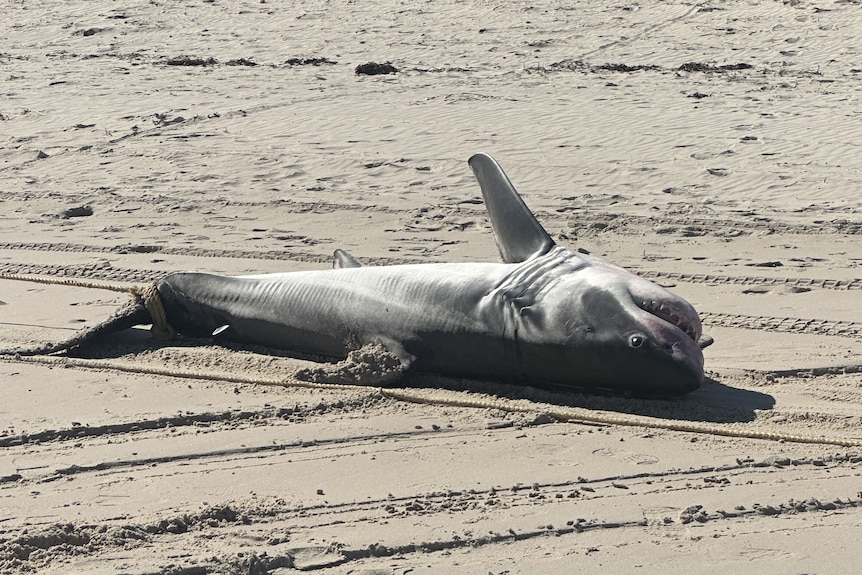
A dead shark on Henley Beach in Adelaide during the state’s algal bloom disaster. The shark’s gills were later found to contain a rare toxin. (Supplied: Rebecca Morse)
At the time, a spokesperson for PIRSA said it was investigating the death of the male shark “with samples collected for further analysis”.
“The cause of death is still under investigation and any links to this incident and other recent shark mortalities at other locations on the South Australian coast are unable to be determined at this stage,” a PIRSA spokesperson said.
Four Corners revealed an email sent by a pathologist — obtained under Freedom of Information — sounded the alarm on the results of the dead shark, which was found to have brevetoxins on its gills.
“This is an uncommon and significant finding,” the pathologist wrote on May 16 at 6pm.
Despite the finding, SA Health did not update its health advice with the premier saying the bloom “doesn’t present a risk to people’s safety” in a press conference the next week.
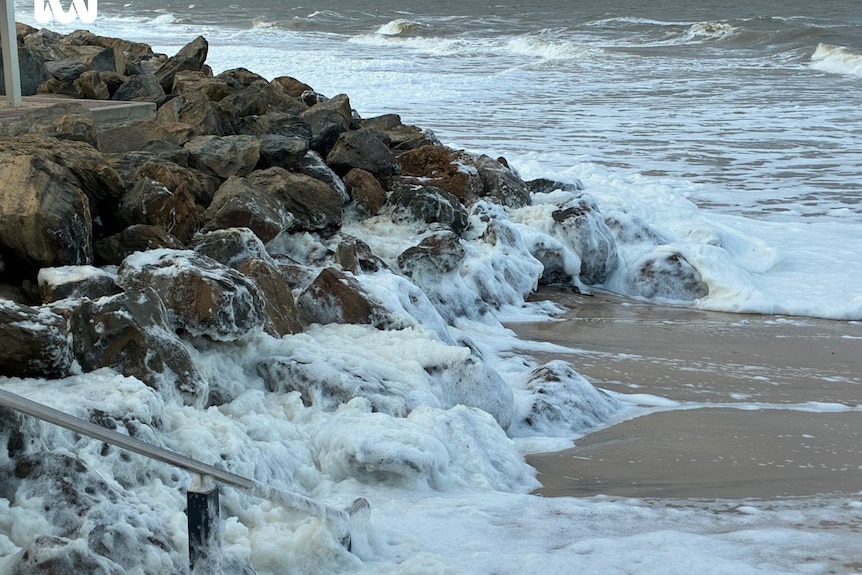
Algal bloom foam at Brighton beach in Adelaide last October. (ABC Radio Adelaide: Bobby Macumber)
Four Corners also revealed SA Chief Public Health Officer Nicola Spurrier asked UTS scientist Shauna Murray, who first helped identify the bloom, and her colleagues remove references to “severe … human health effects” from a research paper they were working on about the algal bloom.
Professor Spurrier defended her request and told the program the scientists’ paper didn’t reflect the evidence she was seeing from hospitals and GPs.
Last year, ABC News spoke to people facing what they believed were health impacts from the bloom including a teenager with a persistent cough and a pharmacist who reported customers experiencing breathing difficulties and itchy eyes after walking on the beach.
Calls to release all information and be ‘transparent’
Both the opposition and The Greens are calling for more transparency on when decisions were made to change public health information.
Opposition Leader Ashton Hurn said the premier had not been “up front” with the wider public.
“You’ve got to be transparent,” Ms Hurn told ABC Radio Adelaide in response.
“You [Peter Malinauskas] avoided using the word toxic at every turn that you could, despite the fact that there were multiple experts from right around the world that were calling it so.
“And this does speak to, I think, something that’s pretty core at the way in which the premier runs the state, and that is that he is so obsessed with PR and politics that … he’s lost sight of what’s important.”
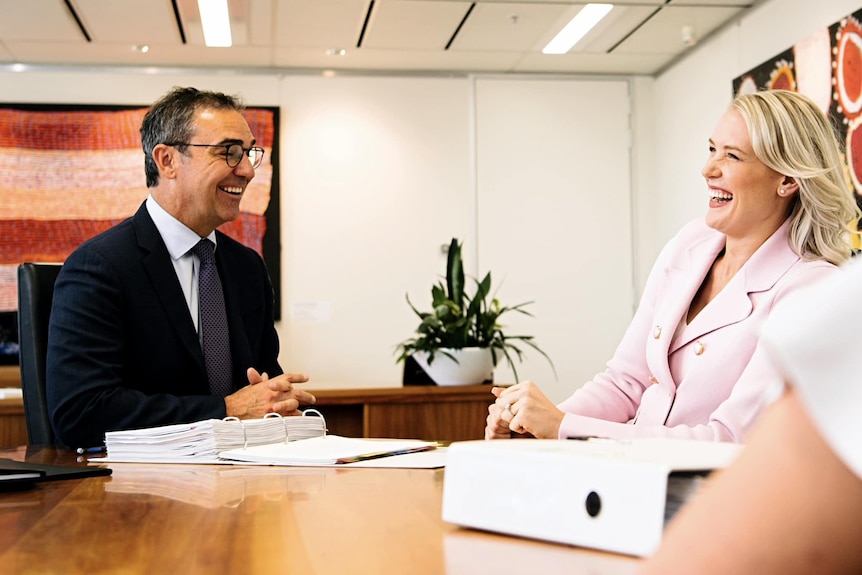
Opposition Leader Ashton Hurn advised former premier Steven Marshall on media and communication before the 2022 election. (Facebook: Ashton Hurn MP)
She said during her time working with former premier Steven Marshall during the COVID pandemic she was “pretty close with how things worked during COVID and making sure that communication was front and centre”.
“You’ve got to be able to give people as much info as you possibly can — you don’t need to spin it,” she said.
Greens SA leader Robert Simms said the premier “has got some explaining to do”.
“The South Australian community should be able to see that full chain of advice that was provided to cabinet and then they can make up their own minds,” Mr Simms said.
“We are in the middle of a significant environmental catastrophe. It’s one that does have significant implications for public health and in the interests of transparency that information should be made available to the community, particularly as we head into the final days of an election campaign.”
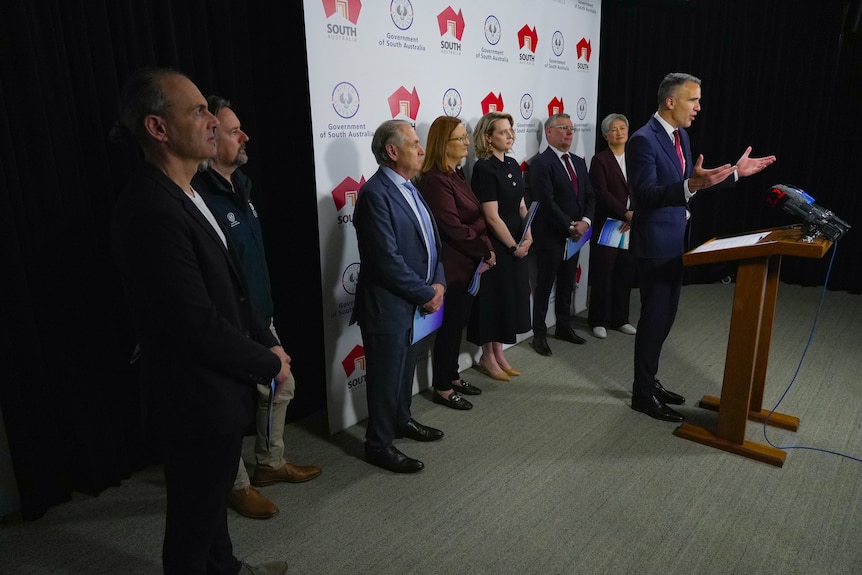
Premier Peter Malinauskas was joined by a number of politicians and others to announce the 2025/26 algal bloom summer plan in October last year. (ABC News: Lincoln Rothall)
Mr Simms said toxic was an appropriate word to describe the bloom.
“The premier has been more focused on word games than dealing with the severity of the issue,” he said.
“I don’t think South Australians are interested in playing semantic word games. This is a toxic algal bloom and it has had a terrible effect on our South Australian coastline.”
Mr Malinauskas defended those making public health decisions including Professor Spurrier, saying they were a “nation-leading public health team”.
“My job is to take the public health advice, scrutinise it, ask questions about it, test it, which we absolutely did, but then ultimately to make sure it’s shared with the people of South Australia in a way that’s consistent with their interests,” Mr Malinauskas said.