

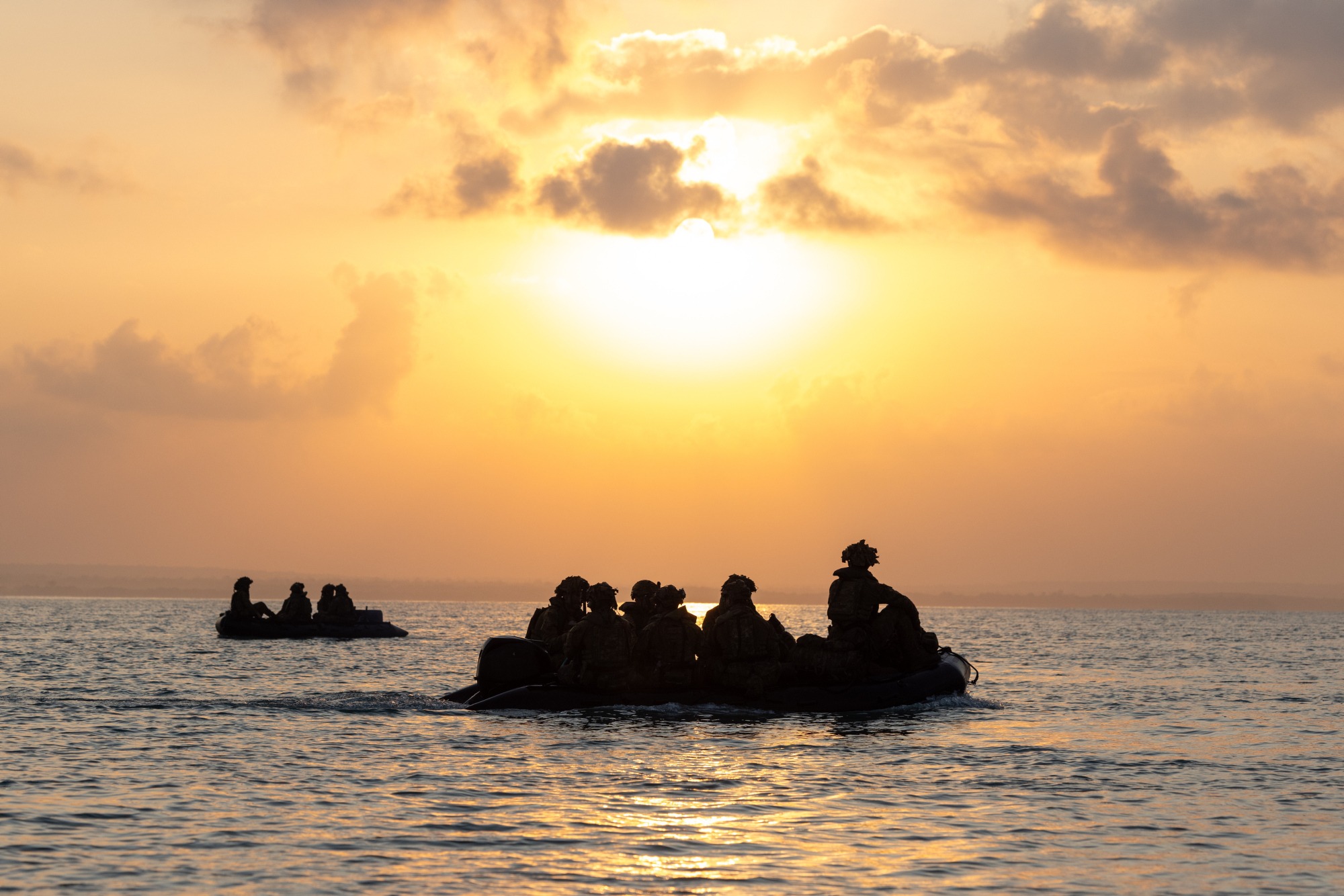
Australia’s defence strategy now points north, but the nation still lacks the systems required to fight and sustain operations there. Strategic documents have identified northern Australia as the decisive geography for deterrence and denial, yet capability, infrastructure and industry haven’t kept pace with that ambition. Australia must now build what our latest ASPI report calls the Northern Engine: a fully integrated defence ecosystem capable of launching, sustaining, repairing and innovating military power across the Indo-Pacific.
Defence policy has delivered unusual clarity about geography. The 2016 Defence White Paper, the 2020 Defence Strategic Update, the 2023 Defence Strategic Review and the 2024 National Defence Strategy all identify northern Australia as important to the defence posture. Yet strategy has advanced faster than execution. Northern Australia still operates as a loose collection of bases, infrastructure upgrades and exercises rather than a coherent operating system capable of sustaining high-tempo operations.
Northern Australia offers extraordinary advantages, proximity to the archipelagic arc, vast training areas and direct access to the Indo-Pacific, but those advantages remain underdeveloped because the systems needed to convert geography into operational power remain fragmented.
The result is a growing strategic mismatch. Australian strategy increasingly depends on operating forward from the north. Yet the infrastructure, logistics, architecture and industrial base required to sustain those operations remain incomplete. Capability diversity in the Northern Territory has also thinned in recent years as mechanised forces, aviation and other enabling capabilities shifted south. Capability positioned in the theatre provides options and responsiveness that cannot be recreated during a crisis.
Meanwhile, the United States has invested heavily through the US Force Posture Initiatives, expanding fuel storage, runway infrastructure and training capacity across northern bases. Bomber rotations, Marine Rotational Force–Darwin deployments and joint logistics planning have grown steadily. Washington has clearly concluded that northern Australia forms a keystone of Indo-Pacific force posture.
Australia, therefore, faces an uncomfortable asymmetry. US forces increasingly rely on northern Australia as an operational hub, while Australian capability in that region remains uneven. Sovereign resilience requires Australia to anchor that ecosystem, not merely host it.
Our report proposes a way forward through the concept of the Northern Engine: a framework that treats northern Australia as a frontier national operating system.
Four interconnected functions define that system.
Northern Australia must launch and lodge forces. Hardened and dispersed airbases, amphibious staging areas and scalable accommodation must enable rapid deployment into the archipelagic arc and sustained operations once forces arrive.
Northern Australia must sustain and repair forces. Darwin and other northern hubs must support forward logistics, maritime sustainment, battle-damage repair and deep fuel and munitions storage. Long internal supply chains stretching from southern Australia slow operations and weaken resilience.
Northern Australia must test and innovate. Vast training areas and controlled airspace provide ideal conditions for testing emerging capabilities such as autonomous systems, long-range strike and advanced surveillance technologies.
Northern Australia must connect and export. The north sits between southern industrial capacity and Indo-Pacific operational demand. Strategic logistics corridors linking Adelaide to Darwin and Brisbane to Townsville must connect domestic industry with forward operations.
Together, those roles transform northern Australia from a cluster of bases into an integrated defence ecosystem capable of generating national and allied combat power.
Several structural gaps currently prevent that transformation.
Australia still lacks a published concept of operations for northern theatre logistics. That means that infrastructure investment, industry planning and allied posture development proceed without a shared blueprint.
Fuel and munitions infrastructure remains too shallow to sustain prolonged operations. Storage, dispersal and survivability require urgent expansion.
Northern industrial ecosystems struggle to scale without predictable Defence demand signals. Sustainment capacity will grow only when basing decisions and operational concepts provide long-term certainty.
Workforce constraints across housing, health care and skilled labour continue to limit northern expansion. Governance fragmentation further complicates delivery, as defence infrastructure, industry development and regional growth initiatives proceed through separate bureaucratic channels.
Australia must therefore shift from incremental upgrades to systemic design.
The government should publish a northern theatre logistics and basing concept of operations, strengthen the Darwin maritime sustainment precinct, expand fuel and munitions storage, establish a northern test and evaluation ecosystem, and formally recognise the logistics corridors linking southern industry with northern operations. Coordinated delivery across governments and industry will prove essential.
Northern Australia will determine whether Australia’s defence strategy succeeds or fails. Building the Northern Engine now will ensure the nation’s most important geography becomes the backbone of its defence posture rather than its greatest vulnerability.