
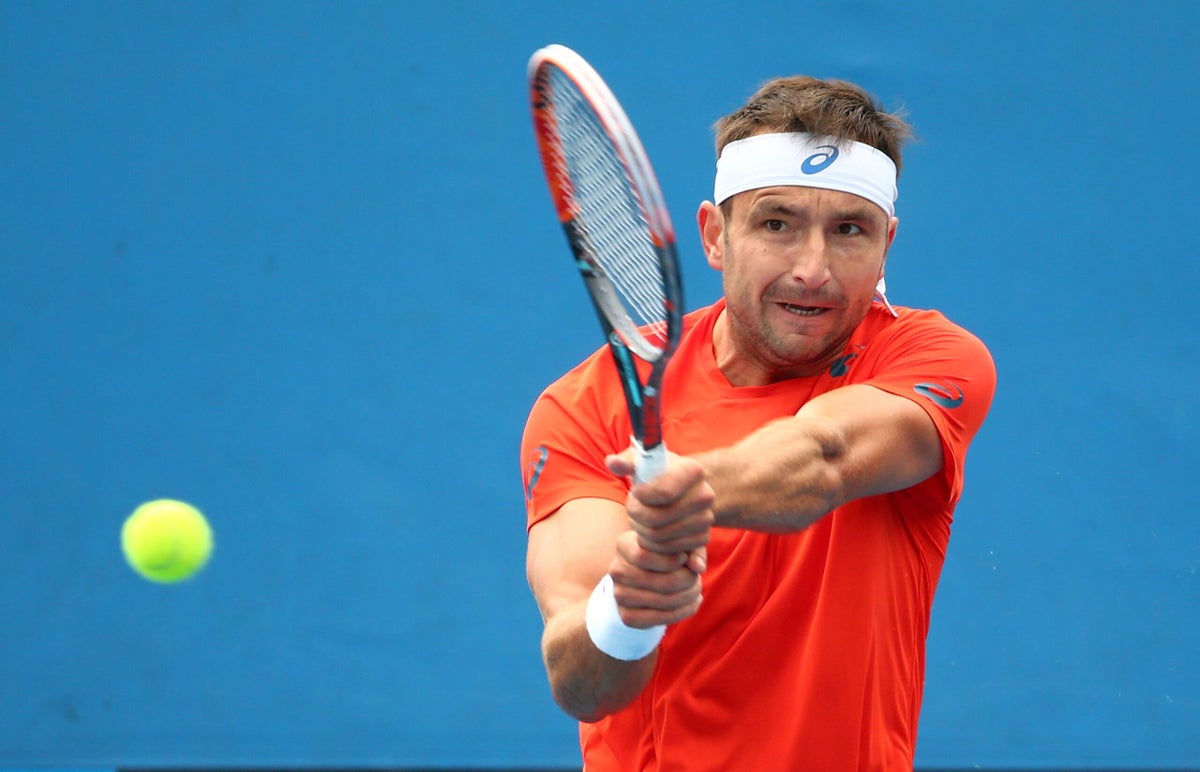
A former world No. 39 who labeled tennis’ anti-doping agency “corrupt” has been given a four-year ban for multiple historical breaches of anti-doping rules.
Marinko Matosevic, a 40-year-old Australian ex-player turned coach, was suspended Monday for five anti-doping rule violations between 2018 and 2020. An independent tribunal convened by the International Tennis Integrity Agency (ITIA), which oversees tennis’ anti-doping programme (TADP), found that Matosevic had committed blood doping and facilitated another player’s blood doping.
In a news release announcing Matosevic’s ban, the ITIA said he had also been banned for “providing advice to other players on how to avoid positive tests, and use and possession of the prohibited substance clenbuterol.”
Matosevic, who initially denied all wrongdoing, admitted to blood doping in a statement issued to Australian publication the First Serve shortly before his hearing, in which he also criticized the ITIA’s investigative practices. Matosevic said that he was in Mexico when he “stupidly” received a blood transfusion in 2018, before retiring shortly afterward partly, he said, out of disgust at his actions.
Former Australian player turned coach Marinko Matosevic has contacted The First Serve to release this statement.
Last year, The First Serve Live reported that Marinko was under investigation by the ITIA.
Read more 👉 https://t.co/YpDdrCeUcc pic.twitter.com/ZVVoKcdx2j
— The First Serve (@TheFirstServeAU) February 2, 2026
In the statement, issued Feb. 2, Matosevic alleged that the ITIA’s process was “corrupt and unjust.”
“They take your phone under threatening circumstances and make legal cases over photos and text message assumptions that are literally over five years old,” he said.
“The whole process is corrupt and lacks credibility, as we have seen over the last few years! These are man-made rules that get changed on a whim and to suit questionable objectives; they are not moral or right! The other ‘complicity’ charges they have against me are total nonsense and have been put together with nothing but text messages from years ago, using more made-up laws like ‘intent.’”
The tribunal dismissed Matosevic’s allegations as without merit, and said that the ITIA “acted within the authority conferred” by the Tennis Anti-Doping Protocol (TADP).
The ITIA did not respond to a request for comment on Matosevic’s allegations.
Matosevic’s suspension will end March 15, 2030, subject to repayment of outstanding prize money from tournaments in Morelos, Mexico and Indian Wells, Calif. around the time of his blood doping violation. One single charge for possession and use of clenbuterol, dating back to before 2020, was dismissed due to lack of evidence.
During the period of ineligibility, Matosevic is prohibited from playing in, coaching at, or attending any tennis event or activity authorized or sanctioned by the members of the ITIA, which includes the men’s and women’s tours and the organizers of the four Grand Slams, as well as smaller associations, clubs and leagues.
Matosevic previously coached leading Australian players Chris O’Connell and Jordan Thompson, helping the latter, a former world No. 26, to a place at that year’s U.S. Open fourth round. He stopped working with O’Connell in late 2024, and Thompson the following year.
These are not the first procedural criticisms leveled at the ITIA. In 2024, the Professional Tennis Players’ Association made a number of complaints in a letter addressed to ITIA chief executive Karen Moorhouse and seen by The Athletic. Outgoing executive director Ahmad Nassar alleged that ITIA investigators had on occasion seized the personal mobile phones of players, harassed their families and threatened players with sanctions and suspensions unless they immediately did what was being demanded of them.
“The reports we have received demonstrate that the ITIA’s investigative process is broken, and that ITIA investigators are abusing their roles,” Nassar wrote.
“While we would hope that these incidents violate the ITIA’s investigative protocols, given the prevalence of complaints, we believe there are flaws at the core of how the ITIA conducts itself,” he added.
In response, the ITIA sent a statement to The Athletic through chief spokesperson Adrian Bassett. It said that the agency characterized the allegations as “serious, yet generic,” adding that it would investigate any specified allegations of improper behavior.
“It is currently our belief that ITIA investigators work according to the rules, with respect and reflecting our values,” the statement said.
The full written decision for Matsoevic’s suspension will be made available as soon as possible, according to the ITIA, once redactions have been made to preserve anonymity of related individuals, and the confidentiality of ongoing investigations.