
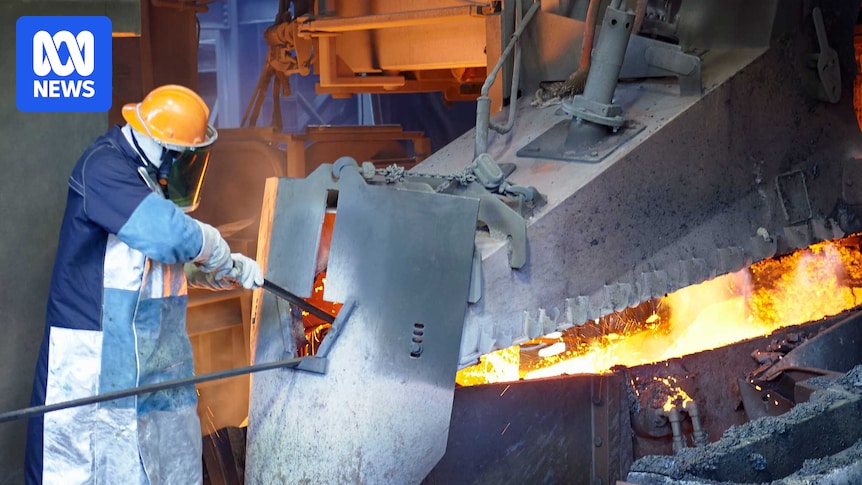
As uncertainty looms large over the Mount Isa copper smelter, researchers say a new technology could offer miners a cheaper and cleaner alternative.
The Mount Isa smelter’s potential closure by 2030 threatens the viability of smaller mines across the region, which will be forced to pay high shipping costs to have their concentrate smelted interstate or overseas.
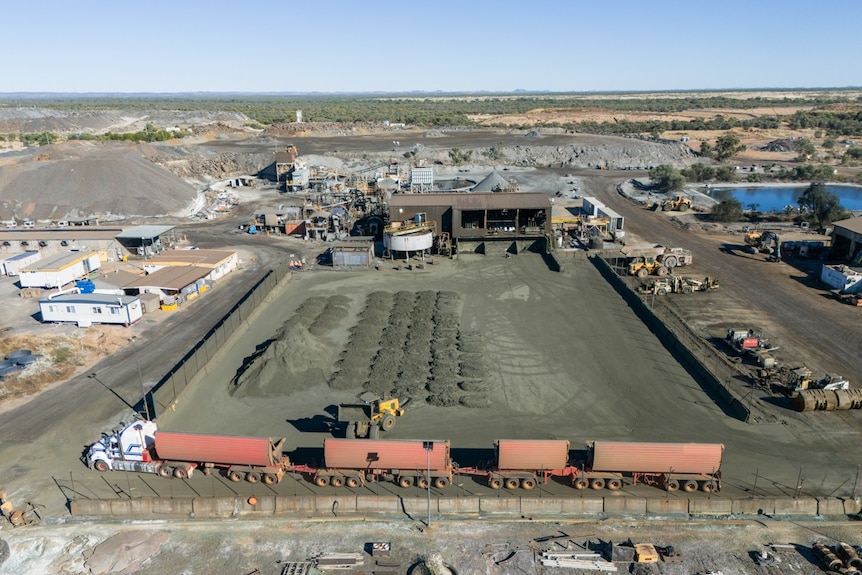
Copper concentrate from plants such as Eloise mine, near Cloncurry, has to be shipped to Mount Isa to be smelted. (Supplied: AIC Mines)
But researchers at the University of Queensland believe they can refine copper without extreme heat and at substantially lower cost.
Buoyed, but sceptical after stumbling across the discovery on LinkedIn, AIC Mines managing director Aaron Colleran sent a bucket of ore from his Eloise mine to test the technology.
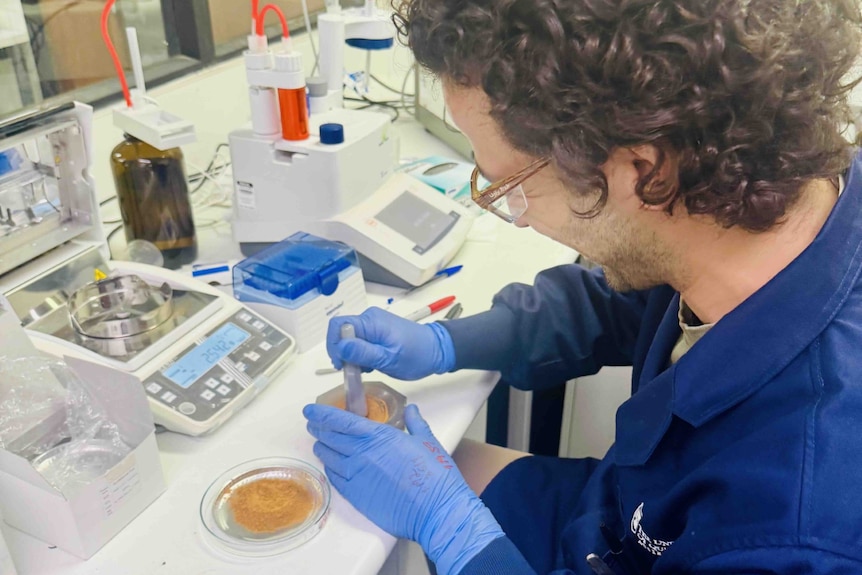
Banksia Minerals technology uses hypersaline solutions to dissolve ore and an electrical current to reconstitute copper. (Supplied: Banksia Minerals)
“There’s a lot of technologies that can do something, but can they do it economically?” Mr Colleran said.
“The results were far better than any expectations.
“The cost of producing copper from our concentrate is really all about the cost of power.
“They estimate it uses roughly half the energy of conventional copper smelting.”
A saline solution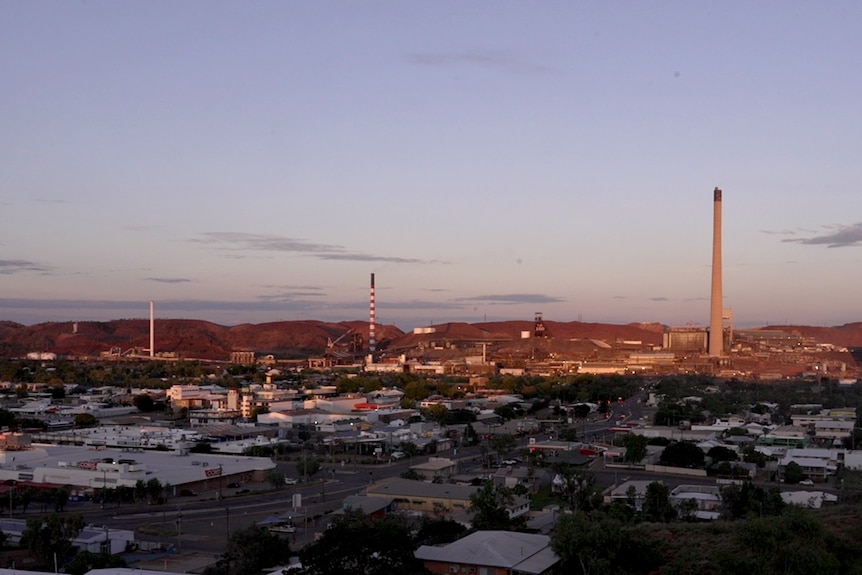
A hydrometallurgical approach to copper refining could have huge energy savings compared to traditional smelting. (Background Briefing: Baz Ruddick)
Traditional copper processing relies on firing concentrated ore in a 1,200-degree Celsius furnace where it is melted, cast and later refined into an exportable product.
But the vast energy demands and rising gas prices have squeezed margins in what was once a lucrative industry.
University of Queensland researcher Professor James Vaughan said his hydrometallurgical process avoided high heat by dissolving copper concentrate in highly saline solutions where the metal is then recovered using an electrical current.
“Smelting still has a significant energy requirement and carbon footprint you can’t get away from,” Professor Vaughan said.
“In our process you avoid that gas emissions problem completely.”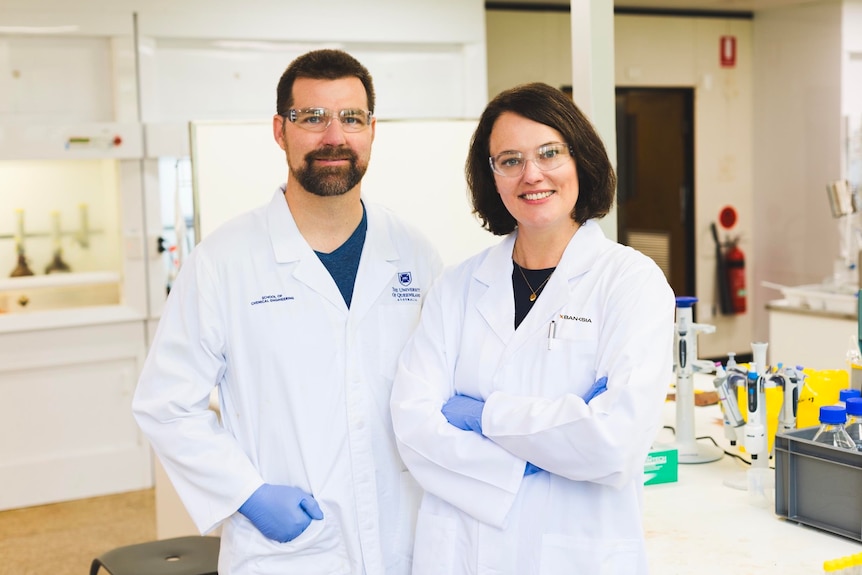
James Vaughan and Leigh Staines, of Banksia Minerals, have developed a process to refine copper. (Supplied: Banskia Minerals)
Bypassing a furnace also meant copper deposits previously ignored due to high arsenic levels could be processed safely without contamination risks or air pollution.
Professor Vaughan said the technology could potentially be built for roughly half the capital cost of a traditional smelter.
“If you look around the world there’s not really any small smelters,” he said.
“The hydrometallurgical process can be very, very small.
“We think we have a capital-cost advantage, and there’s a good chance we’ll also have operating cost savings.”
A modular approach
In February, Banksia Minerals, which is commercialising the technology, was awarded $5 million in federal government funding through the Australian Renewable Energy Agency to develop the technology into a pilot plant expected in 2028.
Banksia Minerals managing director Leigh Staines said, if successful, people could see multiple plants across the region.
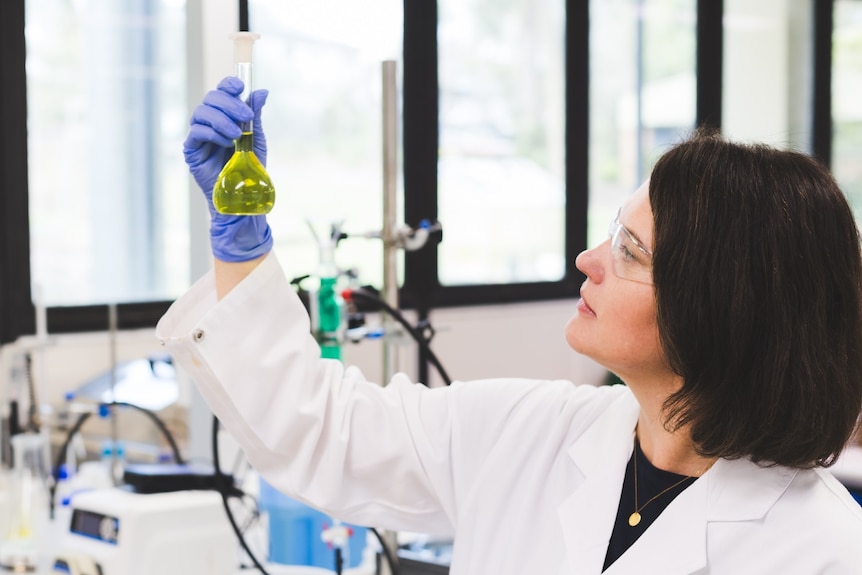
Leigh Staines says recent ARENA funding should allow the company to develop a pilot plant by 2028. (Supplied: Banksia Minerals)
“The Mount Isa region is particularly of interest for this development because we’ve got a couple of different options,” Ms Staines said.
“One would be to almost replicate an equivalent of the smelter … but another option is a number of smaller facilities around the region.
“That’s where we have the option to look at a bit more of a fit for purpose approach, where we may actually choose to have a few plants here.”
‘Fair bit’ of work to come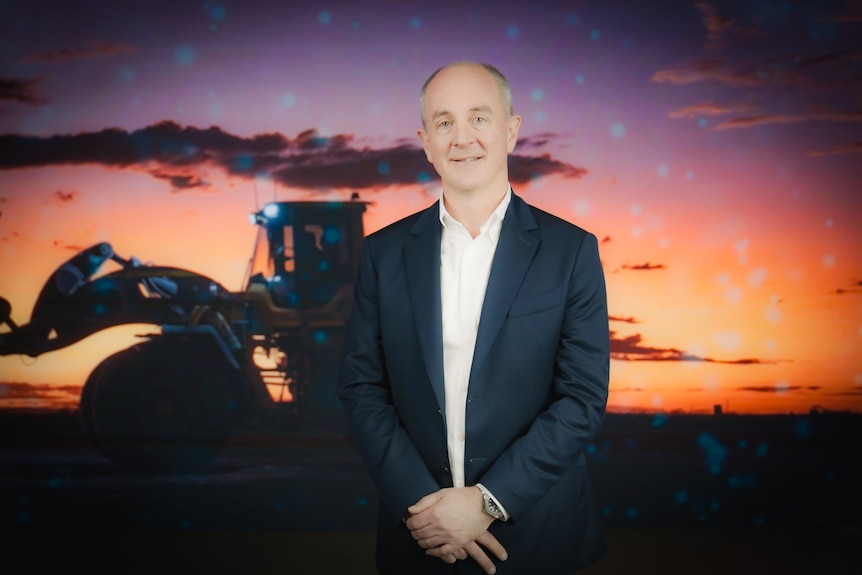
Aaron Colleran was surprised by the initial success of the Banksia Minerals refining technology. (Supplied: AIC mines )
Alternatives to copper smelting have existed for decades, but until now have not been economically feasible.
Mr Colleran said early tests showed the Banksia process could extract high-quality copper cheaply, but struggled with secondary minerals.
“Gold and silver are worth about 20 per cent of our revenue stream,” he said.
“We can’t let those go to tailings. So, the next work is to understand the cost — where we get this chloride solution, what volumes are required, and how it has to be treated.”
He said there was still a “fair bit” of work to do but hoped the region could find a new way forward.
“If operators in the Mount Isa and Cloncurry region have a smelting solution that uses half the energy … that’s potentially a breakthrough for the whole region,” Mr Colleran said.