
Seven in 10 employers are excluding candidates in certain groups, including those who live with a long-term illness, disability, mental illness or are over 55, according to a new survey.
The Australian HR Institute (AHRI) surveyed more than 600 business leaders or senior human resources decision-makers and found one-third of employers admitted to excluding workers with mental illness.
Twenty-nine per cent refused applicants with a long-term illness, while 19 per cent reported excluding applicants with a disability or if they were aged 55 and over.
Recruiters and career coaches have labelled the findings “disgusting”, while AHRI said narrowing the talent pool carried “clear economic risks”.
AHRI chief executive Sarah McCann-Bartlett noted it was illegal for employers or recruiters to discriminate or even ask questions about potential employees’ health conditions.
“For attributes like a history of mental illness, that would require an employee or a potential candidate to disclose, which they are not legally obliged to do so, and the employer is not permitted by law to actually ask them,” she said.
“By restricting their willingness to recruit these candidates, employers are limiting their potential labour pool and, importantly, the diversity of their workforces.
“While the exclusion of certain candidates and certain candidate groups has come down over time, it is disappointing to see that we are still excluding people who would be able to actually do a great job.”‘Absolutely disgusting’
Career coach Leah Lambart said the findings of the AHRI survey were “absolutely disgusting”.
“Some companies are willing to make allowances, even in the recruitment process, for people who have challenges. They might have ADHD or other neurodivergence that might affect how the recruitment process plays out,” she said.
“Because we are aware that people do get excluded because of those things, I would often suggest to my clients that they not perhaps ask for special consideration in case it is a red flag and causes them to be excluded.”
Gayle McNaught from SANE, a national mental health organisation, said the findings were “deeply concerning” and reflected the “entrenched prejudice and discrimination” faced by so many people.
“It really is time for all Australian employers to step up, dismantle bias in recruitment and ensure people are judged on their capability, not their condition.”
Recruiters and career coaches have slammed the findings of the survey. (Black smartphone near person, Headway, Unsplash license)
Disability Discrimination Commissioner Rosemary Kayess said it was clear there was still “a long way to go” in addressing stereotypes.
“It reinforces the fact that we haven’t moved past the assumptions of people with disability being expensive or a burden to employers,” she said.
“We obviously haven’t done enough on the demand side of employment to move employers in their understanding of disability.
“Why is it always back on people with disability to do the heavy lifting to address discrimination?”
The Australian Human Rights Commission has called for changes in the Disability Discrimination Act to put the onus back on employers.
“One of the things we’re really pushing for is a positive duty, where the duty holders have to put in place mechanisms that ensure discrimination doesn’t happen in the first place,” Ms Kayess said.
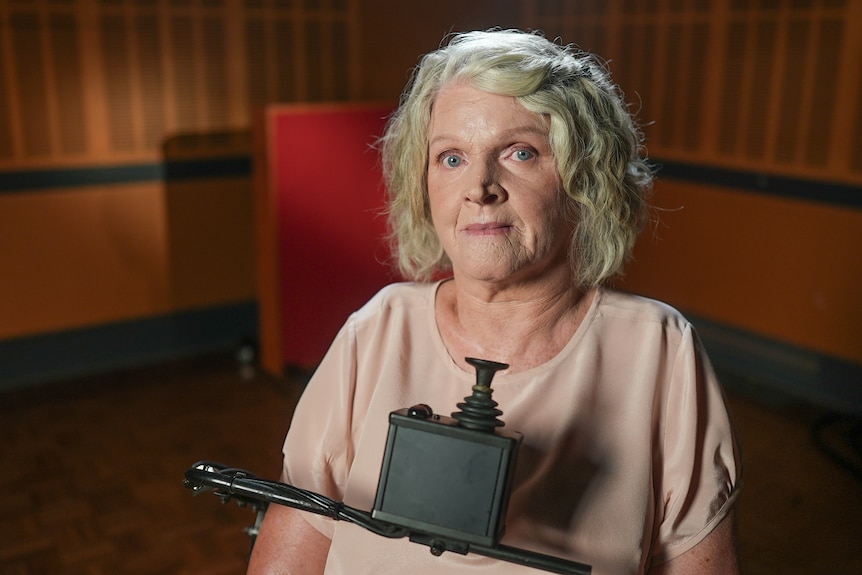
Rosemary Kayess says more work needs to be done to address stereotypes. (
ABC News: Billy Cooper
)
‘Now I just say no’
Tim Hillier, an experienced customer services manager in financial services, thought he was doing the right thing by disclosing to his recruiter that he had taken time out of the workforce to deal with a mental health condition.
“I had that negative experience where I really felt that that did affect my chances just by being honest. We had a chat about it and then I didn’t get a follow-up,” he said.
“I never got a call back for some roles that friends of mine were going for, similar roles, and I had the same experience and postgraduate qualification, but I wasn’t being put forward.”
Mr Hillier said his honesty about a history with obsessive-compulsive disorder, and at times depression, led to stalled applications.
He said one recruiter told him to abandon job hunting in the corporate sector altogether.
“On a lot of applications … they ask, ‘Do you have a disability?’ or ‘Do you need adjustments?'” Mr Hillier said.
“I used to say, ‘Yes, and that I’ve got obsessive compulsive disorder and depression’, but now I’d just say, ‘No’.”
He is now working in a banking role in Melbourne where he has only recently been comfortable disclosing his mental health history.

Recruiters say people do not need to disclose personal information, such as illness or reasons for career breaks. (Person standing near the stairs, Hunters Race, Unsplash license)
Clinton Marks, a director at recruitment company Robert Half, said it would be unusual for an employer to ask a question regarding someone’s personal information.
“The only way I could really establish that they’d be able to learn that information is if a candidate is going to volunteer it in an interview,” he said.
“There’s potential they may bring up they were limited in performing a function for some reason.”
Mr Marks said in the case of a long-term illness, a candidate may want to share that information because they may need personal leave.
“So that may actually appear in the actual resume, or they may just want to establish that they weren’t at work for a period of time and as a result missed out on certain tasks,” he said.
“I wouldn’t suggest to any employer that they should take into account a long-term illness, which is something an individual can’t control.”
Mr Marks said while he had not seen a lot of cases of ageism, he had noticed preference for gender.
Ageism is growing among employers, data reveals
He said if someone had grown up in a different country, there was a presumption they would not have enough English skills.
“Sometimes clients are very keen and understand that they do have a sense of unconscious bias,” he said.
“And we remove names, photos, demographic indicators of [the] candidates, if they’ll be open to that. Increasingly, we are seeing that [they] are prepared to do that.”
Ms Lambart said it was not necessary for job seekers to disclose information such as why they have had career breaks.
“It’s personal information, just as you don’t need to disclose that you’ve got a six-month-old baby at home, a sick parent or a child that’s unwell, [so] you might have to take time off,” she said.
“It’s up to the person whether they want to disclose that after they start, but it could definitely damage their opportunities.
“Sometimes it’s easier just to say that it was for personal reasons and focus on the positive things you’ve been doing during that time where you’ve been building some skills.”