
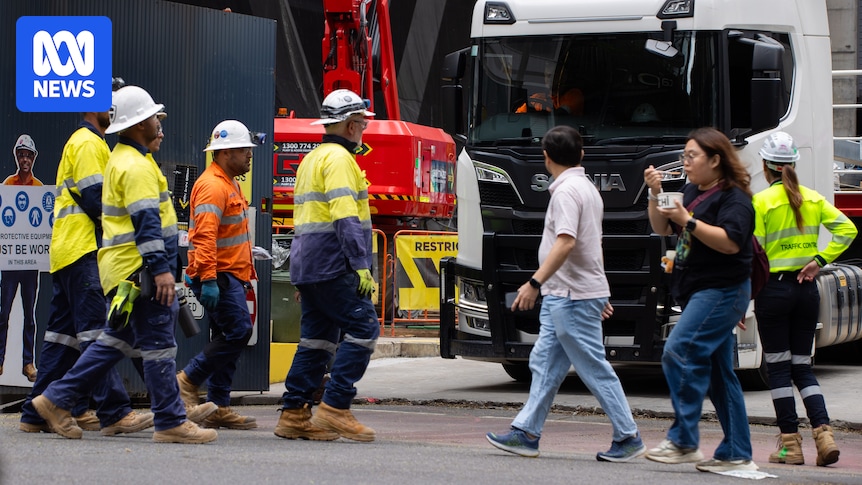
Queensland’s construction industry is forecast to fall just over 19,000 skilled workers a year short of what’s needed to meet a “super-cycle” of demand ahead of the 2032 Olympic and Paralympic Games, a new report has warned.
Construction Skills Queensland’s (CSQ) latest analysis of the state’s construction industry predicts worker shortages will peak with a shortfall of 35,000 in 2027-28.
Demand for labour is expected to jump by 17 per cent in that year compared with now, as building activity peaks.
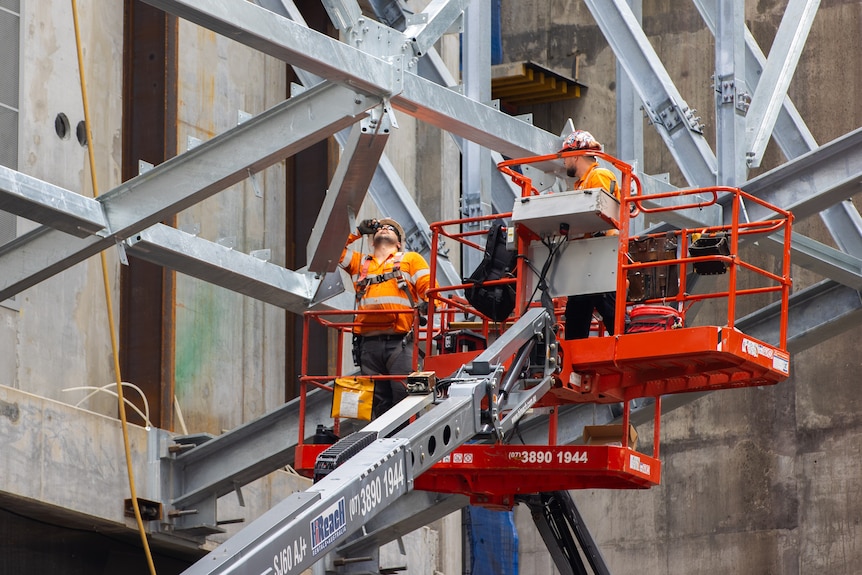
A new report has laid bare the state of the construction worker shortfall in Queensland. (ABC News: Luke Bowden)
‘Hard deadline’ on Games projects
CSQ’s Kim Hetherington said “key drivers” of pressure on the state’s construction industry included population growth and transitioning the energy system, along with the Games.

Kim Hetherington says the workforce shortfall puts projects at risk of delays. (ABC News: Dean Caton)
Last year, the state and federal governments committed to a $7.1 billion joint funding package for new infrastructure, including a 63,000-seat stadium at Victoria Park.
But CSQ is estimating Games-related construction will total $11.2 billion, when athletes’ villages and precinct works are included.
Ms Hetherington warned that unless worker shortages were addressed, major projects could be delayed, and costs could blow out significantly.
“The challenge we’ve got is the projects for the Games … they can’t be shifted,” she said.
“So, there’s a hard deadline on those.”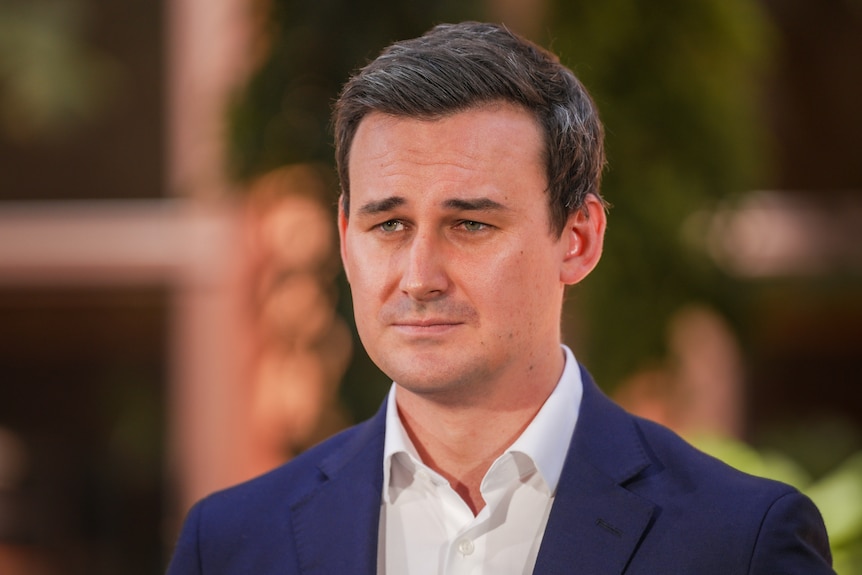
Sam O’Connor says the government is committed to ensuring builders have the right environment to work in. (ABC News: Christopher Gillette)
When asked about concerns costs would blow out, Housing and Public Works Minister Sam O’Connor said the government had been “absolutely clear” about the funding envelope for Games infrastructure.
Asked about the cost discrepancy, Treasurer David Janetzki had the same response:
“We’ve been clear that projects are to be delivered on time and on budget, and the deputy premier has been very clear about that,” he told reporters in Townsville.
“We’ve got the $7.1 billion funding envelope for the Games. We’ve returned productivity to Queensland work sites.”
The treasurer acknowledged the “war for talent”, saying Queensland was determined to get the “skills and training right”.
“We are seeing the green shoots,” he said.
Sector ‘cautiously optimistic’ despite challenges
The difficulty of filling roles was laid bare in the QSC report. It stated there were more than 5,600 vacancies for construction jobs in the state in November last year — up 40 per cent on the same period five years ago.
“Without a stronger pipeline of workers entering the industry, the risk of project delays and rising delivery costs will increase, placing further pressure on an already stretched construction sector,” the report warned.
Despite the challenges, Master Builders Queensland chief executive Paul Bidwell characterised the sector as “cautiously optimistic” about its capacity to deliver on all of the projects in the pipeline.
However, “it begs the question about whether something has to give and … we really won’t know what that looks like until we almost get there,” he said.
He agreed the cost of construction was likely to increase.
According to the report, the cost of projects in the construction pipelines averages out to $69 billion per year over the coming years, with an anticipated peak of $75 billion in 2027-28.
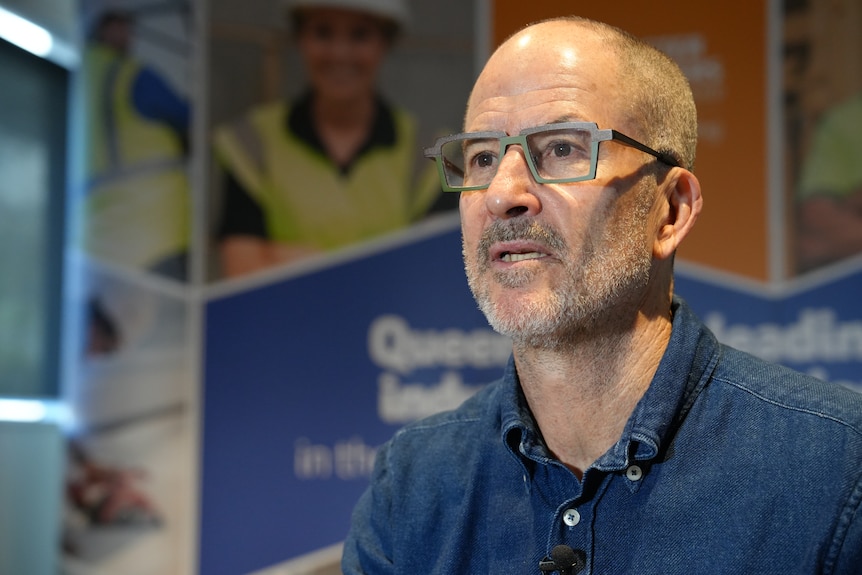
Paul Bidwell says reports which identify the scale of the workforce problem are needed. (ABC News: Glen Armstrong)
This is the second year CSQ has compiled the Horizon 2032 report.
Last year, it projected a larger worker shortfall of 50,000 in 2026-27.
Ms Hetherington said the difference could be explained by a forecast for a “split” peak, with building activity peaking in 2027-28, before demand for engineering peaks in 2030-31, rather than an improvement.
When compared with last year, the average worker shortfall over the coming years has increased by about 1,000.
Engineering includes roads, bridges, recreation and water projects.
She said it would get easier to model demand as projects got closer to fruition.
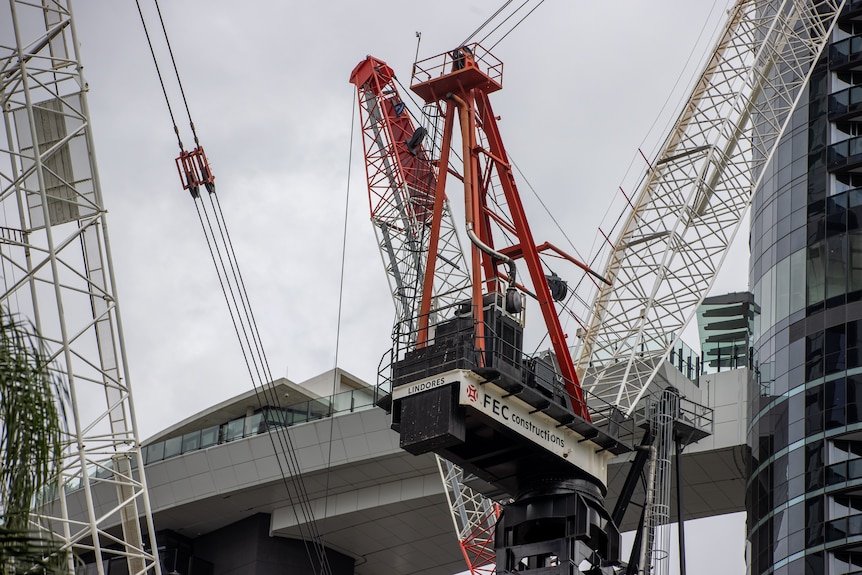
Population growth, the Games and the energy transition are putting pressure on the construction sector. (ABC News: Luke Bowden)
What can be done?
Industry bodies like CSQ and the MBA say what’s needed to address worker shortage is not only more apprentices, but a boost to interstate and overseas migration and incentives to get more women and other under-represented groups into the industry.
The number of commencing apprentices in Queensland in 2024-25 was down about 30 per cent on 2021-22, when enrolments peaked at 15,800, although numbers have improved since the pandemic.
The report stated the decline was “widespread” across trades.
Mr Bidwell was concerned to see statistics like about 7,000 apprentices falling out of the system per year, saying it was important to focus on retention.
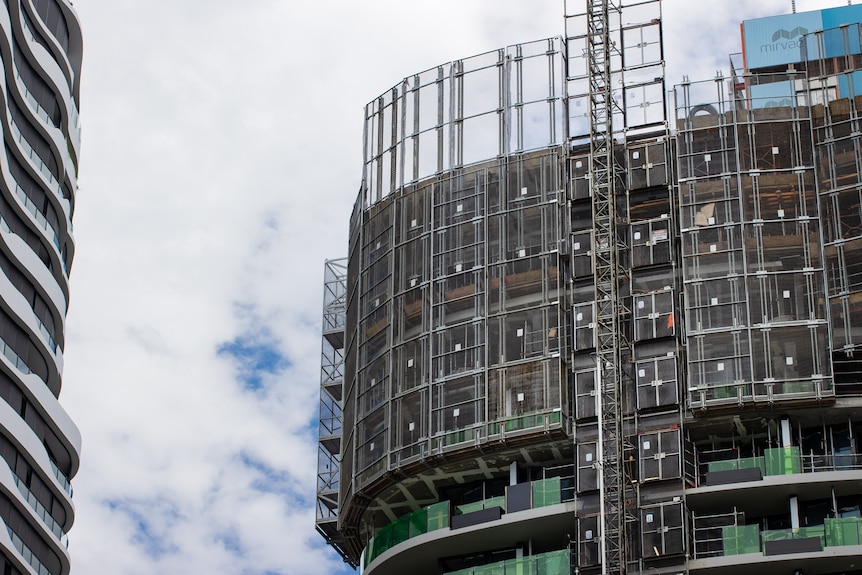
Construction is underway at a rapid pace across Queensland. (ABC News: Luke Bowden)
Structural issues also existed, he said, like young people being urged to take up university degrees rather than apprenticeships.
“That’s been at play for a long time,” he said.
“There’s a lot of work going on to demonstrate how good those jobs are.”Small businesses say taking on apprentices a financial challenge
Mr O’Connor said things were moving in the right direction, referencing the government’s move to scrap Best Practice Industry Conditions (BPIC) and overhaul procurement practices. He said those decisions had “saved billions”.
Encouraging small businesses to take on apprentices was another area of focus for the MBA and CSQ.
Last year, the state government introduced a $19 million apprenticeship subsidy scheme, which Mr Bidwell said was welcome and had enjoyed “reasonable” uptake.
He hoped to see that funded beyond its pilot scheme.
When asked whether it would be be extended, Mr O’Connor said a decision would be made in “due course” but noted it aligned with the government’s values.
Other areas Mr Bidwell was advocating for further changes in included introducing mutual licensing recognition, which he said would make it easier for interstate tradespeople to set up in Queensland.
He also urged continued focus on improving productivity and the industrial relations environment the sector operated in.

The Queensland government will build a new stadium at Victoria Park for the 2032 Olympics. (Supplied)
‘Beg, borrow and steal’
Last year, Deputy Premier Jarrod Bleijie said the government was prepared to “beg, borrow and steal” workers in order to meet the Games’ project deadlines.
He said he did not think Queensland needed to offer incentives, such as cash payments, to lure workers from other states.
Speaking in Bundaberg on Tuesday, Labor Opposition Leader Steven Miles described the report as “concerning”. He said the biggest impact would be on regional Queensland as tradespeople would be lured to Brisbane to work on big-ticket Olympics’ infrastructure and projects that would “pay better”.
Mr Bidwell was also optimistic people would want to be part of the legacy projects.
“We saw that with the Sydney Olympics … and for those major projects like Parliament House where people still say, ‘Oh, my dad worked on Parliament House’, so that will happen,” he said.
But he acknowledged there were simply no silver bullets.
“It’s really the government working with industry and with the unions to increase productivity [and] drive down costs,” he said.
“We want to get more boots on the ground and we want to get more houses out of the ground.”