
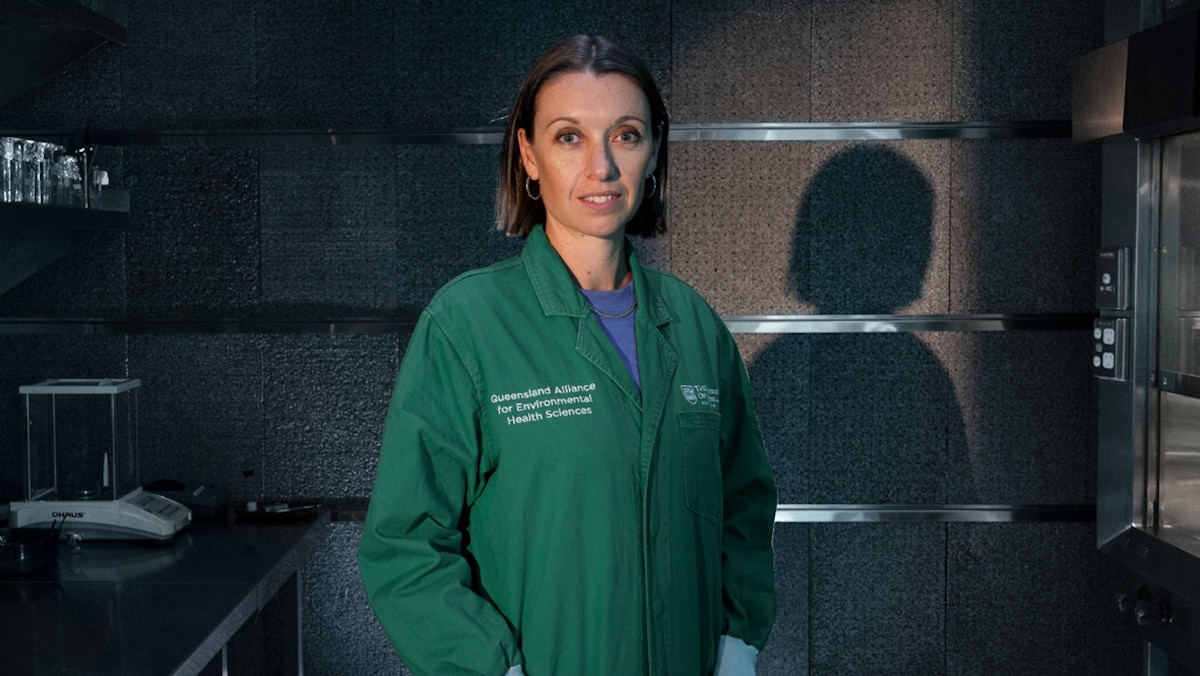
The thought came to Cassandra Rauert while she was new on the job as an analytical chemist studying microplastics in human tissues: Maybe I should test my own blood? This was six years ago, and while scientists had known for decades about the tiny plastic particles polluting the world’s soils and wreaking havoc on marine life, they were only just reckoning with how microplastics might also be infiltrating our bodies. Rauert and her colleagues at the Queensland Alliance for Environmental Health Science (QAEHS), in Brisbane, Australia, were looking for answers.
When her results suggested she was chock-full of polyethylene, Rauert was shocked—but also skeptical. “It doesn’t make sense biologically,” she reasoned, “that your blood would be that percent plastic.” Her moment of doubt set the stage for an innovation that’s driving forward how we grapple with microplastics’ omnipresence.

In the years since, headlines about the scourge of microplastics have only grown more breathless: We consume a credit card’s weight in plastic every week! But reliable data are, in fact, hard to come by. Imagine streaming a song off your phone’s speakers during a rock concert: You can’t distinguish it from what’s pumping out of the PA. When testing for plastic, the background noise is the nine billion tons of the stuff humans have produced since the 1950s, present in nearly every aspect of our lives. And if we can’t accurately determine how much plastic is in a fillet of fish or a vial of blood, how can we regulate or remediate it?
A few months after Rauert did her blood test, her director at QAEHS approached her. A philanthropic organization called the Minderoo Foundation, which sponsors research on microplastics and human health, had agreed to fund construction of a laboratory unlike any other, one almost completely free of plastic and its toxic chemical additives. Could Rauert help design and build it?
She assembled a team that spent the next six months assiduously testing building materials for their plastic content. The result: an air-locked, 250-square-foot facility built almost entirely from stainless steel and nicknamed “the submarine”—though it feels less like a sub and more like a starship from a galaxy where plastic never took over modern life.
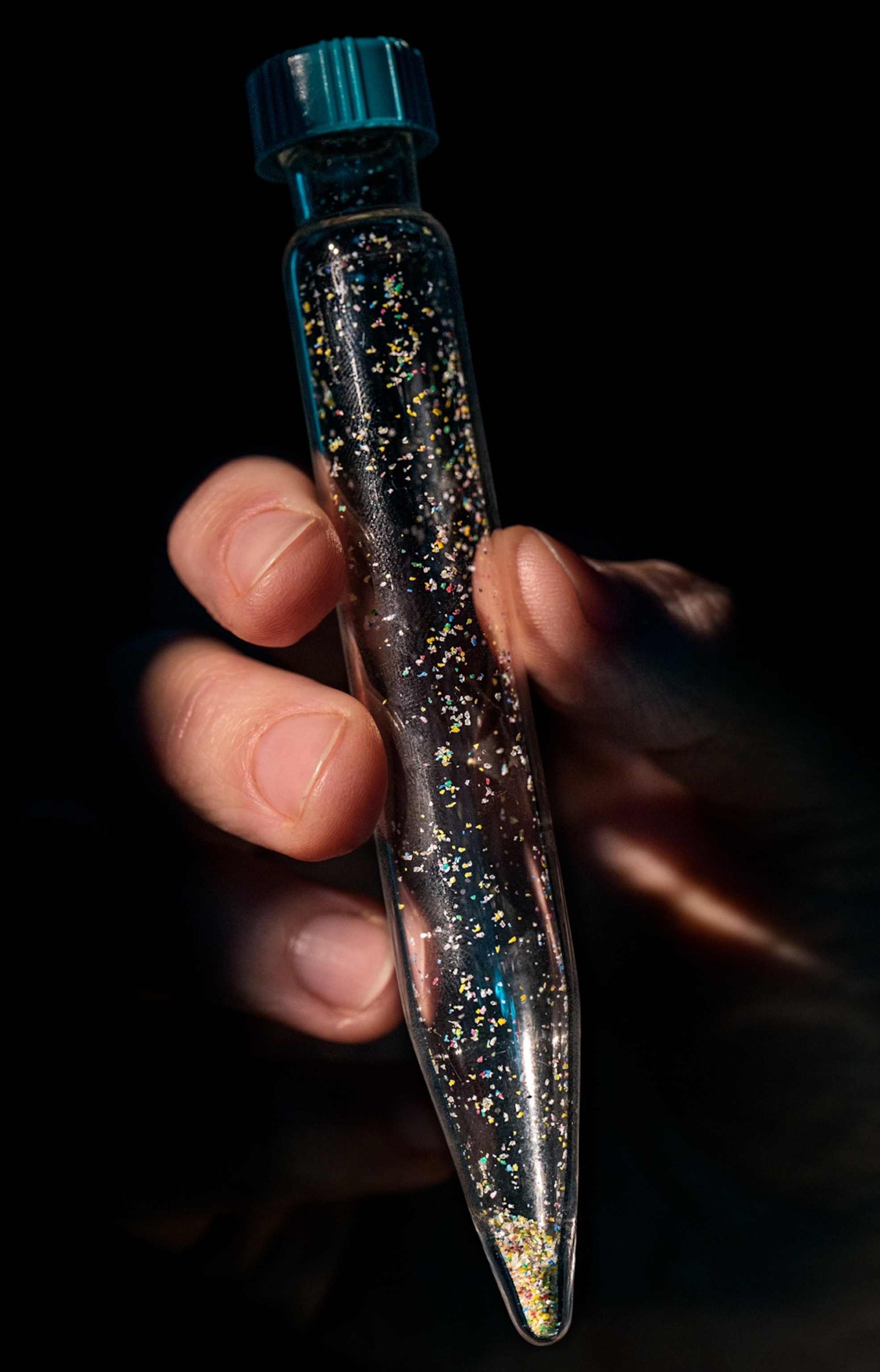
Microplastics, here suspended in solution, are typically defined as particles between five millimeters and one nanometer wide.
It’s officially known as the Minderoo Plastics and Human Health Laboratory, and inside, background levels of plastic are “at least a hundred times lower,” Rauert says, than in a conventional lab. Researchers can handle samples without worrying about contamination, meaning Rauert and her colleagues can finally start determining which testing methods are prone to false positives and other misidentifications of microplastics (and even smaller nanoplastics) in human tissues. Trustworthy testing will help answer critical questions about where microplastics settle in our bodies.
Some of the first peer-reviewed research performed in the clean room was published last year, with Rauert as lead author. It found one very common method of detecting microplastics was unreliable at distinguishing polyethylene from other chemicals in blood. Rauert’s original blood test, in other words, was dubious—and those intimidating headlines may be too.
That’s not to say microplastics don’t pose dangers to humans, a fact Rauert knows better than most. Correlational evidence suggests links to dementia, preterm births, and other issues. But Rauert also knows that scientists can’t parse those dangers with sketchy data. It’s why she and her colleagues didn’t just build the clean room—they open-sourced its design, publishing their process and plans for institutions to replicate.