
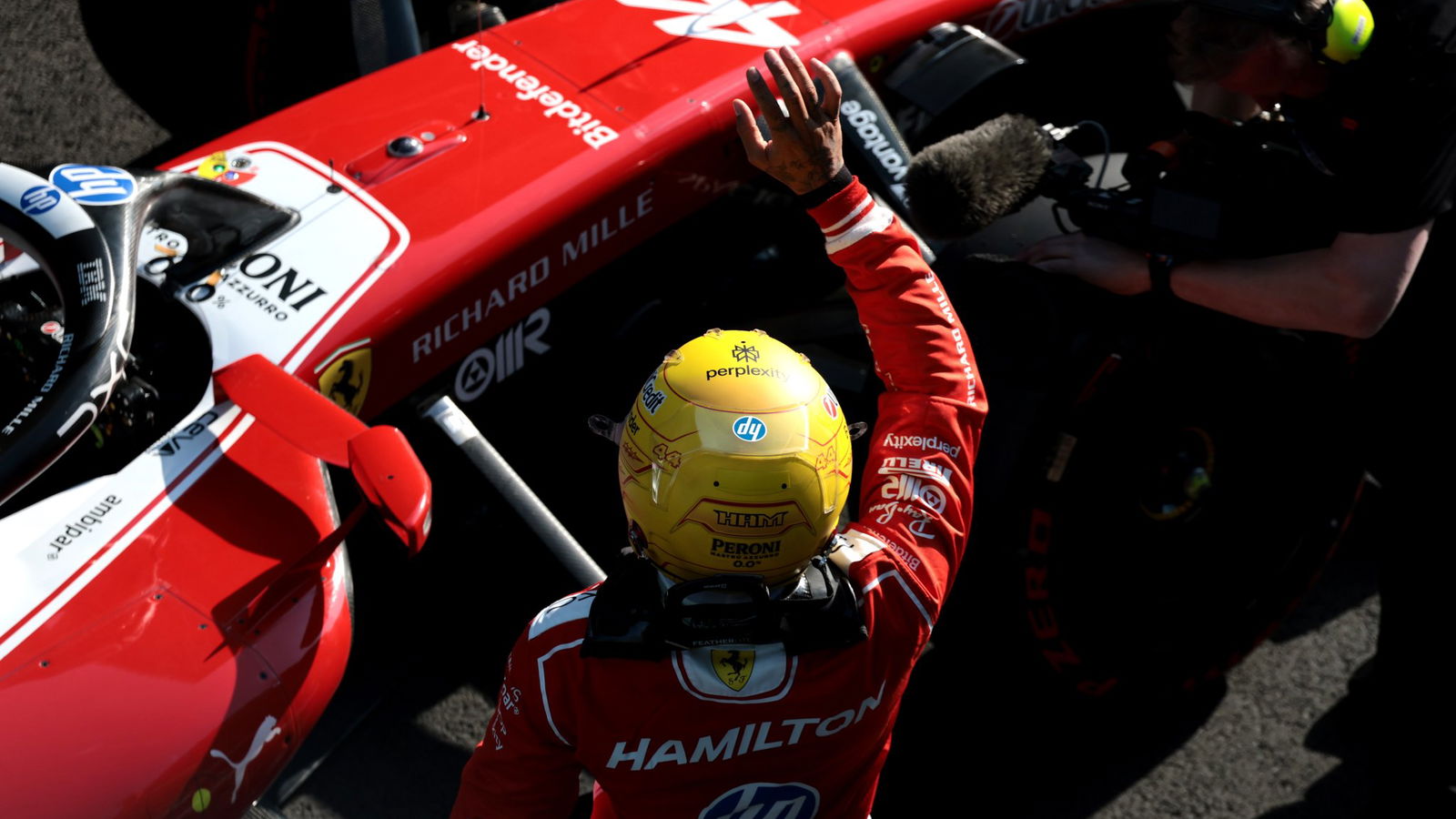
Amid all of the negativity about the new regulations cycle, one of the great joys of the start to the 2026 Formula 1 season has been Lewis Hamilton’s form rebound following a worrying decline across the previous ground effect generation of cars.
When the previous cars were introduced, Mercedes didn’t get it right in the same way it had done in 2014 with the switch to V6 turbo hybrids, and again in 2017 with the aerodynamic overhaul that beefed up the cars.
He suffered his first winless campaign in 2022, which was even more of a kick in the teeth, having faced the bitter loss of an eighth world title in controversial circumstances the previous season. Still, he was a consistent podium contender, showing that his class hadn’t faded.
The podiums lessened the following season as Mercedes continued to struggle, while his win drought continued. That ended in 2024, though he had already elected to leave Mercedes for a headline move to Ferrari for 2025.
The excitement generated when he tested the car for the first time at Maranello in the winter of 2025 stirred an emotional response among F1 fans that made what followed all the more disappointing.
Article continues below ADVERTISEMENT
Article continues below ADVERTISEMENT
After a sprint win in China hinted at much, Hamilton failed to score a single podium for the first time in his career as Ferrari, in general, underwhelmed. Ferrari’s decision to pause development in June to focus all resources on the 2026 project has proven to be a prescient move.
However, that didn’t stop a dejected Hamilton from taking potshots left, right and centre over his ability and the validity of his F1 career carrying on any further. One UK newspaper branded him “delusional” and called for him to retire immediately.
Hamilton’s response to the bloodthirsty crowds was blunt: “None of them have done what I’ve done, so they don’t know any more than I do.”
While he is absolutely correct, his results were alarming, and questions about whether or not he could genuinely compete at the highest level were justified (if at times, in some cases, just an excuse for lesser former drivers to gain some column inches and clout on social media).
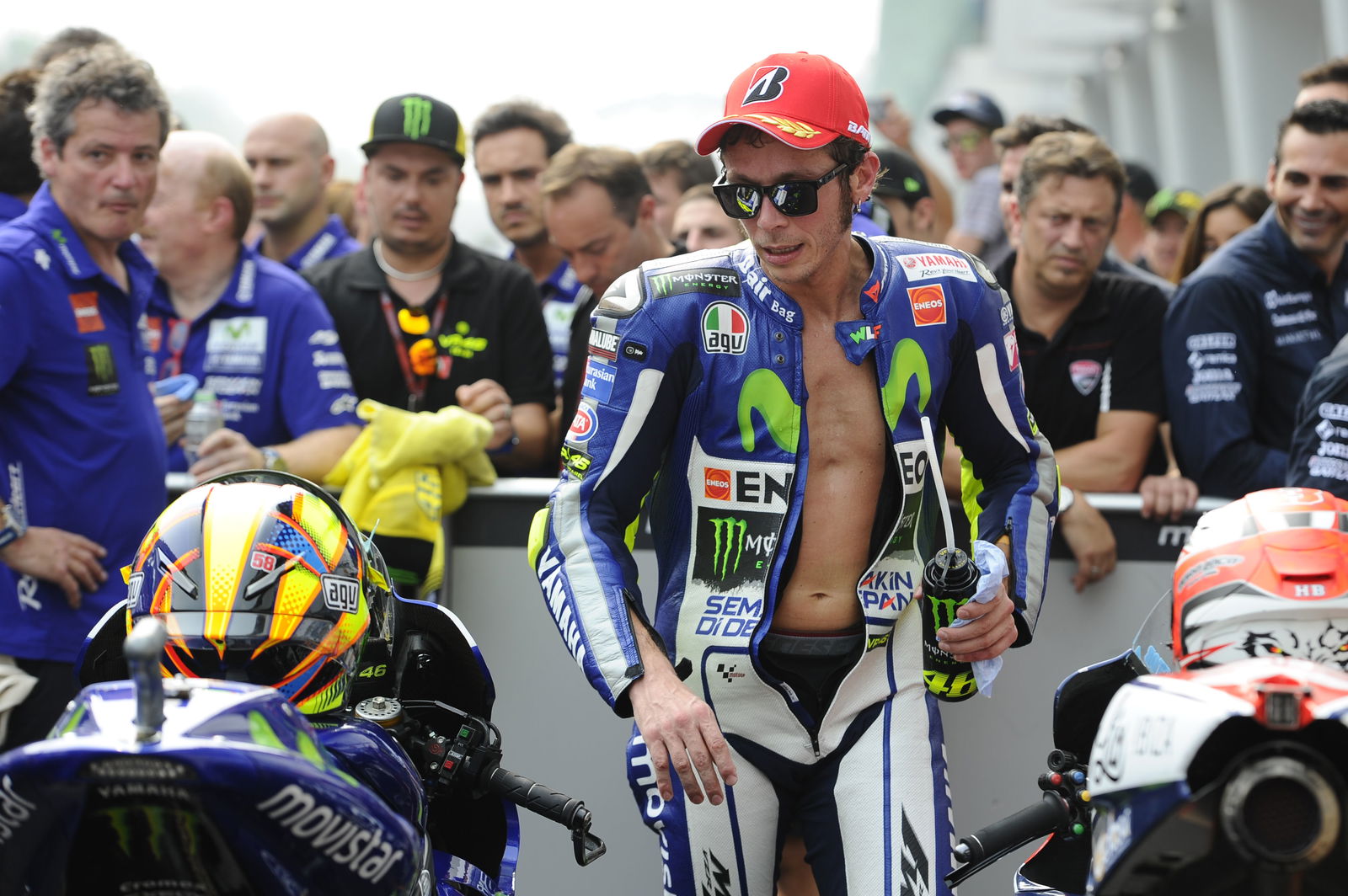
Rossi faced tough questions in the early 2010s before rebounding to fight for the title in 2015
© Gold and Goose
Article continues below ADVERTISEMENT
Article continues below ADVERTISEMENT
Legends always face the toughest questions
The fact that Hamilton has achieved so much in his F1 career only heightened the scrutiny. In many ways, his declining form in the ground effect era he so badly hated, and the first season of his Ferrari move, mirrors Valentino Rossi’s immediate years after his last MotoGP world title in 2009.
Rossi came into MotoGP with a bang, having blazed his way through the junior ranks, not unlike Hamilton did about a decade later in F1. He made his MotoGP debut in 2000 with Honda and was a race winner in his first campaign, much like Hamilton would be with McLaren.
In 2001, his second season, Rossi took the first of his seven world titles; Hamilton would do the same seven years later in F1. Rossi’s star only shone brighter as he won two more titles for Honda, quit the team to join an unfancied Yamaha in 2004 and dominated for another two campaigns.
He was denied in 2006 and 2007, but won back-to-back titles in 2008 and 2009 against his toughest competition yet in hotshot new Yamaha team-mate Jorge Lorenzo. The Spaniard was signed by Yamaha when he was still in the 250cc category and was seen as the natural successor, with Rossi heading into his 30s and also repeatedly toying with the idea of an F1 switch.
The rivalry the pair had was heated from the start, with a wall erected in the Yamaha garage. Ostensibly, this was to stop tyre secrets slipping out, as both ran different suppliers. But when Bridegstone became the sole supplier in 2009, that wall remained.
Article continues below ADVERTISEMENT
Article continues below ADVERTISEMENT
Rossi ultimately turned his back on title-winning machinery to take a big-money Ducati offer for the 2011 season. It was a disaster. For the next two seasons, he scored no race wins and managed a total of just three podium finishes. Inevitably, reports did the rounds during this period claiming he would be retiring.
His return to Yamaha in 2013 was far from guaranteed when he first broached the matter with management. And even when he did come back, he scored just one win that season. Lorenzo, who’d won titles in 2010 and 2012, fought to the final round in a championship battle he’d ultimately lose to Marc Marquez.
But Rossi would go on to finish runner-up in the 2014 standings and mount a genuinely sensational challenge for the championship in 2015, albeit losing out in a controversial conclusion. Rossi was 36 at the time, compared to Hamilton’s 41 now. But both have faced immense lows when their careers were seemingly at their zenith.
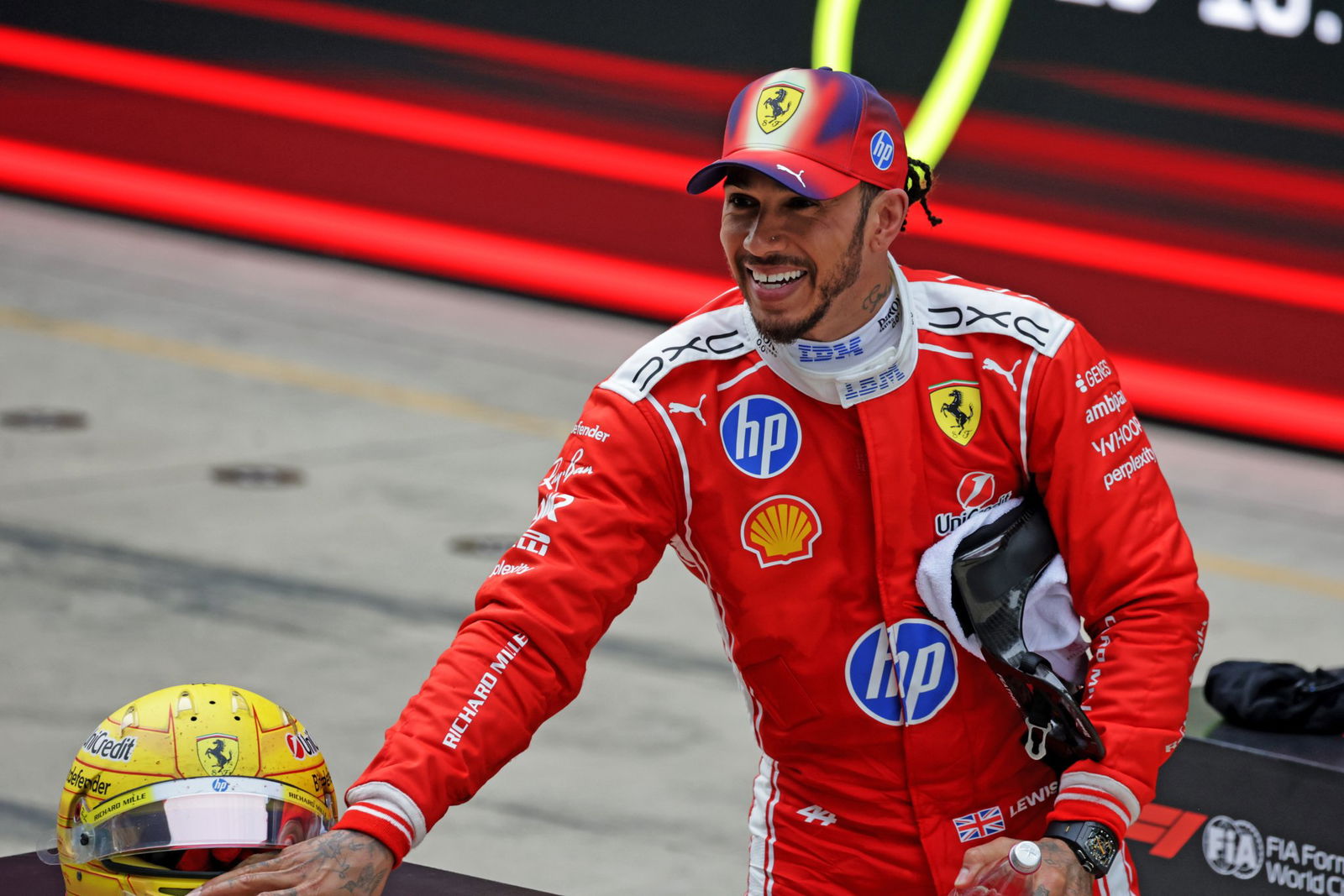
Hamilton scored his first Grand Prix podium with Ferrari in China
How Hamilton has found his groove again
Rossi eventually retired at the end of 2021, but was still able to stand on the podium in his 40s when he was third at Jerez in 2020. Hamilton certainly doesn’t have many years left, but his start to 2026 has almost been a complete refresh from the last four seasons.
Article continues below ADVERTISEMENT
Article continues below ADVERTISEMENT
Part of that came from “rediscovering myself” over the winter, he said ahead of the Australian Grand Prix. But more importantly, he actually likes to drive the 2026 cars, and Ferrari has kicked off the new year with a contender that is decent, if still a way off truly matching the out-of-the-box brilliance of the Mercedes.
And he is holding his own against a very highly-rated team-mate in Charles Leclerc. The Monegasque outqualified him in Melbourne (fourth versus seventh), but the gap was only around a tenth and a half, and that was with Hamilton battling an issue with his SF-26.
A different strategy call from Ferrari under the virtual safety car for Isack Hadjar’s stoppage early in the Australian Grand Prix could have vaulted Hamilton into a podium position. Instead, he was around six-tenths adrift of Leclerc in fourth at the chequered flag.
Clearly, though, he can keep tabs on Leclerc in every metric. Hamilton pipped Leclerc to third in qualifying, having also beaten him in sprint qualifying. Hamilton chewed through his tyres quicker in the sprint, resigning him to third behind Leclerc after a tight early battle. That fight continued into the grand prix, where Hamilton edged clear of his younger team-mate to claim a first Ferrari podium.
He declared after this that he is “physically and mentally definitely back to my best”. That has been evident throughout the opening two rounds in 2026 from the way he has been driving the SF-26.
Article continues below ADVERTISEMENT
Article continues below ADVERTISEMENT
The likes of Toto Wolff and Hamilton’s former engineer Peter Bonnington said during the China weekend that the Briton’s form was never in doubt to them. Ferrari boss Fred Vasseur suggested as much, too, when he was asked about it on Sunday in Shanghai.
“Honestly, I think the second season is much easier because you are part of the project from the beginning,” he said. “He was in the simulator in ’25 when we started the project, and I think he feels a bit more involved in the project than one year ago when he joined the team in January; the car was already there. He knows everyone more, the relationship is getting better and better, so it’s easier for him to deal with people and to work with everybody, and step by step we have to do a marginal gain because it’s like this that we will close the gap.”
A podium is one thing. Hamilton now has to prove that this renaissance in 2026 is permanent with consistent rostrum charges as Ferrari tries to build itself into a race winner, which will be no small feat given the advantage Mercedes has started off with.
That aside, the pleasingly familiar, exciting yet measured driving style that propelled Hamilton onto F1’s Mount Rushmore has clearly returned. Title talk may be ambitious at this stage. But any talk of retirement should be firmly ignored now…
Subscribe to our F1 Newsletter