
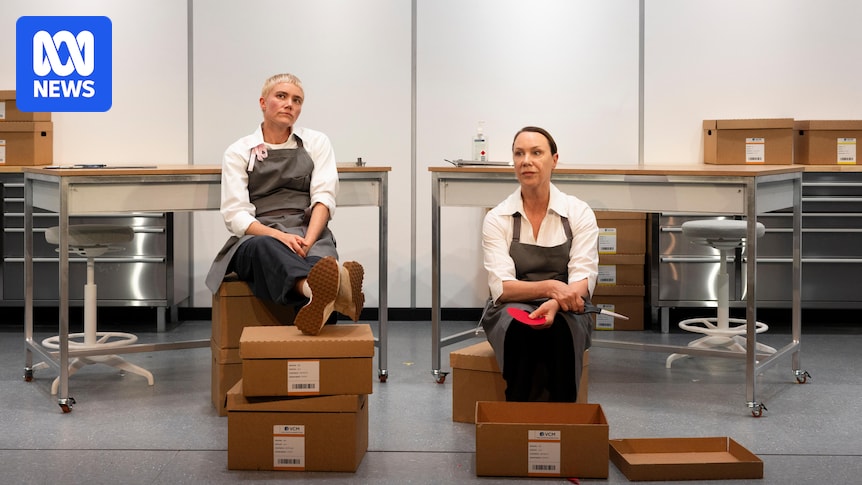
Do Not Pass Go is a play set entirely in one room of a workplace, but we never find out what the work actually is.
Two people show up every day to the bare white room bathed in fluorescent lighting, tie on their plain grey aprons and get down to it.
Standing behind individual metal tables, they make sporadic small talk while in a flow of mundane tasks: cutting ribbons into lengths; stacking and unstacking boxes; and, in one moment of stoic humour, slowly blowing up pool toys.
“Work is a third of our lives,” says playwright Jean Tong, who is an associate artist at Melbourne Theatre Company.
“Everyone is expected to just do it, irrespective of whether what you’re doing has any concrete value to your personal life, to your relationships, to your friends, to your community.
“You have to just do it to get paid to live in the world.”
This culture around work, productivity and money fascinates Tong: capitalism is the key driver of the story.
“It has so become the dominant mode of existence that it’s hard to even conceptualise how we can sit outside of that.”
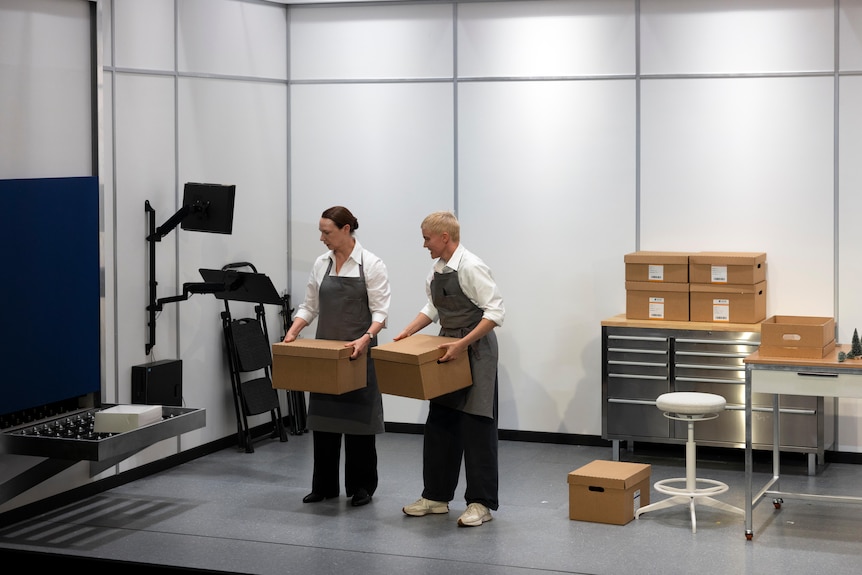
“We see these two people coming in and grappling with all these bigger ideas, but then they just have to keep getting on with it and doing the job,” Jean Tong says. (Supplied: MTC/Pia Johnson)
So instead of trying to break their characters out of this mould, Tong leans right into it, transplanting the audience into the mundane everyday of work.
And while there are no Monopoly references in the play (“don’t sue me!” laughs Tong), the young playwright felt that nodding to the popular game in the title perfectly captured the mood they were going for.
“It’s this feeling of the loop, this merry-go-round that we are always on,” they say.
“And it’s this feeling of failing, like you do the wrong thing and then you get stuck in a corner of the board and it’s one of the most frustrating feelings on the planet.”
‘I used to think I’d do something useful’
Before you baulk at spending your precious non-work hours watching something about how mundane and bizarre work is, it’s important to note that Do Not Pass Go is described in the play notes as a “tender dark comedy”.
Tong — who wrote acclaimed plays like Hungry Ghosts and Flat Earthers: The Musical, as well as screenwriting for the Heartbreak High reboot — says they have a very dry sense of humour. And that comes out subtly, continually, in Do Not Pass Go.
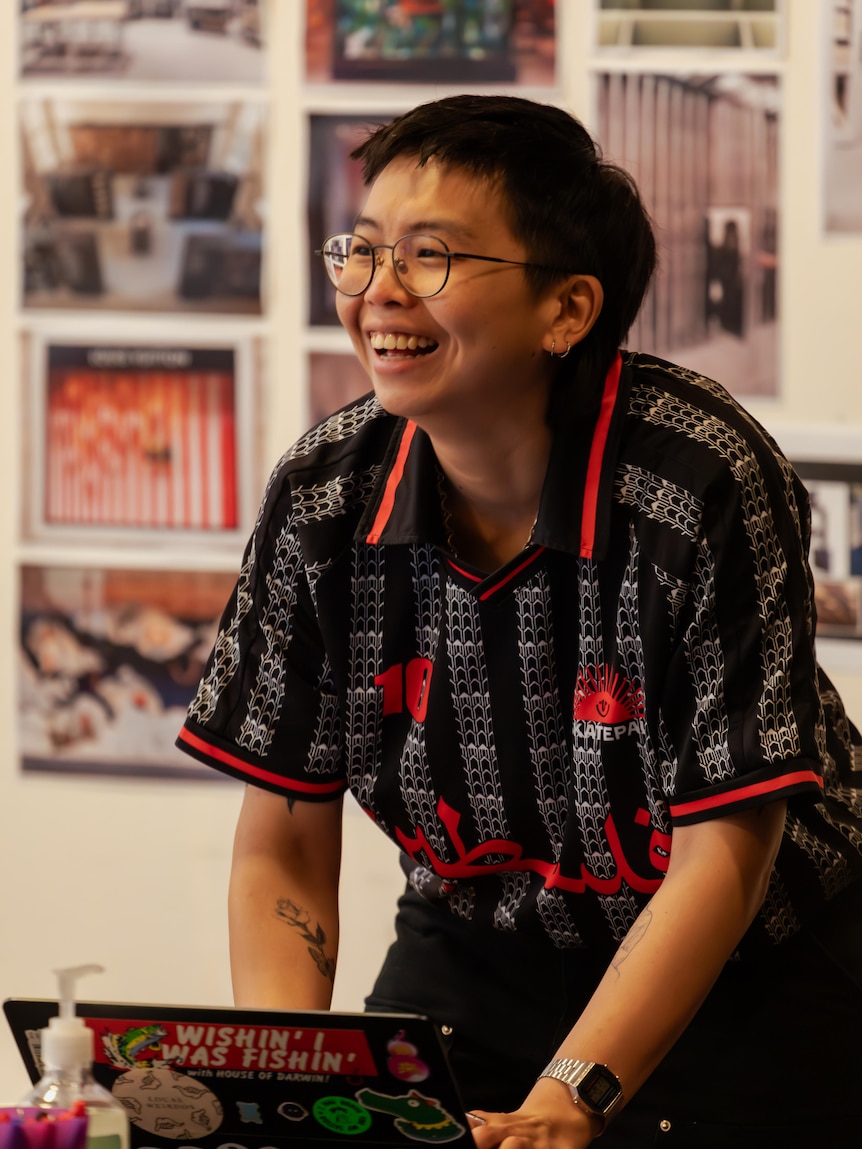
Jean Tong first worked with the MTC under the Next Stage residency program. (Supplied: MTC/Matto Lucas)
“I think it’s the absurdist side of these people being trapped in this workplace and this sense of futility,” they say.
“There’s all these things about bureaucracy that kind of make us all feel a bit mad — ultimately you kind of have to laugh, because it is so absurd.”
This is explored through just two workers.
Newcomer to the workplace Flux (Ella Prince) is a queer-presenting young person who gets about like a clueless but lovable puppy: knocking stuff over; saying slightly dumb things to their colleague; doing the mundane tasks with a distracted sloppiness.
“I used to think I’d do something useful, like put out fires somewhere rural,” they say wistfully as they cut circles out of craft paper for some reason.
“Isn’t that a volunteer position?” asks co-worker Penny, without pausing in her work.
In contrast to Flux, Penny (Belinda McClory) is a tightly zipped woman who resolutely mutes her phone during work hours, doesn’t talk much about her personal life, and just wants to focus on getting the job done.

Do Not Pass Go is directed by Katy Maudlin (right). (Supplied: MTC/Matto Lucas)
Watching the two push and pull against each other through the day is equal parts hilarious and painful.
“I love trying to find a way to balance those moments side by side where it’s, like, this is so funny I’m going to cry, or this is so sad I’ve got to laugh,” Tong says.
Unique bonding experience
As time goes on, and Flux starts to learn the ins and outs of their nondescript job, there is a softening between the two co-workers.
They inevitably find a routine, share little aspects of their lives, and something like a relationship grows.
This is another part of work culture that fascinates Tong.
“I think it’s so weird to share a space with someone who you have not chosen to spend that time with,” they say.
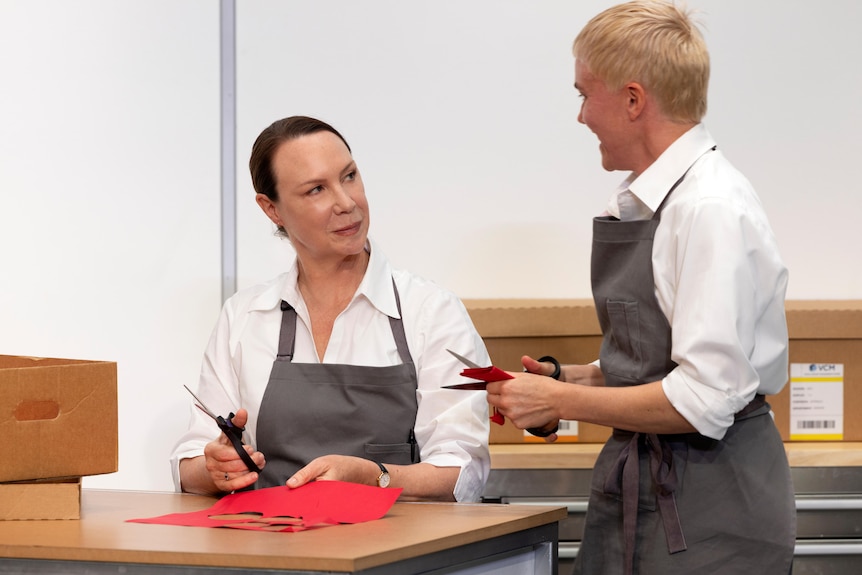
“[The characters] might not come to an agreement, but they’ve heard each other out and that’s actually really important,” Tong says. (Supplied: MTC/Pia Johnson)
“In many ways you’re all just there to do the job, but we have very different preferences, very different viewpoints, politics, ages, demographics, and all of that’s getting thrown into these shared spaces.”
Spending so much time with a largely random group of people can be “horrible” for people who don’t get on with their colleagues, but Tong believes it can also be a “unique bonding experience”.
It’s not always simple for Flux and Penny, as they take tentative steps towards each other through a maze of issues. Their lives rear up and interfere with their days, with their relationship, no matter how hard they might try to keep it separate.
“All of us get thrown into these shared spaces, and you can try to leave stuff at the door, but even that suggests a particular way of existing in the world,” says Tong, pointing out that things like gender identity and race are really difficult to obscure.
Meet the 25yo director at the helm of Miranda Otto’s return to the stage
But Flux and Penny awkwardly, clumsily, feel their way through.
“These are two very different people coming together and, by virtue of being stuck in the same job together, working through those tensions and finding a way through those conversations that doesn’t devolve,” they say.
Tong feels horrified and frustrated by a culture of amplifying controversial or bad faith arguments to increase clicks, but they believe the strangely intimate co-worker relationship can help cut through some of the noise.
“Both characters ultimately sort of find this gentleness for each other and are able to hold space for each other,” they say.
“It’s something really simple, but it adds a small call to action: we could all give each other a little bit of grace in all of the pain and complexity that we’re holding.”Secretly optimistic
Tong laughs at the suggestion that their play might encourage people to quit their jobs.
“It would be very exciting if people quit their jobs because of this play, but terrifying to me personally,” they laugh again.
“Like, if you can quit your job and you feel like you should quit your job, quit your job. But don’t do it because I told you to, do it because you saw something that changed you fundamentally, and I hope it leads to a positive outcome.”
Tong says this play is less about resolute answers, but more a response to significant cultural changes we’re seeing in the world around us.
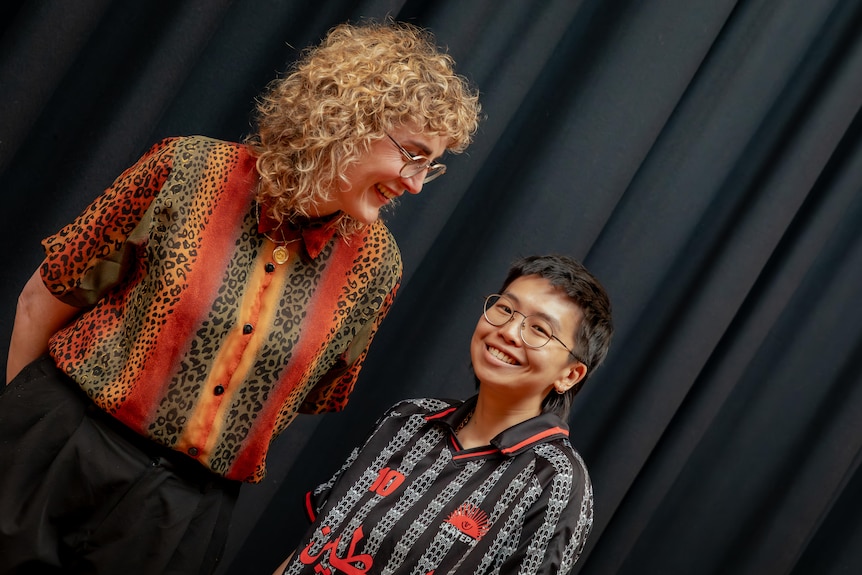
“I was really drawn to the characters and how they start as these two islands, and through the course of the play, connect and change each other,” says director Katy Maudlin (left) in a promotional video. (Supplied: MTC/Matto Lucas)
“We’re at such a precipice of culture and politics, and I’m just trying to capture as much complexity around the pressures that we’re living under,” they say.
Ultimately, they confess to being “secretly an optimist” when it comes to humanity.
“I have to go through the world believing that, fundamentally, everyone is secretly open to actually understanding what’s in front of them,” they say.
“I think we ultimately have to either choose to believe that the other person across from us wants to listen, or we really are just going to fragment even further into smaller and smaller communities.”
Do Not Pass Go is showing at the Melbourne Theatre Company’s Southbank Theatre until 28 March, 2026.