
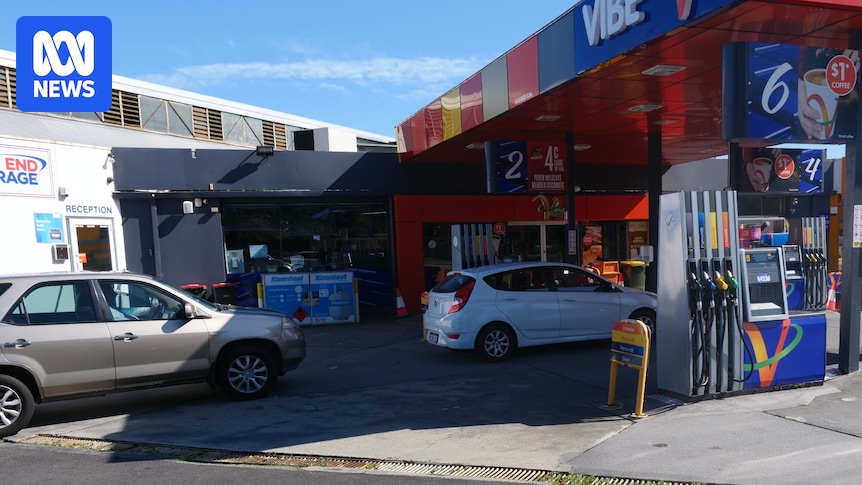
The prime minister will meet with state and territory leaders tomorrow amid fears over Australia’s fuel supply as he flags the government will take further actions to shield the country from global disruptions in the coming days.
Fuel prices have risen sharply around the world since Iran’s blockade of the Strait of Hormuz, a key shipping route for about a fifth of the world’s oil, with the federal government warning the clog could see inflation peak in the “mid-to-high fours” depending on the length of the conflict.
Iran war live updates: For the latest news on the Middle East crisis, read our blog.
The government has already released about six days’ worth of petrol and five days of diesel from its emergency stockpile as part of an internationally coordinated response to the disruption and last week temporarily lowered fuel standards so onshore refineries could redirect supplies into the local market.
Labor has been adamant that the current situation is driven by demand rather than supply shortages, while the opposition has repeatedly called on the government to do more to protect Australians from the global shocks.
Anthony Albanese, in an address to the Australian Automotive Dealer Association today, said the government was prepared to take further action “in the days ahead”.
“We want to make sure that we do everything we can to shield the Australian economy, households and businesses from the worst of global uncertainty,” he said.Fuel panic buying ‘causing system to break down’
“That will also be a focus of our budget coming up in May, but we won’t be waiting until the budget.”
The prime minister will fly to Tasmania today, where he will helm a National Cabinet meeting tomorrow with state and territory leaders.
“The war in the Middle East is disrupting supply chains, it’s pushing up fuel prices and it’s adding to pressure on inflation here and right around the world,” Mr Albanese said.
“Australians understand this. People are not just reading about this conflict in the news, they’re seeing the economic impact that it’s having in their daily lives.
“The longer this war goes, on the more significant those effects will be … even if it is a relatively short conflict, it will have a long economic tail.”
Transport Minister Catherine King was scheduled to hold a fuel security roundtable with stakeholders from the transport industry on Wednesday morning, a day after the competition watchdog hauled in fuel suppliers and retailers to explain the jump in petrol prices since the war.
The government plans to introduce legislation in the coming sitting week to double the penalties for petrol companies who engage in “false or misleading conduct or cartel behaviour”, with maximum fines of $100 million per offence.
Opposition demands plan from Labor
Andrew Hastie, the shadow minister for industry and sovereign capability, on Wednesday accused Labor of being slow to address the crisis and failing to have a plan to deal with the blockade in the Strait of Hormuz.
“I welcome the fact that they’re going to call a meeting of the National Cabinet because we really need to get on top of this,” he told the ABC.
“Post-World War II, the lesson was that if you wanted to be self-sufficient in a geopolitical crisis and during a massive rupture, you need to have certain amounts of infrastructure and industry, particularly oil refining. So I think we’re learning the hard lesson again.”
Treasurer Jim Chalmers said it was unclear how long the conflict would run for, which was the “key determinant” of the severity of the domestic impact.
“At the time that we’re at right now, where we’re trying to finalise forecasts for the budget … really the key uncertainty is how long this thing drags out for and also reasonable assumptions about how quickly the global economy could get back on its feet if there was an end to the most dramatic hostilities,” he said.
“The assumption that if the war ended tomorrow, that the global economy would be fine the day after, I think, is a naive one.”Loading…