
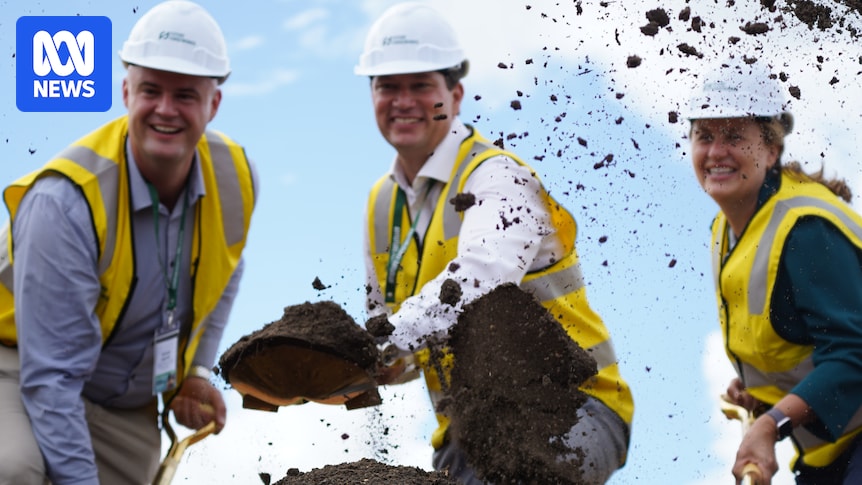
One of the country’s first steel mills in decades has broken ground in south-east Queensland, promising to supply crucial materials for housing and the 2032 Brisbane Olympics.
The Swanbank Steel Mill in Ipswich is expected to produce 350,000 tonnes of steel reinforcing bar — or rebar — a year from scrap metal.
Rebar is used to reinforce concrete, and is commonly used in the construction of skyscrapers and major infrastructure including bridges.
Developer Future Forgeworks wants the project complete in just over two years, hoping to capitalise on an imminent construction boom ahead of the 2032 Brisbane Olympics.
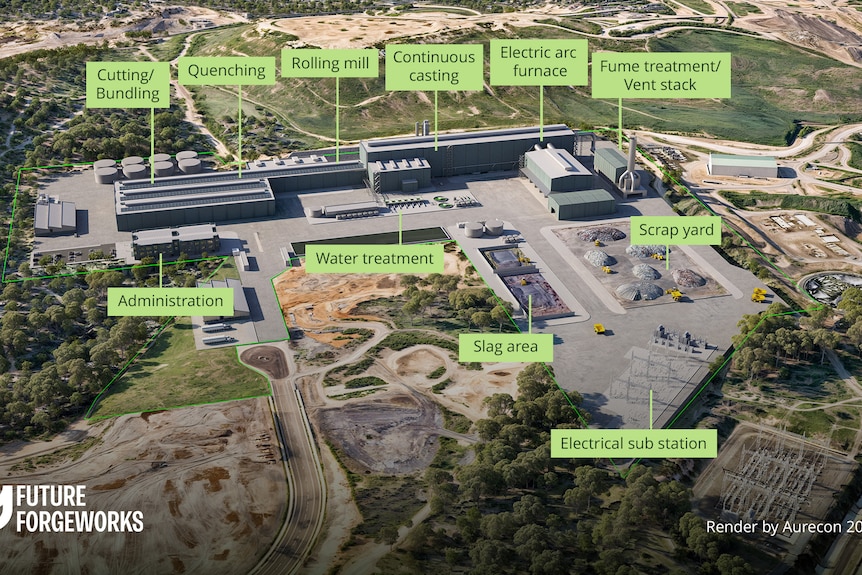
Artist’s impression of the Future Forgeworks steel mill at Swanbank near Ipswich. (Supplied: Future Forgeworks)
“Our ambition is to 100 per cent supply the Olympic build,” Future Forgeworks chief executive Rohan Richardson said.
Mr Richardson, who grew up in Ipswich, said once operational the mill could supply 90 per cent of Queensland’s demand for rebar, meaning much less would need to be imported from overseas.
“Our main premise is to provide the lowest operating cost in Australia and that will take some relief off housing prices and any kind of industrial works.”
Future Forgeworks is also spruiking the project’s environmental credentials, claiming its production technology can reduce carbon emissions by more than 70 per cent compared with the conventional steel-making process.
Most of the world’s steel is produced with fossil-fuel powered blast furnaces, accounting for roughly 8 per cent of global emissions.
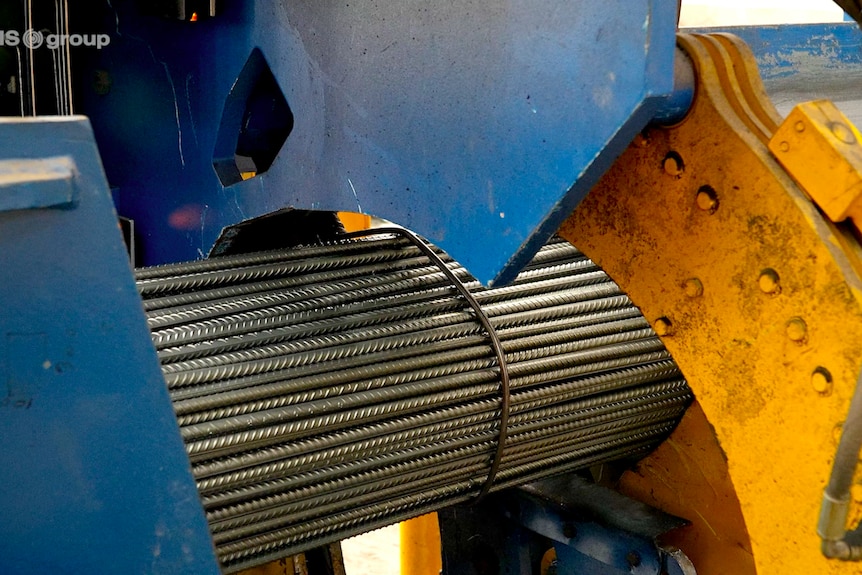
The mill will produce steel bars to be used in construction across the region. (Supplied: Future Forgeworks)
The Swanbank Steel Mill will use an electric arc furnace as part of an energy-efficient production system designed by German-based metals company SMS Group.
“In the last decade particularly, the technology has advanced considerably. A lot of the gas that [was] used in the historic process has been removed and replaced with electricity,” Mr Richardson said.
But the mill is not expected to reach net-zero emissions until 2040.
All three levels of government are backing the project, excited by its potential for economic development and local employment.
Future Forgeworks is expecting the project to require more than 400 jobs during construction, and more than 200 ongoing jobs once complete.
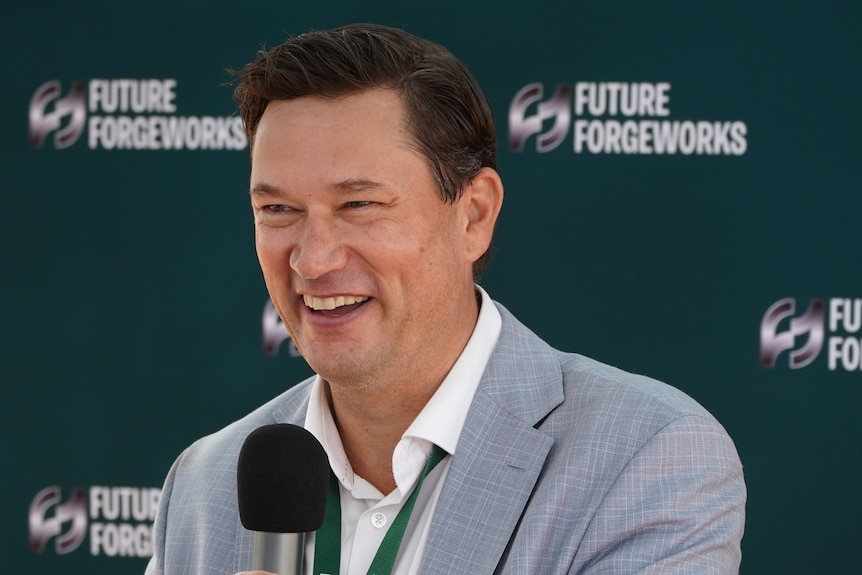
Future Forgeworks chief executive Rohan Richardson says the first steel from the mill is expected in 2028.
(ABC News: Charlie McLean)
“The fact it’s going to be built here locally and create local jobs is just tremendous … this is a tremendous win for Ipswich,” the city’s mayor Teresa Harding said.
“We’ll be using recycled steel from the washing machine to old cars, and that will be used to build houses. It’s just a really exciting story.”
Ms Harding said the Swanbank area — home to several waste dumps and the CleanCo power station — was an appropriate location for a steel mill.
“It’s been heavily industrial for over 100 years, so it’s the right spot,” she said.
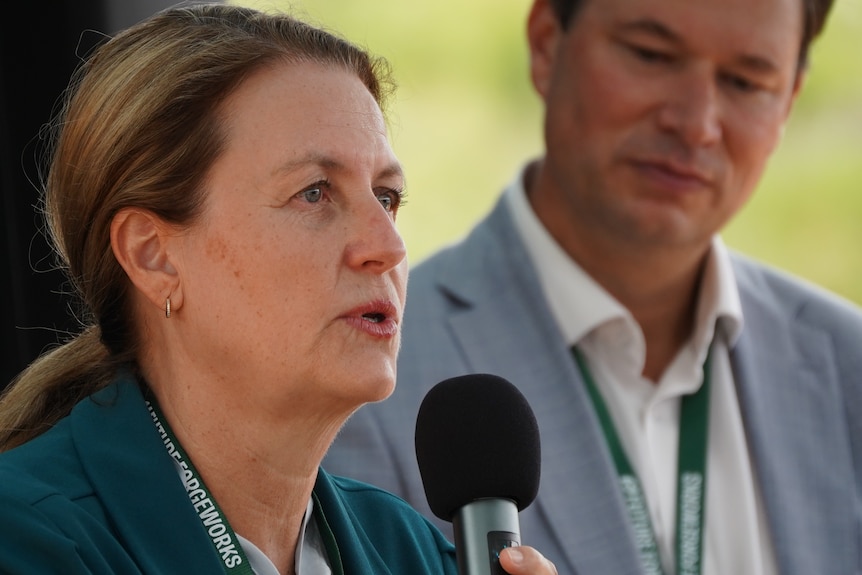
Ipswich Mayor Teresa Harding at the announcement of Australia’s first steel mill in 30 years. (ABC News: Charlie McLean)
She said there were no negative submissions against the development when it went through the council approvals process.
Mr Richardson said the process of turning scrap metal into steel would result in a byproduct known as slag being created.
“We’re looking at recycling a portion of that slag — it can go into road base for road constructions,” he said.
“The rest will go to our neighbouring industrial partners … who handle industrial waste.”
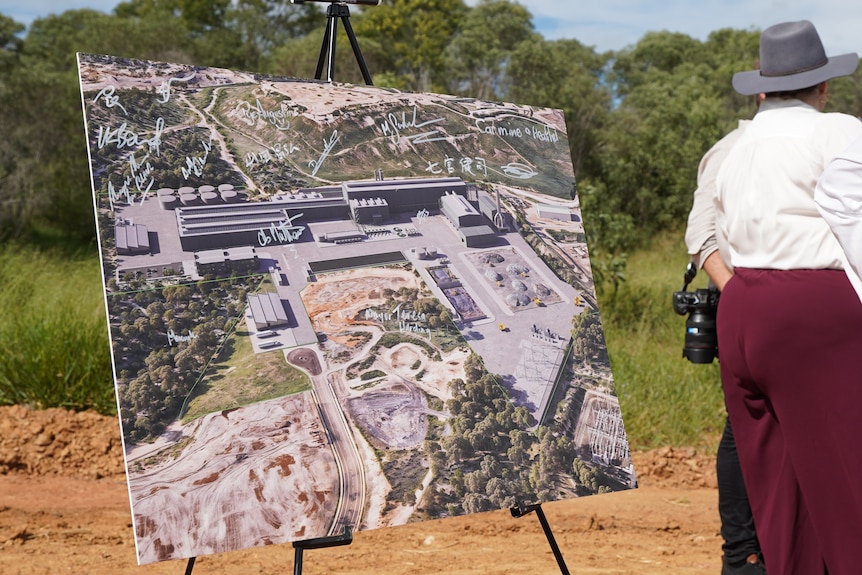
The mill will help replace $2 billion in steel imports between now and 2032. (ABC News: Charlie McLean)
The project has received financial backing from the federal government’s National Reconstruction Fund and several major banks.
Queensland’s assistant resources minister Bryson Head said the mill would make the state more self-sufficient by diverting scrap metal from being sent to overseas processing plants.
“It means steel for our construction sector that we can produce right here in Queensland. Taking scrap metal that traditionally has gone for export for a very long time,” Mr Head said.
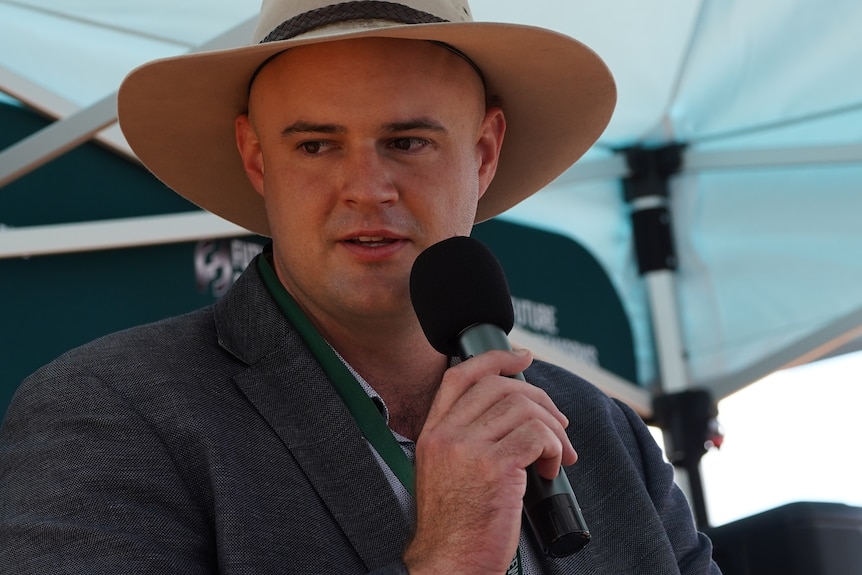
Assistant Minister for Regional Development, Resources and Critical Minerals Bryson Head says the government is backing home grown innovation. (ABC News: Charlie McLean)
“By making construction materials more available, that’s a supply demand metric… that in turn will help with the development of homes.
“We want to make it more affordable for Queensland and access to materials is a key part of that.”
Future Forgeworks is planning to start training and recruiting its workforce for the project later this year.
For now it is in first place and ready to proceed with construction, ahead of a suite of low emissions or ‘green’ steel mill projects awaiting approvals across the country.