
2026-03-18 12:54
12:54
March 18, 2026
pm
America/Chicago
2026-03-18 19:04:00.000000
America/New_York
WASHINGTON, D.C. — Thousands of low-income Americans with HIV are losing access to vital medications, as states grapple with a lack of federal dollars to support their state health budgets.
The Real Housewives would like a word with Congress about it.
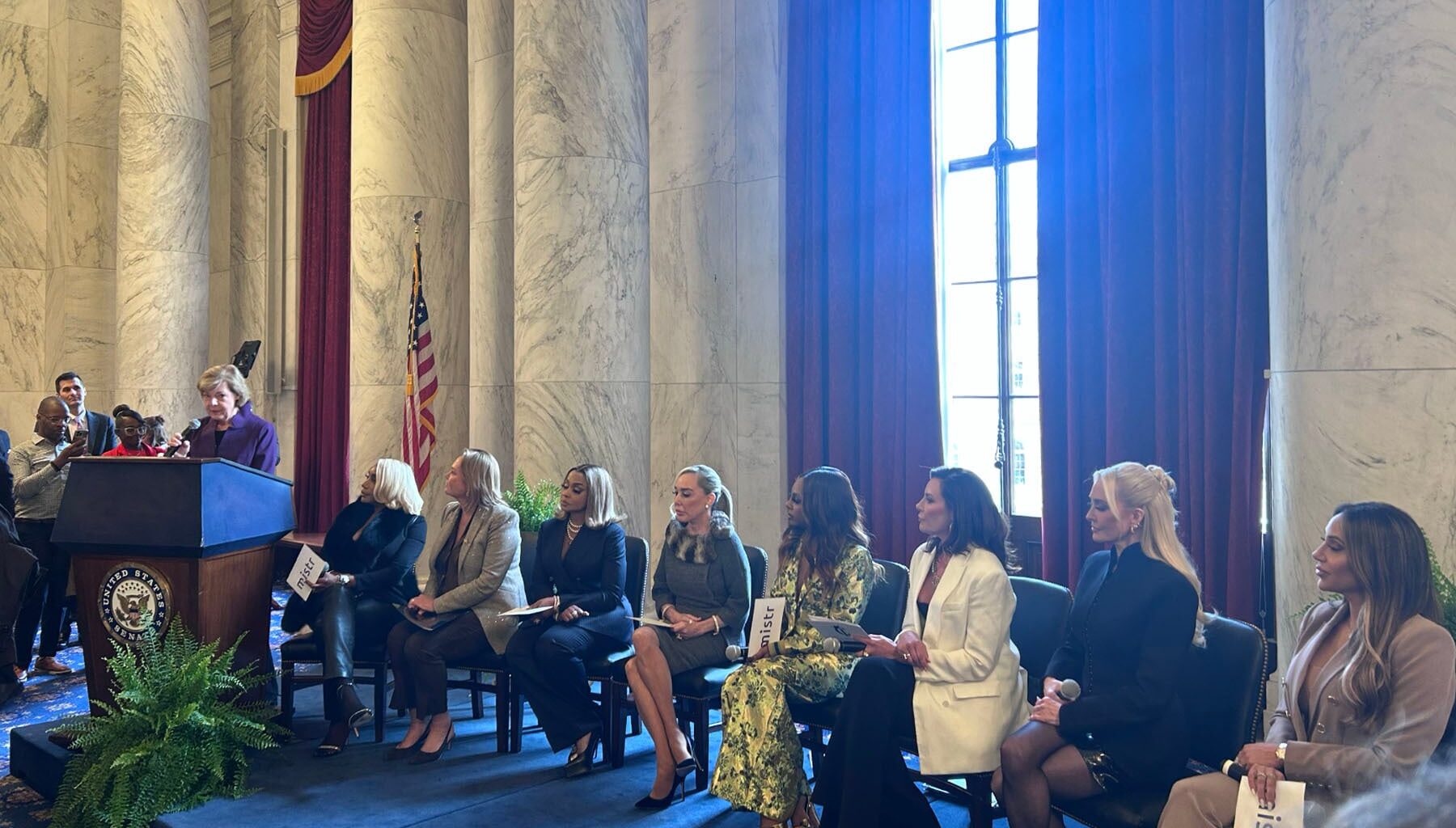
Stars from the shows — including Atlanta’s Nene Leakes, Maryland local Candiace Dillard Bassett and New York’s Luann de Lesseps — took to Capitol Hill on Wednesday to advocate for HIV prevention and expanding access to care. Many Housewives are beloved by the LGBTQ+ community, a reputation that some of them actively encourage.
The Housewives convening was organized by MISTR, a major online provider for PrEP, a daily HIV prevention pill. Several of the Housewives said they have family members and friends who are HIV-positive and emphasized that the epidemic disproportionately impacts Black women.
“The science to end HIV already exists,” said Dillard Bassett, who worked in the White House during the Obama administration. “This is no longer a disease that can only be cured with money.”
Sen. Tammy Baldwin, a Wisconsin Democrat and the country’s first openly gay senator, gave opening remarks at the event. HIV prevention and treatment is not a Republican or a Democrat issue, she said; “saving people from HIV is an American thing.”
But, at the moment, both blue and red states are cutting back on services for HIV-positive Americans. Eighteen states plus Washington, D.C., have made cuts to their AIDS drug assistance programs, and two-thirds of those states are considering more, according to a recent report from KFF, a health policy research nonprofit. Five other states are considering such measures.
AIDS drug assistance programs (ADAPs) get crucial HIV medications to low-income and uninsured Americans. The Ryan White HIV/AIDS Program funds each state’s ADAP, which provides money for medications and helps people who are waiting for medicine. Federal funding for these programs allocated by Congress has stayed mostly the same since 2014, and now rising health care costs are driving states to make big cuts.
Florida is the most extreme example. The state has lowered ADAP eligibility from 400 percent of the federal poverty level to 130 percent. The state says rising health care insurance premiums and a lack of additional Ryan White grant funding are to blame. Florida’s health department says it will cover costs for patients during a two-month transition period following ADAP cuts to allow more time for them to find services.
“This is an extremely drastic change to their program,” said Lindsey Dawson, director of LGBTQ health policy at KFF. “There are blue states too that are having to reduce eligibility for their programs, but it just isn’t happening in such a dramatic way.”
In Florida, over 10,000 people will lose access to HIV drugs, Dawson said. They may be able to turn to pharmaceutical companies, but it will be difficult for people to navigate, she said. Florida also plans to stop covering Biktarvy, the most widely prescribed antiretroviral medication nationally. That will impact even more people.
Marysol Patton, one of the six original cast members in the first season of “The Real Housewives of Miami,” said Florida’s cuts have created uncertainty across the state.
“When programs like ADAP are weakened, working-class people can’t access this treatment,” she said. As of 2025, Florida ranks third in the nation for HIV diagnoses.
Patton and several other Housewives mingled and took selfies with reporters and congressional staff before the event. They glittered in gold platform heels, black and tan powersuits, and fur-lined wool dresses for the winter chill lingering in Washington. Erika Jayne of “The Real Housewives of Beverly Hills,” who flew in from Australia to make the event, Atlanta’s Phaedra Parks and New Jersey’s Melissa Gorga also spoke.
Democrats Rep. April McClain Delaney of Maryland and Sen. Cory Booker from New Jersey also spoke at the event. The members of Congress looked considerably less glamorous than the Housewives.
After the event, Parks told The 19th that she felt it was her responsibility to use her platform to spread awareness.
“Originally, when it came out, it was so stigmatized. People were so fearful,” she said of HIV. But, she said, it’s important that people know there is medication that can help. “We know people that have died from it, but we know people who have survived and they’re living very normal lives.”
Leakes said it’s important that people get answers to questions they might be embarrassed to ask.
“Going back to Housewives, like, I’m the perfect person to ask all of the questions — I will ask them anyway. Literally, I ask them anything,” Leakes said. “We usually all bust out laughing, but I need to understand, I need to know.”
Pennsylvania, Kansas, Delaware and Rhode Island have taken the same step as Florida to reduce income eligibility, although the cuts are not as extreme. In Pennsylvania, roughly 1,500 people with HIV are expected to be impacted, according to the National Association of State and Territorial AIDS Directors. Hundreds of people in Kansas and Delaware will be affected.
New Jersey is one of several states considering a waitlist for ADAP services. Waiting lists have not been used in over a decade and are widely viewed as a last resort, per KFF.
Part of the problem is that federal funding for AIDS drug assistance programs has not kept up with inflation. But states say that the breaking point is the rising costs of medication, as well as the expiration of Affordable Care Act subsidies that have caused health care costs to soar.
“Drugs have gotten more expensive, more people with HIV are relying on Ryan White, and the funding hasn’t kept pace with inflation,” Dawson said. “So state programs are really strapped, but that’s not a direct result of this administration’s policies.”
Although the Trump administration did not mandate these cuts to HIV state programs, recent moves by the federal government have still frustrated experts and advocates. The development of a vaccine, which researchers believed was closer than ever to becoming a reality, is now dead after the administration ended the program. Medicaid cuts signed into law by President Donald Trump have also hurt HIV-positive Americans; about 4 in 10 Americans living with HIV rely on Medicaid.
As health care costs go up, the safety net for Americans living with HIV is getting smaller. That harms the LGBTQ+ community, as well as Black women of all sexual orientations. New HIV diagnoses occur disproportionately among Black women, and in 2022, women accounted for 1 in 5 new diagnoses in the United States.
At the event, Leakes said that her husband’s death in 2021 prompted an unexpected conversation with one of her girlfriends. Once she started dating again, her friend asked if she was on PrEP. She had never thought about it before. But everyone is HIV-possible, she told reporters.
Shelley Washington, campus pastor at St. Peter United Church of Christ in Houston, Texas, who works to expand access to HIV treatment, said that many women are not aware that they should take precautions against the virus.
“A lot of women, cishet women, say ‘PrEP is not for us, we’re not part of the LGBTQ+ community.’ That’s not the point. If you’re engaging in sexual activity, you should be aware,” Washington said.
Washington leads PrEPHer, a program that equips Black, brown, and queer women with sexual health education and access to free HIV/STI self-testing kits. Many women are not getting tested because they have to ask their doctors for it, she said. That makes educating them about their risk level all the more important.
“HIV today is highly treatable and manageable when people have consistent access to care,” said Dillard Bassett. “The challenge is making sure that everyone has access.”