
The Reserve Bank hiked interest rates for the second time this year this week, but the closely divided vote indicated it wasn’t an easy call.
The hike adds an extra cost to many households and businesses that are already facing another kind of (unavoidable) price pressure in the form of higher fuel prices.
And it left ABC readers asking — how would hiking rates stop inflation caused by an unavoidable cost like petrol that’s spiking due to a war on the other side of the world?
And if the RBA wants households to tighten their belts, isn’t the fuel price hike going to do that for them anyway?
As the split in the RBA boardroom indicates, there are no easy answers — but let’s walk through what we know.
Why did the RBA board raise interest rates?
In short — because inflation is too high for its liking.
Top RBA officials have been vocal about the need to bring down inflation, after it picked up in the second half of 2025.
The inflation rate measures increases in the prices of goods and services, and the central bank is tasked with keeping prices low and stable.
To achieve this it tries to keep the inflation rate between 2 to 3 per cent.
The latest data shows consumer price rises are well above the RBA’s target, with headline inflation up to 3.8 per cent in January.
Of course, the RBA’s monetary policy board was also meeting against the backdrop of war in the Middle East, which has disrupted the flow of oil and gas through the key Strait of Hormuz through which about a fifth of the world’s seaborne oil supply passes.
The government says fuel shipments continue to come into Australia as expected, for now, and fuel distributors have reported that supply disruptions are resulting from skyrocketing demand, leading to warnings against panic buying.
But it’s cold comfort to motorists facing price pain at the petrol pump.
In her post-meeting press conference, RBA governor Michele Bullock emphasised that there were reasons to raise interest rates before taking into account the crisis in the Middle East.
“Higher petrol prices will add to inflation, but they’re not the reason for today’s decision,” she said.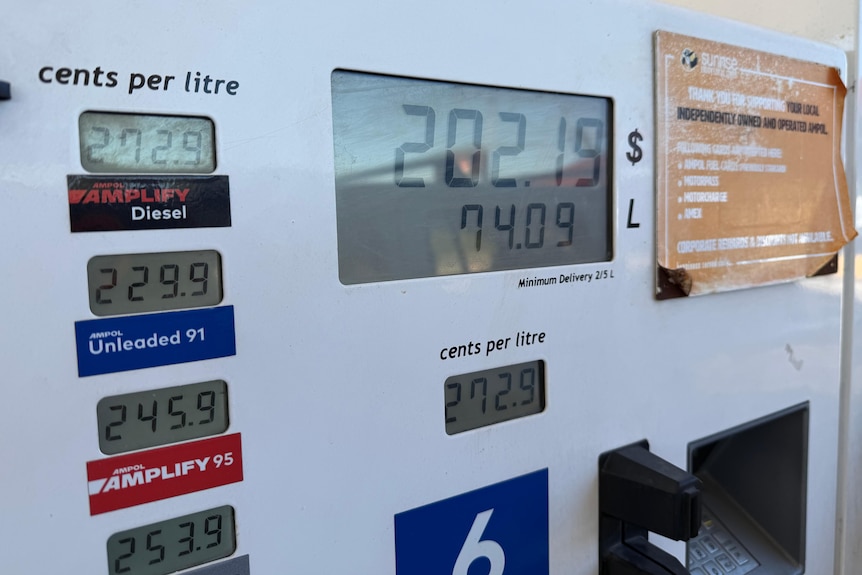
The spike in petrol prices comes with a spike in mortgage payments for many Australians. (ABC News: Dan Irvine)
A key reason for raising rates, the governor explained, was a mismatch between supply and demand in the economy — based on the recent run of data showing Australia’s economy growing faster than expected, a steady jobs market, and above-target inflation.
“Taken together, the data suggests there is slightly more excess demand in the economy than we thought in February, and inflationary pressures are therefore somewhat greater,” Ms Bullock said.
Note she says slightly more — so it’s not like we’re in a situation where demand is running out of control.
Loading…How do higher rates bring down inflation?
The Reserve Bank raises the cash rate to increase borrowing costs for Australian households and businesses, through higher interest rates on their loans.
By changing how much cash is available to spend, by making it more expensive to borrow money, that influences people’s behaviour and, therefore, the demand in the economy.
And when demand drops, prices should go down, in theory.
After Tuesday’s rate hike, households with variable home loans will be left paying between tens and hundreds of dollars more on their monthly minimum repayments — that’s money they don’t have to spend elsewhere.
If businesses have fewer people willing or able to buy their goods or services then they will be less able to keep increasing prices, even as their own costs may be rising.
The RBA governor pointed out on Tuesday that there were a few key so-called transmission channels for interest rates to influence the economy.
The first is by crunching cash flow, as we just described, and it’s the one that gets the most attention.
“That is, those people who have mortgages pay more on interest, and that means that they have less spare money,” Ms Bullock explained.
Another channel, the governor said, is encouraging people to save more and spend less now, as they can earn more interest on their money in the bank — and in a similar way to the cash flow channel it takes demand out of the economy.
And finally, the exchange rate. All else being equal, if Australia’s interest rates are higher compared to overseas counterparts it lifts the value of our currency.
That’s because a country where your money can earn more interest is an attractive place to park your cash and sees more dollars flow in.
If our exchange rate rises, imported goods become cheaper.
“People tend to buy imported goods rather than domestic so it puts less pressure on the domestic side of things,” Ms Bullock said.
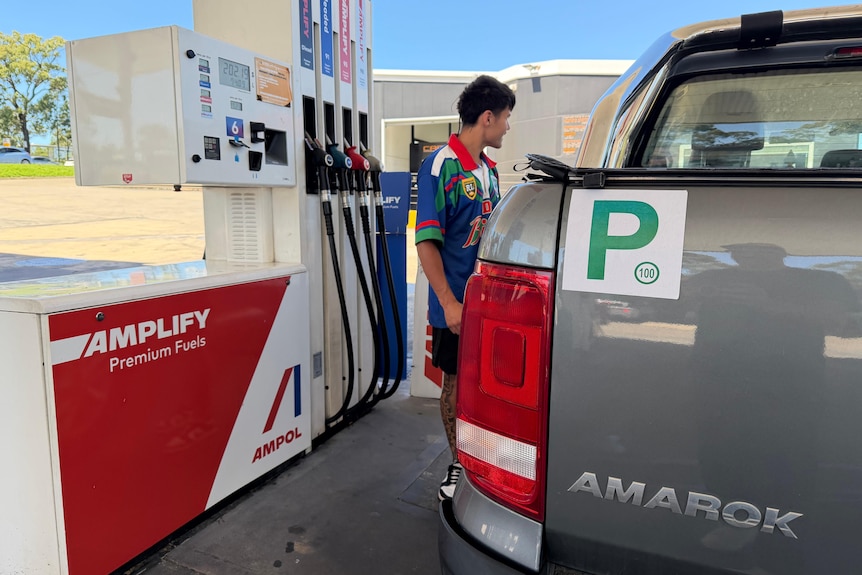
The cost of filling up is hitting many Australians hard. (ABC News: Dan Irvine)
But knowing the way higher interest rates typically flow through the economy may raise more questions than answers about what’s going on at the moment.
It certainly did for many ABC readers who commented on our blog or social media posts, or wrote in.
Is the RBA going to lift rates to … encourage world peace and stop the war in Iran? When the data is so clearly not linked to consumer spending, what is the point of raising rates?
– Sophie
So given that the Middle East/oil inflationary pressures are completely out of our control, what does this rate hike do other than punish people with (large) variable mortgages? Bumping up interest rates won’t make Iran open up shipping.
– Ben
For many households and businesses fuel isn’t an avoidable expense. So rate rises aren’t going to cut demand for fuel.
Demand for other goods and services is likely to fall if people have less cash because they’re spending more on their home loan and petrol tank.
But did the RBA need to raise rates then? Or would the rise in petrol have done its job for it anyway, acting as another quasi-rate hike on households by crunching cash flow?
Did rates need to rise if petrol is also hitting households?
That’s a question that’s difficult to answer without a crystal ball — or a direct line into the mind of Donald Trump, perhaps.
It’s one the RBA’s rate-setting board grappled with over two days of what Ms Bullock described as “robust” discussion this week.
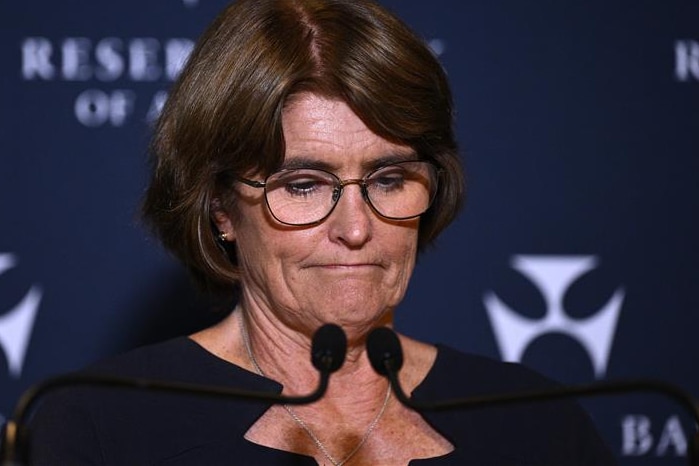
Michele Bullock announced the rate increase on Tuesday. (AAP Image: Dan Himbrechts)
She was at pains to emphasise the split among board members — with five voting to hike rates in March and four calling to keep them steady — was not a dispute around whether rates should go up, but about the timing.
A rate hike had previously been pencilled in for May by many leading economists, but the conflict and associated oil price spike had many shift those forecasts forward to March while still expecting a third straight rate hike in May.
In recent weeks, both Ms Bullock and her deputy Andrew Hauser made public remarks about the RBA watching the Middle East situation closely and acknowledging the risk to inflation.
“You have the immediate effects on the cost of petrol at the pumps. Everyone’s seeing that in real time today,” Mr Hauser told The Conversation’s Michelle Grattan.
“Of course, over time that pick-up in the cost of fuel will push up prices and costs for firms, and it has implications over the longer term for people’s expectations about wages and prices.”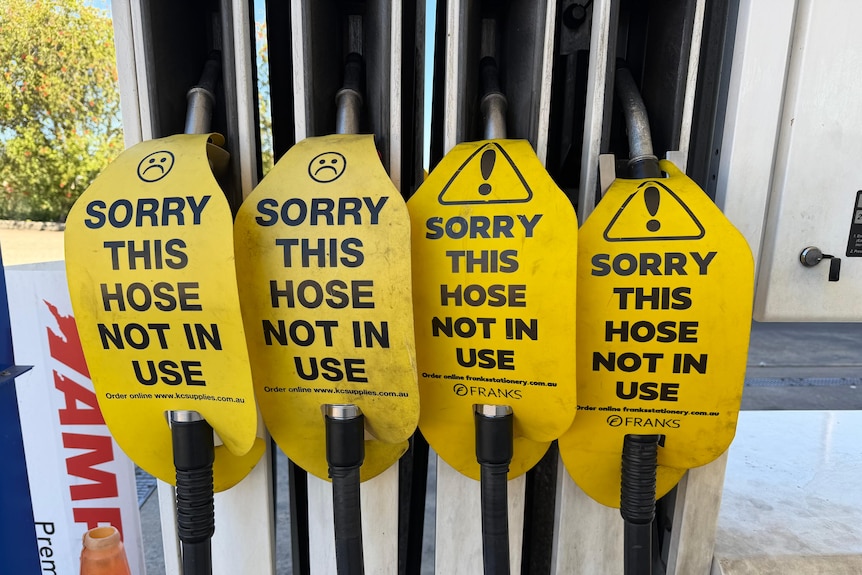
Fuel is unavailable at some service stations. (ABC News: Dan Irvine)
However, Mr Hauser also acknowledged risks in the other direction: “The uncertainty over developments in Iran is extremely high. That will, if it persists, press down on global activity, and that’s a downside effect to throw into the mix.”
The risks of a global downturn are rising, with the chief economist at Moody’s Analytics, for one, tipping the chance of a US recession this year to rise above 50 per cent as oil prices surge.
So why would the RBA board not hold fire and see what plays out in the Middle East over the next seven weeks before it meets in May?
Michele Bullock’s answer? Rates needed to go higher anyway.
“Inflation was already too high, reflecting the fact that demand is outstripping supply,” the governor said on Tuesday.
What about the argument that the higher fuel costs would’ve done the same job as a rate hike?
“Higher fuel costs will not slow demand enough on their own to address this,” Ms Bullock said.
In his RBA day finance report, Alan Kohler described the rise in petrol prices since February 28 as having added the equivalent of about 80 per cent of a rate hike to family outgoings.
Loading…
AMP’s chief economist Shane Oliver estimated that if Australian petrol prices were sustained at current levels it would add around $20 a week, or about $86 a month, to the average household’s fuel bill.
So it might be that the rise in petrol prices could act as enough of an additional dampener on demand that the RBA board may be able to hold off on hiking again come May.
“A further rate hike is highly possible, but the longer the conflict persists the greater the risk that the inflation shock will turn into an output shock as higher fuel prices act as a tax on spending, particularly if fuel shortages in Australia emerge in the next month or so,” Dr Oliver said.
“The RBA is not deluded in thinking that it can get petrol prices back down by raising rates but wants to show that it is serious in wanting to see inflation go back to target and so is trying to keep inflation expectations down.”
So perhaps an insurance rate hike, but one nearly half the board didn’t think was needed yet.
As Michele Bullock said several times this week: “Reasonable people can hold different views.”
Is Australia at risk of a recession?
The short answer is yes.
A recession is a severe economic downturn and is typically associated with a big increase in unemployment.
A so-called technical recession is often defined as two consecutive quarters of a country’s gross domestic product going backwards, although the RBA prefers a measure based on a sharp increase in unemployment.
On either of those measures Australia isn’t currently close to falling into recession.
“We don’t want to see a recession or a large rise in unemployment if we can avoid it,” Ms Bullock told reporters in the wake of Tuesday’s rate hike.
But her answer to whether the RBA would be prepared to put Australia into recession if necessary to bring down inflation was revealing.
RBA governor warns of the recession we might have to have
She said the board hadn’t shifted from its strategy of trying to get inflation back under control without giving up gains in employment, which has often been referred to as the “narrow path” the central bank walks.
But she certainly didn’t rule out a potential change in tack.
“The bottom line is that, in the end, if we don’t have low and stable inflation over time we won’t have full employment. It doesn’t work like that,” she said.
“We don’t want to have a recession, but if it’s hard to get inflation down then we’re going to have to deal with that, possibly.”
By that logic, it seems the governor sees a risk of a recession whether the RBA board delivers further rate hikes or not — with runaway inflation or more restrictive interest rates both potential culprits.
HSBC’s chief economist Paul Bloxham had a blunter assessment earlier this week.
“Australia’s economy needs a downturn to deliver the necessary disinflation to get inflation back to the RBA’s 2.5 per cent target,” he wrote.
“This is the tough, hard and unfortunate reality.”Loading…