
The architects of two Queensland stadium projects set to be delivered ahead of the Brisbane 2032 Olympic and Paralympic Games have been newly announced.
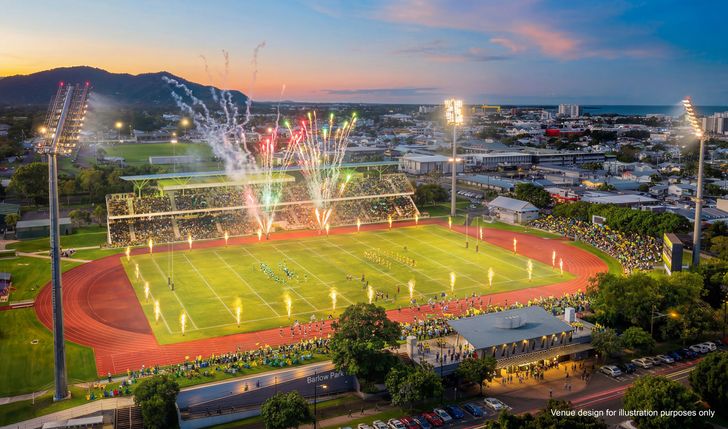
One of the state’s largest practices, Architectus, has been appointed as the principal architect of an upgrade to the Barlow Park Stadium in Cairns, which promises to deliver improved amenities and accessibility, better facilities for athletes, and a new grandstand, increasing the stadium’s capacity from 1,700 to 5,000 seats. During the Olympics, the venue will accommodate up to 20,000 attendees using temporary seating.
Architectus will be supported by international sports architecture specialist HKS and local Cairns practice Indij Design, who will work with the Traditional Custodians to embed First Nations culture, knowledge and connection to Country in the design.
According to a communique from the state government, the team’s proposal reflects “the easy-going, outdoor character of the tropical north” and “will capture cooling breezes and improve shade protection.” The design phase for the project is set to conclude by 2028, with the stadium upgrade delivered by 2029.
View gallery
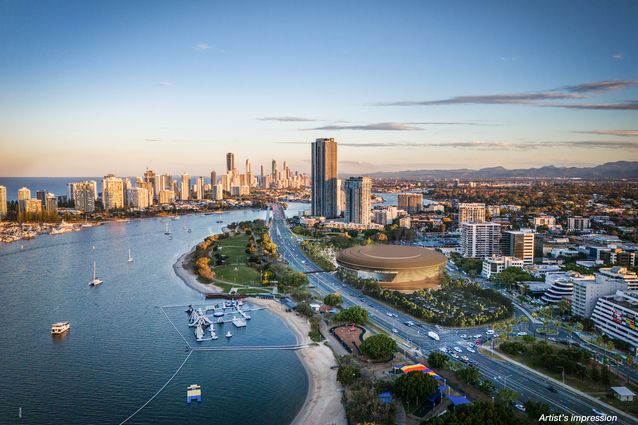
In the south-east corner of the state, a global consortium has been recently selected as the shortlisted proponent for the new Gold Coast Arena.
The AmplifyGC consortium includes infrastructure developer and investor Plenary Group, entertainment company Live Nation and design and construct contractor Built, supported by Australian firm Cox Architecture and Danish-born, international practice 3XN as lead architects. It follows news from earlier this year of Cox’s appointment, alongside Hassell, to deliver Brisbane’s new 63,000-seat stadium at Victoria Park.
The team selection for the Gold Coast Arena was endorsed by the City of Gold Coast on 10 March, following a process in which expressions of interest were sought to design, build, finance and maintain the proposed venue.
“The world’s eyes are on the Gold Coast and the level of interest in this major public infrastructure legacy project is a sign of the city’s status,” said Gold Coast Mayor Tom Tate.
“With a single proponent, we waste no time in getting into the finer planning, investment options and detailed design,” he said. “We can move swiftly as a designated Olympic venue to ensure the arena is delivered by 2030.”
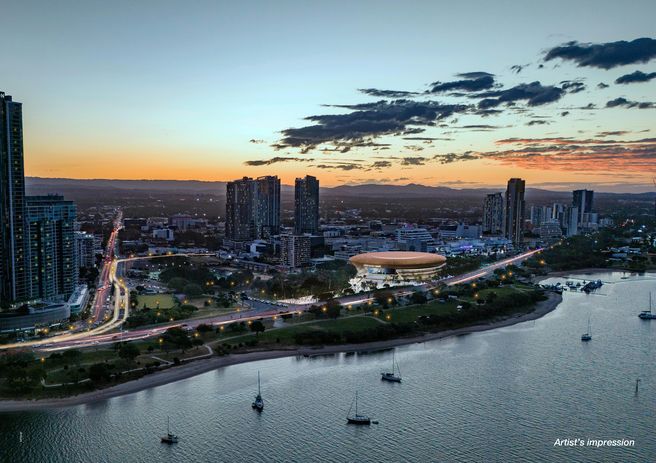
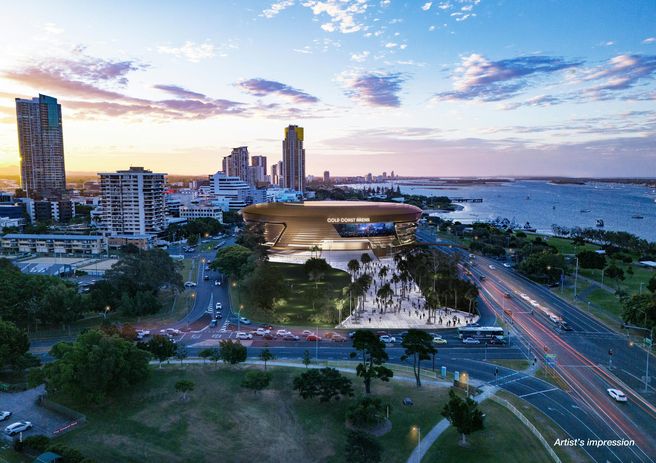
Situated on the waterfront at Carey Park in Southport, the arena is set to accommodate a minimum of 12,000 attendees.
Live Nation Australia and New Zealand senior vice-president – venue development Guy Ngata said, “Beyond the Olympics, the arena will position the city as a destination for global touring – driving economic growth, strengthening the region’s cultural life, and giving international and local artists a world-class stage for the next generation of live entertainment.”
According to a spokesperon from Invest Gold Coast, visions of the 3XN- and Cox-designed Gold Coast Arena are expected to be released later this year. The execution of an agreement between Invest Gold Coast and AmplifyGC is planned for early 2027, with construction on the arena scheduled to commence soon after.
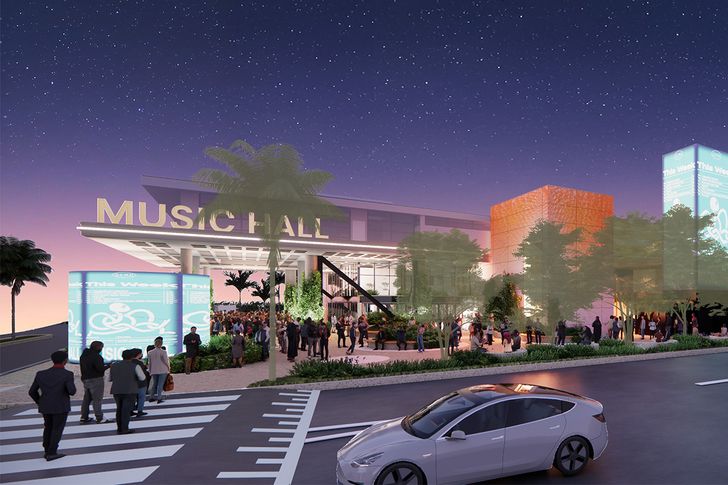
Earlier this month, plans for another new live entertainment venue in the region – a $40 million, 2,500-seat Gold Coast Music Hall – were announced as being under construction by the City of Gold Coast. Designed by ARM, the proposal involves the redevelopment of the Surfers Paradise Transit Centre and a section of nearby carpark, and is set to be complete by early 2028.
View gallery