
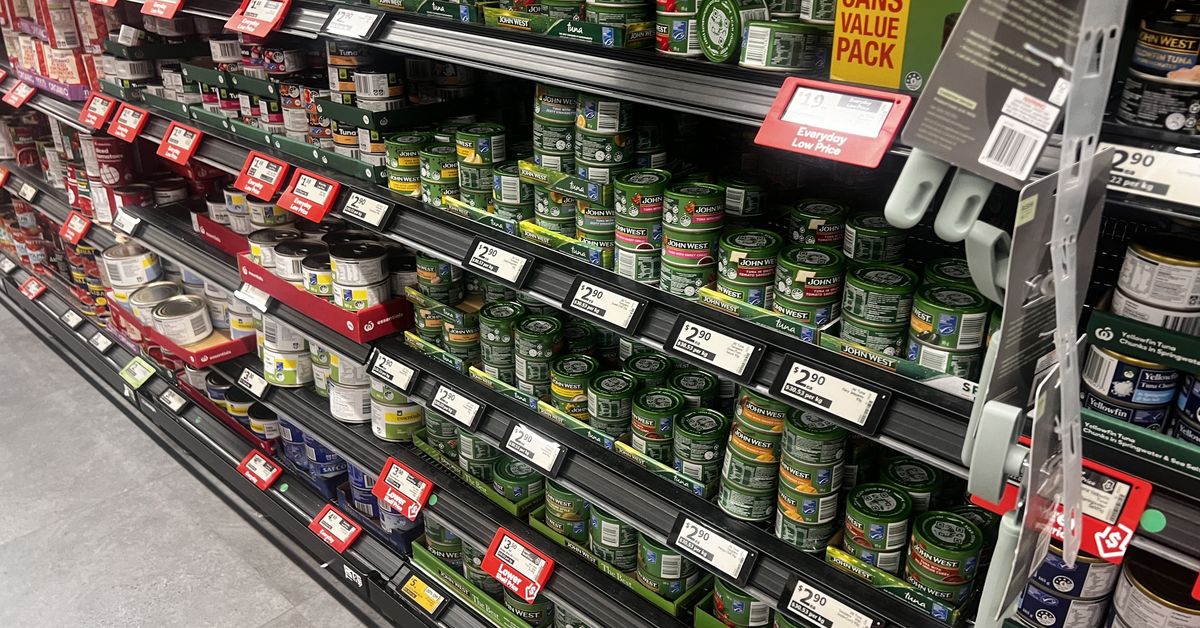
The grim forecast, driven primarily by an elastic shock to the supply and cost of diesel used by food trucks, depends on how long the conflict lasts.
As the blockade of the Strait of Hormuz enters a critical phase, leading academics say that the knock-on effect of soaring diesel costs is no longer just a headache at the petrol pump – it is becoming a threat to national food security.
 Independent petrol stations in regional areas have been running out of fuel. (9News)
While the sight of $3-a-litre petrol has rattled commuters, the real danger lies in the fuel that powers the nation’s heavy machinery.
Associate Professor Devika Kannan, from the University of Adelaide, warns that surging diesel prices could soon lead to some very painful supermarket bills.
“High fuel costs may compromise both food security and the resilience of domestic logistics infrastructure,” Professor Kannan told the Science Media Centre.
“Surging diesel prices threaten a 50 per cent spike in food costs and the potential collapse of just-in-time logistics networks.”
Associate Professor David Ubilava of the University of Sydney echoed this concern, noting that energy costs are baked into every stage of the food chain.
“Energy costs that are directly or indirectly linked to crude oil prices are a substantial component of the price we pay for a loaf of bread or a box of cereal,” he said.
Panic buying a “self-fulfilling prophecy”
Professor Ben Fahimnia of the University of Sydney said disruptions or sudden changes in demand tended to become amplified as they move through supply chains, a phenomenon known as the “bullwhip effect”
“A small movement at the handle can create a much larger crack at the tip,” Professor Fahimnia told the Science Media Centre.
 Long queues for petrol at a Sydney service station. (Peter Rae)
Fahimnia is among the experts who are pleading with the public to stop “panic buying,” which can worsen the situation.
Economist Dr Scott French, from UNSW, described panic buying as a “self-fulfilling prophecy.”
While it may seem prudent for an individual to fill up today, the collective action “overwhelms the system and creates the shortage that was feared.”
Australia’s fuel resilience is under the microscope, with the country currently holding only 29 to 36 days of stock – well below the International Energy Agency’s 90-day mandate.
Professor Kannan noted that if the Hormuz blockade exceeds 30 days, the Liquid Fuel Emergency Act 1984 could be triggered, ushering in formal transaction limits and fuel rationing. Already, nearly 20 percent of reserves have been released to support independent retailers in regional areas.
However, Dr Lurion De Mello of Macquarie Business School says the immediate focus should be on diesel, rather than petrol.
“Our diesel supply depends heavily on refineries in South Korea, Japan, and Singapore,” De Mello said. “In the short term, limiting the filling of jerry cans at petrol stations could help stabilise demand.”
If there is a silver lining, experts suggest this crisis may be the final push Australia needs to break its oil dependence.
“Every major geopolitical shock in an oil-producing region quickly becomes an energy and transport crisis,” Professor Hussein Dia of Swinburne University said.
“Moving away from oil is as much about stability and security as it is about climate action.”
NEVER MISS A STORY: Get your breaking news and exclusive stories first by following us across all platforms.