
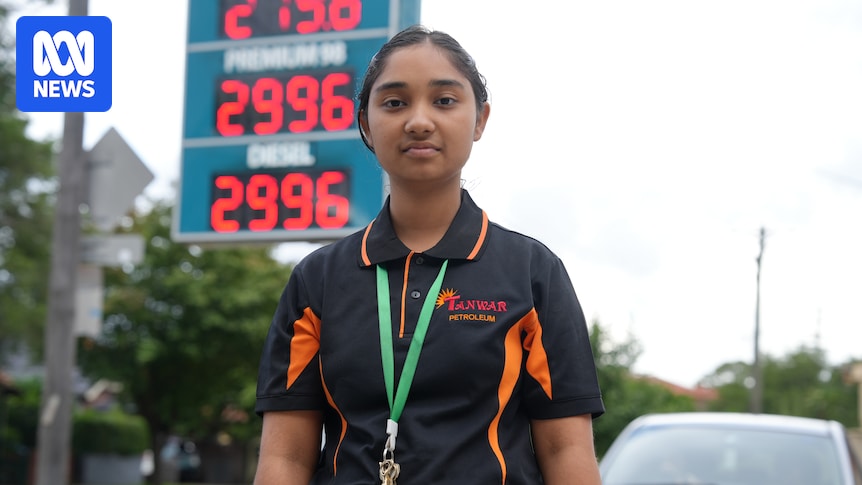
It has gone from one of the cheapest to among the most expensive service stations in the blink of a fuel crisis.
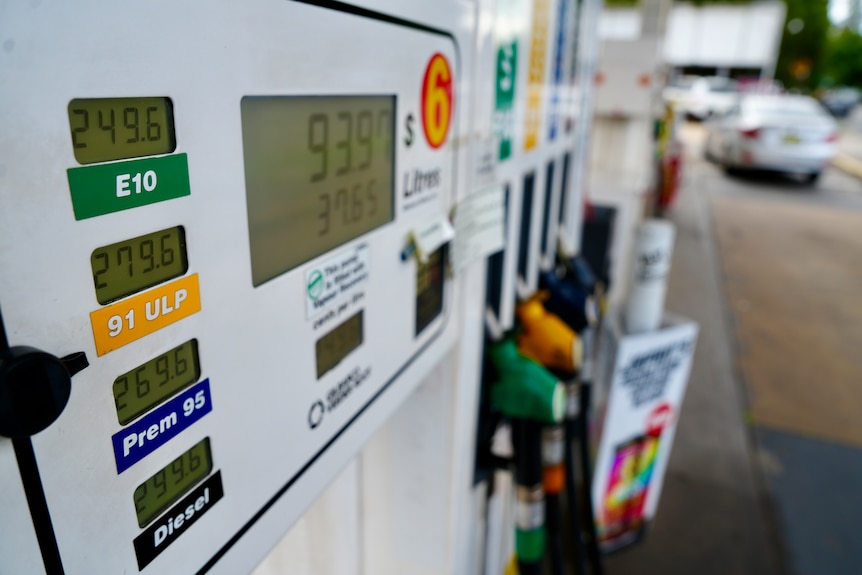
Premium unleaded and diesel is nudging $3 a litre at Tanwar Petroleum at Lewisham in Sydney’s inner west.
Iran war live updates: For all the latest news on the war in the Middle East, read our blog.
And the twist: that is at margins that are either thin or below cost.
“We were the cheapest in Sydney. Our business was very busy before, like cars queuing up to the driveway,” service station employee Gunveet Kaur said.
“But it’s very quiet now, hardly two customers in one hour.”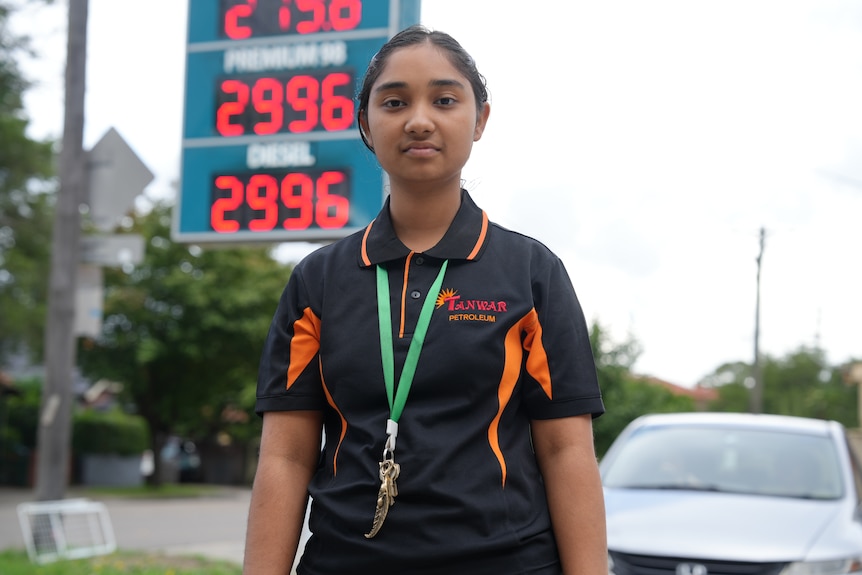
Gunveet Kaur says the service station is much more quiet than usual. (ABC News: Adam Griffiths)
Daily sales have dropped from 20,000 litres to just 2,000 litres, causing the service station to recently operate at a loss.
But the same pricing system that allows fuel stations to often undercut rivals on price has left many acutely vulnerable to the shock waves of an overseas war, jeopardising the survival of some and the flow of fuel to others.
Sydney’s most expensive fuel?
The question has been asked if Tanwar Petroleum is selling “Sydney’s most expensive fuel?” on Reddit.
But a price list, dated March 14 and shared with the ABC, tells a different story.
The owners of the service station claim E10 was bought for $2.68 a litre, but sold for $2.45 — a loss of $0.23 a litre.
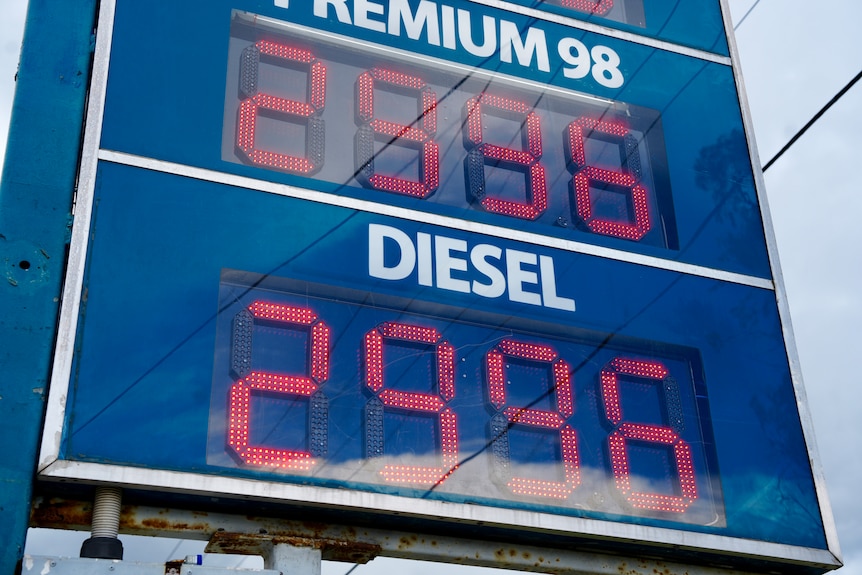
The business says it is selling some fuels at a loss. (ABC News: Adam Griffiths)
Diesel was purchased for $3.28 a litre, but sold for $2.99 — a loss of $0.29 a litre.
Three other fuels retailed at a profit; 95 Unleaded had the thickest margins at $0.14041 a litre.
“We want to keep our business going, that’s why we have to sell at this price,” Ms Kaur said.
A turn to public transport
The family business’s recent price increases are testing customers’ patience.
Frank Tmouti fills up regularly as he makes a living driving a taxi.
The father of three said his fuel bill has risen by $250 a week over the past month, but fears it could keep rising.
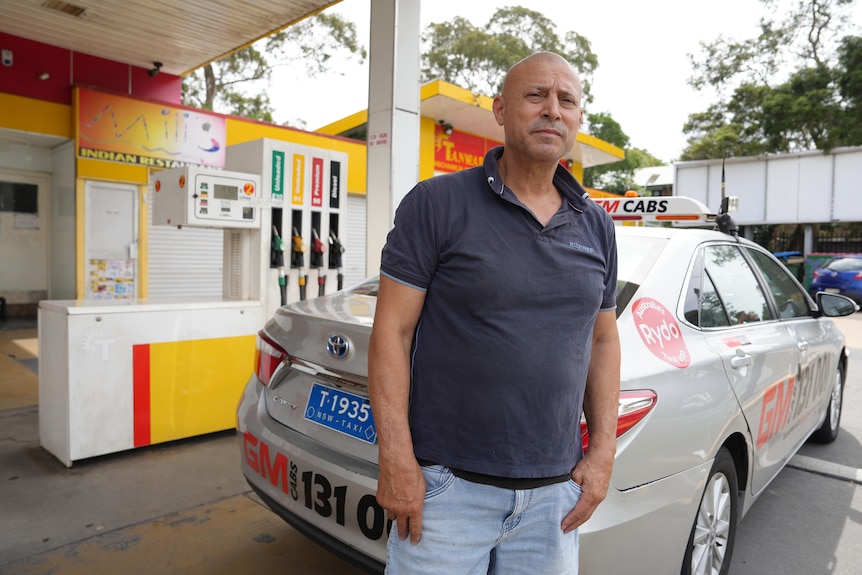
Mr Tmouti says his fuel bill has gone up $250 a week within a month. (ABC News: Abbey Haberecht)
“Everyone worries at the moment because we don’t know whether this war is going to escalate or just going to stop,” he said.
“Maybe another couple of months we can sustain. After that, there’s not much profit to make a living.”
Emma, who declined to share her surname, said the high fuel prices motivated her to buy a hybrid car.
“Honestly, that $500, $600 a month is a lot of money. That’s what I was paying with my old car,” she said.
“I just came home and said, ‘I’m sick of paying this sort of money for petrol. I want a hybrid car.'”
Transport for New South Wales has observed an increase in people turning to trains and metro services recently.
During the four weeks up until March 15, an average of more than 47,000 more trips were made each day.
Competitive but vulnerable
The Australasian Convenience and Petroleum Marketers Association (ACAPMA) said Tanwar Petroleum’s situation was “not unique”.
The business does not have a contract for its fuel, but instead pays a market price (also known as ‘spot price’) on the day it makes a fuel purchase.
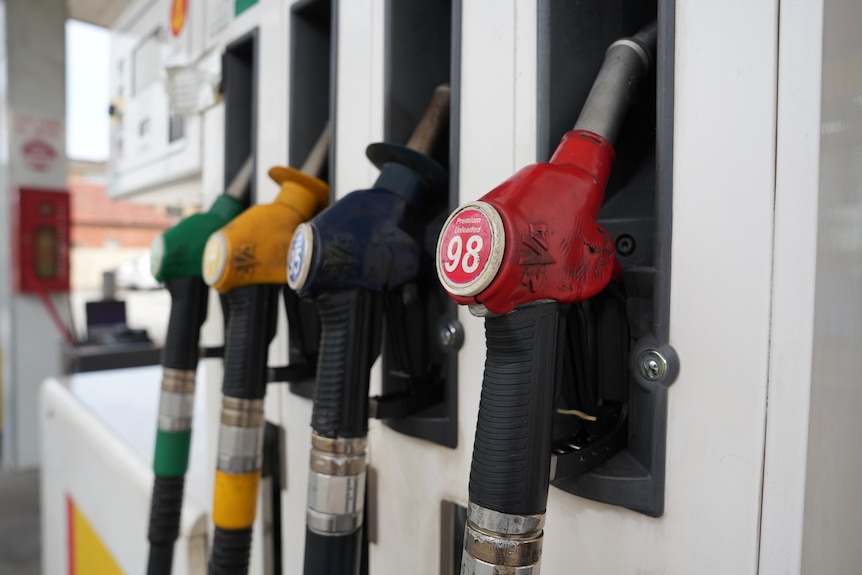
Paying a market price on the day makes service stations more competitive, but opens them up to industry instability. (ABC News: Abbey Haberecht)
“They can shop around and get fuel a little bit cheaper and respond to demand quite quickly,” ACAPMA chief executive Rowen Lee said.
But he noted it left them vulnerable to the instability brought by the blockade of the Strait of Hormuz, a key shipping route that channels about a fifth of the world’s oil supply.
“The [service stations] on spot price are probably coming in second order priority, unfortunately, and sometimes … supplies that are coming a bit short at times for them,” he said.
‘Consistently the cheapest’
Family-owned service stations like Tanwar Petroleum typically compete on price.
“Independents are consistently the cheapest service stations in Australia,” the National Roads and Motorists’ Association’s Peter Khoury said.
“They are the most competitive, they are most likely to put the most downward pressure on prices.”
It remains unclear how long the fuel crisis will last. (ABC News: Adam Griffiths)
But it remains unclear how long they will have to weather volatile costs and supply pressures.
“There are two solutions to this crisis,” Mr Khoury said.
“The first is that the war [with Iran, Israel and the US] ends.
“The second is that there is some sort of solution to reopening the Strait of Hormuz.”
Loading…